Lost Books
1 Enoch (Book of Enoch)
Enochian / Pseudepigrapha
Excluded from Canon
About this text
Excluded from the biblical canon — preserved in fragments, oral tradition,
and the margins of history.
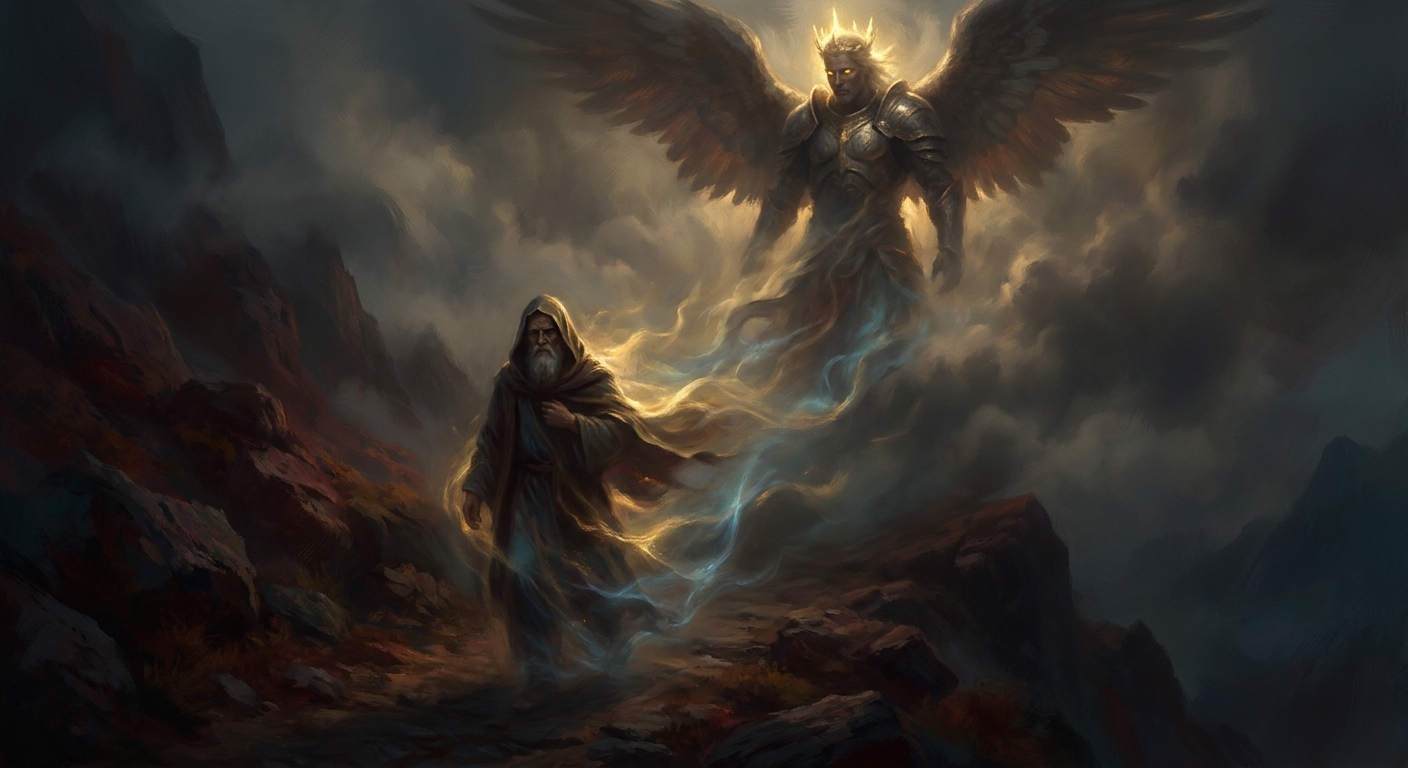
The most consequential “lost” book. Quoted in the New Testament. Canon in Ethiopia. Foundational to Jewish and Christian angelology, demonology, and apocalypticism.
| Aspect | Detail |
|---|---|
| Written | ~300 BC - 100 BC (composite work, multiple authors over ~200 years) |
| Language | Originally Aramaic; survived in full only in Ge’ez (Ethiopian) |
| Attributed to | Enoch, great-grandfather of Noah (“Enoch walked with God; then he was no more, because God took him” — Gen 5:24) |
| Canon status | Canonical in Ethiopian Orthodox and Eritrean Orthodox churches. NOT in Protestant, Catholic, or mainstream Orthodox canons |
| Quoted in NT | YES — Jude 1:14-15 directly quotes 1 Enoch 1:9. References also in 2 Peter |
| Section | Chapters | Content | Significance |
|---|---|---|---|
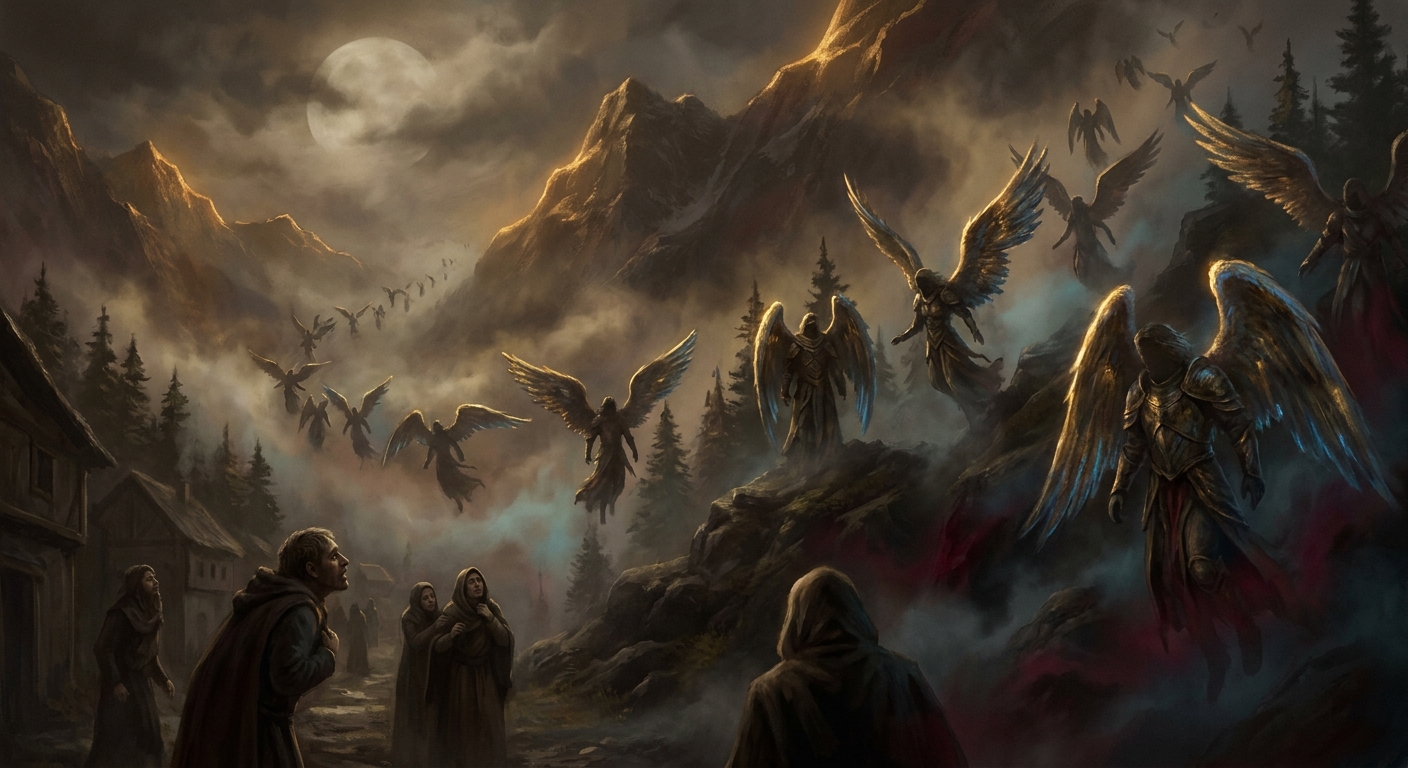
| Book of the Watchers | 1-36 | 200 angels (Watchers) descend to Mount Hermon, take human wives, produce the Nephilim (giants). God sends the Flood as judgment. Names of fallen angels: Azazel, Semyaza | Origin story for demons. Explains Genesis 6:1-4 (“sons of God” + “daughters of men”). The template for all later fallen-angel theology |
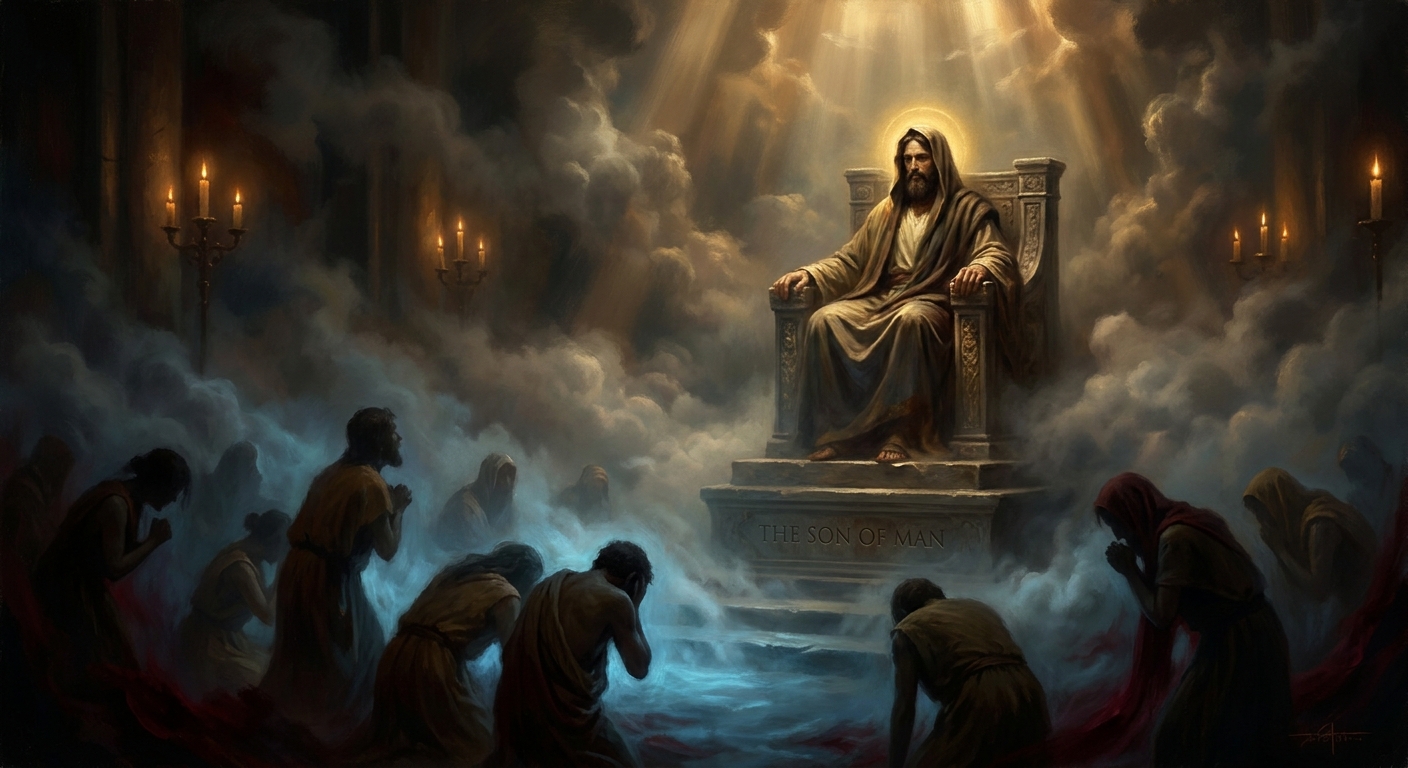
| Book of Parables (Similitudes) | 37-71 | Visions of the “Son of Man” — a pre-existent heavenly figure who judges the wicked and vindicates the righteous | Strikingly similar to Jesus’ self-designation as “Son of Man.” Many scholars believe Jesus’ audiences understood this Enochic figure |
| Astronomical Book | 72-82 | Solar calendar of 364 days (vs. the lunar 354-day calendar). Detailed cosmology | The Dead Sea Scrolls community (Qumran) used this calendar. Source of Jewish calendar disputes |
| Book of Dream Visions | 83-90 | Allegorical history of Israel from Adam to the Messianic age. The “Animal Apocalypse” | Animals represent nations and people; predates and parallels Daniel’s beast imagery |
| Epistle of Enoch | 91-108 | The “Apocalypse of Weeks” — world history divided into 10 “weeks.” Woes against the wicked. Promise of a new heaven | A prophetic timeline competing with Daniel’s. The 7th week = apostasy; 8th = righteousness; 10th = eternal judgment |
- Not in the Hebrew canon — Jewish authorities at Yavneh (~90 AD) did not include it; it was written in Aramaic, not Hebrew
- Theological tension — The Watchers narrative (angels mating with humans) was considered too mythological by later rabbinic Judaism and mainstream Christianity
- Authorship doubts — Clearly composite, written centuries apart; could not have been authored by the pre-Flood patriarch Enoch
- Augustine and Jerome — Both influential church fathers rejected it. Jerome called it apocryphal. Augustine’s canon list excluded it
- It was never “removed” — It was never universally accepted in the first place. The Ethiopian Church is the exception, not the rule
| Tradition | Significance |
|---|---|
| Christian | The “Son of Man” imagery deeply influenced Jesus’ self-understanding and the Gospels. Jude quotes it as prophetic. The entire framework of fallen angels, demons, and the Nephilim comes largely from 1 Enoch, not Genesis |
| Jewish | Widely read during the Second Temple period (300 BC - 70 AD). Found among the Dead Sea Scrolls (11 copies — more than most biblical books). Rabbinic Judaism later distanced itself |
| Catholic | Not canonical but acknowledged as influential. The Church fathers knew it well. Tertullian argued for its authority; Augustine argued against |
| Masonic | Enoch figures prominently in Masonic legend. The Royal Arch degree involves Enoch hiding sacred knowledge in an underground vault before the Flood. The “Enochian pillar” legend: Enoch inscribed all knowledge on two pillars (one brick, one stone) to survive both fire and flood |
| Esoteric | ”Enochian magic” (John Dee, 16th century) claims angelic language revealed to Dee through scrying. The Watchers as “fallen teachers” who gave humanity forbidden knowledge (metallurgy, astrology, cosmetics, warfare) parallels Promethean myths |
| Ethiopian Orthodox | Fully canonical. Read in churches. Central to Ethiopian Christian identity and theology |
flowchart TB
    ENOCH["<b>1 ENOCH</b><br/>~300 BC - 100 BC"] --> WATCHERS["Book of the Watchers<br/>200 angels fall<br/>Nephilim born<br/>Flood as judgment"]
    ENOCH --> SONOFMAN["Book of Parables<br/>'Son of Man' figure<br/>Pre-existent judge<br/>Influenced Jesus' language"]
    ENOCH --> CALENDAR["Astronomical Book<br/>364-day solar calendar<br/>Dead Sea Scrolls community"]
    ENOCH --> WEEKS["Apocalypse of Weeks<br/>10-week world history<br/>Parallel to Daniel"]

    WATCHERS --> JUDE["Jude 1:14-15<br/>QUOTES 1 Enoch 1:9<br/>in the New Testament"]
    SONOFMAN --> GOSPELS["Jesus calls himself<br/>'Son of Man' 80+ times<br/>Echoing Enoch's figure"]
    WATCHERS --> MASONIC["Masonic Royal Arch:<br/>Enoch hides sacred<br/>knowledge in a vault"]

    style ENOCH fill:#c9a227,color:#000,stroke-width:3px
    style JUDE fill:#8b0000,color:#fff
    style GOSPELS fill:#4a6fa5,color:#fff
    style MASONIC fill:#2e8b57,color:#fff