Apocalypse of Peter
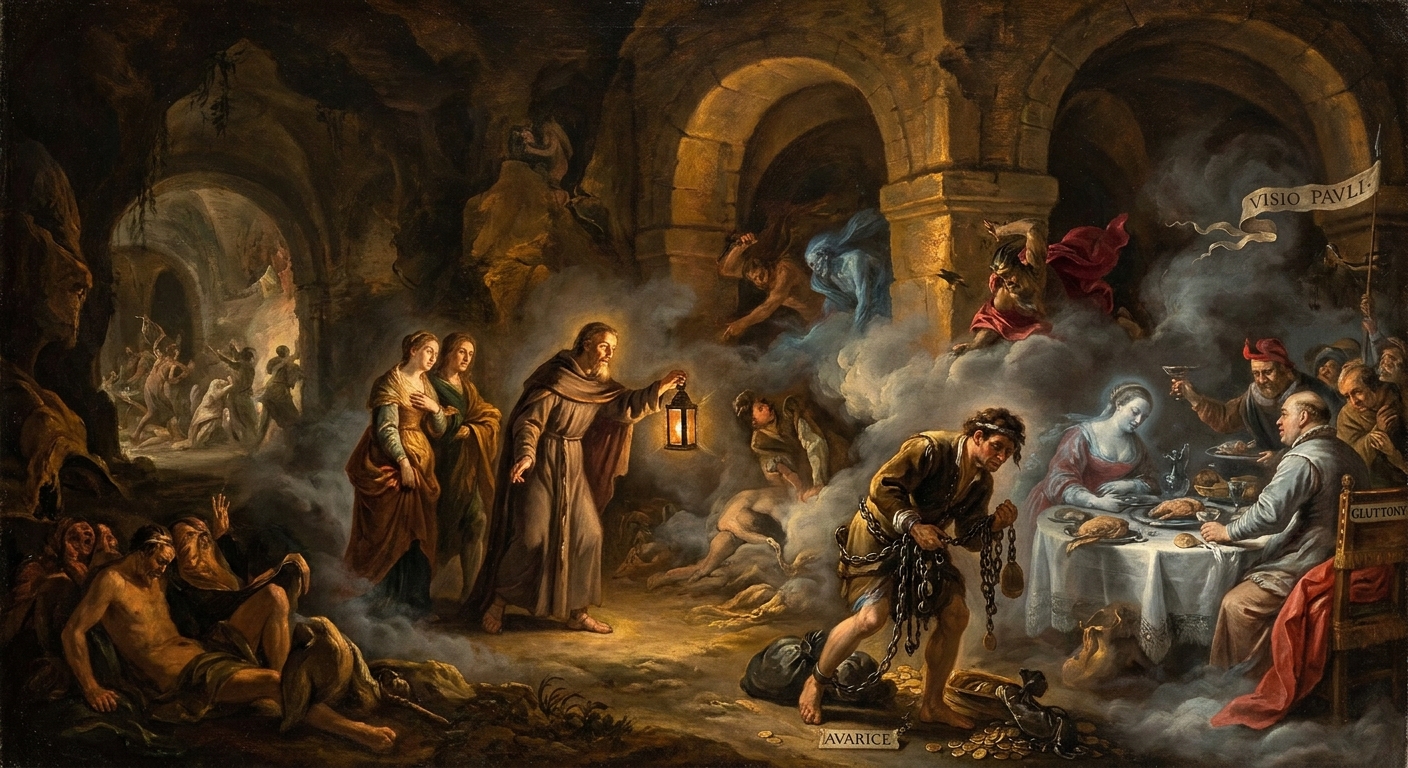
The earliest detailed Christian tour of heaven and hell. It almost made the New Testament canon. The Muratorian Fragment (the oldest known list of New Testament books, ~170 AD) includes it. It is the direct ancestor of Dante’s Inferno.
| Aspect | Detail |
|---|---|
| Written | ~100-150 AD |
| Language | Greek (two versions survive: a shorter Greek fragment found in 1886-87 at Akhmim, Egypt, and a longer Ethiopic translation) |
| Attributed to | The apostle Peter |
| Genre | Apocalypse / vision literature |
| Canon status | Listed in the Muratorian Fragment (~170 AD) as scripture, “though some of us are not willing that it be read in church.” Used as scripture by Clement of Alexandria. Ultimately excluded from all canons |
| Almost canonical | This is the closest any non-canonical text came to entering the New Testament. It was read in churches on Good Friday in some communities as late as the 5th century |
On the Mount of Olives, Peter asks Jesus to show him the fate of the righteous and the wicked after death. Jesus grants him a vision.
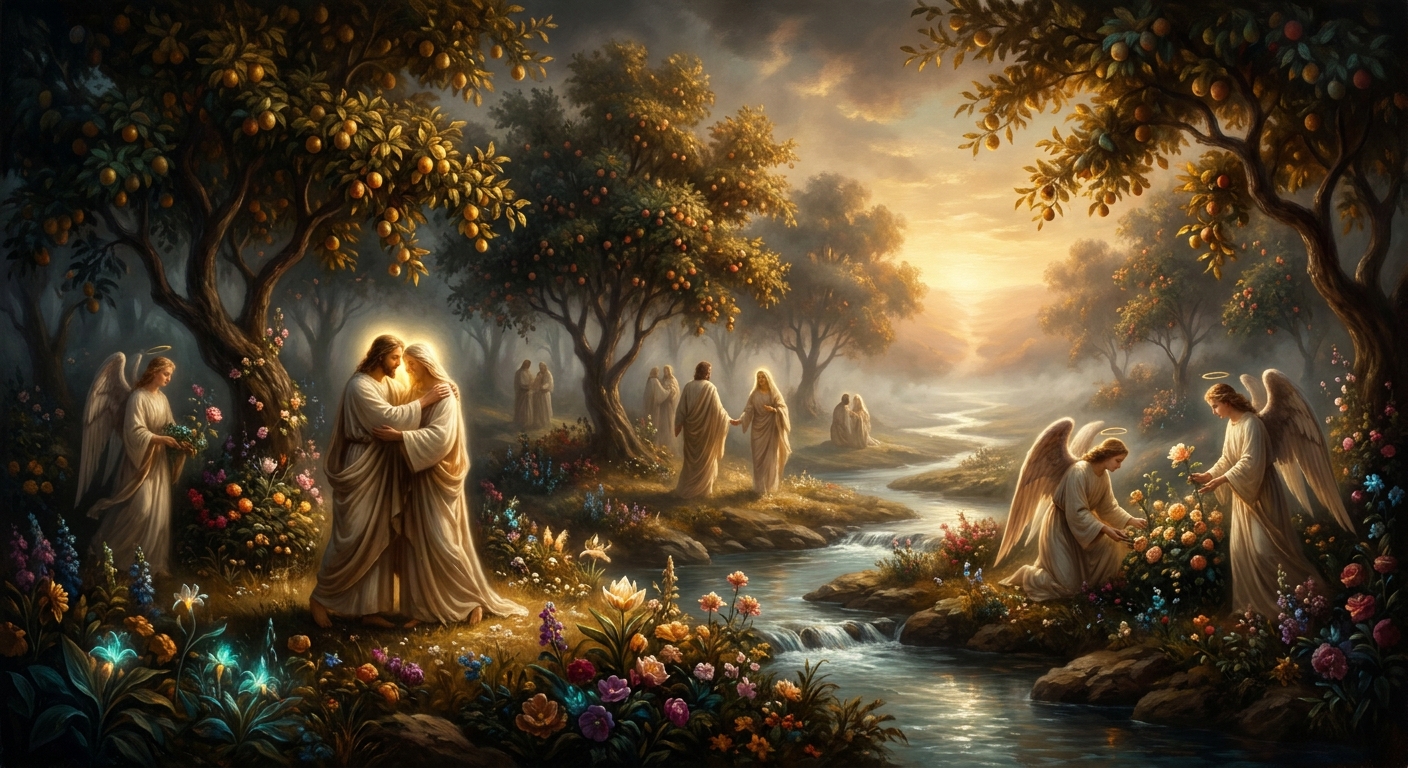
Heaven: The righteous dwell in a place of brilliant light. Their skin is white as snow, their hair curly and beautiful. They wear shining garments and sing praises. The earth blooms with unfading flowers. (Chapters 15-16)
Hell: This is where the text becomes extraordinary — and gruesome. Each sin has a corresponding punishment, described in vivid physical detail:
| Sin | Punishment |
|---|---|
| Blasphemy | Hung by the tongue over unquenchable fire |
| Murder | Placed in a pit full of venomous beasts that torment them |
| Usury/greed | Boiled in a lake of flaming mire |
| Abortion/infanticide | The aborted children sit in a place of light while their parents are tormented; the children cry out to God for justice |
| Adultery | Hung by their hair (women) or feet (men) over boiling mire |
| Persecution of the righteous | Rolled over sharp stones endlessly |
| False witness | Their lips cut off; fire enters their mouths |
| Sexual immorality | Cast from a great cliff, driven up again, thrown down again endlessly |
Apocalypse of Peter 3 (Ethiopic) — Jesus shows Peter:
“And the Lord showed me a very great place outside this world, all gleaming with light, and the air there flooded by the rays of the sun, and the earth itself blossoming with unfading flowers and full of spices and plants which bloomed gloriously and were incorruptible and bore a blessed fruit.”
Apocalypse of Peter 7 (Ethiopic) — The punishment of the blasphemers:
“And in another great lake, full of boiling mire and blood, there stood men and women up to their knees. And these were those who lent money and demanded usury upon usury.”
- Graphic violence — The detailed torture descriptions were considered excessive and unsuitable for liturgical reading
- Pseudepigraphical — Peter did not write it; the theology reflects 2nd-century concerns
- Uncertain theology — Some versions include a hint that the damned will eventually be freed (universalism), which contradicted developing orthodox teaching on eternal damnation
- Competition with Revelation — The canon could accommodate one apocalypse. The Apocalypse of John (Revelation) won out
| Tradition | Significance |
|---|---|
| Christian (Protestant) | Not canonical, but its imagery of hell — specific punishments for specific sins — became the default Christian imagination of damnation, mediated through later texts. When modern Christians picture hell, they are often picturing the Apocalypse of Peter without knowing it |
| Catholic | Not canonical, but Dante’s Inferno (1320) draws directly on its tradition of graded punishments in hell. The entire Catholic vision of Purgatory as a place of specific, pedagogical suffering owes something to this text |
| Jewish | The Apocalypse of Peter adapts earlier Jewish “tours of hell” (cf. 1 Enoch 21-27). The correspondence between sin and punishment follows the rabbinic principle of middah k’neged middah (measure for measure) |
| Masonic | Not directly referenced, but the tradition of a “tour of the afterlife” as initiation — seeing what lies beyond death — parallels the symbolic death-and-rebirth of Masonic ritual |
| Esoteric | Important for the history of visionary literature. The idea that the geography of the afterlife can be mapped and described systematically influenced later Kabbalistic and theosophical maps of the spiritual world |
| Ethiopian Orthodox | The Ethiopic version is the most complete surviving text. Ethiopian Christianity preserved it when the rest of the world forgot it |