Book of Jubilees
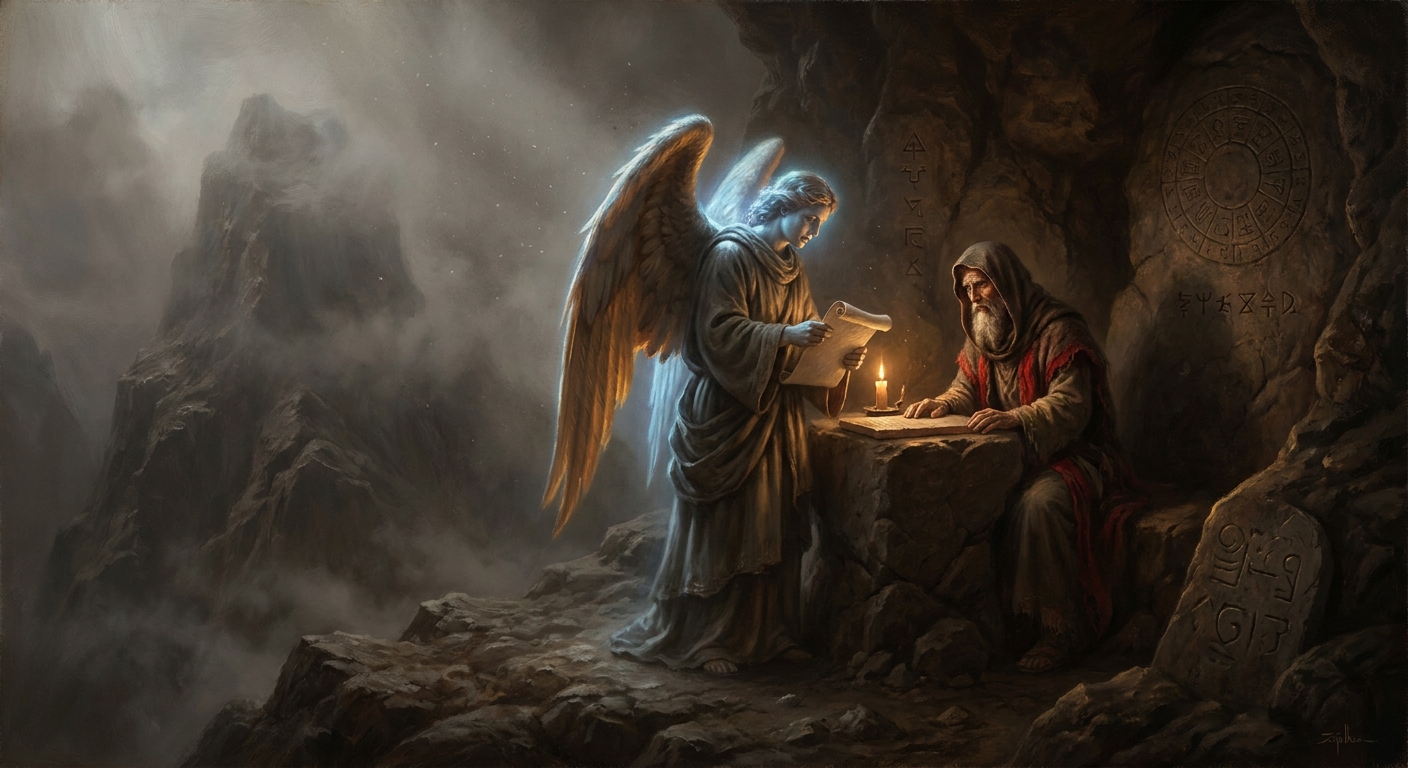
Genesis retold by an angel, on a strict 364-day solar calendar, with the entire history of the world organized into 49-year “jubilee” cycles. Scripture in Ethiopia. Found in 15 copies at Qumran — more than Deuteronomy.
| Aspect | Detail |
|---|---|
| Written | ~160-150 BC (Maccabean period) |
| Language | Originally Hebrew (fragments found at Qumran). Survived in full only in Ge’ez (Ethiopian). Also preserved partially in Latin and Syriac |
| Attributed to | Moses — the text claims to be dictated to Moses by the “Angel of the Presence” on Mount Sinai during the 40 days of Exodus 24:18 |
| Genre | Rewritten Bible / apocalyptic retelling of Genesis 1 through Exodus 12 |
| Canon status | Canonical in Ethiopian Orthodox and Eritrean Orthodox churches. NOT canonical in any other tradition. Found in 15 copies among the Dead Sea Scrolls — the Qumran community treated it as authoritative |
| Dead Sea Scrolls | 15 fragmentary copies from Caves 1, 2, 3, 4, and 11 — one of the most attested texts at Qumran |
Jubilees retells the narrative of Genesis and the opening of Exodus, but with critical additions and modifications:
-
The 364-day solar calendar — Jubilees insists on a solar calendar of exactly 364 days (52 weeks), ensuring that holy days always fall on the same day of the week. This opposed the 354-day lunar calendar used by mainstream Judaism. The Dead Sea Scrolls community followed Jubilees’ calendar, which was a major reason for their split from the Jerusalem Temple establishment.
-
Detailed angel hierarchy — Angels are created on the first day, already circumcised, already observing the Sabbath. The angels of the presence and the angels of sanctification are the highest ranks.
-
Expanded demon mythology — After the Flood, nine-tenths of the evil spirits (offspring of the Watchers) are bound, but God allows Mastema (the chief demon, similar to Satan) to keep one-tenth to test and tempt humanity. Mastema, not God, is responsible for the testing of Abraham and the hardening of Pharaoh’s heart.
-
Halakhic rulings — The patriarchs observe Jewish law (Sabbath, tithes, festivals) centuries before Sinai, demonstrating that the Law is eternal and cosmic, not merely a historical covenant.
-
Jubilee chronology — All history is organized into 49-year jubilee cycles. The Exodus occurs in the 50th jubilee (year 2,450 from creation).
Jubilees 2:2 — Angels created on day one:
“For on the first day He created the heavens which are above, and the earth, and the waters, and all the spirits which serve before him — the angels of the presence, and the angels of sanctification, and the angels of the spirit of fire…”
Jubilees 10:8-9 — Mastema’s bargain:
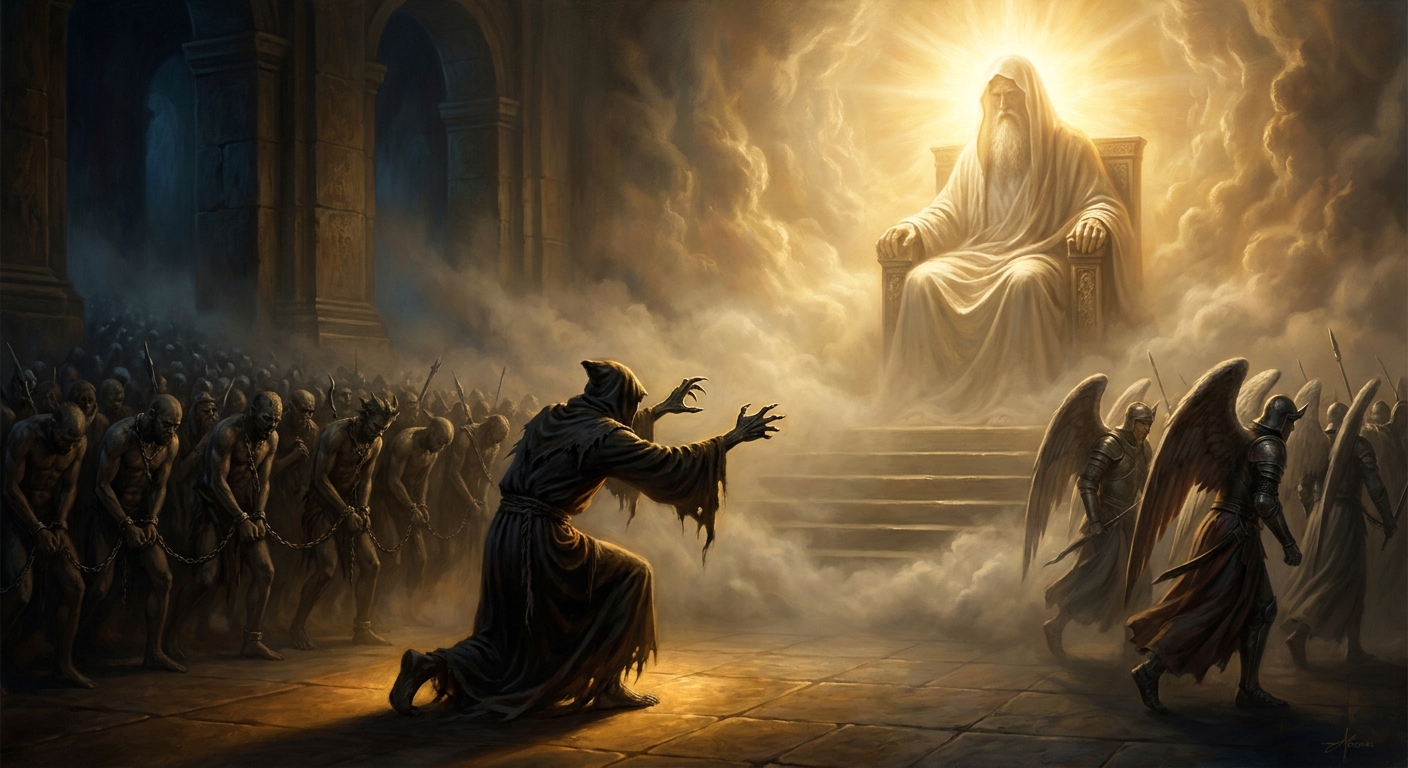
“And the chief of the spirits, Mastema, came and said: ‘Lord, Creator, let some of them remain before me, and let them harken to my voice… for if some of them are not left to me, I shall not be able to execute the power of my will on the sons of men.’ And He said: ‘Let the tenth part of them remain before him, and let nine parts descend into the place of condemnation.’”
Jubilees 6:32-38 — The solar calendar mandate:
“And command thou the children of Israel that they observe the years according to this reckoning — three hundred and sixty-four days, and these will constitute a complete year… For there will be those who will assuredly make observations of the moon — how it disturbs the seasons and comes in from year to year ten days too soon.”
- Calendar controversy — The 364-day calendar contradicted mainstream Jewish and later Christian practice
- Expansive additions to Torah — Adding material to Genesis and Exodus was seen as presumptuous; Deuteronomy 4:2 (“You shall not add to the word that I command you”)
- Pseudepigraphical attribution — Claiming Moses received a secret revelation beyond the Pentateuch was not accepted
- Sectarian origins — Its strong association with the Qumran sect (who rejected the Jerusalem Temple) marked it as factional
| Tradition | Significance |
|---|---|
| Christian (Protestant) | Not canonical, but shows the diversity of Jewish thought in the period immediately before Christianity. The Mastema figure (demon given permission by God to test humanity) closely parallels the Satan of Job and the Temptation narratives |
| Catholic | Not canonical. Acknowledged as a Second Temple text showing the development of angelology and demonology |
| Jewish | Not canonical, but hugely important for understanding pre-rabbinic Judaism. The calendar dispute in Jubilees is the same dispute that split the Qumran community from the Temple establishment |
| Masonic | The theme of antediluvian knowledge (sacred information preserved from before the Flood) is central to both Jubilees and Masonic legend. The jubilee chronology organizing all history into ordered cycles resonates with Masonic numerology |
| Esoteric | The Mastema bargain (God allowing demons to operate within limits) is a foundational concept in demonology. The idea that sacred law pre-exists Sinai (cosmic, not historical) aligns with esoteric concepts of eternal truth |
| Ethiopian Orthodox | Fully canonical. One of the defining books of the Ethiopian biblical tradition. Read alongside Genesis as an authoritative commentary. Central to Ethiopian Christian identity — “We have the books the others lost” |