Book of Tobit
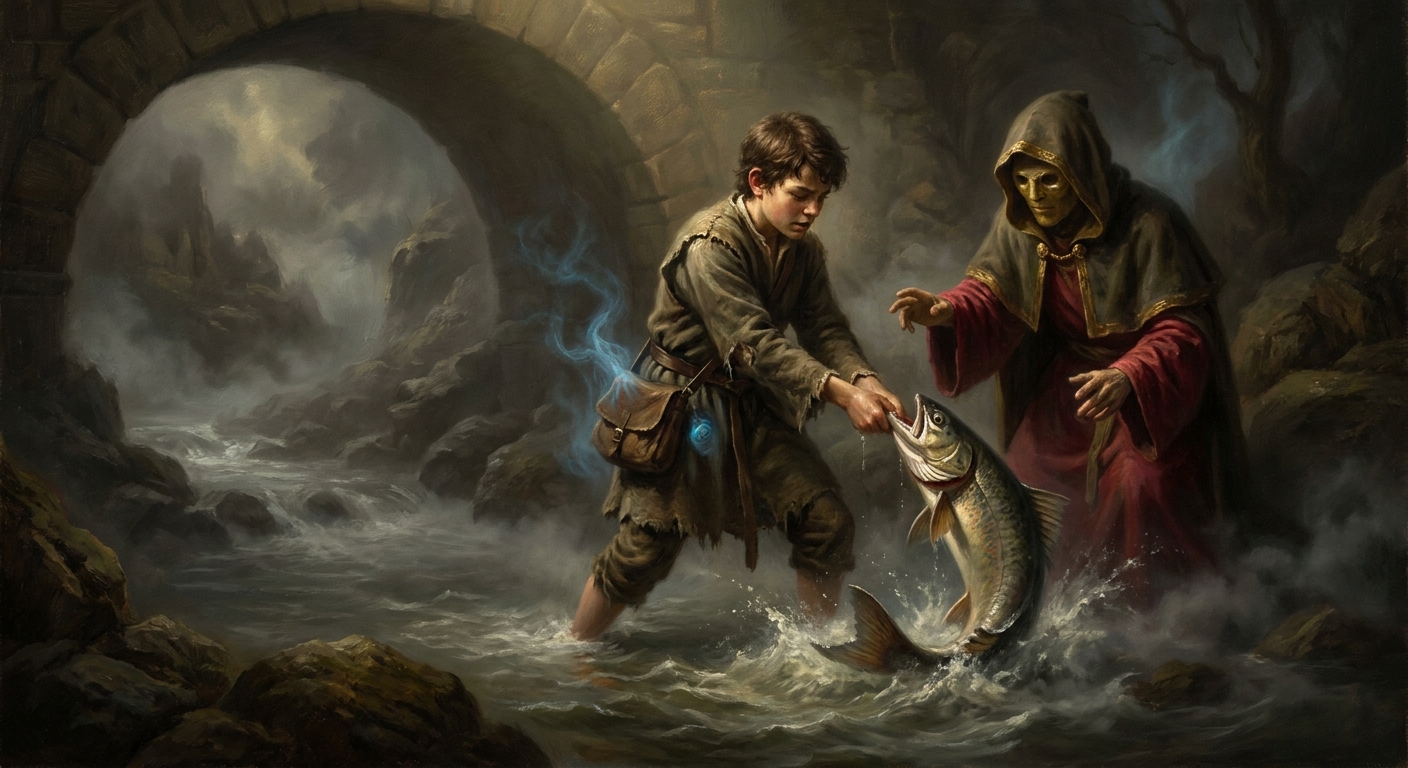
A tale of blindness, demons, angels, a magic fish, and a wedding night from hell. One of the most vivid narratives in the Deuterocanonical books — and the only place in any biblical text where the angel Raphael and the demon Asmodeus appear by name.
| Aspect | Detail |
|---|---|
| Written | ~200 BC (possibly earlier); set during the Assyrian exile (~722 BC) |
| Language | Originally Aramaic and Hebrew (fragments found among the Dead Sea Scrolls at Qumran). Survived in Greek (Septuagint) |
| Genre | Wisdom tale / novella with elements of folklore, travel narrative, and romance |
| Canon status | Canonical in Catholic, Eastern Orthodox, and Ethiopian Orthodox churches. Rejected by Protestants (Apocrypha) and not in the Jewish Tanakh |
| Dead Sea Scrolls | Four Aramaic fragments and one Hebrew fragment found at Qumran (Cave 4) — proving the text predates Christianity |
The story follows two parallel threads that converge through divine intervention:
Thread 1: Tobit in Nineveh — Tobit is a righteous Israelite in exile who buries the dead at personal risk. He goes blind when bird droppings fall into his eyes (Tobit 2:10). Despairing, he prays for death.
Thread 2: Sarah in Media — Sarah, a young woman in the city of Ecbatana, has been married seven times. Each husband was killed on the wedding night by the demon Asmodeus, who is obsessed with her. She also prays for death.
God hears both prayers simultaneously (Tobit 3:16-17) and sends the archangel Raphael (disguised as a human named Azariah) to solve both problems.
Raphael guides Tobit’s son Tobias on a journey to Media. Along the way, Tobias catches a fish in the Tigris River. Raphael instructs him to keep the heart, liver, and gall:
“As for the heart and liver, if a demon or evil spirit gives trouble to anyone, you make a smoke from these before the man or woman, and that person will never be troubled again. And as for the gall, anoint a person’s eyes where white films have appeared on them; blow upon them, upon the white films, and the eyes will be healed.” (Tobit 6:8-9)
Tobias marries Sarah. On the wedding night, he burns the fish heart and liver. The smoke drives Asmodeus to Upper Egypt, where Raphael binds him. When Tobias returns home, he applies the fish gall to Tobit’s eyes and restores his sight.
Tobit 3:16-17 — God’s simultaneous response:
“At that very moment, the prayers of both of them were heard in the glorious presence of God. So Raphael was sent to heal both of them.”
Tobit 8:2-3 — The exorcism of Asmodeus:
“As Tobias remembered Raphael’s instructions, he took the fish’s liver and heart and put them on the embers of the incense. The odor of the fish so repelled the demon that he fled to the remotest parts of Egypt. But Raphael followed him and at once bound him there hand and foot.”
Tobit 12:15 — Raphael reveals himself:
“I am Raphael, one of the seven angels who stand ready and enter before the glory of the Lord.”
This is the origin of the Catholic doctrine of the seven archangels and a primary proof-text for angelic intercession.
- Not in the Hebrew canon — Written in Aramaic, preserved in Greek; excluded by rabbinic authorities
- Folklore elements — The magic fish, the demon-binding, and the “fairy tale” structure struck Protestant reformers as non-scriptural
- Jerome’s hesitation — Jerome included it in the Vulgate but noted it was not in the Hebrew Bible
- Luther’s assessment — Placed it in the Apocrypha section as edifying but not authoritative
| Tradition | Significance |
|---|---|
| Christian (Protestant) | Rejected from the canon but widely read through the 17th century. The KJV originally included it. The story of Raphael influenced Protestant angelology even after the book was dropped |
| Catholic | Fully canonical. Tobit 8:4-8 (Tobias and Sarah’s wedding prayer) is one of the most popular readings at Catholic weddings. Raphael is a patron saint of travelers, the blind, and happy marriages |
| Jewish | Not canonical but the Dead Sea Scrolls prove it was widely read in Second Temple Judaism. The demon Asmodeus reappears in the Talmud (Gittin 68a-b) where Solomon captures him |
| Masonic | The binding of Asmodeus connects to the Solomonic tradition. In some Masonic legends, Asmodeus is a demon who opposed the building of Solomon’s Temple |
| Esoteric | Foundational text for practical demonology. Asmodeus becomes one of the seven princes of Hell in later grimoire tradition. The fish-smoke exorcism is one of the earliest recorded “recipes” for banishing spirits |
| Ethiopian Orthodox | Fully canonical. Read as part of the Old Testament |