Gospel of Judas
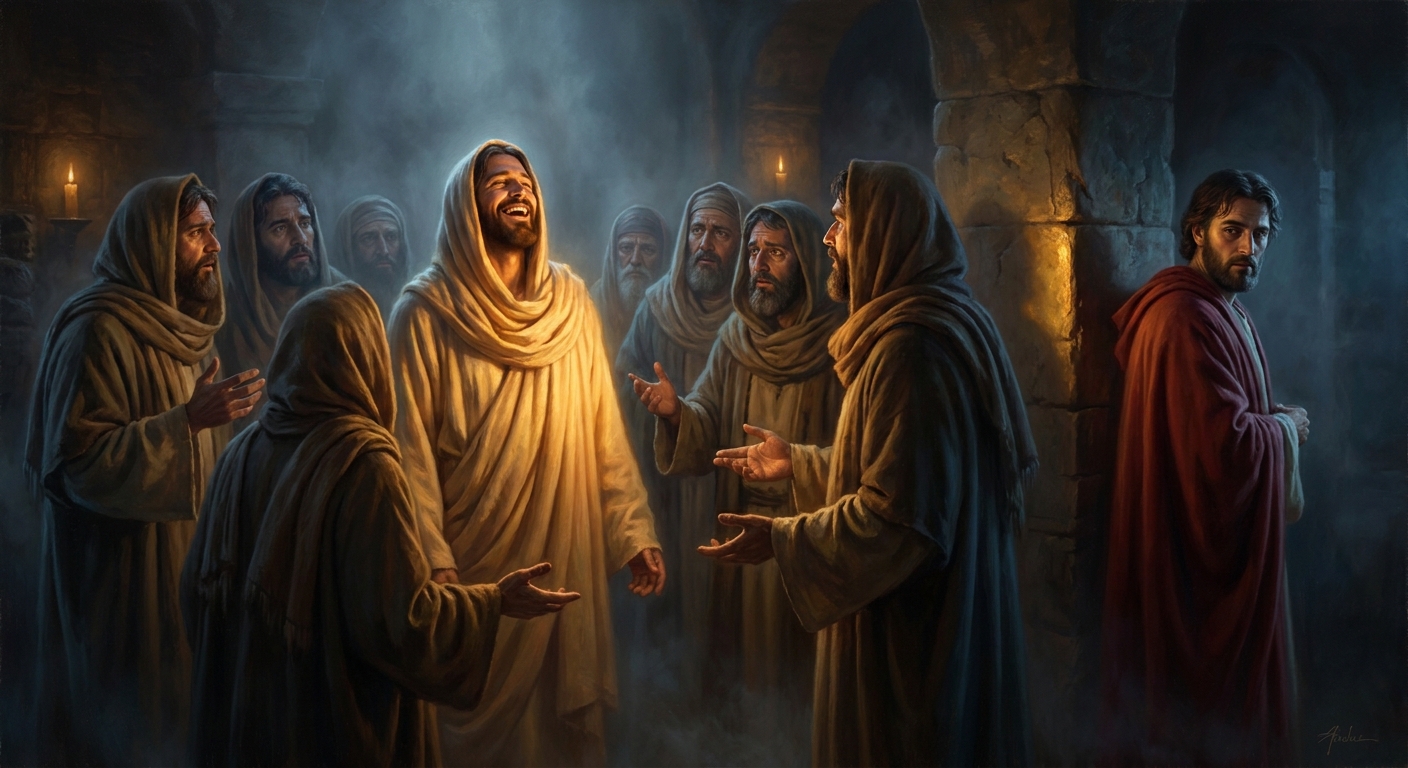
Judas is not the traitor. He is the only disciple who truly understands Jesus. Jesus asks Judas to betray him so that the divine spirit can be freed from the prison of flesh. The ultimate inversion of the Christian story.
| Aspect | Detail |
|---|---|
| Written | Mid-2nd century AD (~140-180 AD). Mentioned by Irenaeus in Against Heresies (180 AD) as a text used by the Cainite Gnostics |
| Language | Coptic (translated from Greek). A single manuscript survives — Codex Tchacos |
| Discovered | Found in the 1970s near El Minya, Egypt. It passed through antiquities dealers for decades, deteriorating badly. National Geographic published the first translation in 2006 |
| Attributed to | Judas Iscariot (as told to him by Jesus) |
| Canon status | NEVER canonical. Condemned by Irenaeus in 180 AD. A product of Sethian Gnosticism |
Jesus laughs repeatedly at his disciples because they do not understand who he truly is. They pray to their god, but Jesus tells them their god is not the true God — he is the demiurge (Saklas / Yaldabaoth), the ignorant creator of the material world.
Only Judas recognizes Jesus’ true origin: “I know who you are and where you have come from. You are from the immortal realm of Barbelo, and I am not worthy to utter the name of the one who has sent you.”
Jesus takes Judas aside and reveals the true cosmology: the material world was created by a lesser, ignorant god. The human body is a prison for the divine spark. Death is liberation.
Jesus then asks Judas to perform the ultimate act of service:
“You will exceed all of them. For you will sacrifice the man that clothes me.”
In other words: “Betray me. Hand my body over to be killed. Free my spirit from the flesh.”
Judas is not a traitor. He is the most faithful disciple, the only one willing to bear the burden of being hated forever so that Jesus can return to the divine realm.
Gospel of Judas 35 — Jesus laughs at the disciples:
“When he came to his disciples… he found them gathered together and seated in pious observance. When he approached his disciples, gathered together and seated and offering a prayer of thanksgiving over the bread, he laughed. The disciples said to him: ‘Master, why are you laughing at our prayer of thanksgiving?’ …He answered and said to them: ‘I am not laughing at you. You are not doing this because of your own will but because it is through this that your god will be praised.’”
Gospel of Judas 56 — The command:
“But you will exceed all of them. For you will sacrifice the man that clothes me.”
Gospel of Judas 57 — Judas’ vision:
“Judas lifted up his eyes and saw the luminous cloud, and he entered it.”
- Radical Gnostic dualism — The material world is evil; the creator god is ignorant or malicious. This contradicts Genesis 1:31 (“God saw all that he had made, and it was very good”)
- Inverts the entire gospel — The betrayal becomes a heroic act. The cross is not sacrificial atonement but escape from matter. This dismantles orthodox soteriology
- Condemned early — Irenaeus condemned it specifically in 180 AD, showing it was considered dangerous from the start
- Cainite theology — Associated with a sect that venerated Cain, Esau, the Sodomites, and other “villains” of the Hebrew Bible as heroes who resisted the evil creator god
| Tradition | Significance |
|---|---|
| Christian (Protestant) | Rejected completely. But it raises uncomfortable questions about the role of Judas in God’s plan — questions that orthodox theology has struggled with since Augustine. If Jesus needed to die, did Judas have any real choice? |
| Catholic | Rejected as heresy. But the text forces engagement with the theological problem of predestination and the role of evil in God’s plan |
| Jewish | Indirectly significant. The vilification of Judas (“Judas” = “Jew”) has been used for centuries to justify anti-Semitism. A gospel that rehabilitates Judas has implications for Jewish-Christian relations |
| Masonic | The theme of secret knowledge given to one trusted individual, who must bear misunderstanding from the uninitiated, resonates with the Masonic concept of the “Master’s Word” passed in secrecy |
| Esoteric | Major text. The idea that the material world is a prison and that true spirituality involves escaping matter is central to Gnostic, Hermetic, and Neoplatonic traditions. The “villain as secret hero” archetype is powerful in esoteric thought |
| Ethiopian Orthodox | Not canonical. Not part of the Ethiopian tradition |