Gospel of Philip
The text that launched a thousand conspiracy theories. Contains the phrase “companion of the Savior” applied to Mary Magdalene. The Da Vinci Code starts here. But the real text is far stranger than the novel.
| Aspect | Detail |
|---|---|
| Written | ~150-300 AD (probably late 2nd to mid-3rd century) |
| Language | Coptic (Nag Hammadi Codex II). Translated from Greek |
| Discovered | 1945, Nag Hammadi, Egypt |
| Attributed to | Philip the Apostle (pseudepigraphical) |
| Genre | Not a narrative gospel. A collection of theological reflections, parables, and sacramental theology — more like a catechetical notebook |
| Canon status | NEVER canonical. Valentinian Gnostic in orientation |
The Gospel of Philip is not a story. It is a loosely organized collection of sayings, meditations, and theological arguments. Key themes:
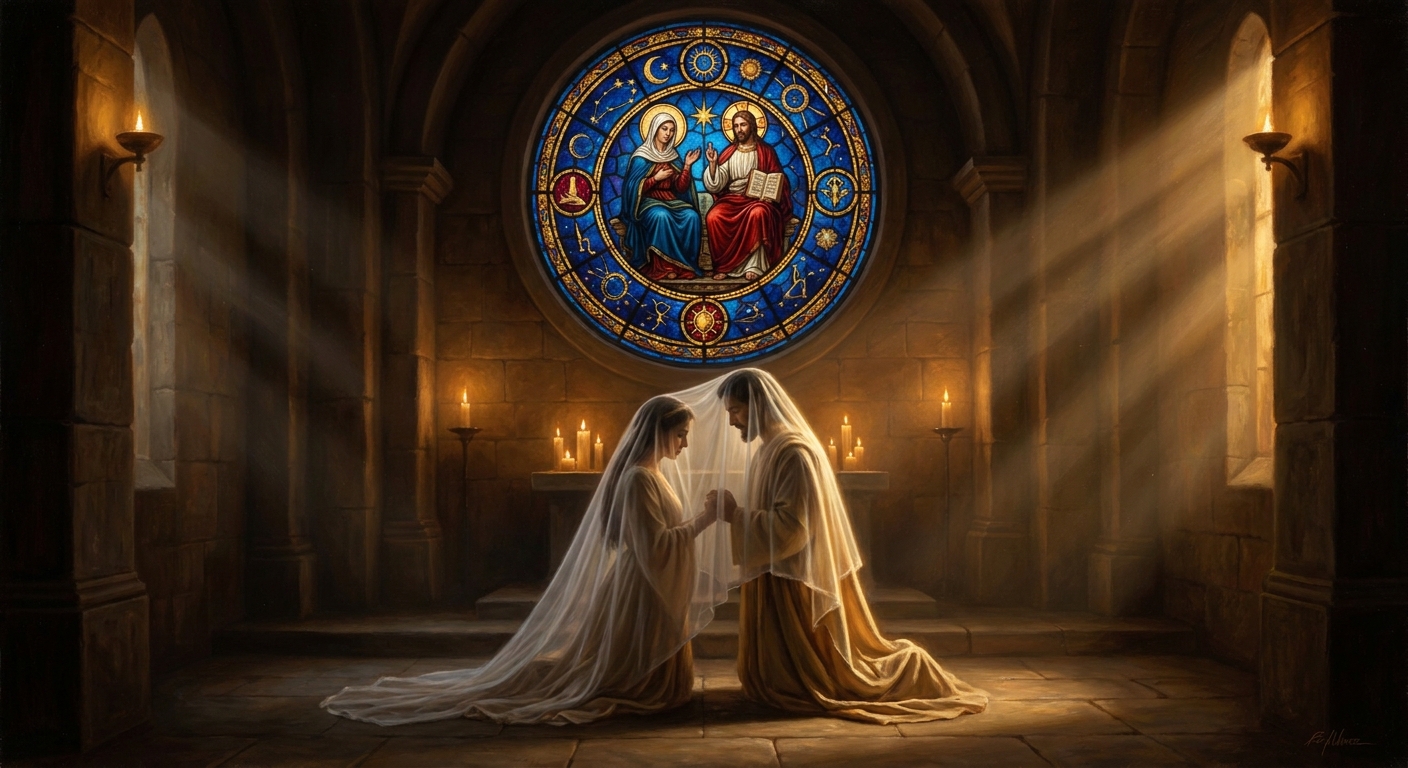
Sacramental theology: Philip describes five sacraments — baptism, chrism (anointing), eucharist, redemption, and the bridal chamber (the most mysterious). The bridal chamber is the highest sacrament, representing the reunion of the soul with its divine counterpart.
Names and truth: “Names given to worldly things are very deceptive, for they divert our thoughts from what is correct to what is incorrect.” Philip argues that words like “God,” “Father,” “Son,” and “Holy Spirit” are worldly labels that obscure divine reality.
The Mary Magdalene passages: Philip identifies Mary Magdalene as a central figure in Jesus’ inner circle, using language that has generated centuries of debate.
Gospel of Philip 63:32-64:10 — The “companion” passage:
“There were three who always walked with the Lord: Mary, his mother, and her sister, and Magdalene, the one who was called his companion. His sister, his mother, and his companion were each a Mary.”
The Coptic word translated “companion” is koinonos (borrowed from Greek), which can mean companion, partner, consort, or spiritual partner. It does NOT necessarily mean “wife,” though it can imply intimacy.
Gospel of Philip 63:10-11 — The kiss passage (partially damaged):
“And the companion of the […] Mary Magdalene. […loved] her more than [all] the disciples, [and used to] kiss her [often] on her […].”
The manuscript is damaged at the critical point. The word after “kiss her on her” is missing. Scholars have proposed “mouth,” “forehead,” or “cheek.” In Gnostic contexts, a kiss on the mouth symbolized the transmission of spiritual knowledge, not necessarily romantic love.
Gospel of Philip 67:9-18 — The bridal chamber:
“The mysteries of truth are revealed, though in type and image… But the bridal chamber remains hidden. It is the Holy in the Holy… The veil at first concealed how God controlled creation. But when the veil is torn and the things inside are revealed, this house will be left desolate.”
- Valentinian Gnosticism — The theological framework is unmistakably Gnostic: the material world as deficient, salvation through secret knowledge, a complex system of aeons
- Sacramental unorthodoxy — The “bridal chamber” sacrament has no basis in apostolic tradition
- Ambiguity about Jesus and Mary — The text’s suggestive language about their relationship contradicted developing orthodox teaching about Jesus’ celibacy
- Late date and pseudepigraphy — Written at least a century after Philip the Apostle
| Tradition | Significance |
|---|---|
| Christian (Protestant) | Rejected as Gnostic heresy. The “companion” passage is dismissed as irrelevant to orthodox faith |
| Catholic | Rejected. The Catholic Church has consistently maintained that the text is Gnostic and that the “companion” language does not imply marriage. However, the elevation of Mary Magdalene as “Apostle to the Apostles” (2016) shows the Church engaging with Mary’s significance on its own terms |
| Jewish | Not relevant (a Christian/Gnostic text) |
| Masonic | The “bridal chamber” as the highest mystery — hidden within the Holy of Holies, accessible only to initiates — parallels the Masonic concept of progressive revelation through degrees |
| Esoteric | Central to the “sacred marriage” (hieros gamos) tradition in Western esotericism. The union of masculine and feminine as the path to wholeness is a foundational esoteric principle. Dan Brown’s Da Vinci Code popularized a simplified version of Philip’s theology to a global audience |
| Ethiopian Orthodox | Not canonical. Not part of the Ethiopian tradition |
flowchart TB
    NAG["<b>NAG HAMMADI LIBRARY</b><br/>Discovered 1945, Egypt<br/>13 codices, 52 texts"] --> MARY["<b>Gospel of Mary</b><br/>Mary as teacher<br/>Peter vs. Mary conflict<br/>Soul ascent past archons"]
    NAG --> JUDAS["<b>Gospel of Judas</b><br/>Judas as hero<br/>Betrayal as liberation<br/>'Sacrifice the man<br/>that clothes me'"]
    NAG --> PHILIP["<b>Gospel of Philip</b><br/>'Companion' passage<br/>Bridal chamber sacrament<br/>Names deceive"]

    MARY --> FEMININE["Sacred Feminine<br/>tradition in Western<br/>esotericism"]
    JUDAS --> DUALISM["Radical Gnostic<br/>dualism: matter<br/>as prison"]
    PHILIP --> DAVINCI["Dan Brown's<br/><i>Da Vinci Code</i><br/>(2003) popularizes<br/>the 'companion' debate"]

    style NAG fill:#c9a227,color:#000,stroke-width:3px
    style MARY fill:#6b3fa0,color:#fff
    style JUDAS fill:#8b0000,color:#fff
    style PHILIP fill:#4a6fa5,color:#fff