Lost Books
Gospel of Thomas
Gnostic Gospels
Excluded from Canon
About this text
Excluded from the biblical canon — preserved in fragments, oral tradition,
and the margins of history.
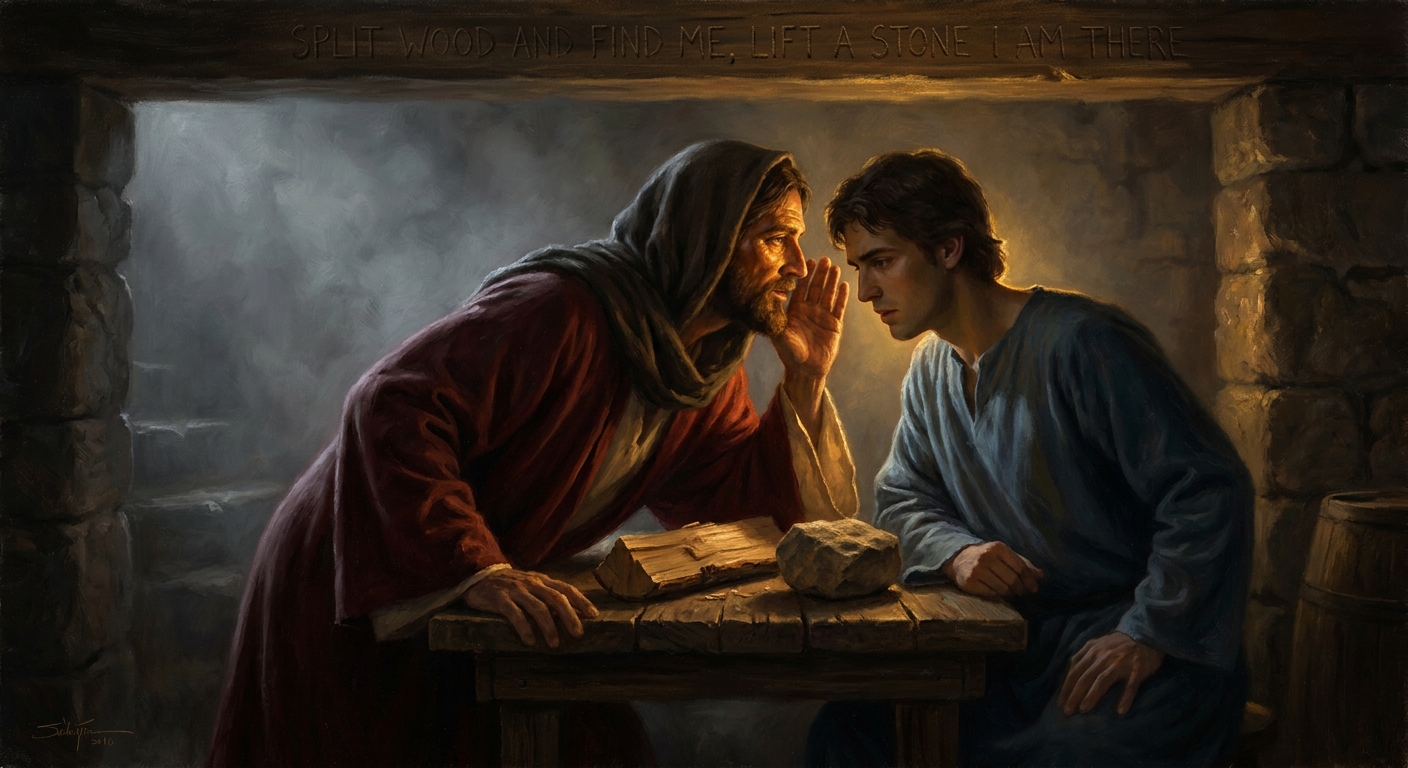
114 sayings of Jesus with no narrative, no miracles, no crucifixion, no resurrection. A “sayings gospel” that may contain some of Jesus’ earliest recorded words — or Gnostic inventions. The debate is fierce.
| Aspect | Detail |
|---|---|
| Written | Debated: Early camp says ~50-100 AD (contemporary with or earlier than canonical Gospels). Late camp says ~140-180 AD (Gnostic composition) |
| Language | Coptic (Nag Hammadi copy, ~340 AD). Possibly originally Greek. Fragments found at Oxyrhynchus, Egypt |
| Discovered | 1945 at Nag Hammadi, Egypt — a sealed jar containing 13 leather-bound codices of Gnostic texts. One of the most important archaeological finds of the 20th century |
| Attributed to | ”Didymos Judas Thomas” — Thomas the twin, one of the twelve apostles |
| Canon status | NEVER canonical in any major tradition. Rejected by the early church. Listed as heretical by multiple church fathers |
- 114 logia (sayings) of Jesus, introduced by “Jesus said…”
- ~50% overlap with the canonical Gospels (especially Luke and Matthew)
- ~50% unique material found nowhere else
- No birth narrative, no miracles, no death, no resurrection
- Opens with: “These are the hidden words that the living Jesus spoke, and Didymos Judas Thomas wrote them down. And he said, ‘Whoever discovers the meaning of these sayings will not taste death.’”
| Saying | Text | Significance |
|---|---|---|
| 3 | ”The kingdom is inside of you, and it is outside of you. When you come to know yourselves, then you will be known” | Self-knowledge = God-knowledge. Core Gnostic theme. But also echoes Luke 17:21 (“the kingdom of God is within you”) |
| 22 | ”When you make the two one, and when you make the inside like the outside… and the male and the female one and the same… then you will enter the kingdom” | Union of opposites. Closely parallels Galatians 3:28 (“neither male nor female”) but pushes further |
| 77 | ”I am the light that is over all things. I am all: from me all came forth, and to me all reached. Split a piece of wood; I am there. Lift up a stone, and you will find me there” | Christ as immanent in all matter. Pantheistic undertones. Beautiful — and theologically explosive |
| 113 | ”The kingdom of the Father is spread out upon the earth, and people do not see it” | The kingdom as present reality, not future event |
| 114 | ”Simon Peter said: Let Mary leave us, for women are not worthy of life. Jesus said: I myself shall lead her in order to make her male…” | Controversial final saying. Gender transformation language. Some read it as misogynistic; others as transcendence of duality |
- Gnostic framework — Knowledge (gnosis) saves, not faith or grace. Jesus is a teacher of secrets, not a sacrificial redeemer
- No death and resurrection — The core of Christian faith (1 Cor 15:14) is absent. A “Jesus” without the cross is a different Jesus
- Late attribution — No evidence Thomas the Apostle wrote it. The framing device (“hidden words”) signals esoteric knowledge, not public proclamation
- Irenaeus, Hippolytus, Origen all rejected it or warned against it
- Self-salvation — “Whoever discovers the meaning of these sayings will not taste death” puts salvation in human understanding, not divine action
| Tradition | Significance |
|---|---|
| Christian | Rejected. But some sayings may preserve authentic Jesus traditions independent of the Synoptics. Scholarly tool for reconstructing the “historical Jesus” |
| Catholic | Rejected as Gnostic heresy since the 2nd century. However, some of its sayings parallel canonical material |
| Gnostic/Esoteric | Central text. The “living Jesus” who speaks hidden wisdom is the esoteric Christ — not the institutional Church’s Christ. Major influence on modern “spiritual but not religious” movements |
| Masonic | Not directly referenced, but the theme of “hidden knowledge” entrusted to initiates parallels Masonic concepts of the “lost Word” |
| Academic | One of the most studied non-canonical texts. The “Q Source” hypothesis (a lost sayings source behind Matthew and Luke) is partly supported by Thomas’s existence as a sayings collection |