Shepherd of Hermas
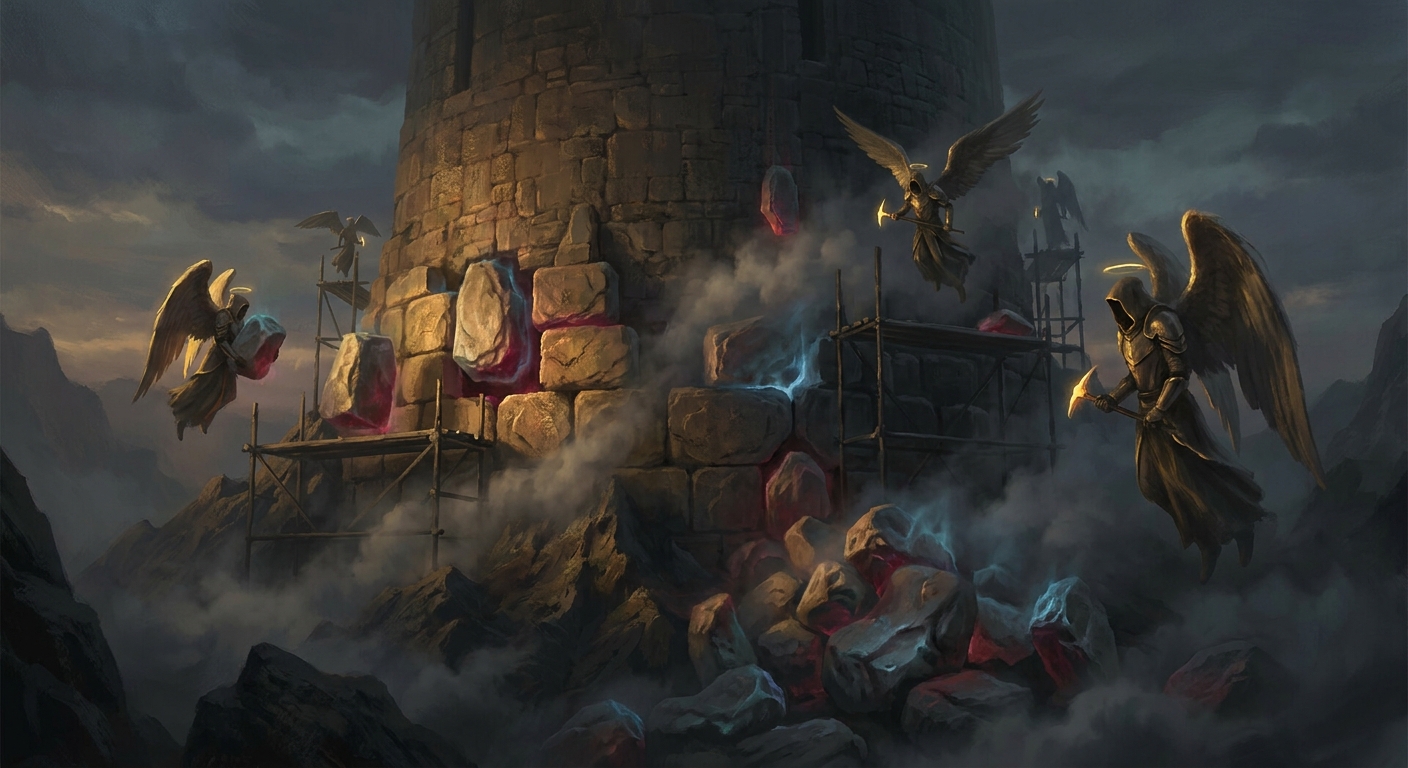
A book so respected in the early church that it was bound into the Codex Sinaiticus — the oldest complete Bible — right after the Book of Revelation. It was read as scripture for centuries. Then it was forgotten.
| Aspect | Detail |
|---|---|
| Written | ~100-160 AD (possibly composed in stages) |
| Language | Greek |
| Attributed to | Hermas, a freed slave and Christian in Rome |
| Genre | Apocalyptic / paraenetic (moral instruction) — structured as Visions, Mandates (Commandments), and Similitudes (Parables) |
| Canon status | Included in the Codex Sinaiticus (4th century, the oldest complete NT manuscript). Cited as scripture by Irenaeus, Clement of Alexandria, and Origen. The Muratorian Fragment says it may be read but not publicly in church. Ultimately excluded from all canons |
| Nearly canonical | Athanasius (367 AD) excluded it from his canonical list but recommended it for instruction. It was the last major text to be “cut” from the NT |
Hermas, a Christian in Rome, receives a series of revelations organized into three sections:
The Visions (1-5): Hermas sees an elderly woman (representing the Church) who grows progressively younger as the Church repents. She shows him a great tower being built from stones — the Church under construction. Some stones fit perfectly (faithful Christians); others are rough and need shaping (sinners who can repent); others are thrown away (apostates).
The Mandates (6-17): Twelve commandments delivered by an angel called “the Shepherd” (hence the title). They cover faith, simplicity, truthfulness, chastity, patience, and the discernment of spirits. The key theological issue: is there a second repentance after baptism? Hermas says yes — one more chance, but only one.
The Similitudes (18-30): Ten parables about the Christian life. The most famous is the parable of the willow tree — branches are given to Christians and returned. The living branches represent the faithful; the dead ones, the fallen.
Vision 3.3 — The tower (the Church):
“The tower which you see being built is I, the Church, who have appeared to you now and before. Ask whatever you wish about the tower, and I will reveal it to you.”
Mandate 4.3 — The second repentance:
“I have heard, sir, from some teachers that there is no other repentance beyond the one given when we went down into the water and received remission of our former sins. He said to me: ‘You have heard correctly… But for those who were called before these days, the Lord has appointed repentance. The Lord knows the heart and foreknows all things; he knew the weakness of humanity and the cunning of the devil… so he had compassion and gave one more repentance.’”
This passage was explosively controversial. Rigorists (like the Novatians) said there was NO forgiveness for post-baptismal sin. Hermas offered a middle way — one more chance — which the mainstream church eventually adopted in its penitential system.
- Not apostolic — Hermas was not an apostle or apostolic companion. The Muratorian Fragment says it was written “very recently, in our times”
- Angelology concerns — The role of the angel “Shepherd” as mediator of revelation troubled later theologians who wanted to restrict revelation to apostolic sources
- One-more-repentance theology — The strict limit of one post-baptismal repentance was awkward for a church developing a more flexible penitential system
- Length and style — It is long (about the length of the entire Gospel of Mark) and repetitive, which made it impractical for liturgical use
| Tradition | Significance |
|---|---|
| Christian (Protestant) | Not canonical, but the penitential theology of the Shepherd directly influenced the development of the Christian doctrine of repentance. The “tower being built” image of the Church became standard ecclesiology |
| Catholic | Not canonical, but the concept of post-baptismal repentance — and the idea that it is limited and precious — contributed to the development of the Sacrament of Penance (Confession). The vision of the Church as a building under construction is echoed in Catholic ecclesiology to this day |
| Jewish | Not relevant (it is a Christian text), but the apocalyptic structure reflects Jewish vision-literature conventions |
| Masonic | The “tower being built from living stones” resonates with the Masonic metaphor of building a spiritual temple from the “rough ashlar” (unfinished stone) to the “perfect ashlar” (finished stone). The idea that individual moral development contributes to a collective structure is deeply Masonic |
| Esoteric | The discernment of spirits (Mandate 6) — how to tell a true spirit from a false one — is an early manual of spiritual discernment that influenced later mystical and esoteric traditions |
| Ethiopian Orthodox | Not canonical, but known and respected within the broader Orthodox tradition |