The Didache (Teaching of the Twelve Apostles)
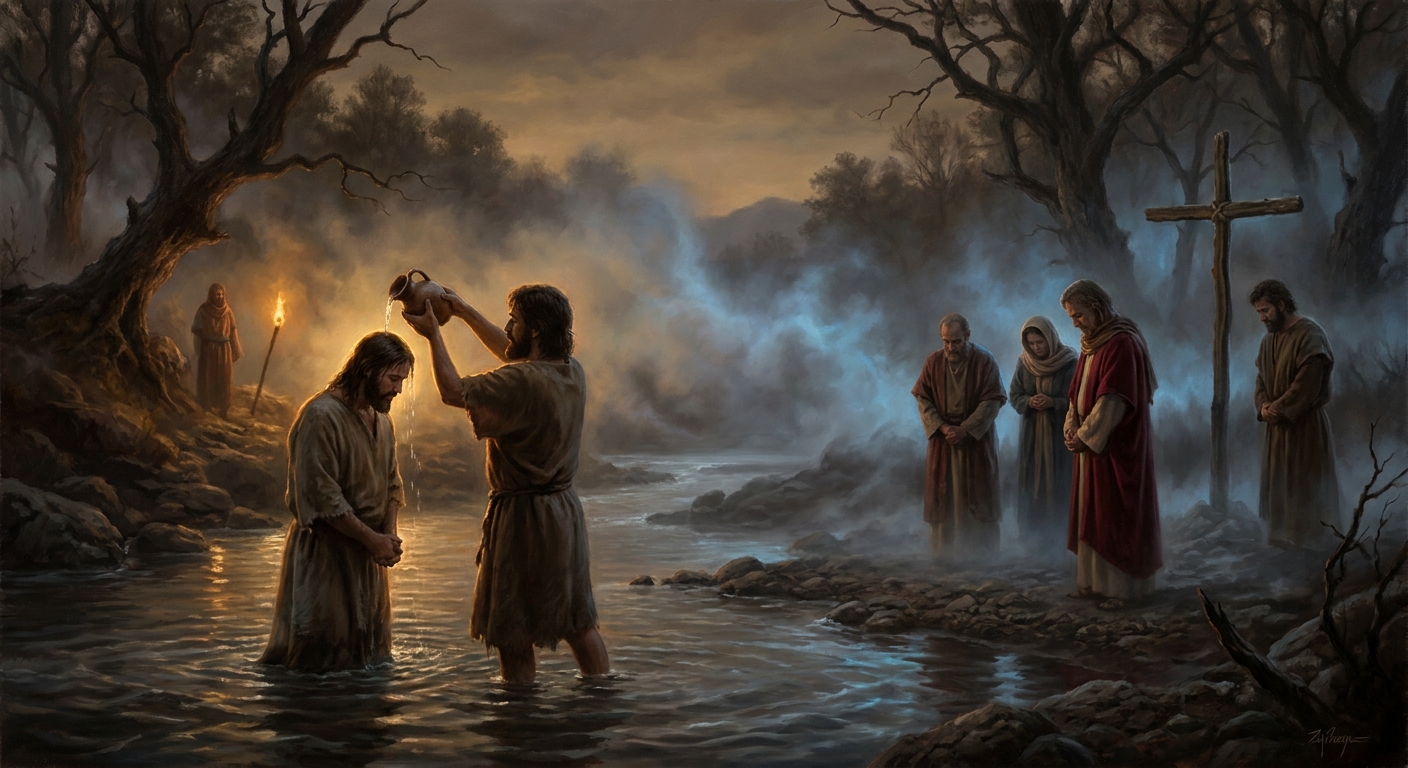
The oldest surviving church manual. It tells you how the very first Christians baptized, fasted, prayed, celebrated the Eucharist, and organized their communities. It may be as old as some New Testament books.
| Aspect | Detail |
|---|---|
| Written | ~50-120 AD (debated; many scholars place it at 70-90 AD, making it contemporary with the Gospels of Matthew and Luke) |
| Language | Greek |
| Discovered | Rediscovered in 1873 by Philotheos Bryennios in a monastery library in Constantinople. A single 11th-century manuscript (Codex Hierosolymitanus) |
| Genre | Church order / catechetical manual |
| Canon status | Listed by Athanasius (367 AD) among books that are “not in the canon but appointed to be read” for instruction. Eusebius classified it as “disputed” (not rejected, not accepted). Never made any canon |
| Length | Very short — 16 chapters, roughly 2,000 words. Could be read in 15 minutes |
The Didache is organized into four sections:
The Two Ways (Chapters 1-6): A moral catechism: the Way of Life vs. the Way of Death. The Way of Life begins with the double love command (“First, love the God who made you; second, love your neighbor as yourself”) and continues with specific ethical instruction. The Way of Death catalogs sins.
Liturgical Instructions (Chapters 7-10): How to baptize (running water preferred; if not, pour water three times over the head “in the name of the Father and of the Son and of the Holy Spirit”). How to fast (Wednesdays and Fridays, NOT Mondays and Thursdays like “the hypocrites” — meaning Jews who follow that schedule). How to pray (the Lord’s Prayer, three times daily). How to celebrate the Eucharist.
Church Order (Chapters 11-15): How to receive traveling prophets and apostles (test them — if they stay more than two days or ask for money, they are false). How to appoint bishops and deacons. How to practice church discipline.
Eschatological Warning (Chapter 16): Watch for the end times. A “world-deceiver” will appear. The dead in Christ will rise first.
Didache 7:1-3 — On baptism:
“Concerning baptism, baptize in this way: Having first said all these things, baptize into the name of the Father and of the Son and of the Holy Spirit, in running water. But if you do not have running water, baptize in other water; and if you cannot do so in cold water, do so in warm. But if you have neither, pour out water three times upon the head.”
This is the earliest evidence outside the New Testament for the Trinitarian baptismal formula and for baptism by pouring (affusion) as an acceptable alternative to immersion.
Didache 9:1-4 — The Eucharist prayer:
“Concerning the Eucharist, give thanks in this way. First, concerning the cup: ‘We give thanks to you, our Father, for the holy vine of David your servant, which you have made known to us through Jesus your servant. To you be the glory forever.’ And concerning the broken bread: ‘We give thanks to you, our Father, for the life and knowledge which you have made known to us through Jesus your servant.’”
Note: the cup comes BEFORE the bread — the opposite of later practice. And there is no mention of the body and blood of Christ. This may represent the earliest, simplest form of the Eucharist before the “words of institution” became standard.
Didache 11:5-6 — Testing prophets:
“Every apostle who comes to you, let him be received as the Lord. But he shall not remain more than one day; if there is need, also a second. But if he remains three days, he is a false prophet. And when the apostle goes forth, let him take nothing but bread until he reaches his lodging. But if he asks for money, he is a false prophet.”
- Not apostolic authorship — Despite the title, the twelve apostles did not write it
- Superseded — As the church developed more complex liturgical and organizational structures, the Didache’s simple rules became obsolete
- Too Jewish — The “Two Ways” section closely parallels Jewish moral catechesis, and the text lacks developed Christology
- Lost for centuries — It disappeared from circulation and was unknown in the West until 1873
| Tradition | Significance |
|---|---|
| Christian (Protestant) | Invaluable historical evidence for how the earliest Christians actually worshipped. Challenges later Protestant claims about “original” Christian practice by showing how quickly formal liturgy, fasting rules, and church hierarchy developed |
| Catholic | Confirms the antiquity of Catholic practices: Trinitarian baptism, the Eucharist as a formal liturgical act, fasting on specific days, hierarchical church structure with bishops and deacons. Catholics point to the Didache as evidence that “high church” practices are not medieval inventions |
| Jewish | The “Two Ways” section closely parallels the Jewish Derech Eretz tradition and the Dead Sea Scrolls’ “Community Rule.” Shows how Jewish Christianity maintained Jewish ethical frameworks |
| Masonic | The theme of testing visitors (proving they are genuine before admitting them) parallels Masonic tiling — the practice of verifying that someone is truly an initiated Mason before allowing them into lodge |
| Esoteric | The Didache’s simplicity — direct spiritual practice without elaborate theology — appeals to those who seek “original Christianity” stripped of later institutional development |
| Ethiopian Orthodox | Not canonical, but known within the broader Orthodox tradition. The Ethiopian church’s own church order (the Didascalia) draws on similar early traditions |

| Book | Content | Why It Was Rejected |
|---|---|---|
| Gospel of Thomas | 114 sayings of Jesus (see above) | Gnostic framework; no death/resurrection |
| Gospel of Philip | Sacramental theology; “companion” of Jesus (Mary Magdalene) | Gnostic cosmology; Jesus and Mary Magdalene relationship; bridal chamber mysticism |
| Gospel of Truth | Valentinian meditation on salvation through knowledge | Pure Gnosticism; salvation by gnosis not faith |
| Gospel of Mary (Magdalene) | Mary Magdalene receives private teaching from Jesus; Peter objects | Female authority over Peter; vision-based theology |
| Apocryphon of John | Secret teaching by Jesus about the true God vs. the demiurge | The demiurge (creator god) is evil; material world is a prison. Direct contradiction of Genesis |
| Gospel of Judas | Judas as the hero; Jesus asks him to betray so the spirit can be freed from flesh | Inverts the entire gospel narrative; the body is a prison |