Contents
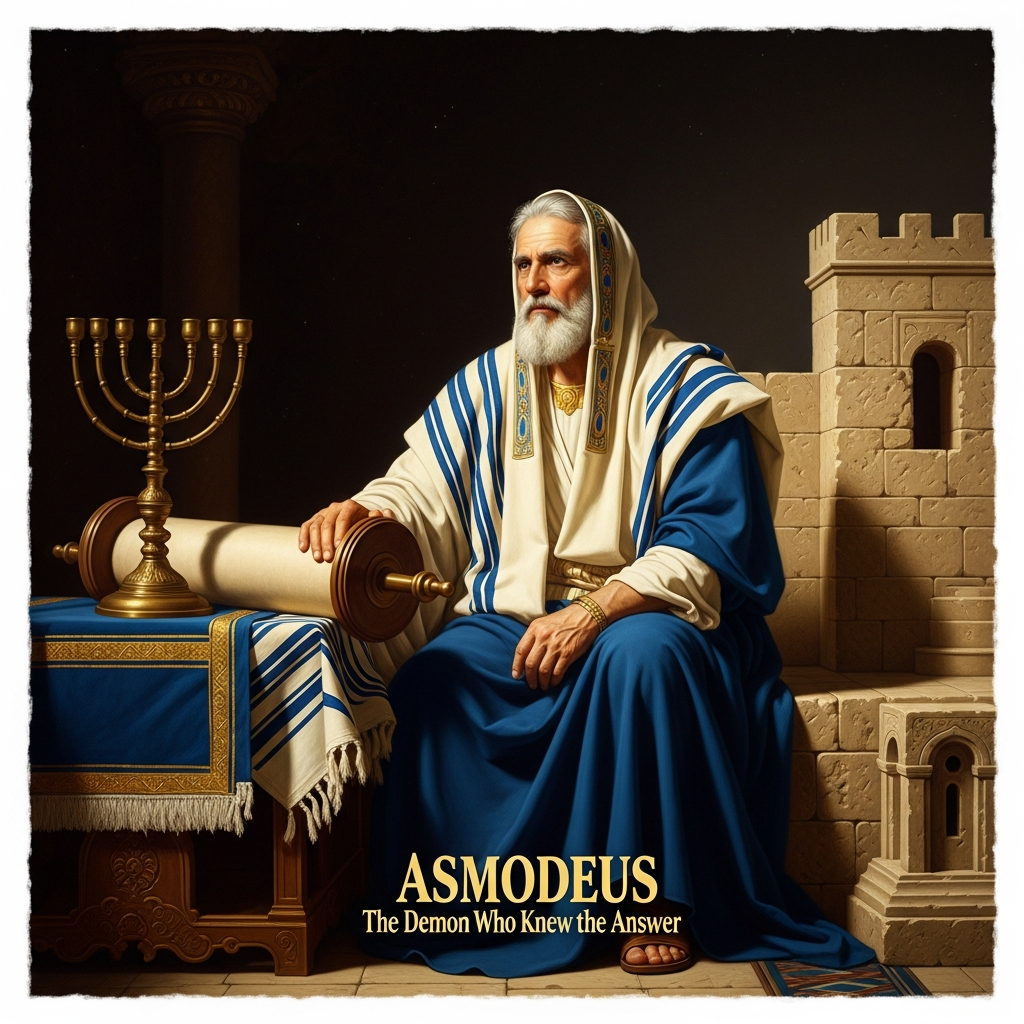
King Solomon needed the shamir — the worm that could cut stone without metal, the only thing that could build the Temple without the sound of iron. To find it, he needed Asmodeus, king of demons. Solomon's servant got the demon drunk and brought him in chains. What followed was a negotiation between the wisest king and the smartest demon — and the demon had his own questions.
- When
- Talmudic period · Gittin composed c. 200-500 CE · Tobit c. 3rd-2nd century BCE
- Where
- Jerusalem · the throne room of Solomon · the mountains where Asmodeus dwelt
Solomon needed a worm.
The commandment about the Temple was clear: No iron tool was used in the Temple while it was being built (1 Kings 6:7). No hammer, no axe, no chisel of iron might touch the stones. The Temple of God, where God’s presence would dwell, could not be constructed with the weapons of war. But stones do not cut themselves, and the Temple required cut stone.
The tradition solved this problem with the shamir: a small worm, or perhaps a stone, or perhaps a kind of sand — the accounts vary — that could cut through the hardest rock as easily as a knife through bread. It had been made at the end of the sixth day of creation, in the last moments before the first Sabbath, in the category of things that existed in the gap between what the world needed and what the natural order could provide.
Solomon needed it. His wise men didn’t know where it was. His demons didn’t know either. But one demon knew who did know.
Asmodeus.
Getting Asmodeus required a procedure.
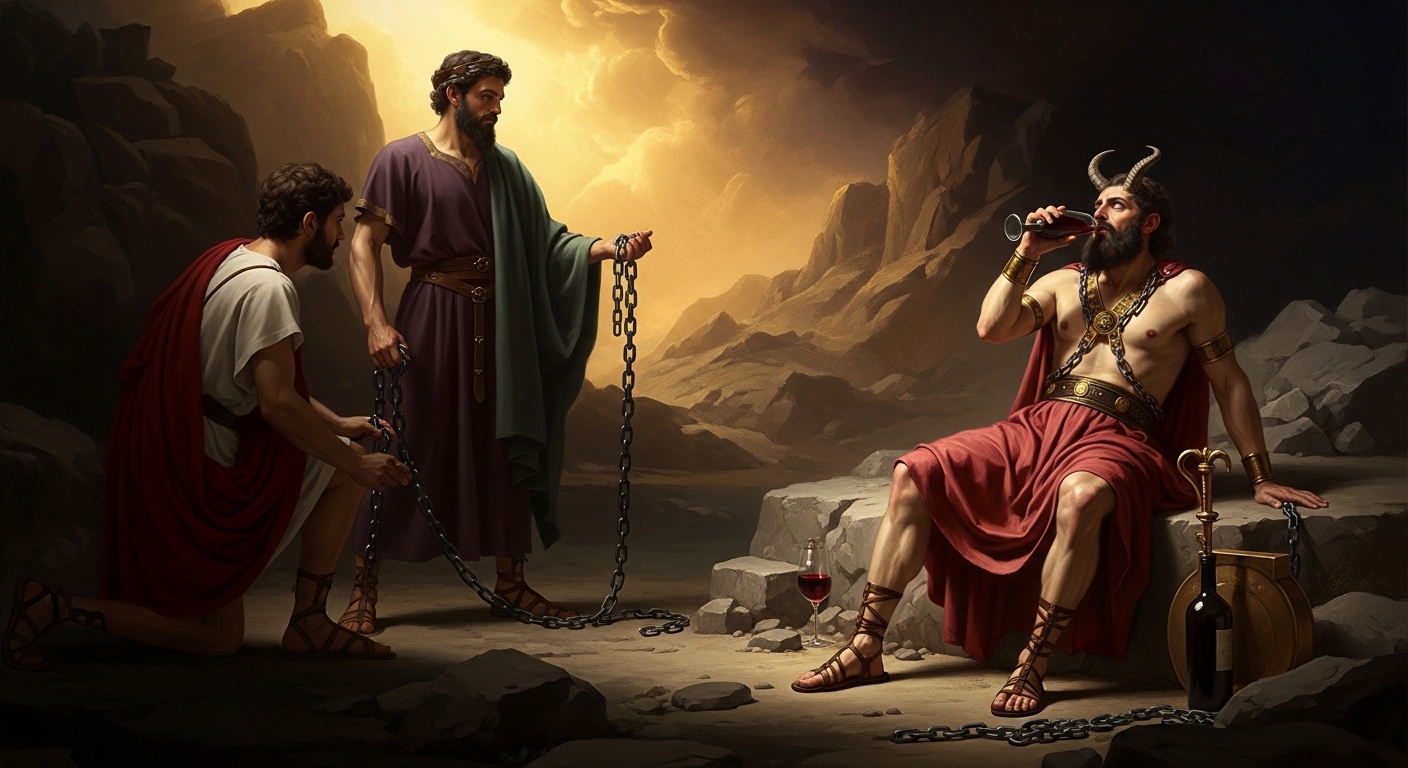
The demon king lived on a mountain. Every morning he ascended to heaven to study Torah — the Talmud is very particular about this; Asmodeus studied Torah — and every evening he descended and bathed in a certain pool on that mountain. Benaiah, Solomon’s general and servant, was sent with a chain engraved with God’s name, which was the only thing that could hold a demon.
He found the pool. He drained it. He filled it with wine.
When Asmodeus descended at evening and found wine where water had been, he refused to drink at first. He was aware of the properties of wine. The Talmud records that he recited Proverbs: Wine is a mocker, strong drink a brawler. Then he drank anyway.
Benaiah waited until Asmodeus was asleep and put the chain on him.
The walk to Jerusalem was instructive.
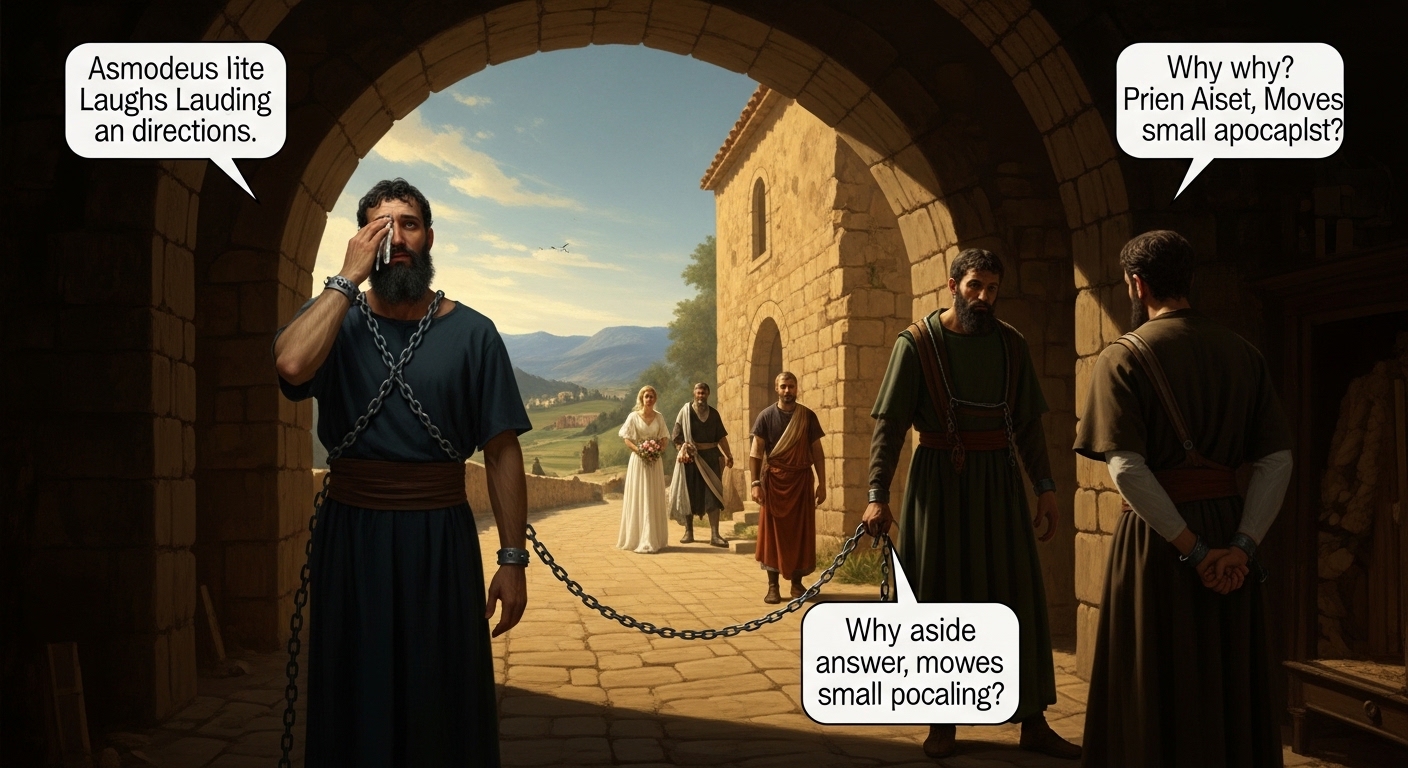
Asmodeus in chains was not quiet. He observed the world as he passed through it and made observations that his escort found alarming. At one point he wept. At another he laughed. He moved aside for a drunk and let a wedding procession pass with such deliberate care that Benaiah finally asked.
He wept at the wedding because he could see that the groom would be dead within thirty days — he could see futures — and the widow who had been preparing her hope would spend the rest of her life waiting. He laughed at the beggar who asked for directions to a certain town, because Asmodeus knew the man would die before he arrived and the question was therefore moot. He moved aside for the drunk because a drunk, says the Talmud, is under special divine protection — God watches over the foolish — and Asmodeus would not interfere with what God was watching.
Each observation is a small catastrophe: the demon in chains, dragged against his will to the king’s throne room, was more perceptive about the shape of the world than his captors.
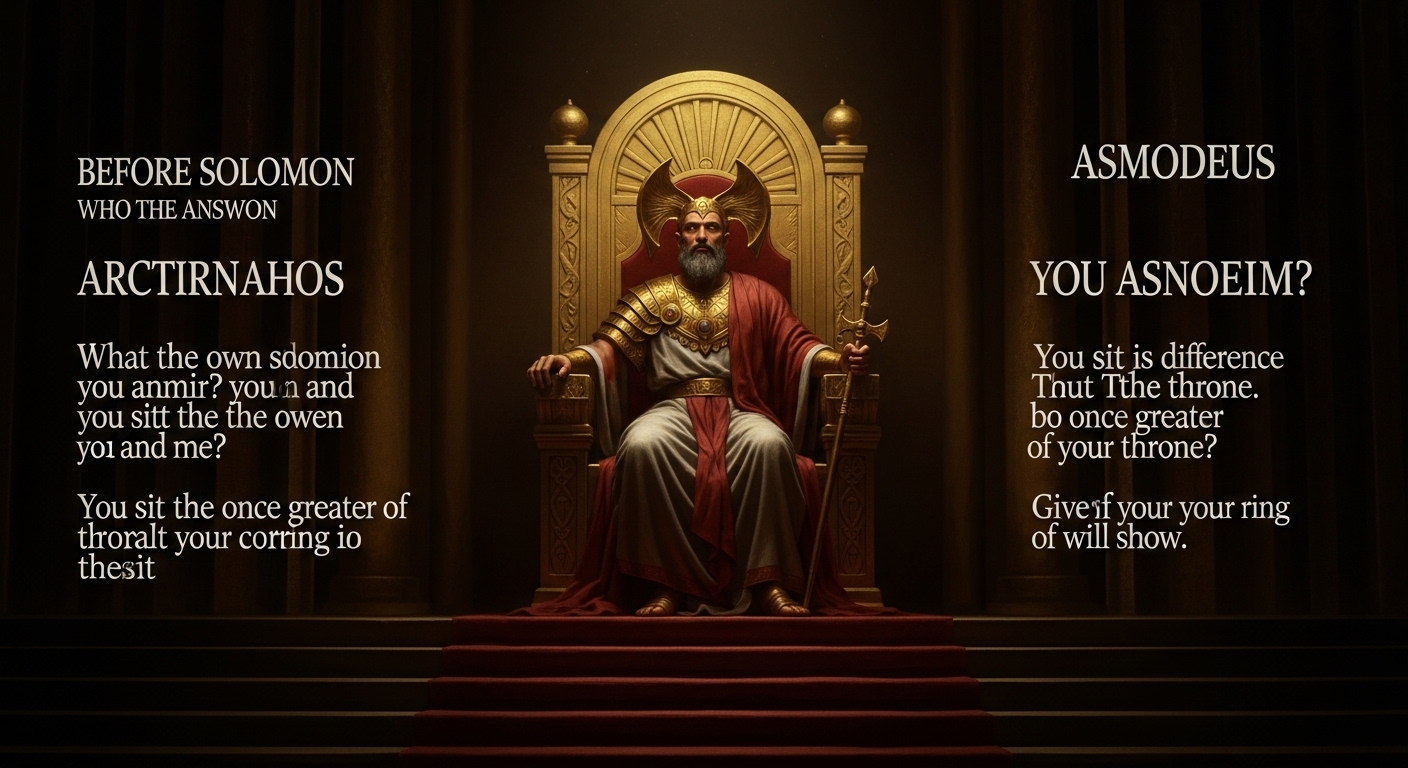
Before Solomon, Asmodeus answered the question.
The shamir was in the care of a bird called the woodpecker — in some versions, the hoopoe — which used it to split open mountain crags and plant grass seeds. The nest of the bird could be located. The shamir could be taken. The Temple could be built.
Then Asmodeus asked his own question.
What makes you greater than me?
Solomon said: the wisdom God gave me.
Give me your ring, said Asmodeus. And I’ll show you what that wisdom is worth.
The accounts vary about what happened next. In the most dramatic version, Solomon gave the ring — or Asmodeus seized it — and threw it across the world into the sea, where a fish swallowed it. Then Asmodeus swallowed Solomon and placed him at the far end of the earth and took his throne, disguised in Solomon’s form, for years.
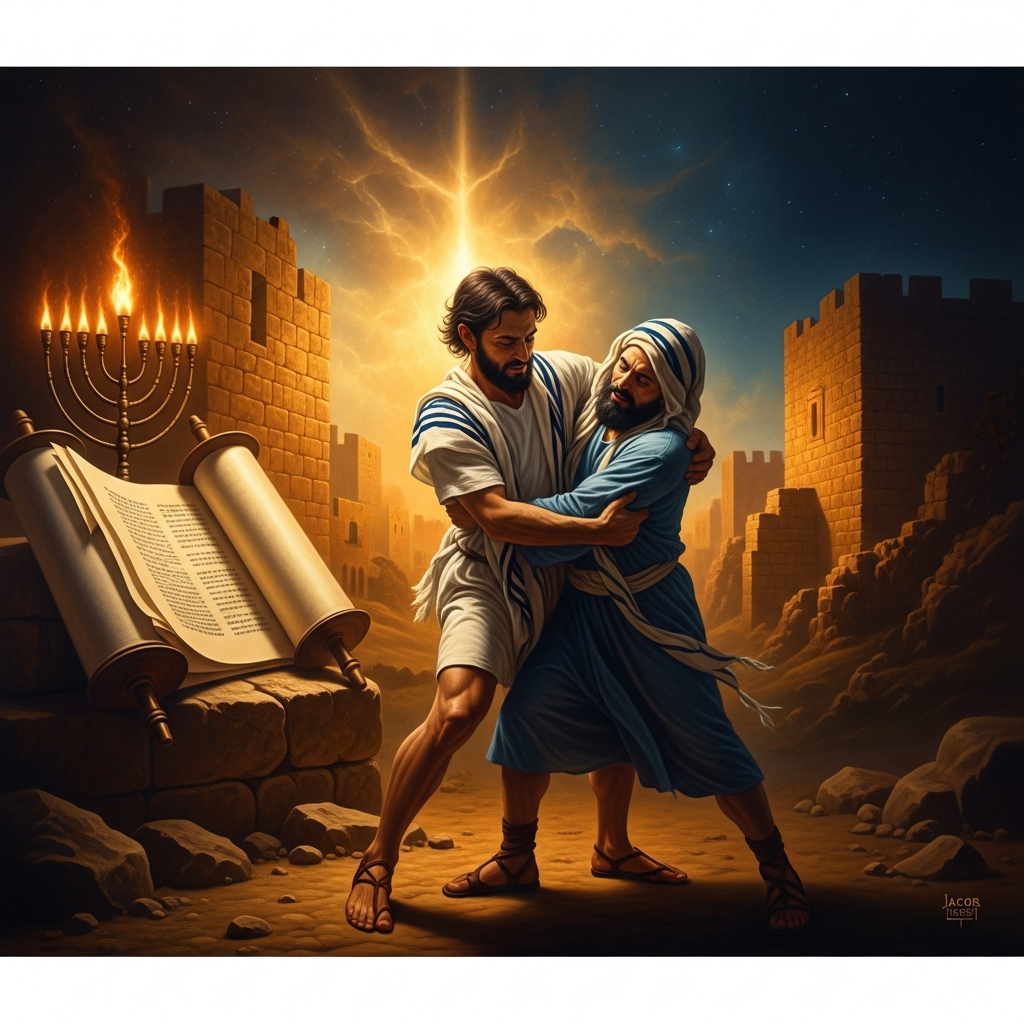
Solomon wandered, begging for food, saying I, Kohelet, have been king over Israel in Jerusalem — the opening of Ecclesiastes — and no one believed him. He was the wisest man in the world, sitting on the side of the road, unable to prove who he was.
He found the fish. The fish contained the ring. He returned to Jerusalem. Asmodeus fled when Solomon revealed the ring.
The Talmud, which tells this story in Tractate Gittin, is not telling a story about evil being defeated by good.
It is telling a story about the relationship between wisdom and power, and what happens when the two come apart. Solomon had wisdom. Solomon also had a ring that was the source of his authority over the demons. For the duration of the story in which Asmodeus throws the ring away, Solomon’s wisdom is present and his power is gone — and no one cares about his wisdom without the proof of his power.
Asmodeus, meanwhile, kept his own relationship with Torah. He was a demon and he studied the Law. He told the truth about the wedding and the beggar. He moved aside for the protected drunk. He gave Solomon a correct answer about the shamir.
The demon is not simply wrong. He is wrong about one thing: he believes that power is the demonstration of wisdom, that the one who has authority is greater than the one who has knowledge. Solomon’s wandering proves him wrong. But proving him wrong requires Solomon to lose everything first.
Ecclesiastes is the book written by a king who lost everything and understood, afterward, what it had been worth.
Vanity of vanities, he writes. All is vanity.
The demon taught him that.
Scenes
Echoes Across Traditions
Entities
- Asmodeus
- Solomon
Sources
- Babylonian Talmud, Gittin 68a-b (the most complete account of Solomon and Asmodeus)
- Book of Tobit (Asmodeus kills Sarah's seven husbands; Raphael binds him)
- Testament of Solomon (Solomon binds demons for the Temple's construction)
- 1 Kings 6:7 (the Temple built without the sound of iron)