The First Keening: Origin of the Banshee
1014 CE — the Battle of Clontarf, and the mythic prehistory of the fairy women · The hillside above Clontarf, County Dublin, and the fairy mounds of County Clare
Contents
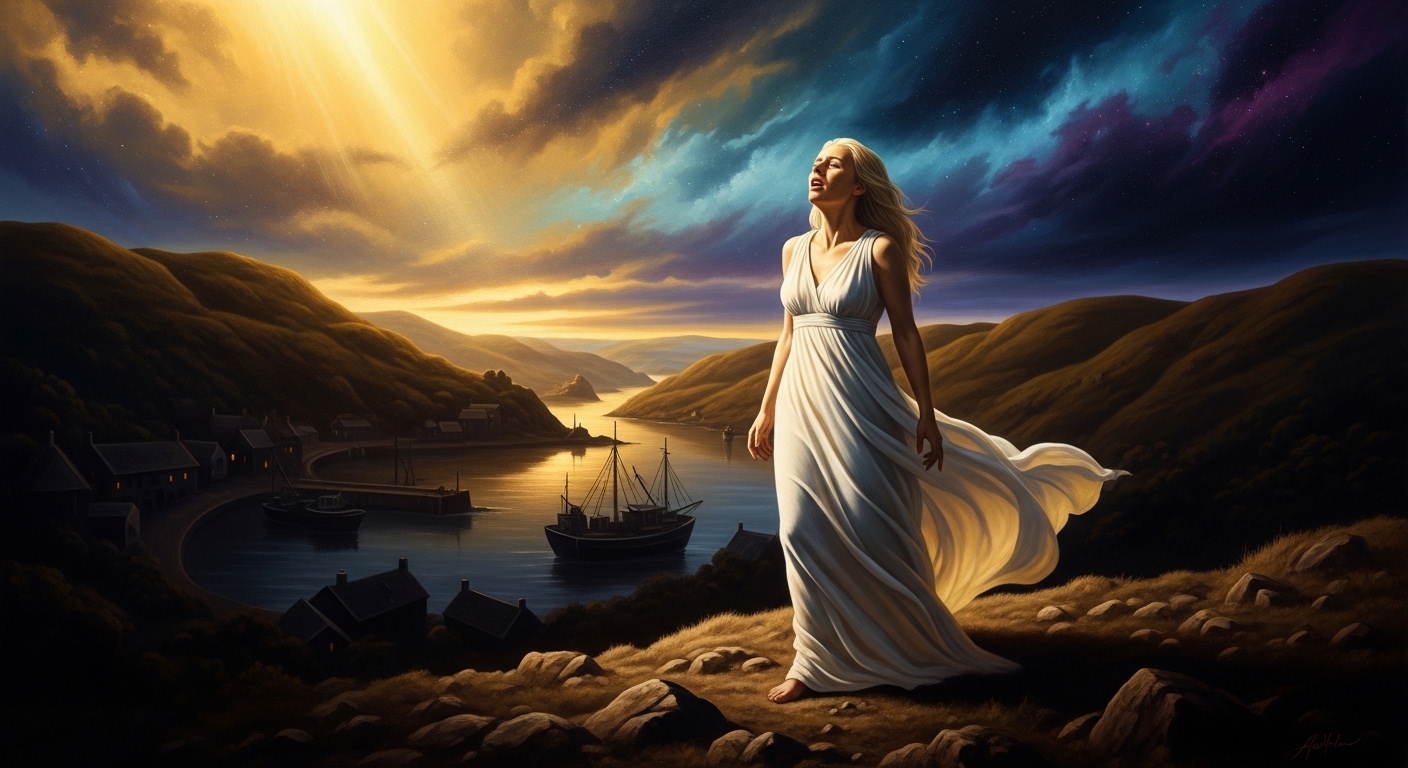
When the great queen Áibhill loses her protégé at the Battle of Clontarf, she stands on the hillside in white and begins the mourning-cry that Irish women have heard on the wind before a death in the family ever since.
- When
- 1014 CE — the Battle of Clontarf, and the mythic prehistory of the fairy women
- Where
- The hillside above Clontarf, County Dublin, and the fairy mounds of County Clare
She is white on the hillside above the harbor.
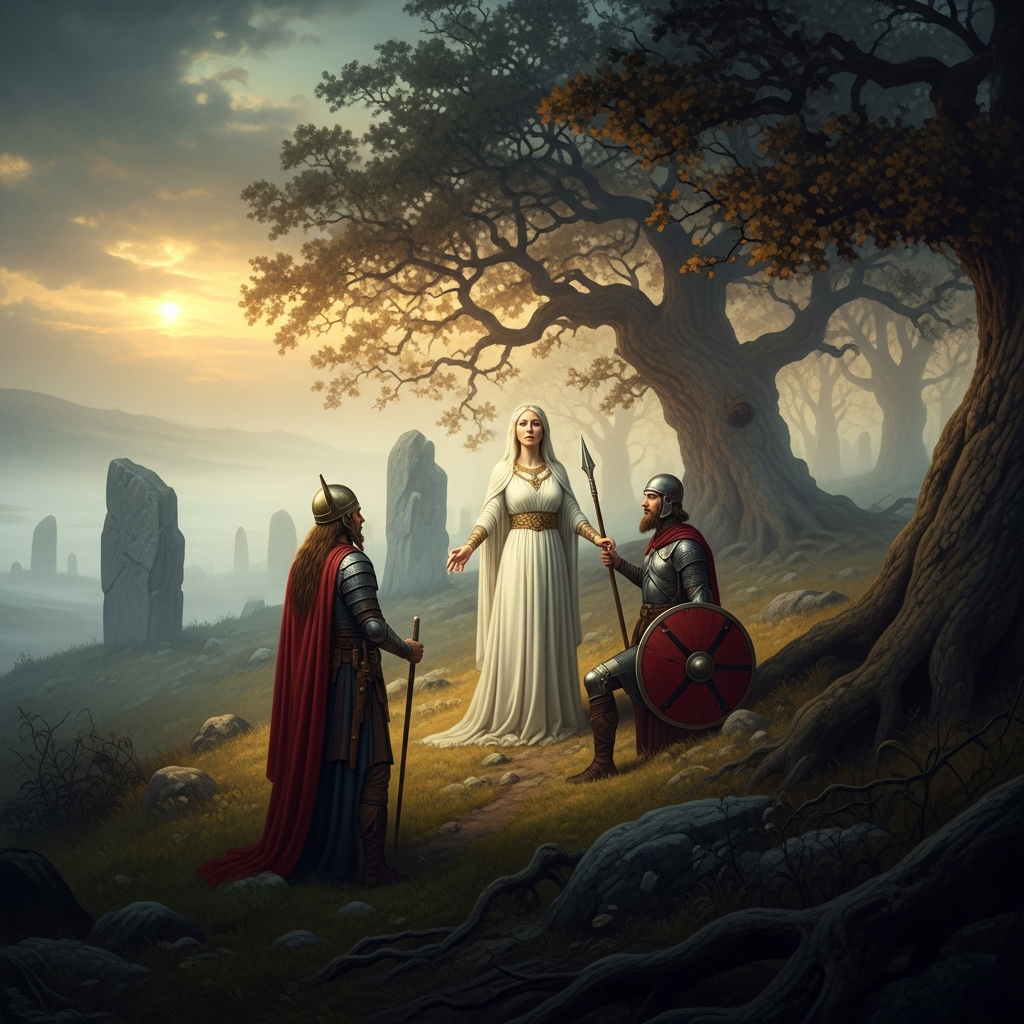
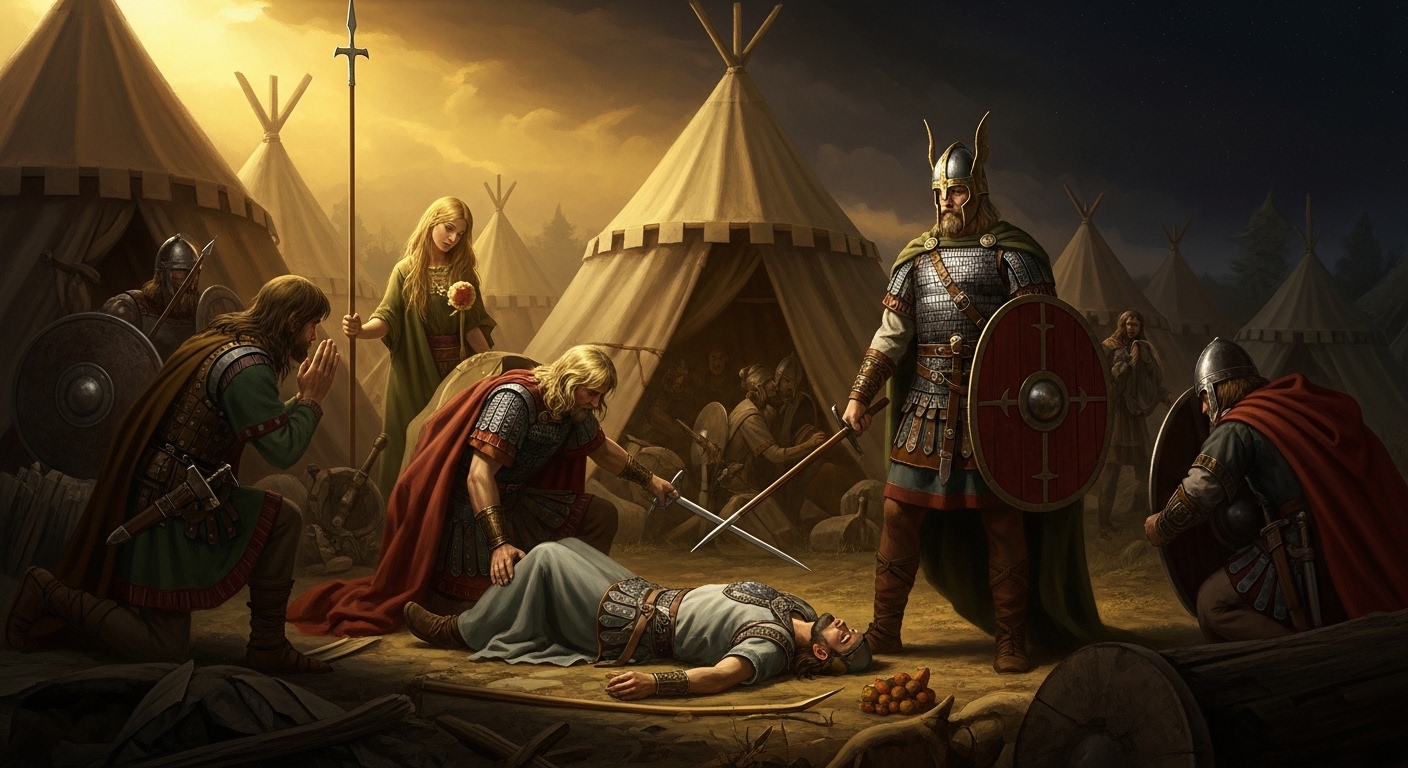
Áibhill of Craigleith is the guardian spirit of the Dál Cais, the sept that produced the O’Briens and the High Kings of Munster, and she has been watching the battle at Clontarf from the high ground since morning. The year is 1014 CE. The opposing forces are enormous — Brian Boru’s Irish alliance against the Norse and Leinster confederation — and the field below her is a catastrophe in progress. She watches with the attention of a being who has attended battles before, who knows the difference between the living movement of armies and the settling stillness that comes after.
She sees, before the day is over, what she knew she would see: the Dál Cais warriors dying. Her warriors. The men her family has guarded for generations.
Brian Boru himself dies before evening — not in the battle but in his tent, cut down by a fleeing Norseman while he prays. The news moves across the field. The Irish win the battle and lose their High King in the same afternoon.
Áibhill begins to cry.
The sound she makes is the caoineadh — the keening — but amplified into something that is not quite a human sound, not quite wind, not quite the cry of any animal, but partakes of all three. It is the sound of grief compressed into a single prolonged note that carries across hills. The women of the farms hear it. They know without being told what it means: a great man of the Dál Cais is dead or dying.
This is what the bean sídhe is. Not a death-agent — she does not kill. Not a demon — she mourns. She is the supernatural preserving a human office: the professional keener, the bean chaointe, who was hired by great families to lead the ritual mourning at funerals, whose voice organized communal grief into a form that could be survived. Every family of note in Ireland had a keener who was sworn to them. The fairy woman attached to great houses is simply the ultimate form of that sworn keeper: undying, uncancellable, present at every death the lineage suffers.
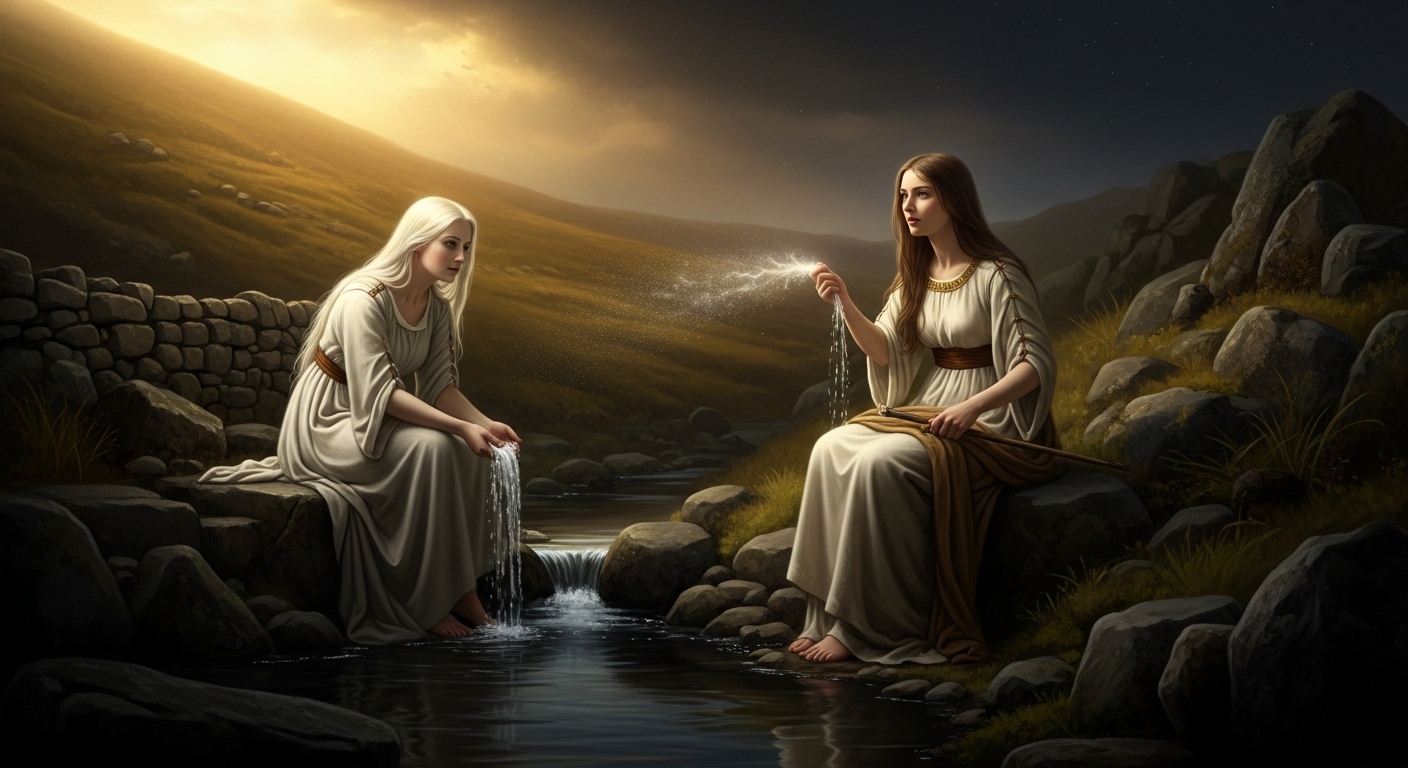
She appears as a white figure — washing at a stream, standing on a hillside, sitting on a stone — and the sound she makes is unmistakable once you have heard it, which most people in Ireland believe they have not. If you hear it outside your window at night, you know what it means and you also know there is nothing to be done about it. The banshee is not a warning that can change the outcome. She is a notification. She cries out of love, which is what makes her simultaneously the most comforting and the most terrible of the Irish supernatural presences.
The O’Briens, the O’Neills, the O’Grady’s, the MacNamaras — the old Gaelic families whose names reach back to the mythic age of Ireland — each have their own bean sídhe. The figure is specific to the bloodline. She is not a generic death-spirit but a family attachment, a supernatural mourner sworn to particular people by whatever covenant holds the supernatural world together.
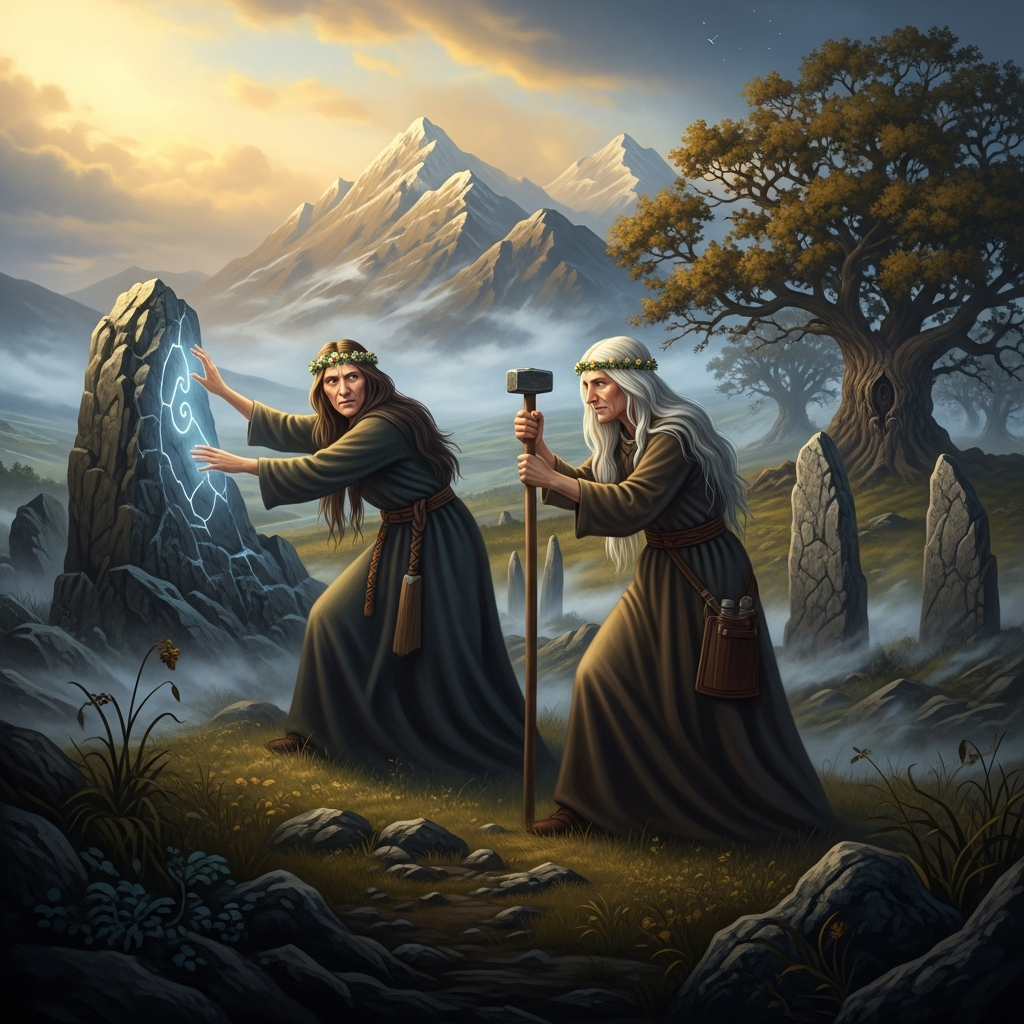
The keening at Clontarf in 1014 begins the tradition as the bardic poetry records it. But the women on the hillsides of County Clare, County Tipperary, County Clare, have been hearing the sound longer than that. They hear it when a great storm is coming and a fisherman is still out. They hear it before the messenger arrives. They hear it the night before a death that no one was expecting.
The white figure on the hill does not cause the death. She mourns it before it happens because she lives outside the sequence that makes before and after meaningful to mortals. She is grief arriving slightly ahead of its occasion, which is the only form of warning available to a figure made entirely of love.
Scenes
Echoes Across Traditions
Entities
- Áibhill
- The Banshee
- Brian Boru
- Donnchadh
- The Bean Sídhe
Sources
- Patricia Lysaght, *The Banshee: The Irish Supernatural Death Messenger* (Glendale Press, 1986)
- Dáithí Ó hÓgáin, *Myth, Legend and Romance: An Encyclopaedia of the Irish Folk Tradition* (Prentice Hall, 1990)
- Bo Almqvist, 'Of Mermaids and Marriages,' *Béaloideas* 58 (1990)