The Nine Gods Who Preside Over the Underworld
Classic Maya period, c. 300-900 CE; the mythology gained particular attention as December 2012 approached · The nine levels of Xibalbá; present in all Maya inscriptions that record the night cycle
Contents
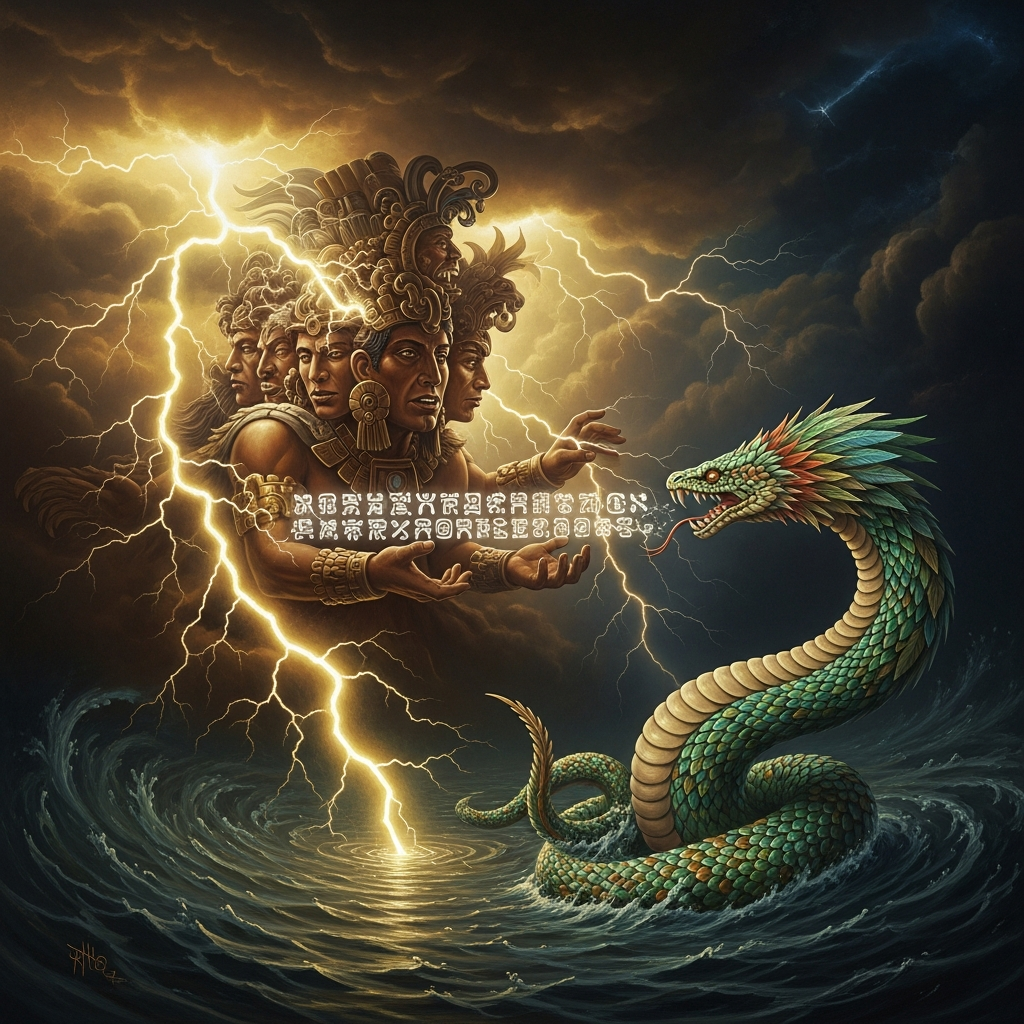
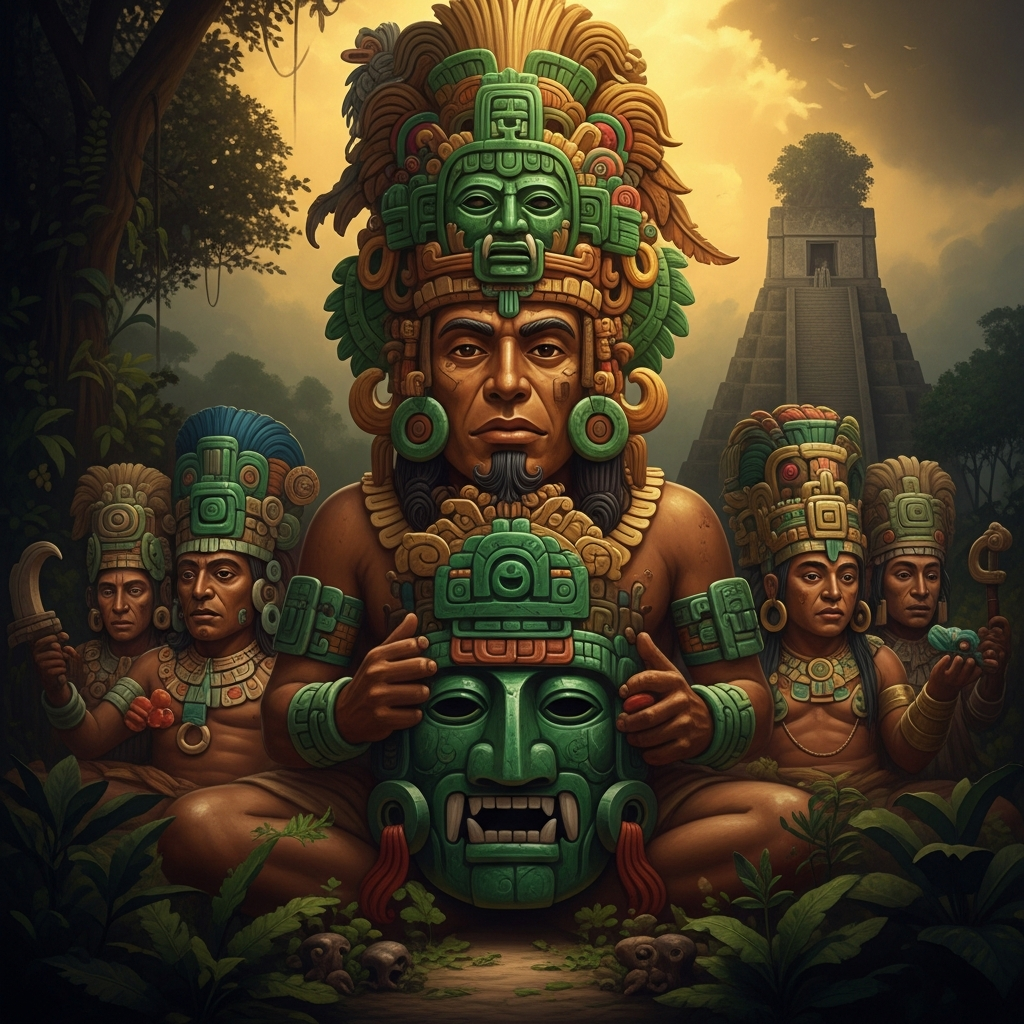
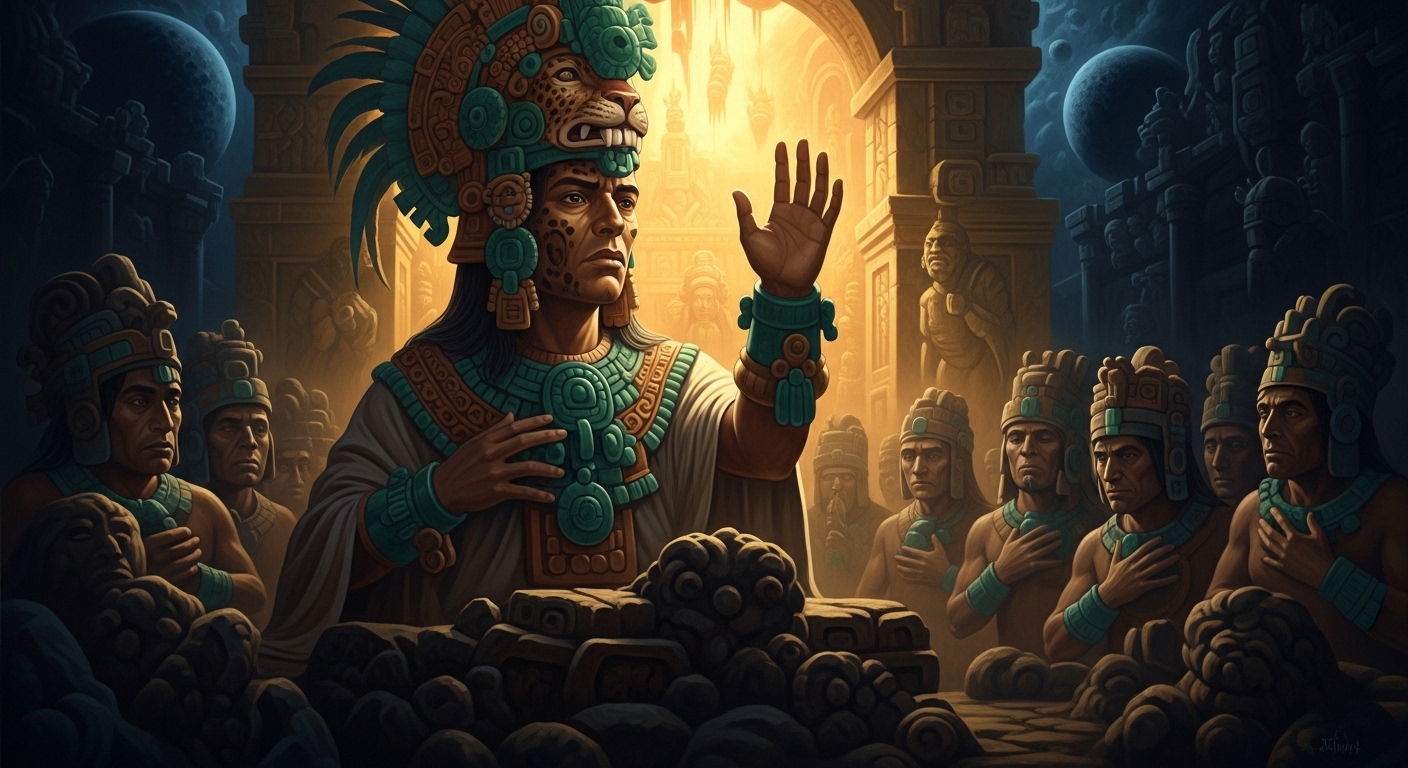
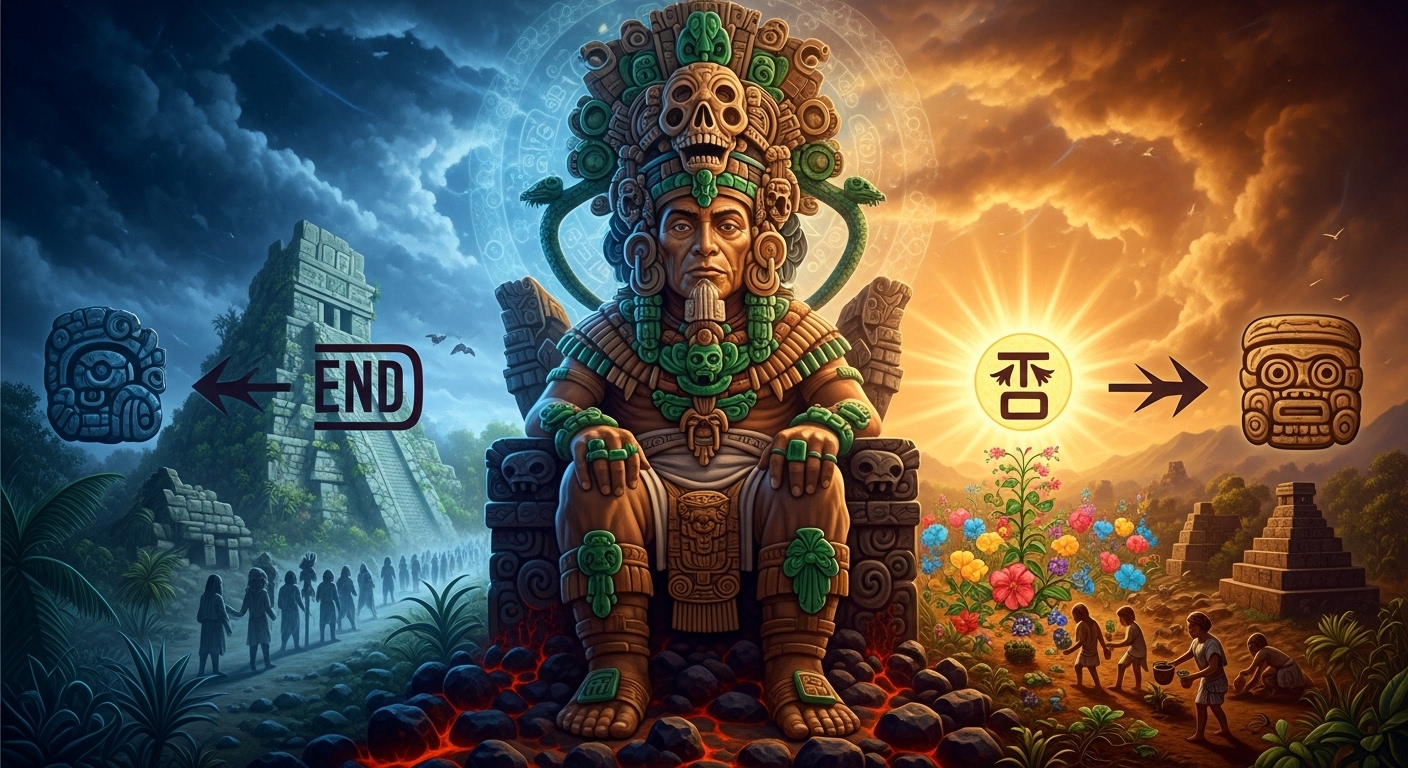
Nine divine lords rule the nine levels of the Maya underworld, cycling through the days and years in a sequence that determines the character of each night — Bolon Yokte K'uh, the god of conflict and transition, presides over world endings.
- When
- Classic Maya period, c. 300-900 CE; the mythology gained particular attention as December 2012 approached
- Where
- The nine levels of Xibalbá; present in all Maya inscriptions that record the night cycle
Nine lords cycle through the night.
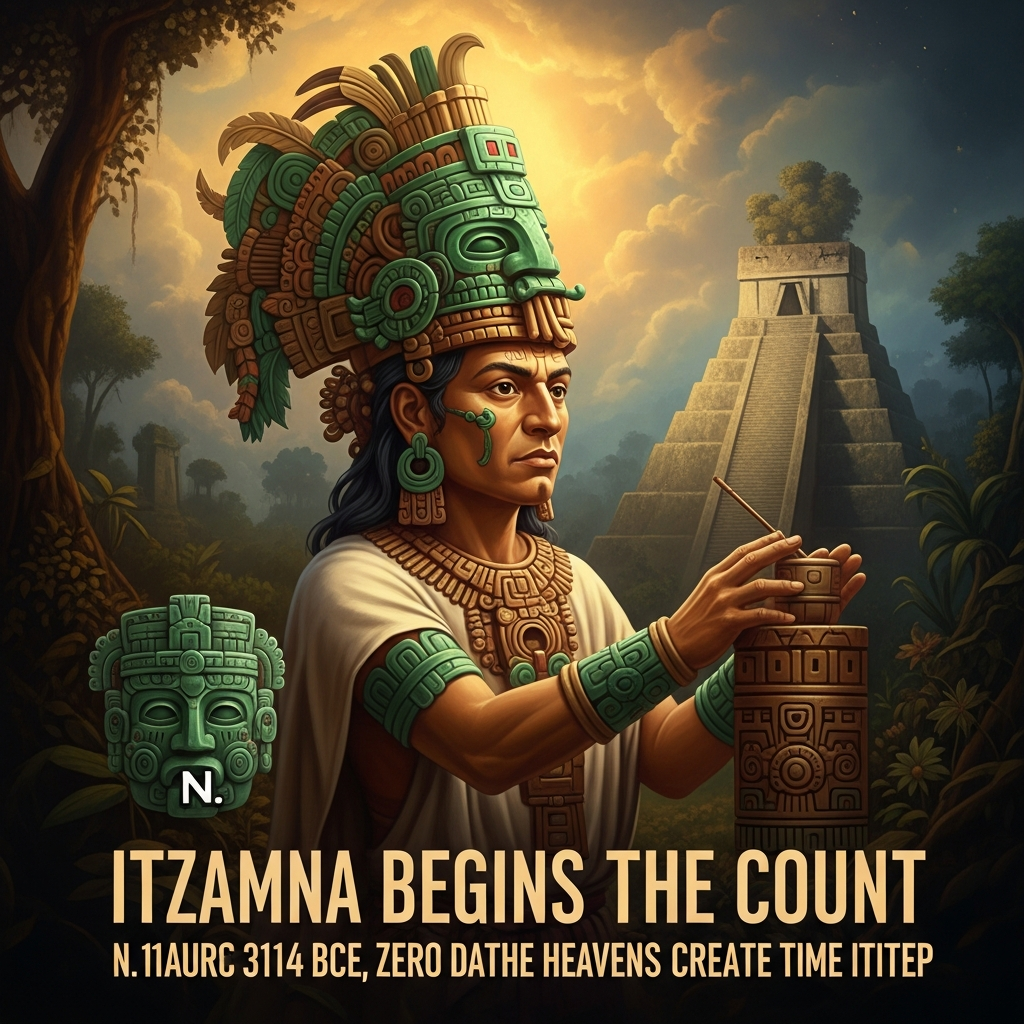
The Maya calendar does not simply count days forward in a single sequence — it layers multiple cycles, each one measuring a different quality of time. The 260-day tzolk’in measures sacred time. The 365-day haab measures solar time. And cycling through both, invisible to most modern observers, is the sequence of Nine Night Lords — nine deities who rule the underworld in rotation, each presiding over one night, cycling through all nine every nine days, year after year, forever.
Every night belongs to one of them.
The night you were born was under the rule of one specific Night Lord, and this lord shapes the quality of your connection to the underworld, your vulnerability to certain kinds of misfortune, your relationship to death. The Maya daykeeper who reads your birth into the calendar reads not just your tzolk’in day-sign but also your Night Lord, and the combination gives a fuller picture.
Bolon Yokte K’uh stands apart from the other eight.
His name means something like Nine-Foot-Tree-God, or He of Nine Strides, or God of Many Supports — the translations are contested and the meaning is uncertain. What is clear from the inscriptions is that he appears at moments of world transition: the completion of great time cycles, the installation of new cosmic orders, the moments when the structure of reality is renegotiated. He is not a destruction god. He is a transition god, which is not the same thing.
In 2012, Bolon Yokte K’uh became briefly famous.
An inscription at the site of Tortuguero — a fragmentary text on Monument 6, damaged by time and looting — mentions the end of the 13th b’ak’tun of the Maya Long Count, which fell on December 21, 2012, and describes Bolon Yokte K’uh as the deity who will be present at that moment. He will descend from the sky, the text says, or something like it — the exact translation is debated because the inscription is badly damaged.
The global media interpreted this as a Maya prophecy of apocalypse.
Maya scholars spent years explaining that this was not what the inscription said, that the end of a b’ak’tun in the Maya calendar was like the odometer rolling over from 99,999 to 100,000 — a significant completion that calls for ceremony but not for destruction, that the Maya had inscribed events past that date on other monuments, that no Maya source predicts the end of the world in 2012.
Bolon Yokte K’uh presides over transitions. Transitions include endings, but they also include beginnings. At the end of the 13th b’ak’tun he was expected to be present the way a dignitary is present at a ceremony — not causing it, not stopping it, not destroying anything, but witnessing, presiding, maintaining the order of things through the event.
The Nine Night Lords and their cycling through the days map the underworld onto daily life.
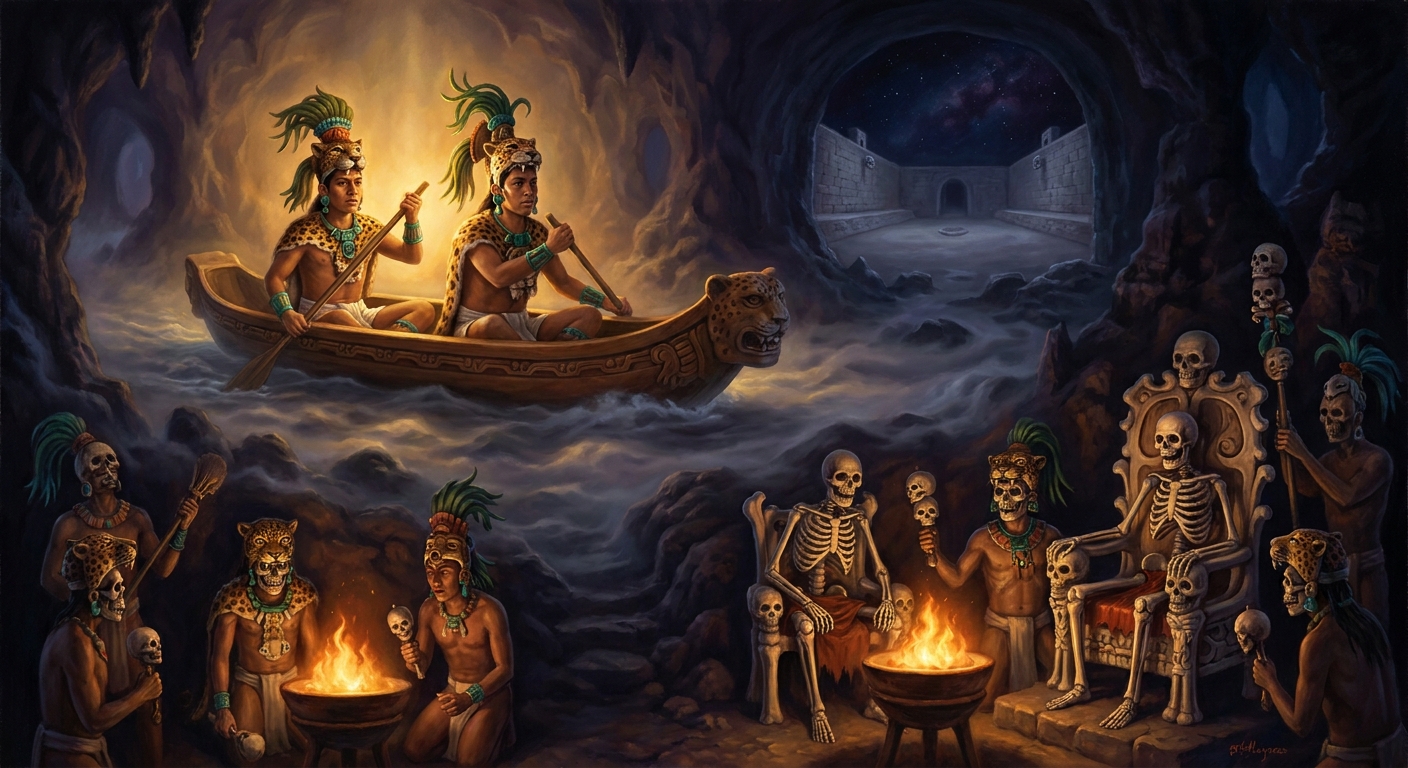
Every night the underworld is present through one of its lords, cycling, reminding the surface world that the darkness has structure, that the nine levels of Xibalbá are not chaos but organization. The Nine Lords are the bureaucracy of death — the administrative structure that keeps even the underworld running with some regularity.
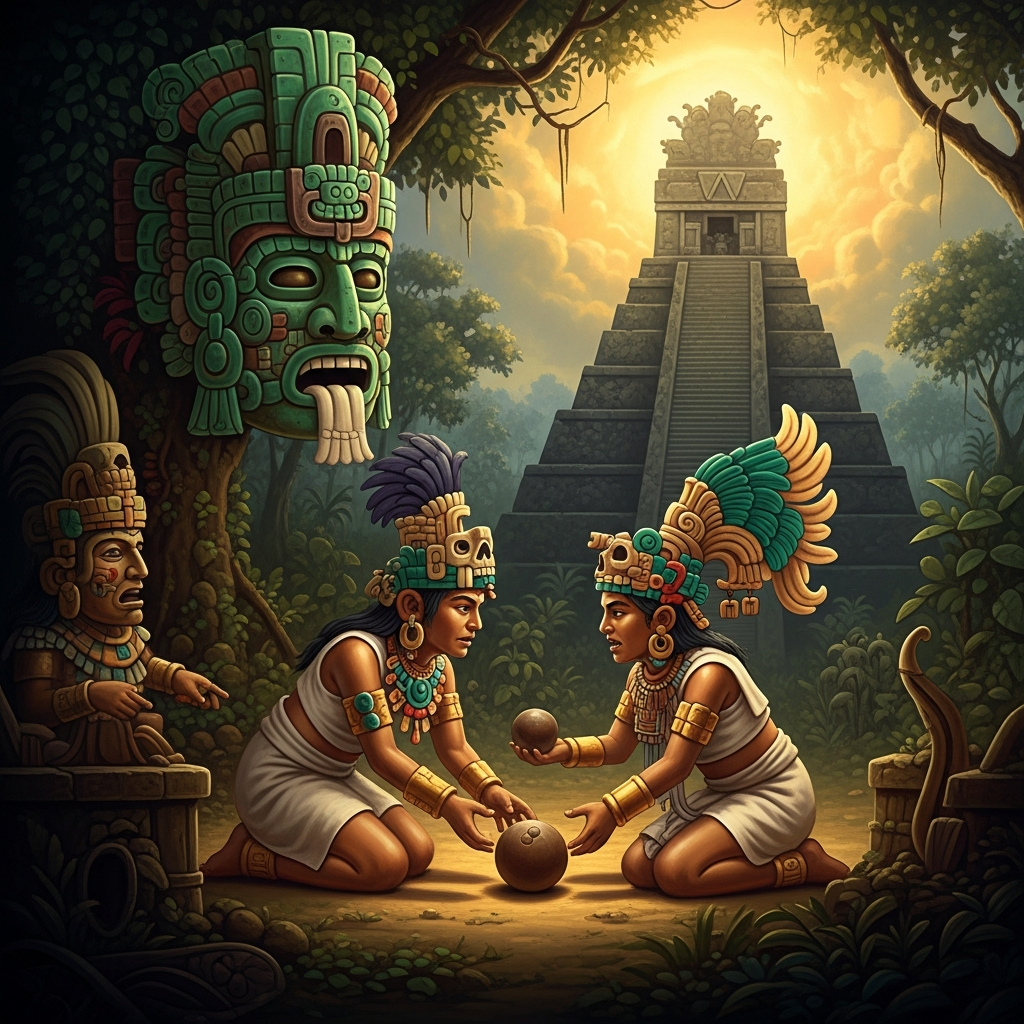
This is characteristically Maya: the underworld is not disorder. It has levels, lords, rules, ceremonies. The dead travel through it in ways that can be mapped and predicted. The living who understand its structure can navigate it — the Hero Twins proved this.
Bolon Yokte K’uh descends when the great cycles turn. He has been present at every major cosmic transition in Maya time. He will be present at the next one. His descent is not the end of the world; it is the world pausing to acknowledge that something has changed, that the new count has begun, that the Nine Lords are cycling through their rotation as they always have, as they will continue to do, measuring out the nights until the counting stops.
It has not stopped.
Scenes
Echoes Across Traditions
Entities
- Bolon Yokte K'uh
- the Nine Lords of the Night
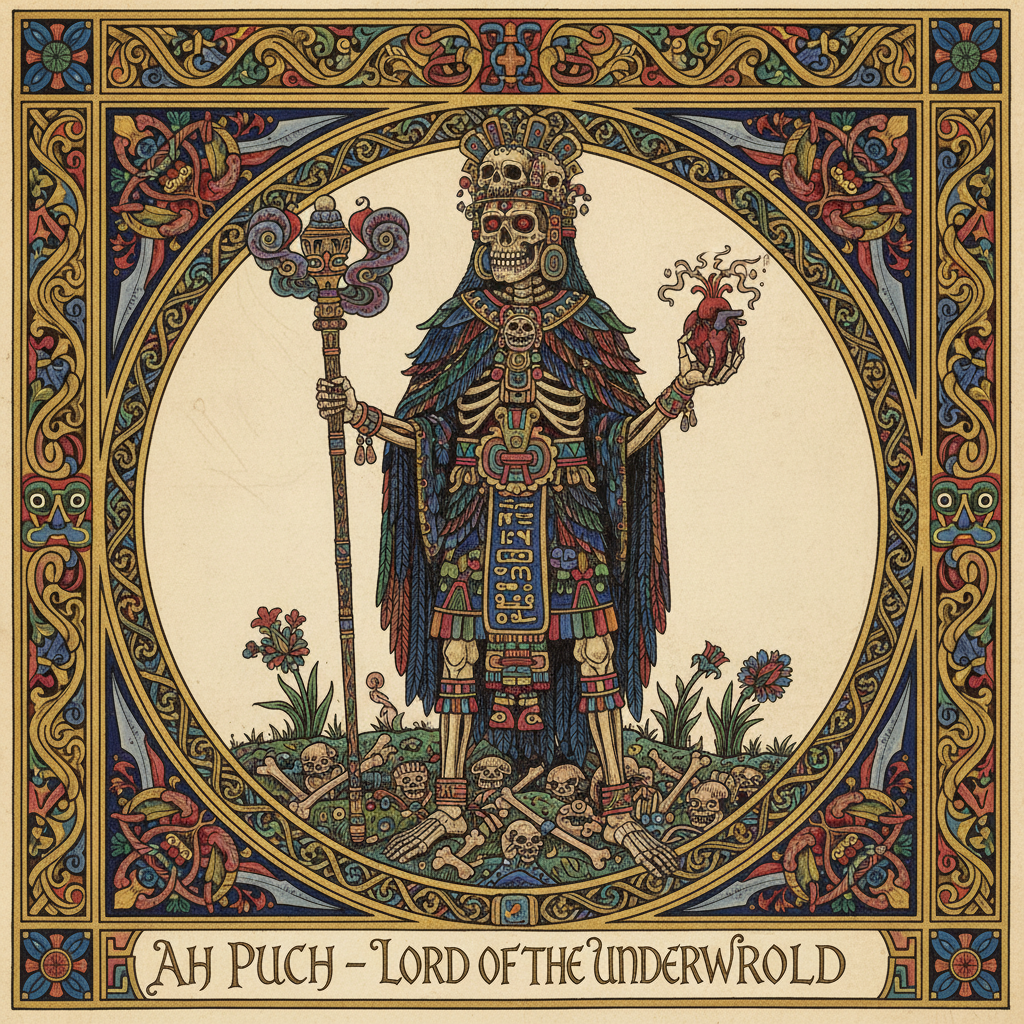
- Ah Puch
- One Death
Sources
- Michael D. Coe, *The Maya* (Thames & Hudson, 8th ed., 2011)
- David Stuart, *The Order of Days: The Maya World and the Truth about 2012* (Harmony Books, 2011)
- Dmitri Beliaev and Albert Davletshin, *Los sujetos novelísticos y las palabras obscenas* in Wayeb Notes (2006)