The 37 Nats of Burma
Nat pantheon formalized under King Anawratha, 1044–1077 CE; folk traditions much older · Burma/Myanmar; Mount Popa; Bagan
Contents
Burma's 37 official Nats — nature spirits — are almost all humans who died violently and unjustly. King Anawratha tried to replace Nat worship with Buddhism, but the spirits proved too powerful: he eventually enshrined them as a pantheon of the martyred dead who must be appeased alongside the Buddha.
- When
- Nat pantheon formalized under King Anawratha, 1044–1077 CE; folk traditions much older
- Where
- Burma/Myanmar; Mount Popa; Bagan
Before the Buddha came to Burma, the land was full of nats.
They were everywhere: in the trees, in the rivers, in the peaks of mountains, in the carved posts at the entrance of every house. They were the dead who had not finished — the spirits of people whose lives were cut short by violence, by treachery, by the cruelty of those with more power. They were not imaginary. Every family in every village knew which nat lived in the banyan at the edge of the paddy, which one inhabited the particular mountain visible from the eastern window, which ones needed rice and flowers and the blood of a white chicken before the planting season began.
They were demanding. They were temperamental. They were, in the way of the unquiet dead everywhere in the world, persistent.
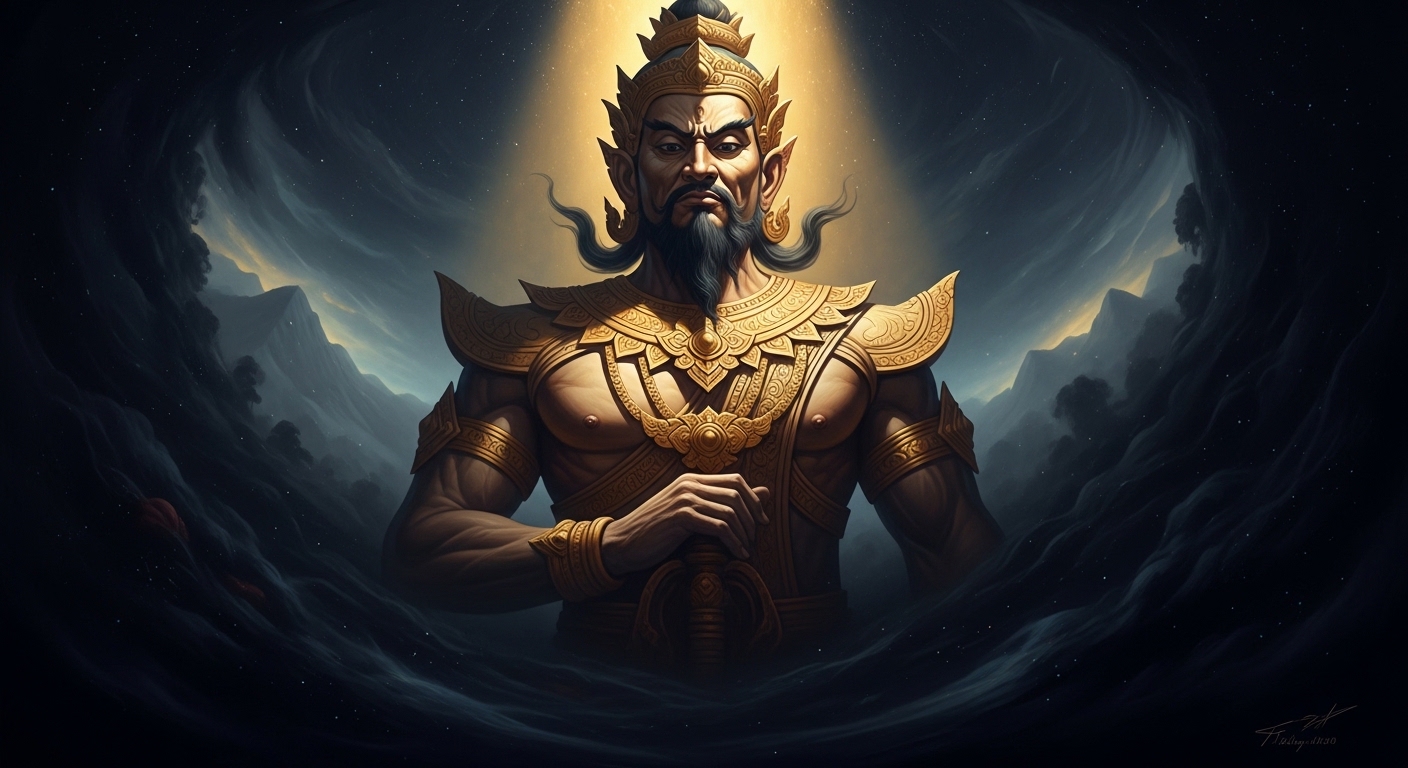
The most important of them was Min Mahagiri, Lord of the Great Mountain.
He began as a blacksmith — a man of extraordinary strength, so strong that a king became afraid of him. The king was the ruler of Tagaung, and fear in kings takes the same form everywhere: he tried to eliminate the threat. He had the blacksmith seized, chained to a tree, and burned alive. The blacksmith’s sister — who had become the king’s wife, not knowing what her husband had planned — threw herself into the fire to die with her brother.
They became nats together: the brother and the sister, fused in the fire, inhabiting the tree from which they were burned. The king, realizing too late the gravity of what he had done, ordered the tree cut down and the log cast into the Irrawaddy River. The log floated south. It washed up at the base of Mount Popa — the great volcanic peak in central Burma that rises from the plains like a fist — and there it lodged, and there Min Mahagiri remained, and there he remains still.
Mount Popa became his mountain. Pilgrims climb it. The shrine at its peak is dedicated to the brother-sister pair. The offerings there are the offerings of propitiation: recognizing that the violence was unjust, that the anguish of the death was real, that the spirit who inhabits the mountain is owed acknowledgment if not amends.
King Anawratha unified Burma in 1044 CE and established Theravada Buddhism as the state religion.
He was a king of genuine Buddhist conviction — he built Bagan, the city of a thousand temples, whose spires still rise from the plain along the Irrawaddy. He wanted Burma to be a proper Buddhist kingdom, which in his understanding meant a kingdom in which the path to liberation was clear, unobscured by the dealings with spirits and the complex debts of propitiation that Nat worship required. Buddhism offered something Nat worship could not: a systematic path beyond rebirth, a way out of the cycle rather than just a way to manage it.
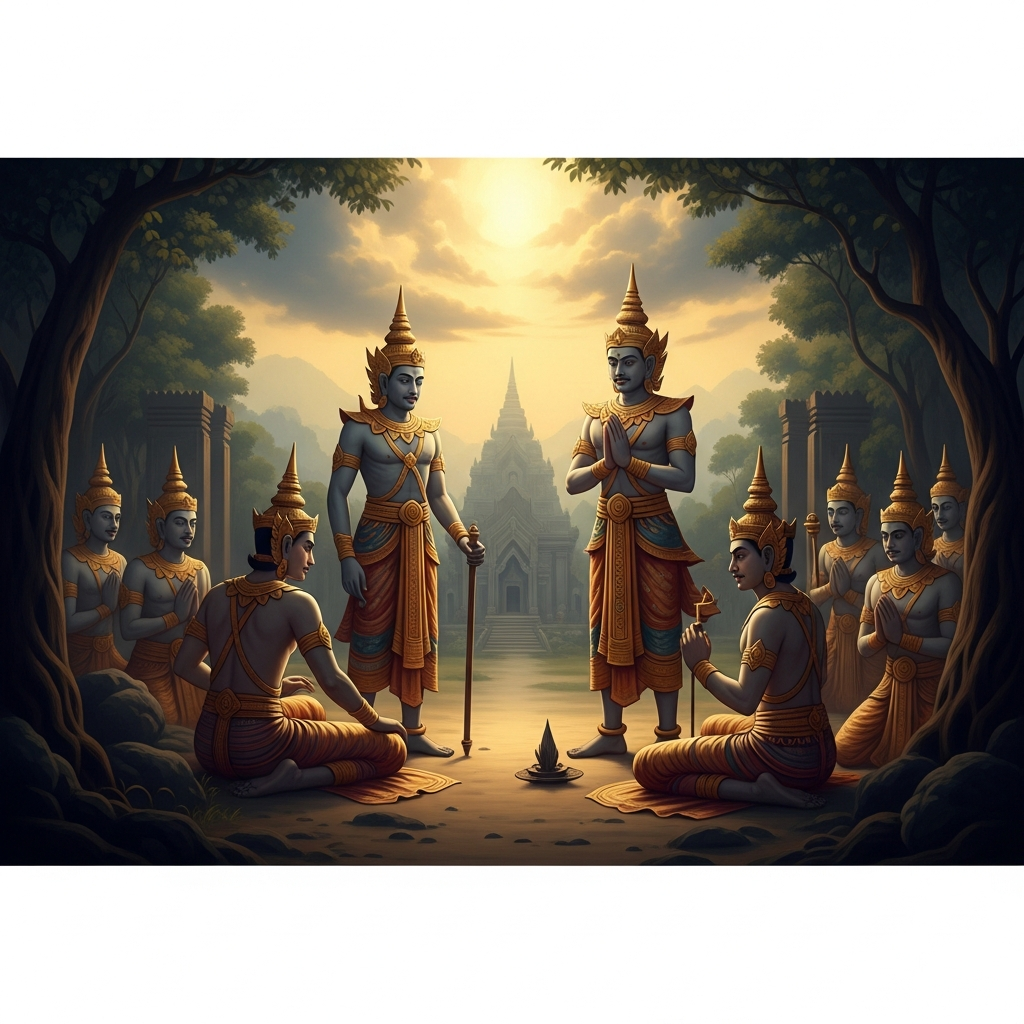
He collected all the Nat images he could find and had them brought to Bagan.
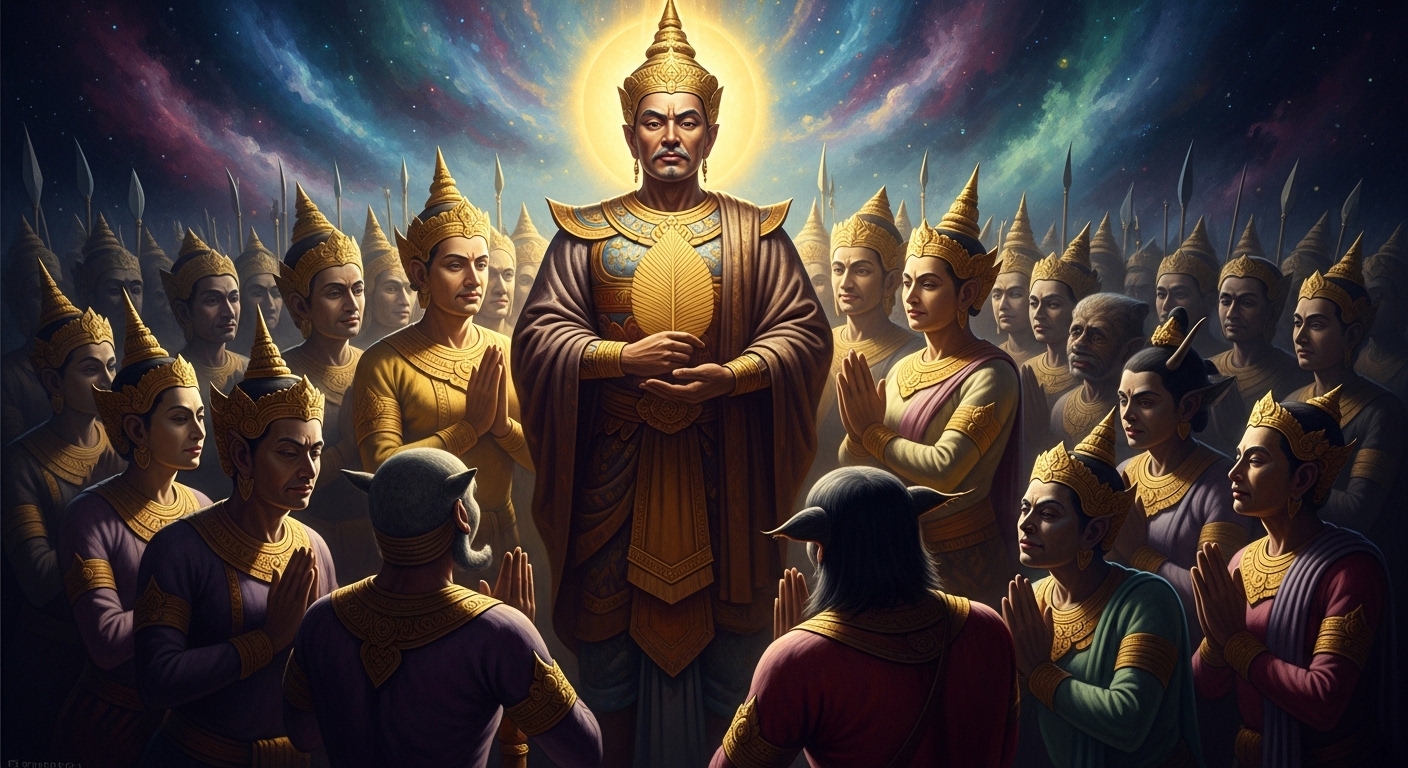
He did not destroy them. This is the critical detail. He placed them at the base of the great Shwezigon Pagoda — at the foot of the pagoda, not inside it, not at its peak, but in a subordinate position where they could be acknowledged without threatening the Buddhist hierarchy. He allowed Nat worship to continue. He gave it a number: thirty-seven. Thirty-seven official Nats, with Thagyamin (Indra) at their head, a deity who was already half-Buddhist by the time Anawratha got to him.
The message was theological and political simultaneously: the Nats exist, they are real, they have power over this world — but they are subordinate to the Dhamma, as all worldly powers are subordinate to the Dhamma, and their proper propitiation belongs in the antechamber of Buddhist merit rather than in competition with it.
It worked and it did not work.
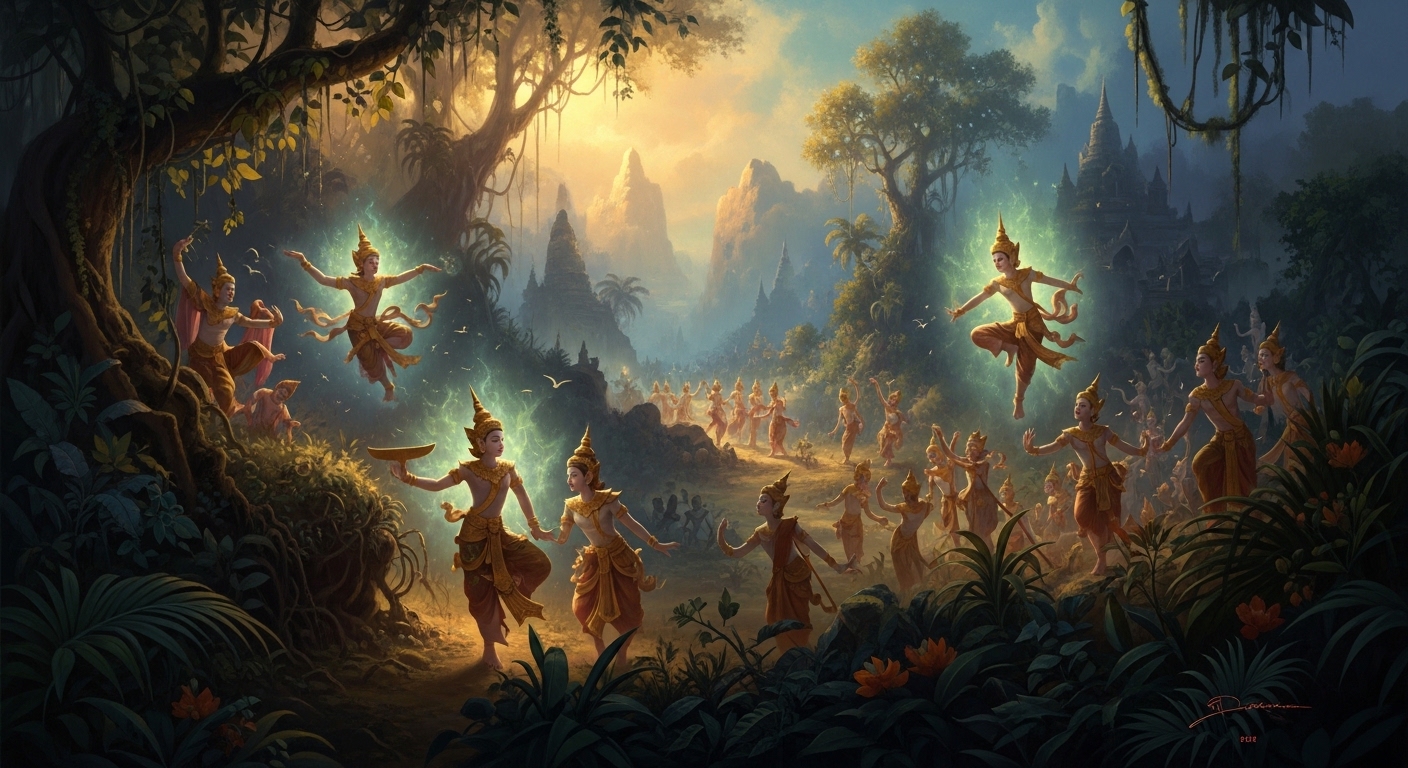
The thirty-seven Nats were enshrined. The number was official. The hierarchy was established. And the Nat worship continued exactly as it had before, with shamans called nat kadaw (Nat wives) entering trance, hosting the spirits in their bodies, dancing and drinking and receiving the petitions of those who needed help that the Dhamma’s long-term program could not immediately provide.
The nat kadaw are still active. The annual festival at Mount Popa still draws thousands of pilgrims. The most popular festival — held at the base of the mountain over several days — involves music, trance possession, alcohol, and the specific offerings each Nat requires. It is not a Buddhist ceremony. It is older than Buddhism in Burma. Buddhism happened to it the way the monsoon happens to a mountain: the mountain is altered at the surface, shaped over centuries, but the volcanic rock at the core is not the same material as the rain.
Every village in Burma still has its resident Nat. The village Nat’s shrine — a small wooden post or a carved figurine in a niche — stands at the edge of every settlement. The offerings are left there as they always were. The prayers are said as they always were.
And every pagoda in Burma has, somewhere in its precincts or at its base, an acknowledgment of the Nats — because Anawratha’s compromise became the permanent settlement. Buddhism manages the ultimate questions. The Nats manage the immediate ones. The dead who died unjustly have not stopped needing acknowledgment. The king who tried to give them a number found, as kings always find, that spirits are not easily numbered.
The thirty-seventh Nat is sometimes listed as a special category: the spirit of the king himself, added to the pantheon of the violently dead. Whether Anawratha knew this would happen is not recorded. The Nats have their own sense of humor about such things.
Scenes
Echoes Across Traditions
Entities
- Min Mahagiri (Lord of the Great Mountain)
- King Anawratha
- Thagyamin (Indra)
- the 37 Nats
Sources
- Maung Htin Aung, *Folk Elements in Burmese Buddhism* (1962)
- Bénédicte Brac de la Perrière, 'An Overview of the Field of Religion in Burmese Studies,' *Asian Ethnicity* 10.1 (2009)
- Melford E. Spiro, *Burmese Supernaturalism* (1967)
- G.E. Harvey, *History of Burma* (1925)
- Patrick Pranke, 'On Becoming a Buddhist Wizard,' in *Buddhism in Practice*, ed. Donald Lopez (1995)