The Druids and the Oak Grove
circa 500-1 BCE — the height of the druidic tradition in Britain, Ireland, and Gaul · Sacred oak groves (nemetons) throughout the Celtic world — Britain, Ireland, Gaul
Contents
At the center of every Celtic territory a sacred oak grove mediates between the human world and the divine — and the druids who serve it are the only people in the Celtic world who can speak to the gods directly, predict the future, and remember the knowledge that cannot be written down.
- When
- circa 500-1 BCE — the height of the druidic tradition in Britain, Ireland, and Gaul
- Where
- Sacred oak groves (nemetons) throughout the Celtic world — Britain, Ireland, Gaul
The oak is the door.
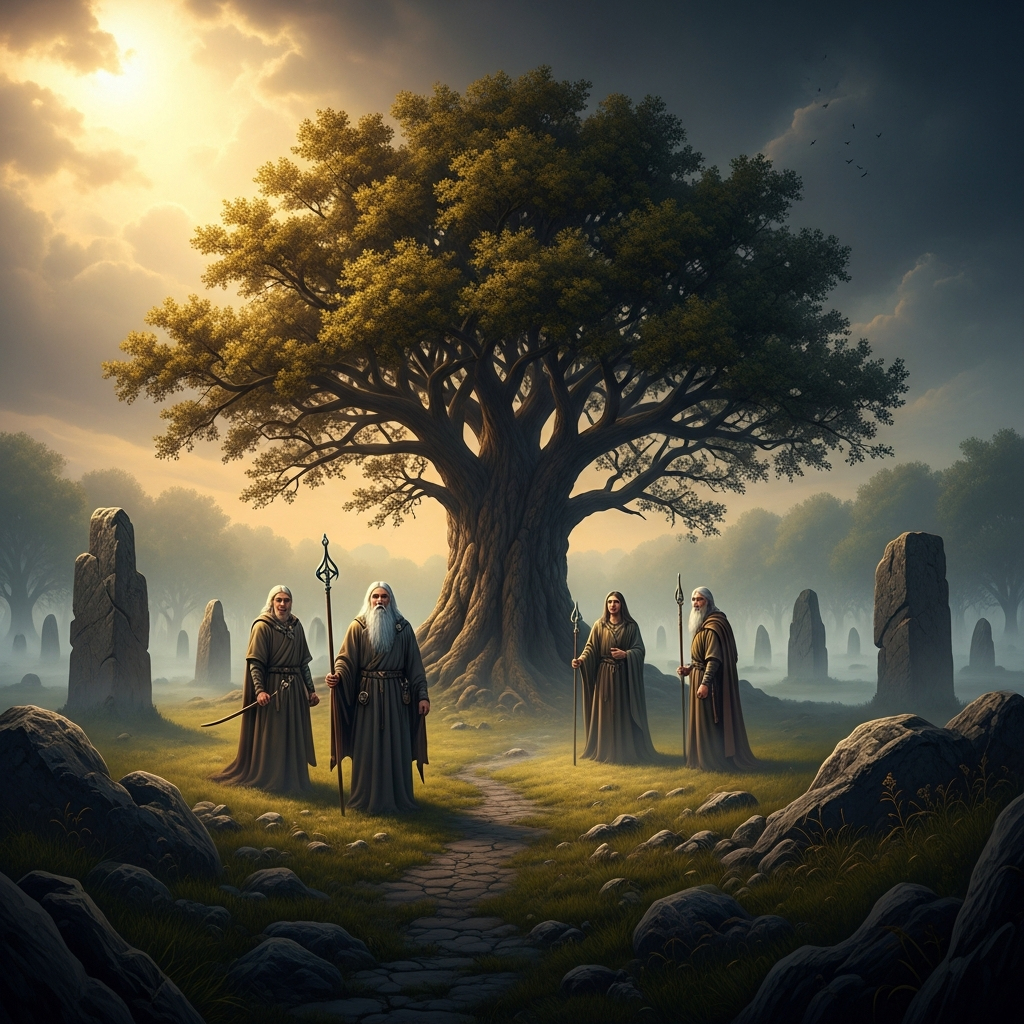
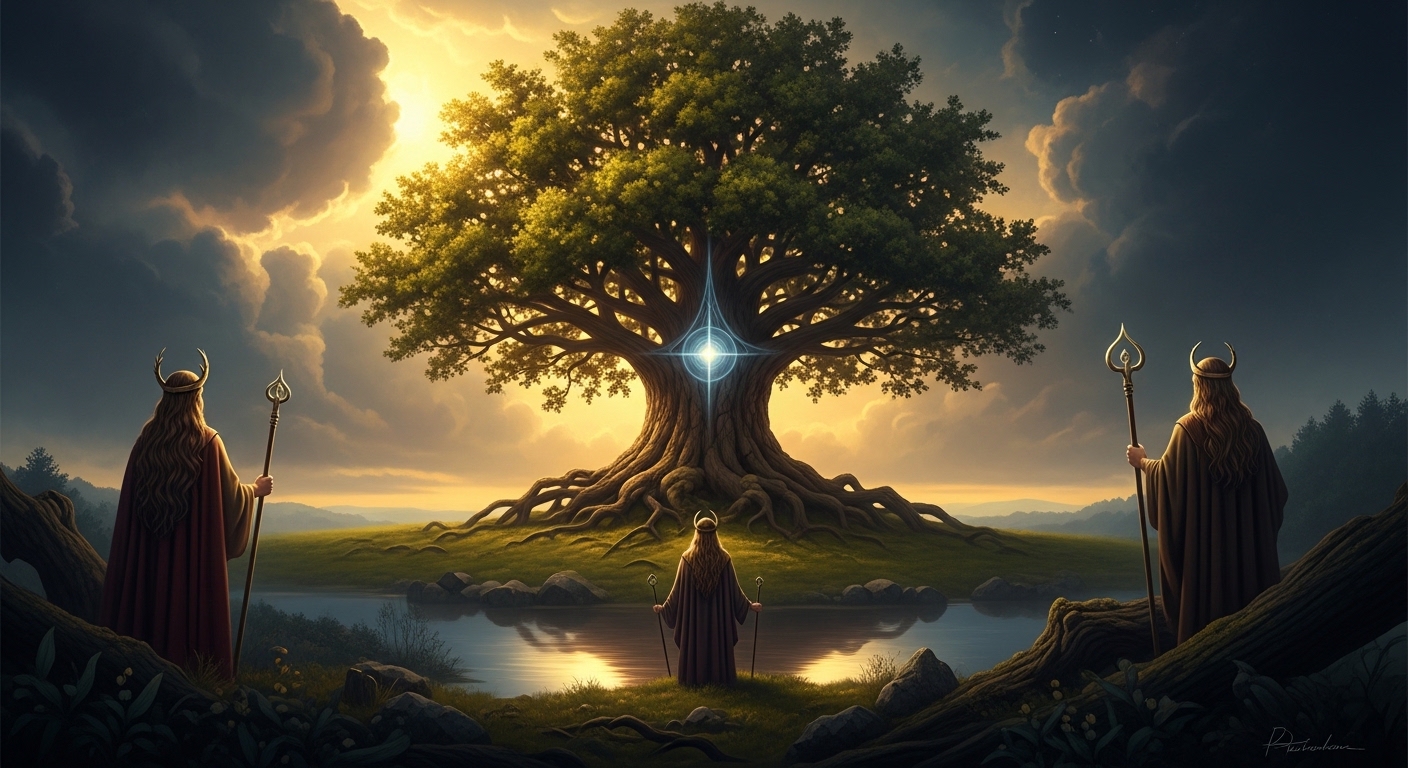
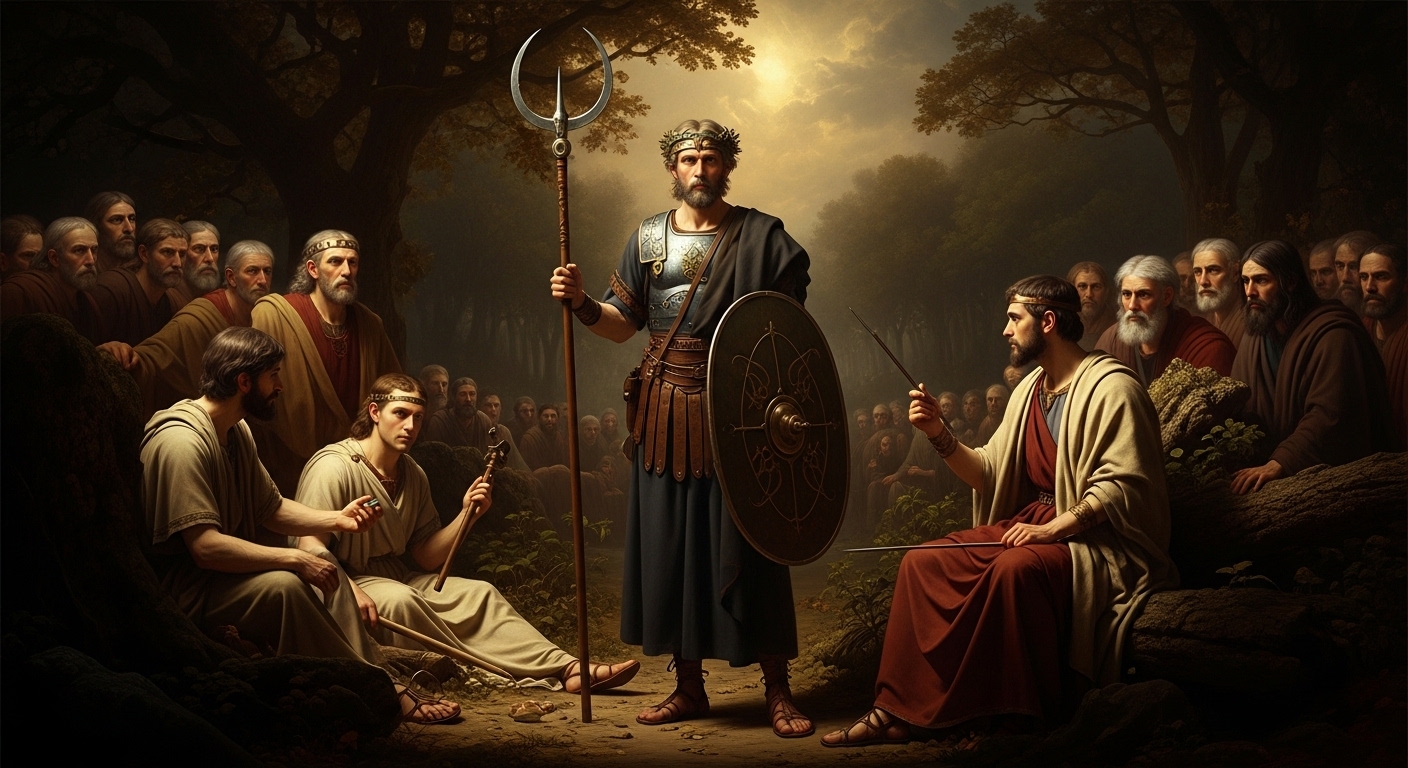
Not metaphorically: in the druidic understanding, the oak tree at the center of the nemeton — the sacred grove — is the world-tree axis, the point where the three worlds (sky, land, water-below) intersect and where the divine is most accessible. The word druid itself may derive from dru-wid, those who know the oak, or from the same root that gives us tree in other Indo-European languages. The people who stand in the oak grove are people who have stood there long enough to become, in some sense, the grove itself.
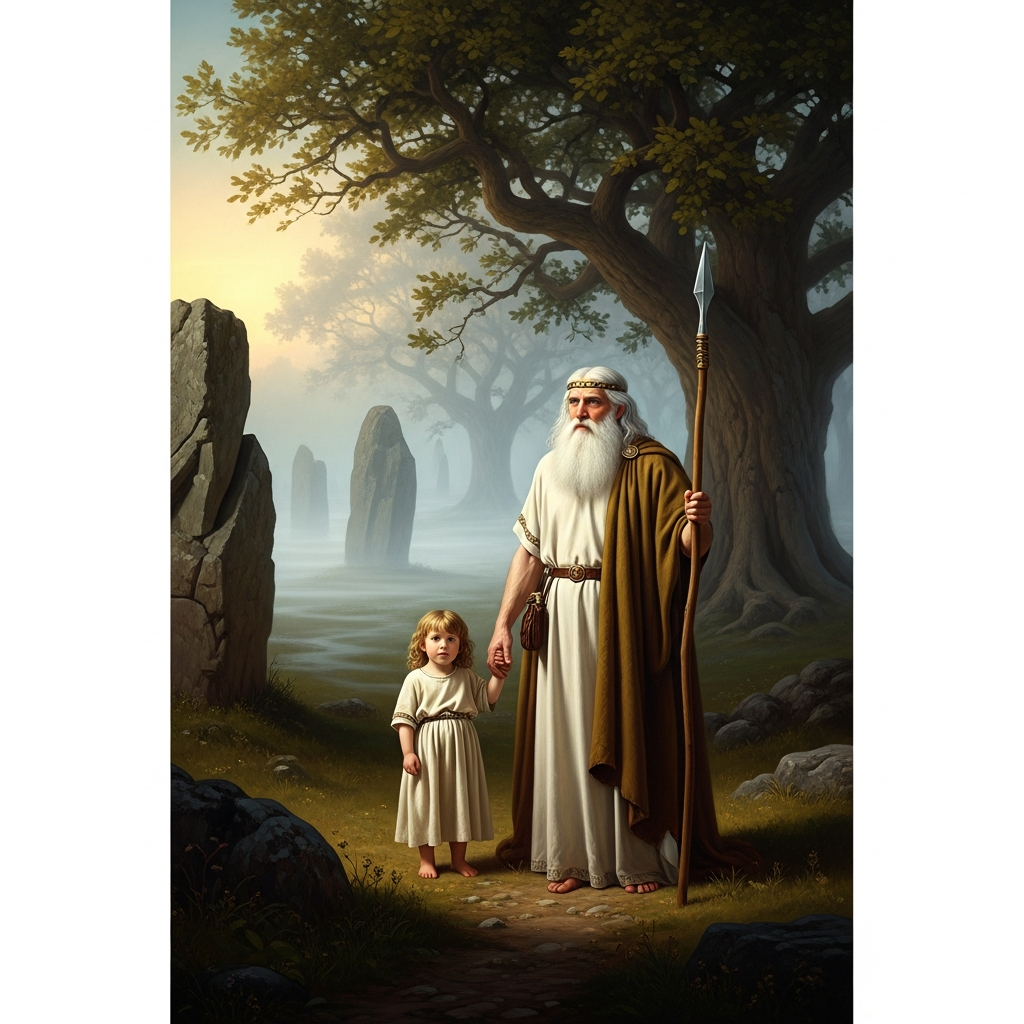
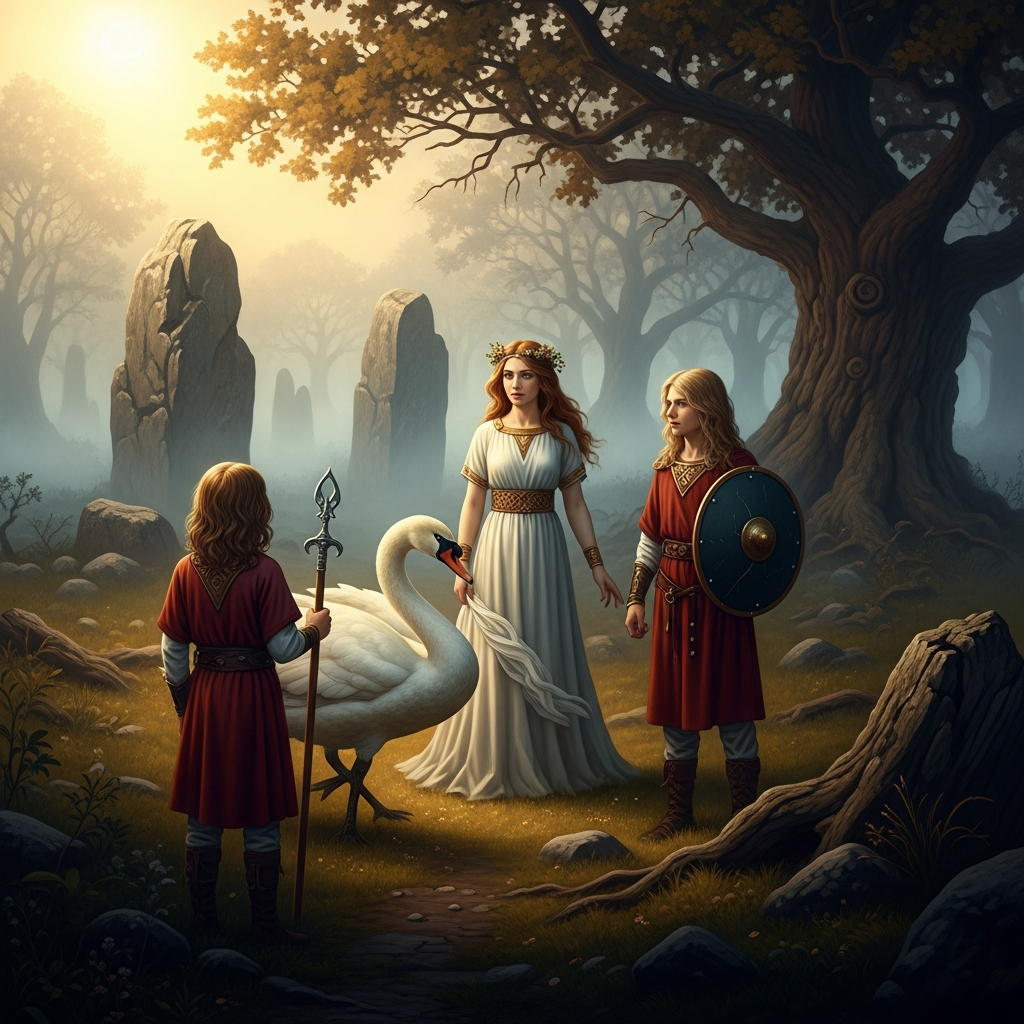
The grove is not built. It is found. A nemeton is a clearing in the forest where oaks of sufficient age have created a natural cathedral — the interlocking canopy overhead, the roots deep enough in the water-below to touch the world beneath the world, the trunks old enough to have accumulated the specific quality of presence that very old trees develop. You do not consecrate a nemeton. You recognize it.
Cathbad the druid who attends the court of Ulster — who prophecies at the births of Deirdre and Cú Chulainn, who reads the omens before every military campaign, who moderates the relationship between the human world and the divine — is trained in the twenty-year oral curriculum that is the druid’s complete education. Not twenty years of study in a school: twenty years of living transmission, memorizing the laws, the genealogies, the astronomical data, the calendrical cycles, the complete body of tribal knowledge, in verse forms that survive in the memory without writing.
This refusal to write is deliberate. The classical sources — Caesar, Strabo — are puzzled by it: a sophisticated class of intellectuals who write nothing down. The druids’ explanation, preserved in fragments, is theological: the knowledge that matters is alive. A living teacher is an irreplaceable fidelity-check on what the text says. A written text is a frozen moment; the living transmission is a conversation that updates.
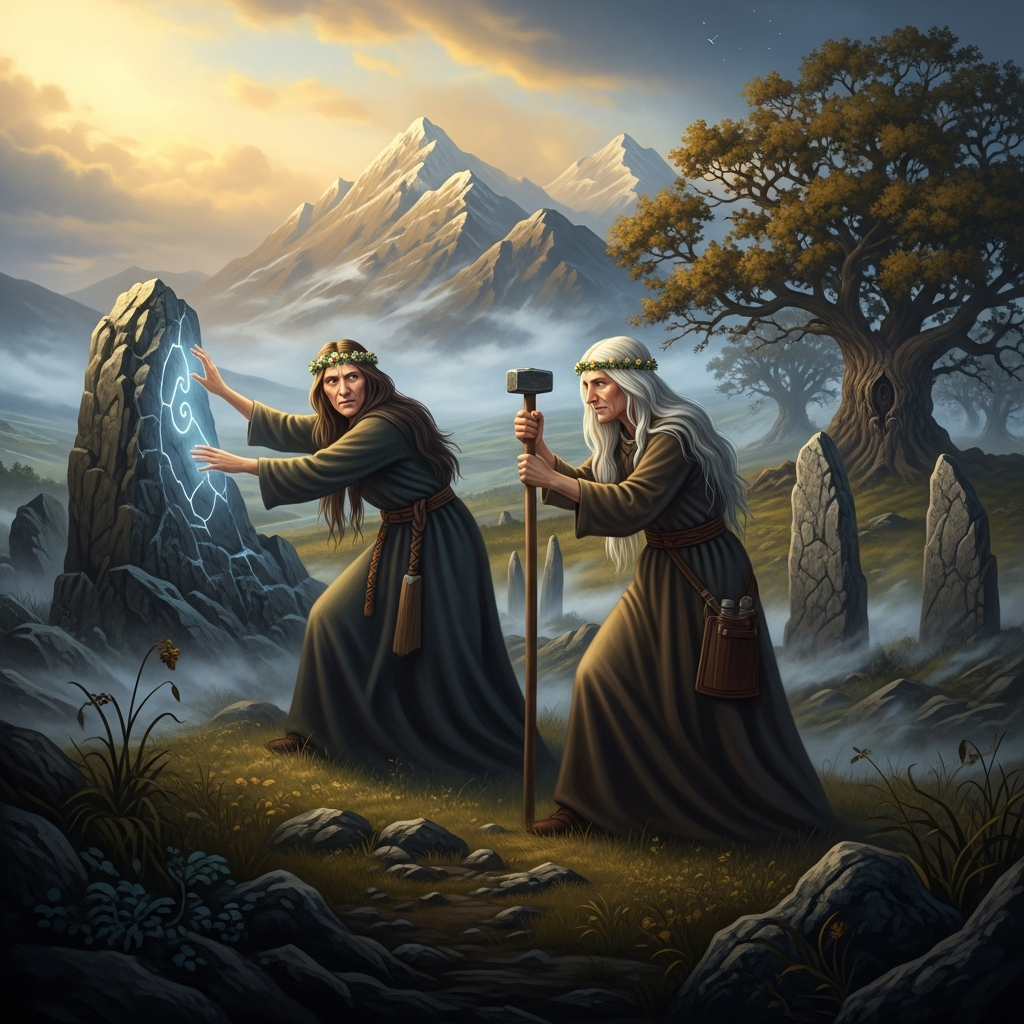
In the grove, the ritual is precise. The mistletoe is cut from the oak with a golden sickle — iron is too disruptive, gold does not disturb what it touches — on the sixth day of the moon, in the winter when the oak has dropped its leaves but the mistletoe is still green. White bulls are brought as sacrifices. The ceremony combines astronomical observation, sacrifice, the ritual meal, and the consultation of what the mistletoe’s position on the oak reveals.
Pliny the Elder watches this from a distance and writes it down in his Natural History, which is how it survives, because the druids wrote nothing and the Christians who eventually replaced them wrote about them only to condemn them. The condemnation is also a preservation: the accusations of human sacrifice, of prophecy by entrail, of animal-magic — even these hostile records preserve the outline of a practice that would otherwise have vanished entirely.
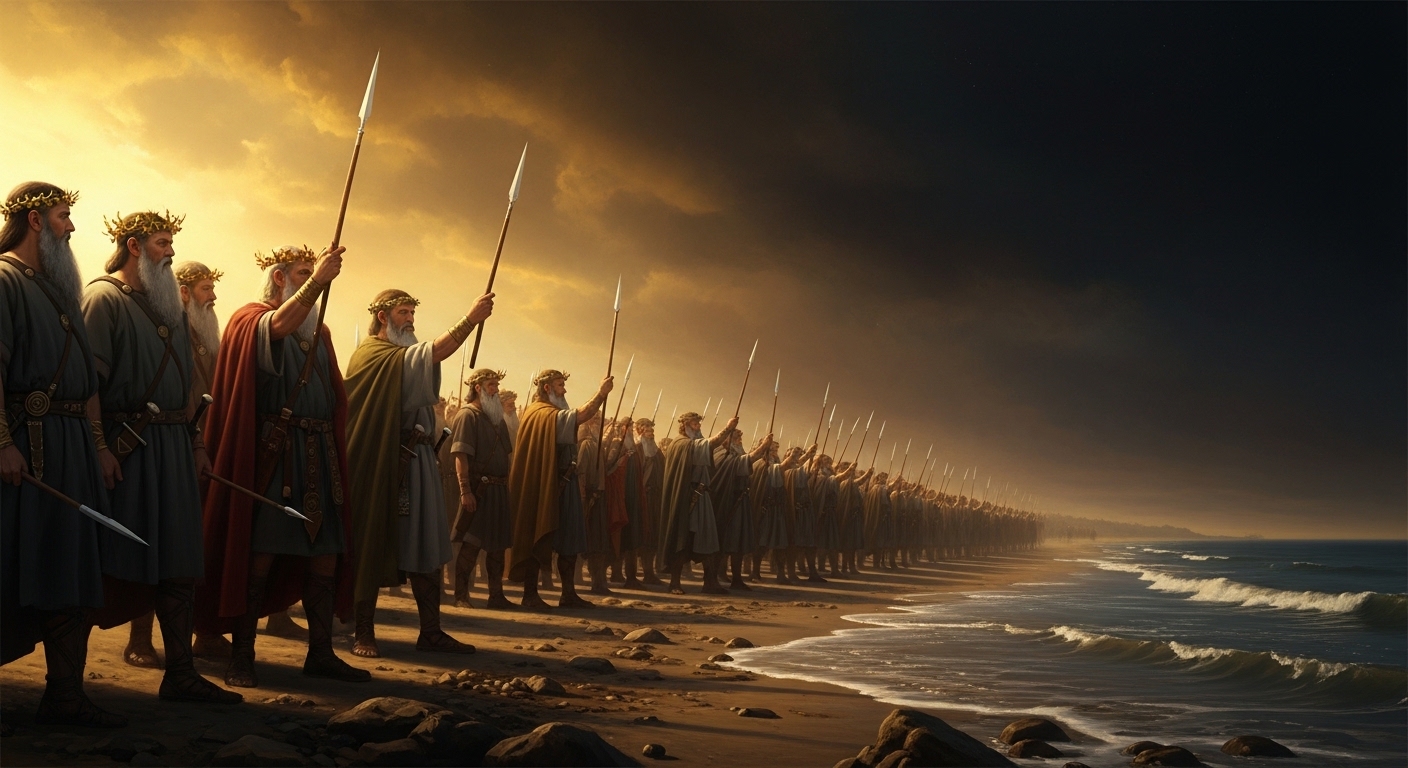
The last druids were killed by the Roman legions on Anglesey in 60 CE, standing on the beach in rows with their arms raised, cursing the invaders with whatever druidic authority still functioned outside a nemeton. The soldiers hesitated at the shore. Then they crossed.
The groves were cut. The knowledge that was not written down was lost.
Except that Ireland was never fully Romanized, and the oak trees are still old, and the places called Derry — from doire, oak-grove — are still on the map. Kildare is the church of the oak. The nemeton is under the church. The fire never went out.
Scenes
Echoes Across Traditions
Entities
- Cathbad the Druid
- The druids of Gaul
- The oak tree
- The mistletoe
- The nemeton
Sources
- Nora Chadwick, *The Druids* (University of Wales Press, 1966)
- Miranda Jane Green, *The World of the Druids* (Thames and Hudson, 1997)
- Stuart Piggott, *The Druids* (Thames and Hudson, 1968)