Contents
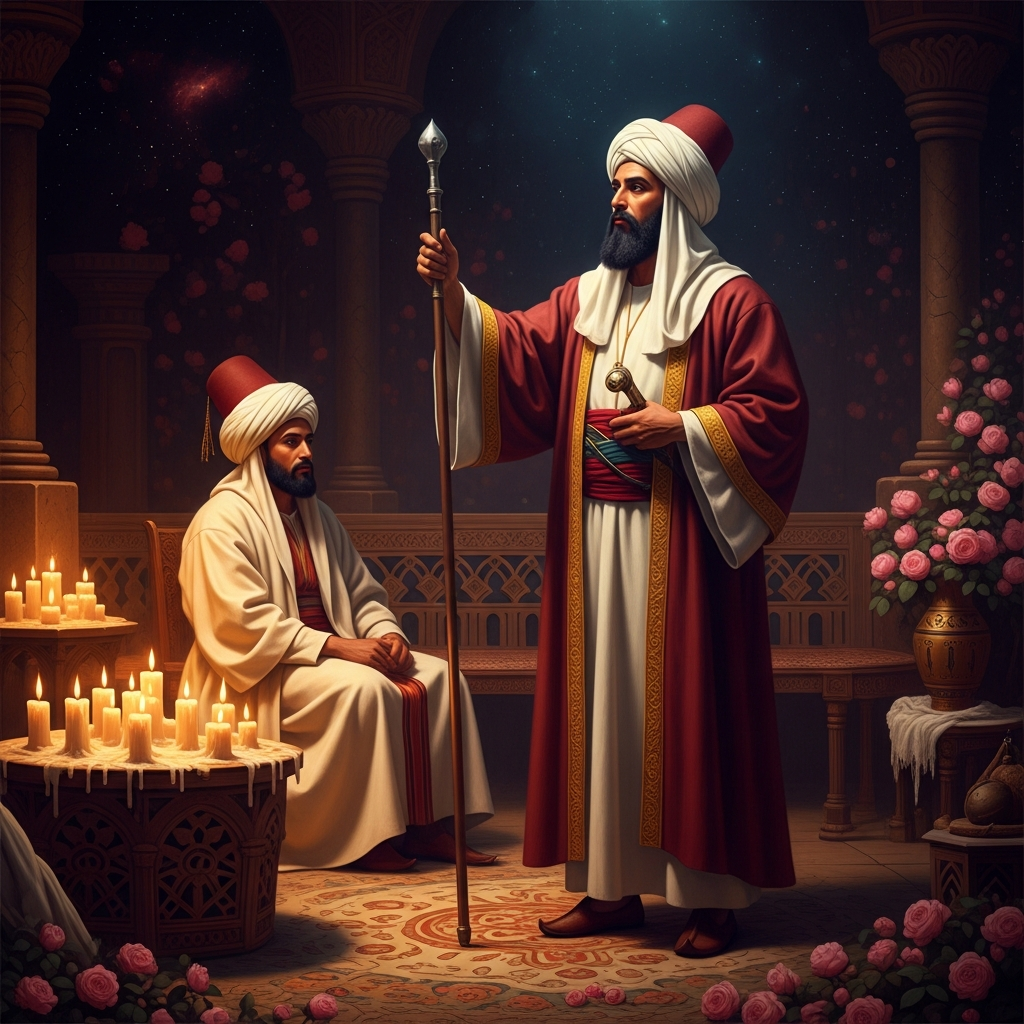
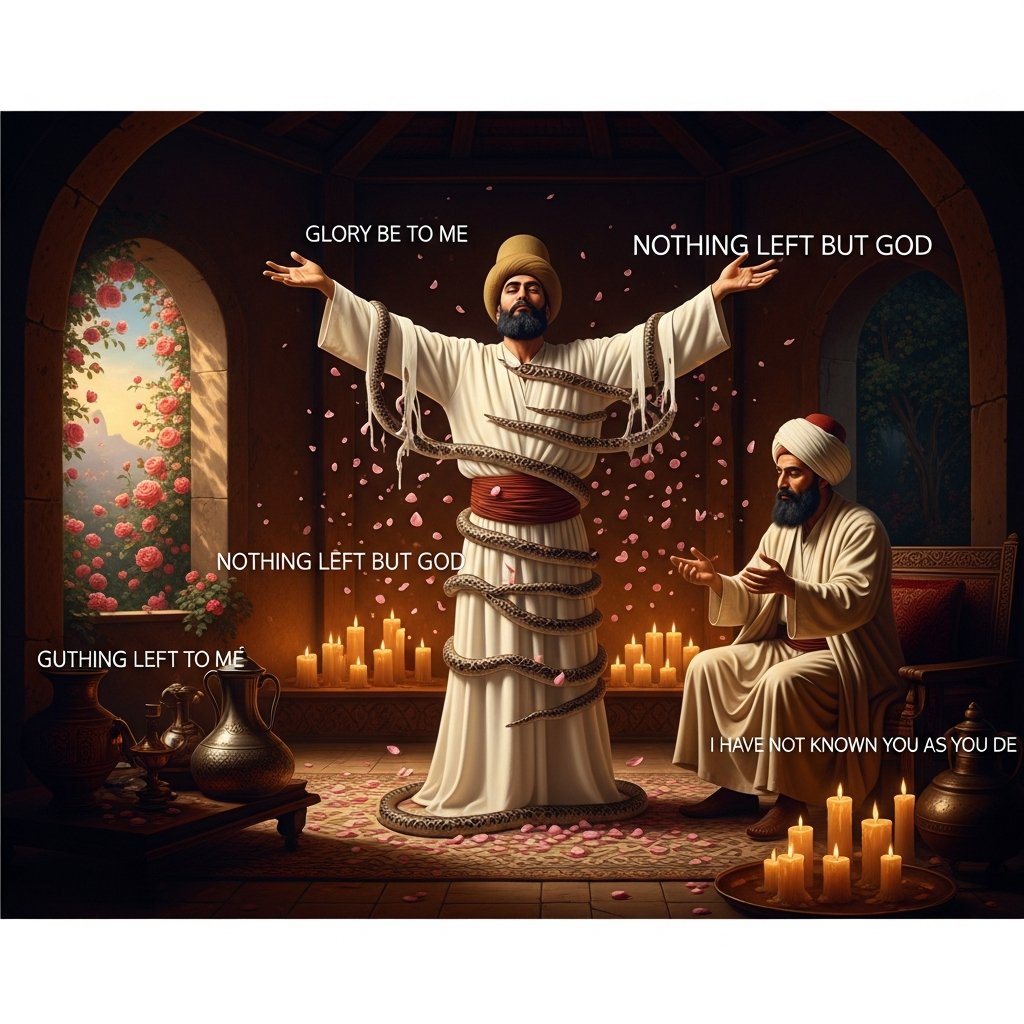
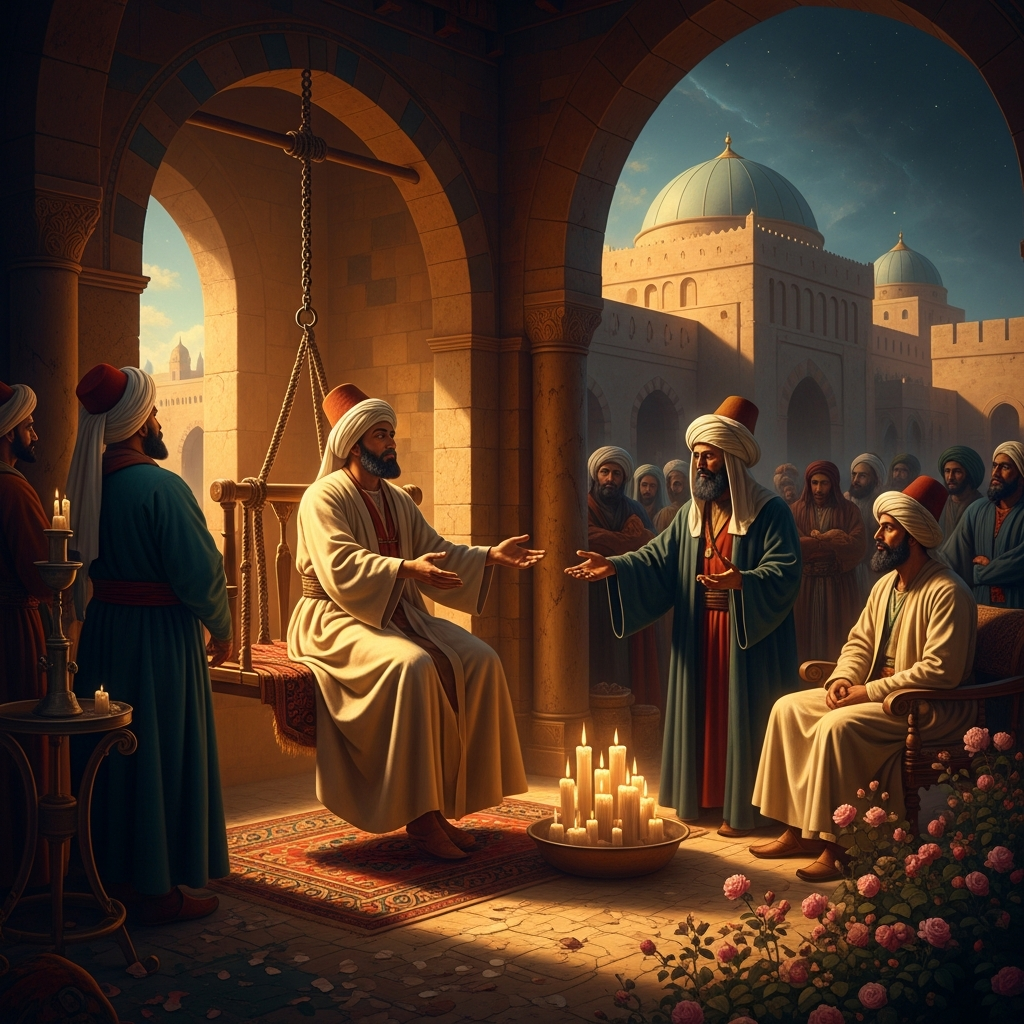
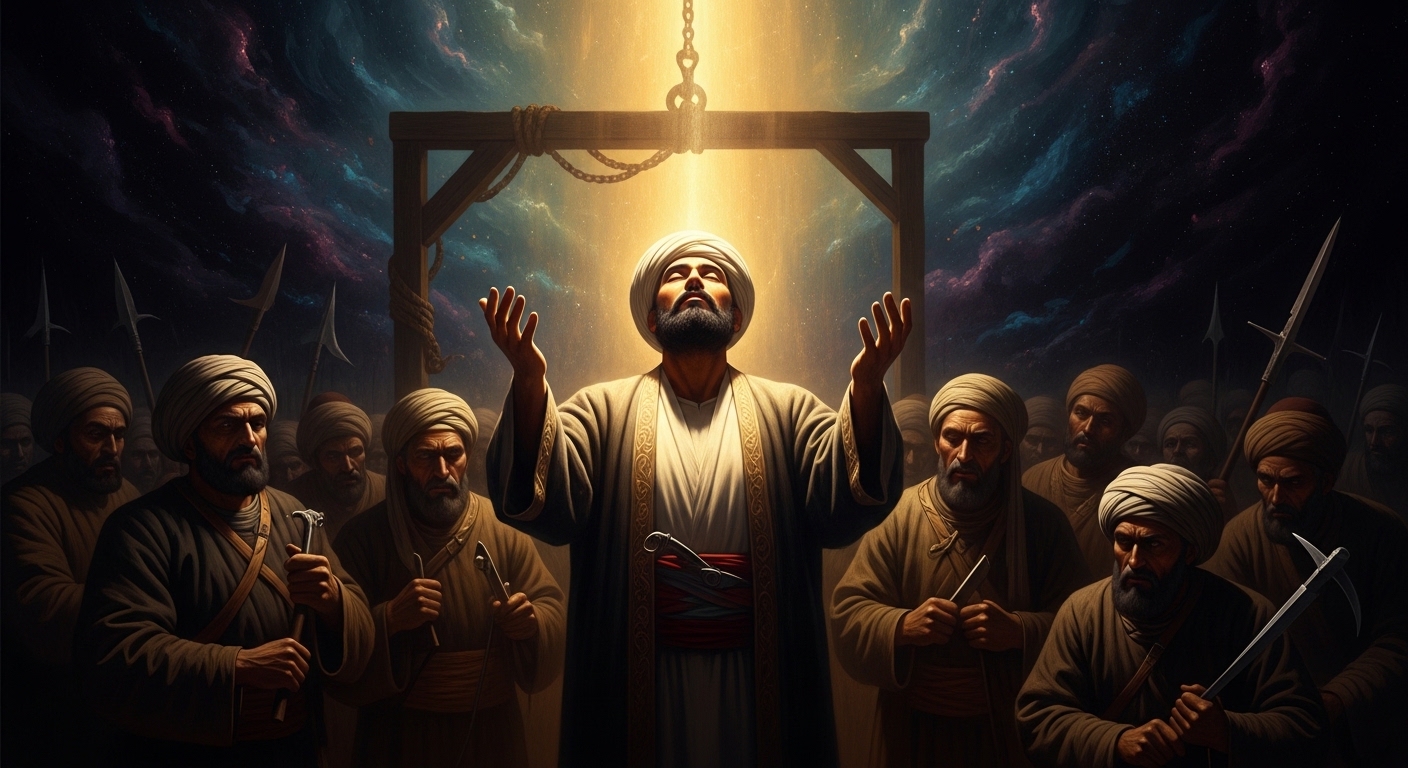
On the morning of March 26, 922 CE, Mansur al-Hallāj is brought to the execution ground in Baghdad. Before the crowd of thousands, he performs two cycles of prayer. Then he prays for the men who are about to kill him — in what the tradition has called the purest act of Sufi love ever witnessed in public.
- When
- March 26, 922 CE — Baghdad, Abbasid Caliphate
- Where
- Baghdad, Iraq — the execution ground near the Khorasan Gate, in the public square
He comes to the execution ground smiling.
This is what the witnesses record. The accounts in Massignon’s research — reconstructed from multiple Arabic sources including hostile ones — are consistent on this detail: Mansur al-Hallāj on the morning of his execution has a demeanor that his opponents cannot easily explain and that his supporters take as the most direct evidence for what he has been teaching for decades. He is not performing courage. He is in a state.
He performs two cycles of prayer — the salat — before the execution begins. The prayer is observed by those present as fully composed, unhurried, the movements precise and voluntary. He is not trembling. He is not weeping. He is praying as if the execution ground is a prayer ground, which, in his framework, it is.
Then he raises his hands and prays for the people who are going to kill him.
The prayer, as reported through the tradition, is extraordinary in its content.
He says: O God, these are your servants who have come together to kill me in support of your religion and in order to draw near to you. Forgive them. And if you were to reveal to them what you have revealed to me, they would not have done what they have done. And if you were to withhold from me what you have withheld from them, I would not have done what I have done. Praise be to you in all that you have decreed.
This prayer contains three theological claims compressed into a few sentences.
First: the executioners are not villains. They believe they are serving God. They are acting from genuine religious conviction, even if they are wrong about the content of that conviction. They are not punished by God for this — they are forgiven.
Second: the reason Hallāj has done what he has done — said the words, lived the way he has lived, refused to recant — is not courage or stubbornness. It is the divine disclosure he has received. He has seen something that makes it impossible to behave differently. If the executioners had seen it, they could not have executed him. If he had not seen it, he could not have been executed. Both trajectories are in God’s hands.
Third: both outcomes — the disclosure given, the disclosure withheld — are forms of divine praise. The mystic who is killed for God’s sake and the executioners who kill for what they believe is God’s sake are both, in this framework, in God.
Shibli is in the crowd.
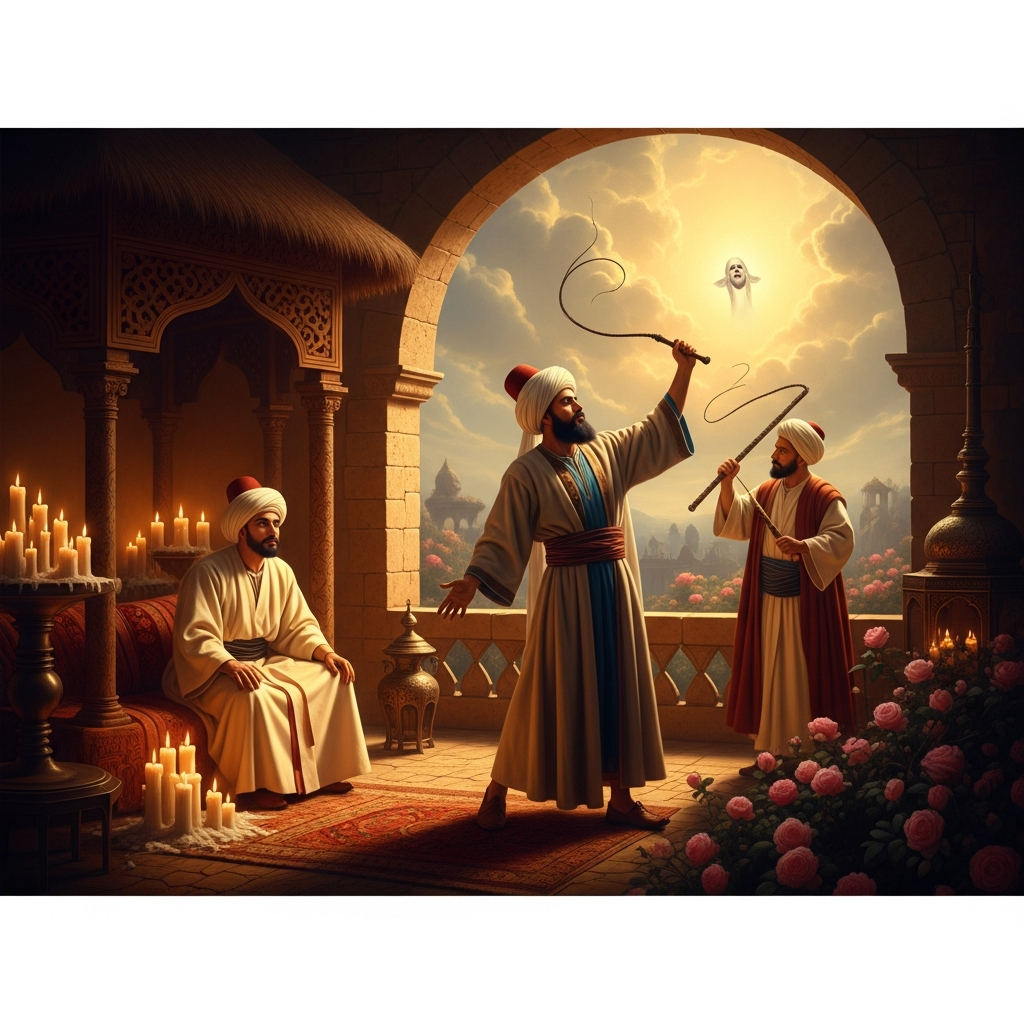
Shibli — the eccentric Sufi master, the student of Junayd, the man who performed wajd publicly and was sometimes taken to be mad — is watching from among the spectators. He has in his hand a rose. When the stoning begins — the crowd throwing stones or projectiles at Hallāj as he is bound to the gibbet — Shibli throws his rose.
Hallāj winces only when the rose hits him.
The account says: he was impassive when the stones struck, but winced at the rose. His explanation, in some versions: the stones are from people who do not know. I can endure not-knowing. But Shibli knows what this is. His rose is a witness. A witness who throws roses is more costly than an ignorant stone-thrower.
They cut off his hands. They cut off his feet. They gouge out his eyes. They behead him. They burn the remains. They scatter the ashes on the Tigris.
At each stage — the accounts in Massignon are detailed — he speaks. When his hands are cut off, he smears the blood of his wrists on his face, saying: ablution with one’s own blood when in the presence of the Beloved. When they come to take his eyes, he recites Quranic verses about vision.
The last thing witnesses hear him say, before the beheading, is the word haqq — truth, God’s name, the word that was on his lips when they arrested him years before.
He dies with God’s name.
The river carries his ashes to the sea.
The tradition carries his death to everywhere the tradition goes.
Scenes

Echoes Across Traditions
Entities
- Al-Hallāj
- Shibli (friend in the crowd)
- the Caliph al-Muqtadir
- the executioners
Sources
- Louis Massignon, *The Passion of al-Hallaj* (Princeton, 1982), vol. 1: chapter on the execution
- Herbert Mason, *Al-Hallaj* (Curzon, 1995)
- Herbert Mason's poem *Al-Hallaj* — the verse retelling, with close attention to sources
- Farid ud-Din Attar, *Tadhkirat al-Awliya*, section on Hallāj