The Karmapa's Black Crown: Woven from Dakini Hair
c. 1110–1193 CE — the First Karmapa, with the Black Crown ceremony established in the 15th century · The Tsurphu Monastery, Tibet — seat of the Karmapa lineage, in the Tolung Valley northwest of Lhasa
Contents
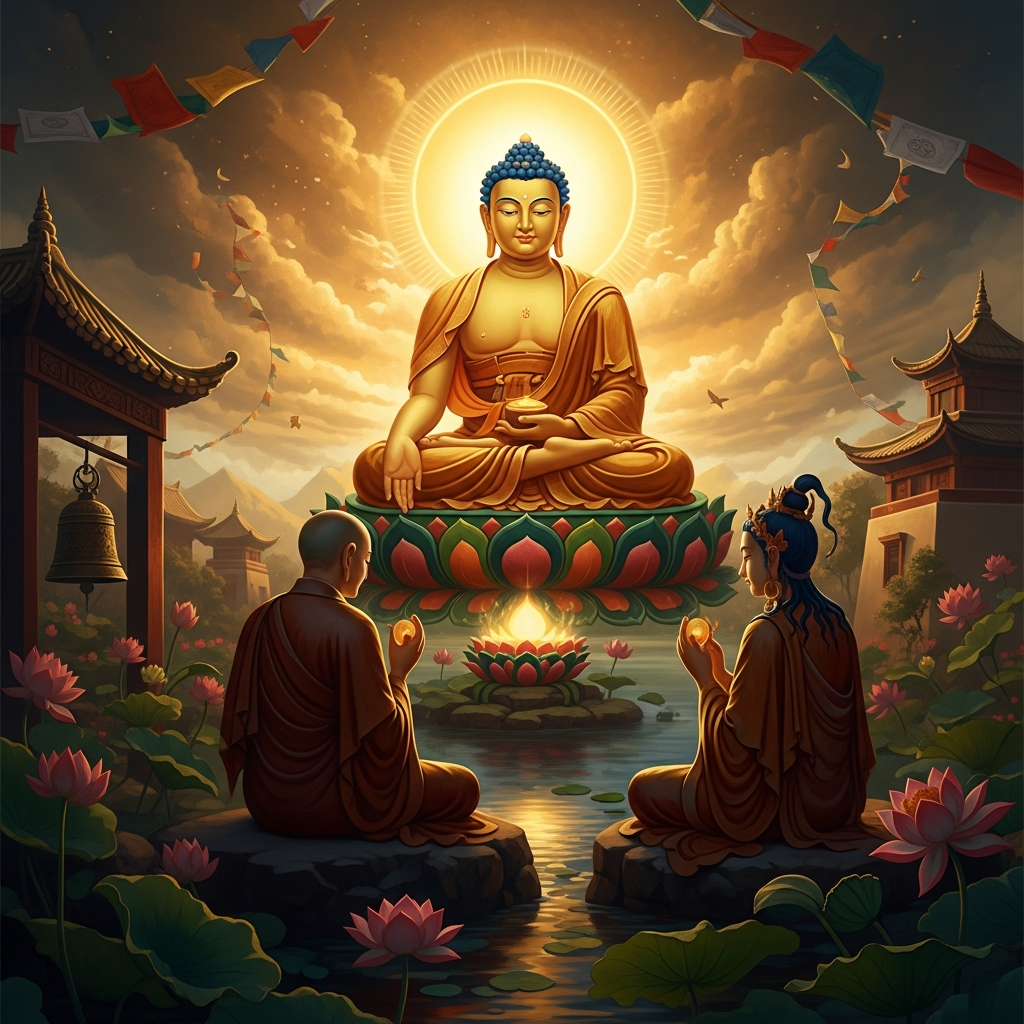
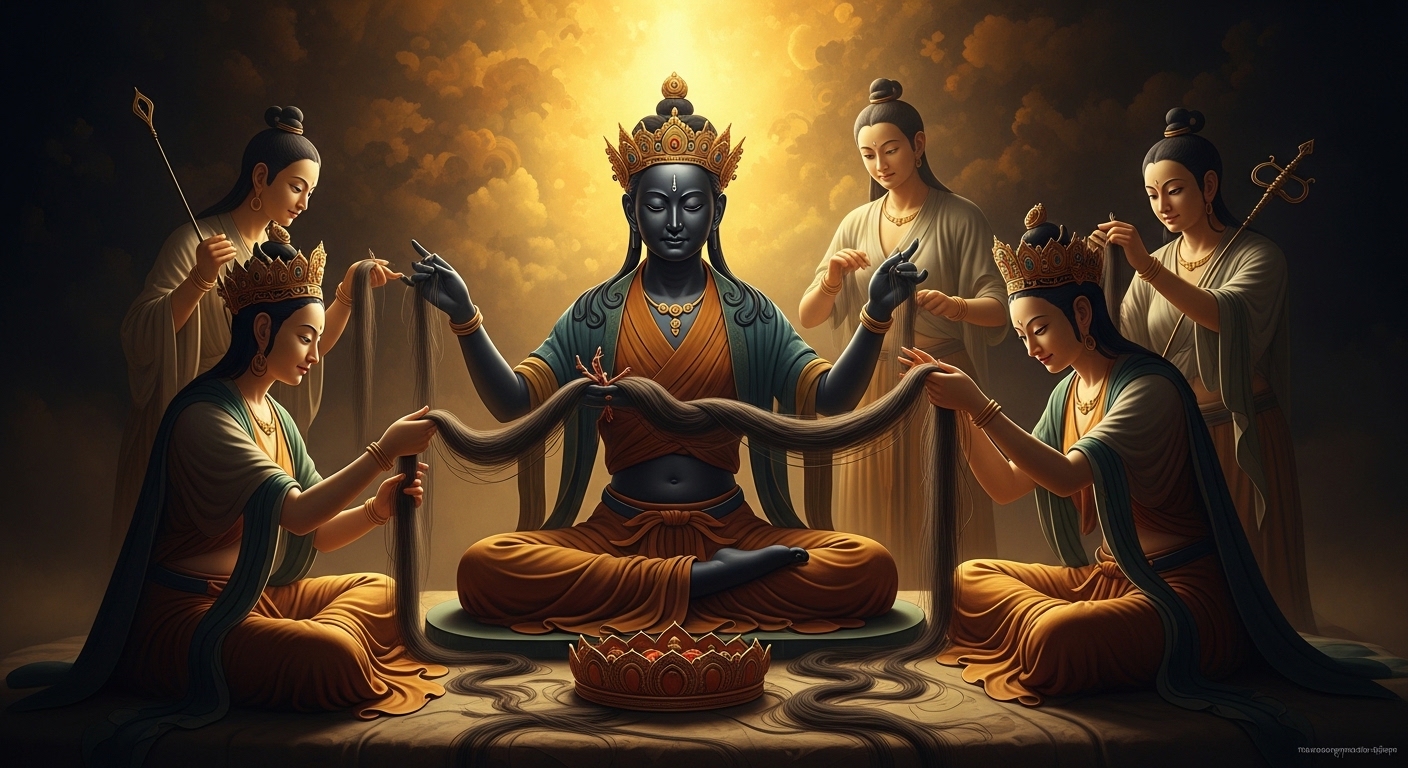
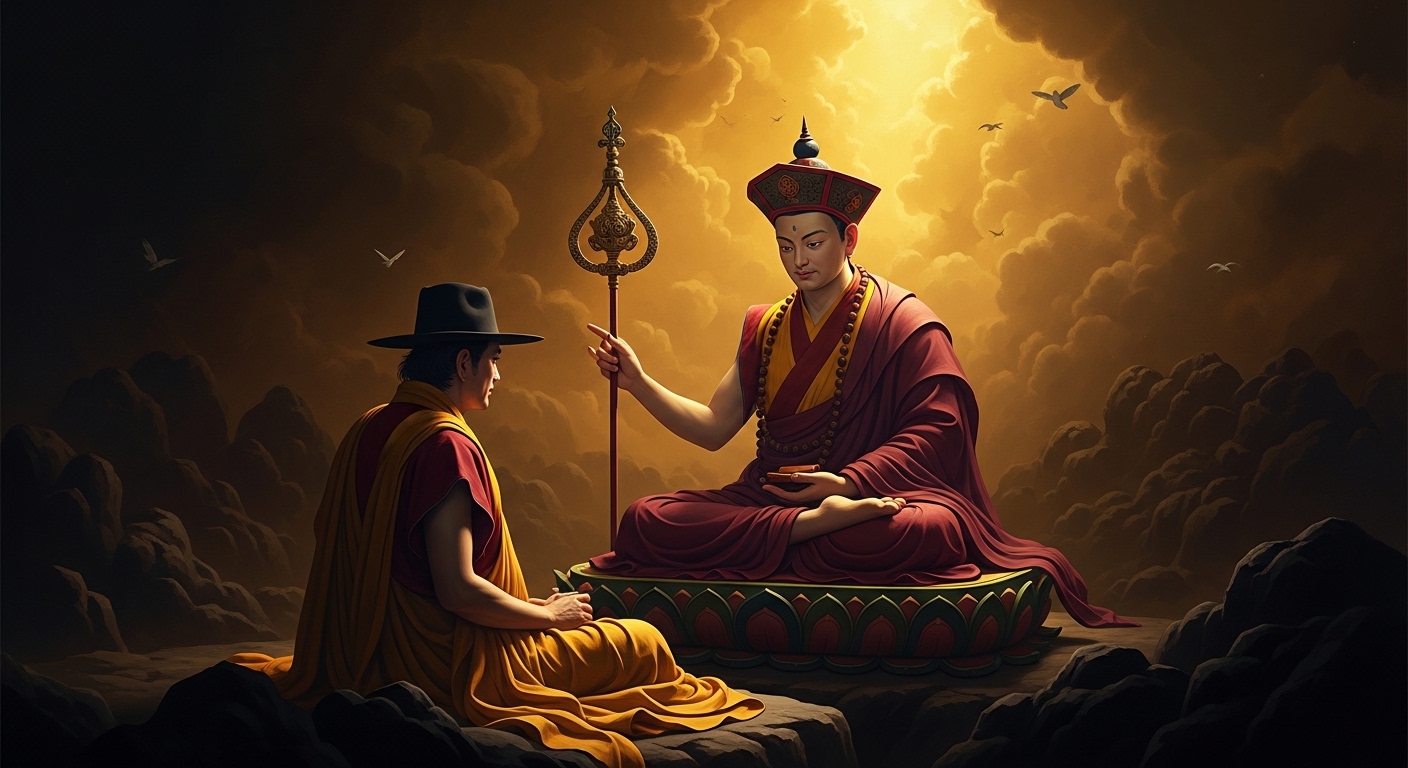
Over aeons, the dakinis wove a crown from their own hair and gave it to the Karmapa — the first of the great Tibetan tulkus, the Black Hat lama whose crown, when worn and beheld, liberates observers through sight alone.
- When
- c. 1110–1193 CE — the First Karmapa, with the Black Crown ceremony established in the 15th century
- Where
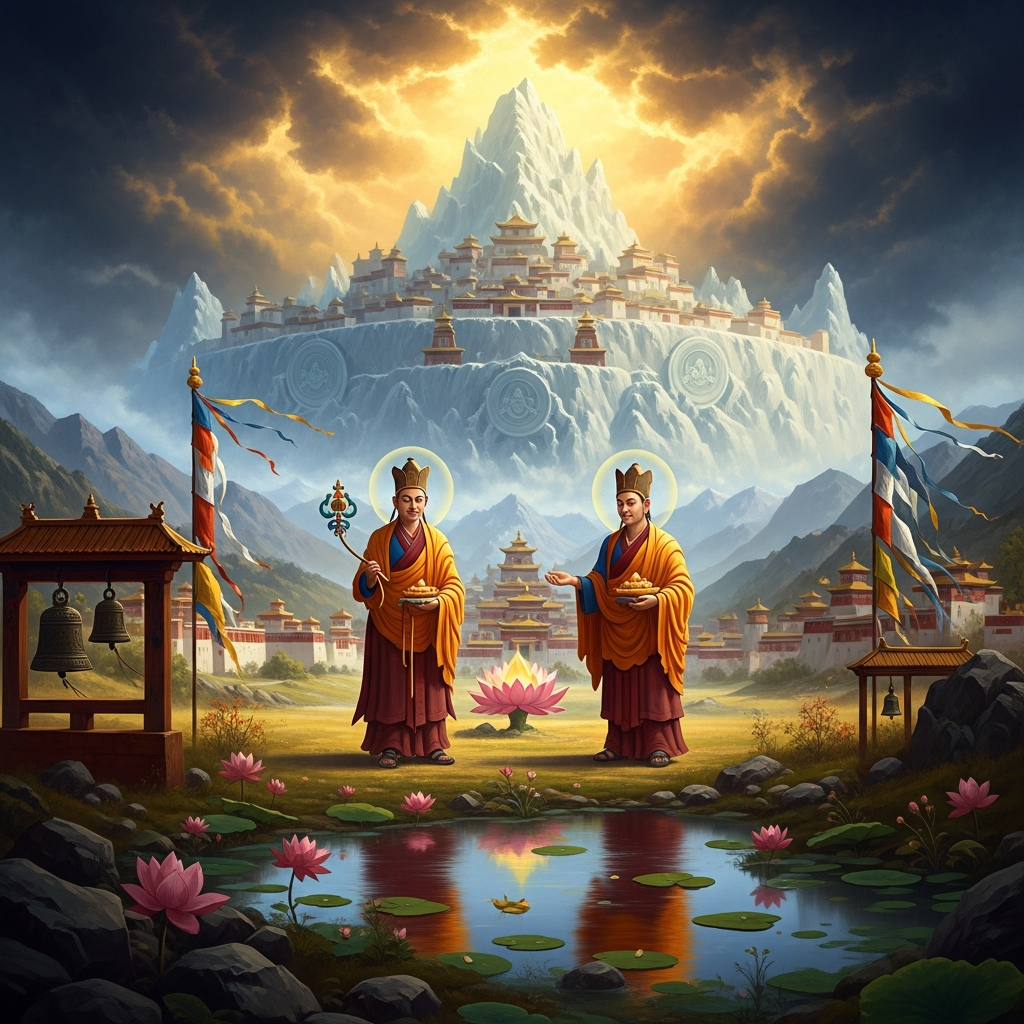
- The Tsurphu Monastery, Tibet — seat of the Karmapa lineage, in the Tolung Valley northwest of Lhasa
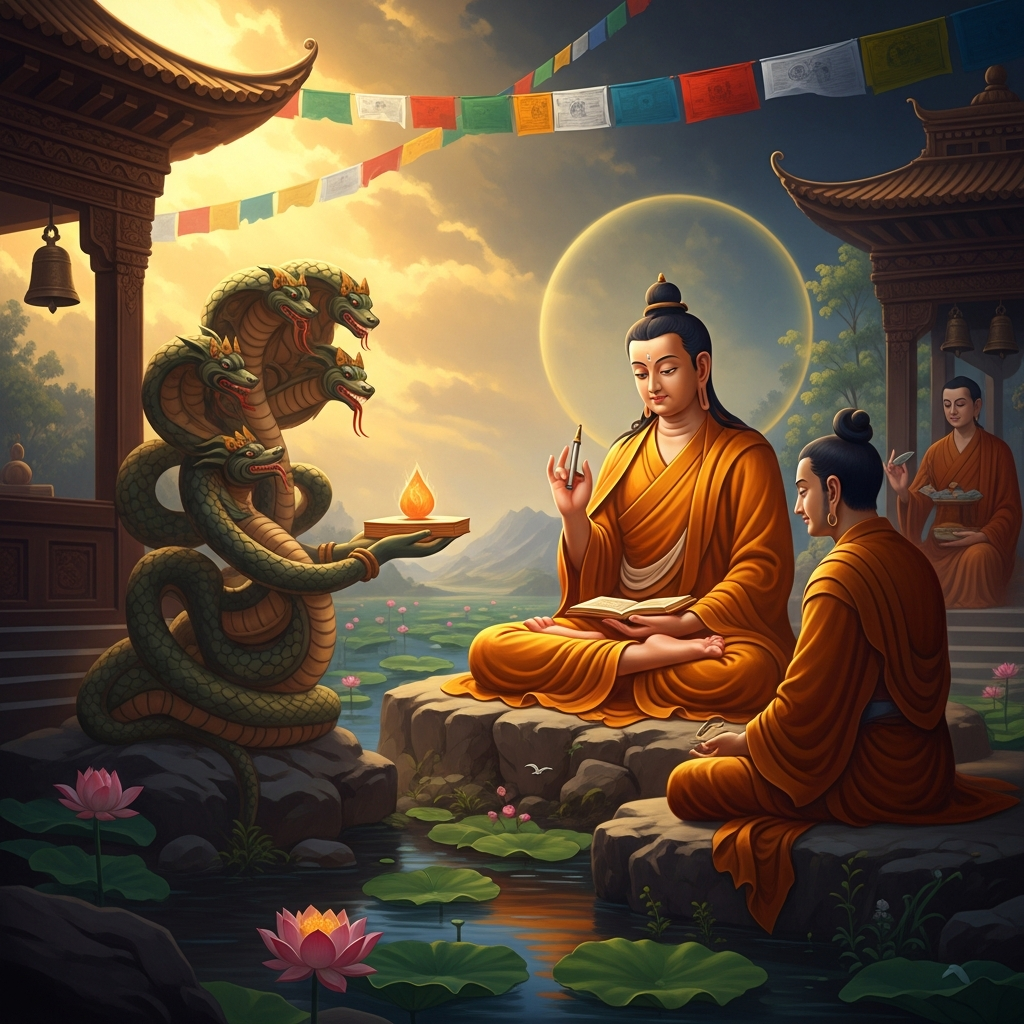
The dakinis wove it over aeons.
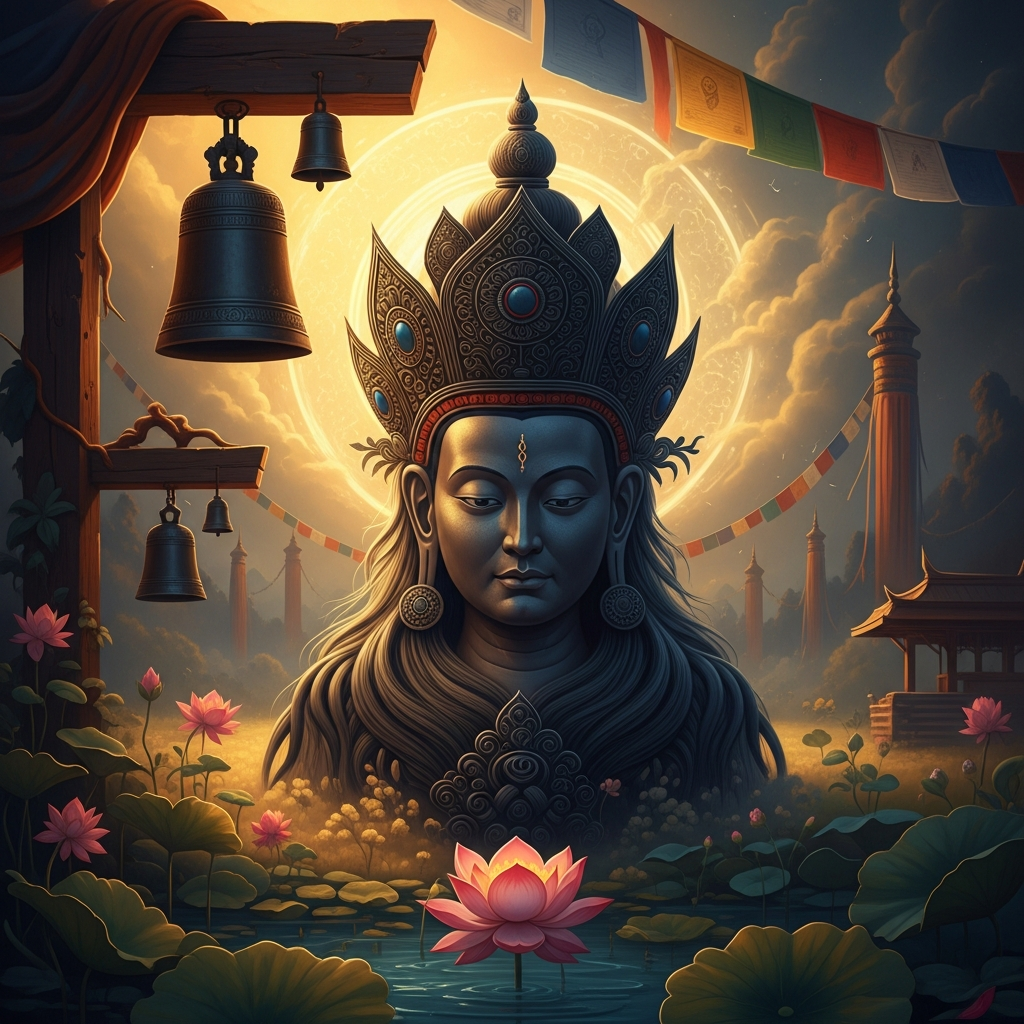
This is the tradition’s account: the wisdom dakinis, recognizing the being who would become the Karmapa and understanding the function he would serve across countless lifetimes, gathered their hair and wove it into a crown. The crown is black — the black of ultimate reality, the black beyond the spectrum of colors that are formed by light and shade. It sits above the Karmapa’s head, visible to those with developed awareness, invisible to ordinary perception.
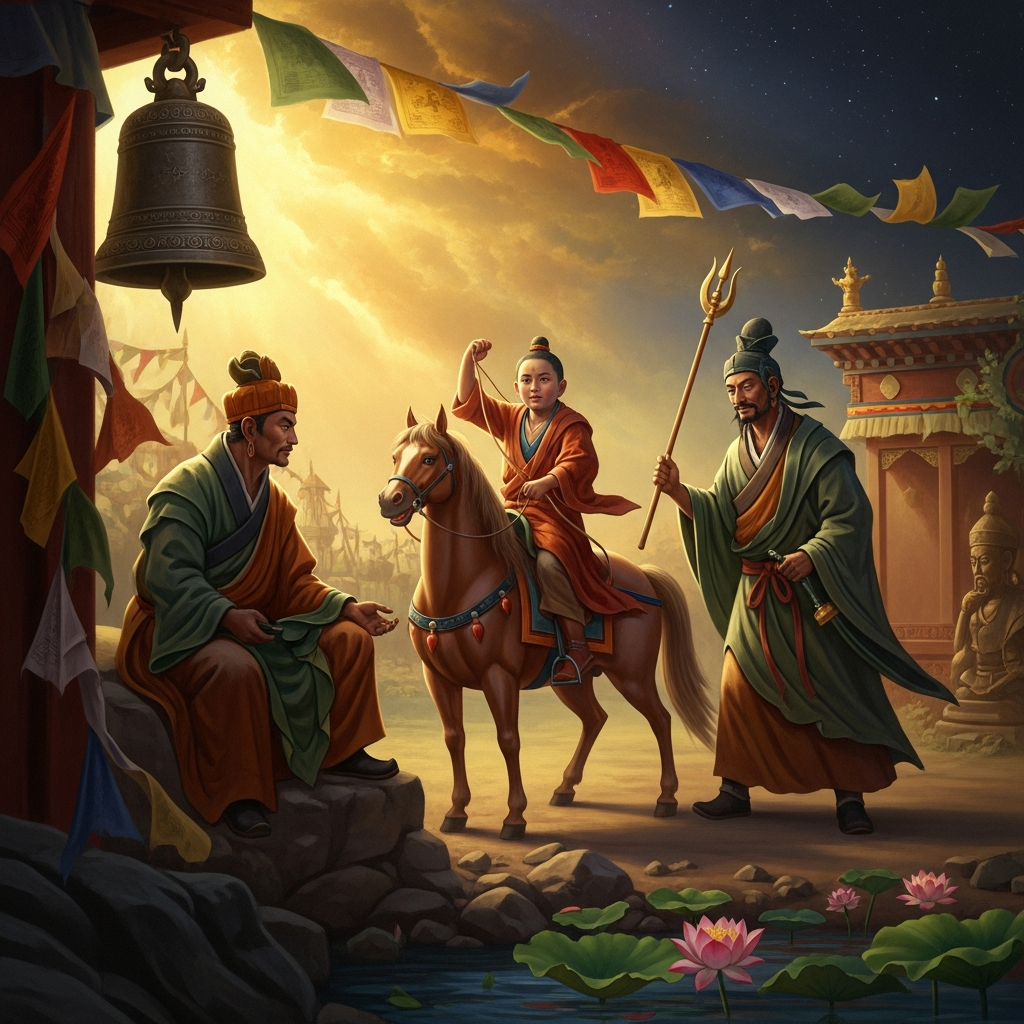
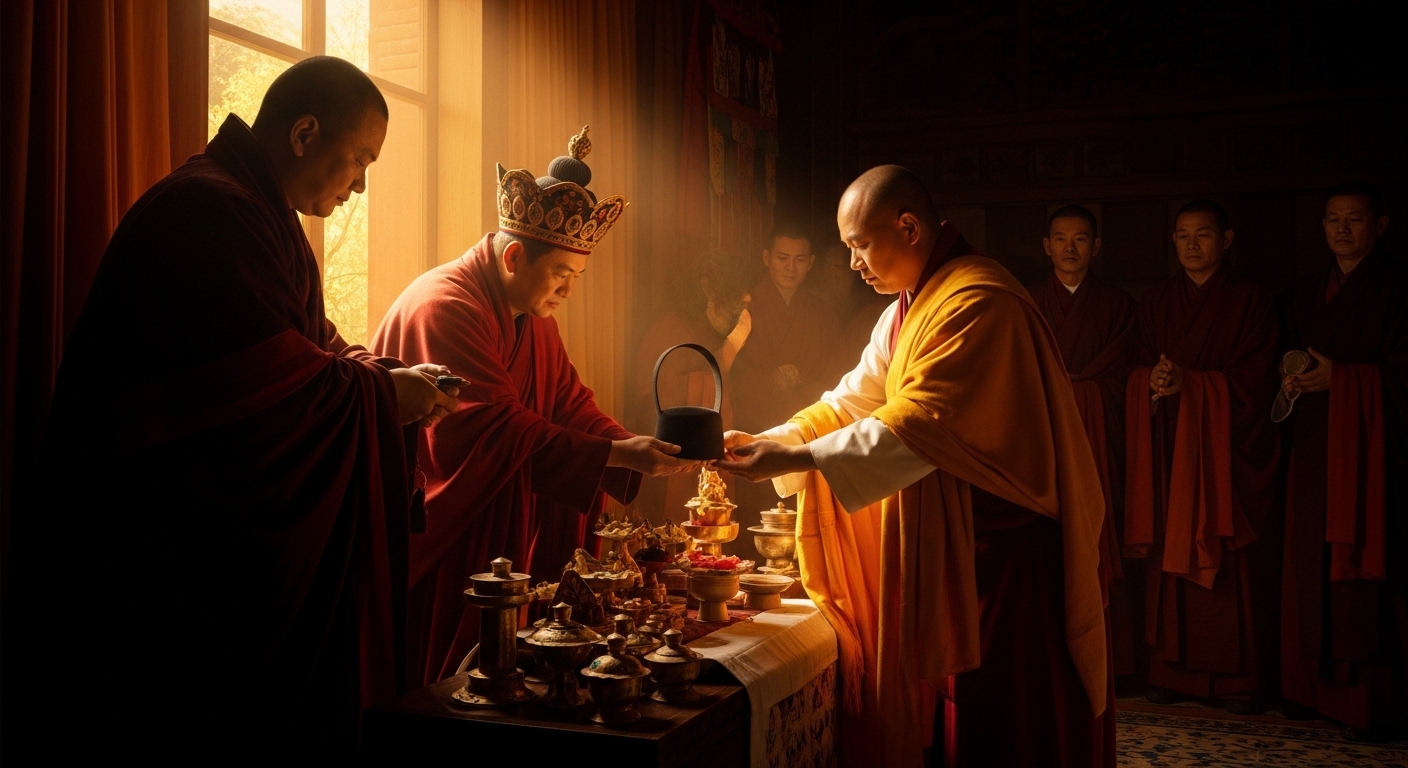
The physical crown that appears in the Black Hat ceremony is a replica — made at the Chinese imperial court in the early fifteenth century when the Emperor Yung Lo had a vision of the immaterial crown and commissioned a physical version so that ordinary people could see what those with developed perception could already see. The replica is kept in a golden box and brought out only for the ceremony. It is treated as a sacred object, not because the physical crown itself contains the power but because it marks the location of the immaterial original.
When the Karmapa holds the crown and bows his head forward — the specific gesture that constitutes the ceremony — he is touching the crown as a reminder, a marking of the moment. The liberation happens in that moment for anyone present who is prepared to receive it. The term the tradition uses is taktrig: liberation through sight.
Dusum Khyenpa is the First Karmapa.
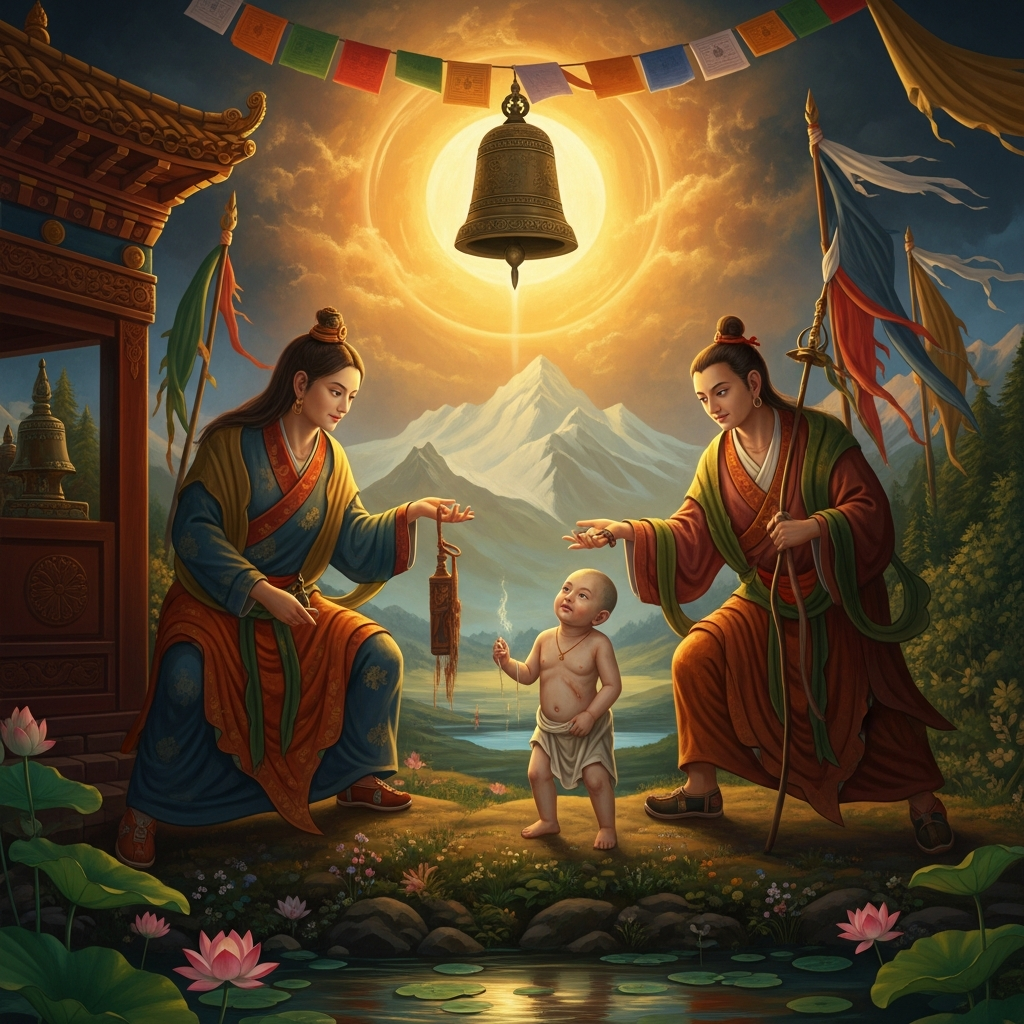
He is recognized as such not at birth — the tulku recognition system that will eventually formalize this takes several generations to develop — but by the depth and swiftness of his realization. He is a student of Gampopa, who is Milarepa’s principal student, who is the link between the wandering cave-yogi tradition and the institutional monasticism that makes the Kagyu lineage transmissible across generations. Dusum Khyenpa founds Tsurphu Monastery. He achieves such complete realization that before his death he announces: I will continue. I will be reborn. You will be able to find me.
This is the founding gesture of the tulku system — the first time a recognized master announces his intention to reincarnate in a findable way and establishes the criteria by which the recognition will proceed. The system works because the candidate is tested: they must demonstrate memory of previous lives, identify objects belonging to their predecessor, display qualities consistent with the lineage. It is not infallible and the tradition does not claim infallibility. It claims probability and verification.
The Black Crown ceremony is still performed.
Wherever the current Karmapa travels — in India, in Europe, in America, in the Asian diaspora — the ceremony is performed for whoever comes. The golden box is opened. The crown is taken out. The Karmapa places it on his head and bows forward, holding the tassel that prevents the crown from falling, and the gathered witnesses look.
What they see is a physical replica of a crown woven from dakini hair, held on the head of a man understood to be the latest in a long line of Karmapa incarnations, in a ceremony that has been performed for six centuries in a tradition that has survived persecution, exile, and diaspora. Some of them see the physical object. Some of them see something more.
The tradition’s claim is that the seeing is the point. The elaborate setup — the history, the lineage, the immaterial crown above the physical one, the ceremony’s careful repetition — all of this is in service of a single moment: the viewer’s eye and the Karmapa’s presence meeting, and something passing between them in that meeting that could not pass any other way.
The dakinis wove the crown for this moment. They are still weaving.
Scenes
Echoes Across Traditions
Entities
- The Karmapa (the lineage of Kagyu leaders)
- the dakinis who wove the crown
- Dusum Khyenpa (the First Karmapa)
- the Emperor of China (who had a physical replica made)
Sources
- Reginald Ray, *Indestructible Truth: The Living Spirituality of Tibetan Buddhism* (Shambhala, 2000)
- Chogyam Trungpa, *The Rain of Wisdom* (Shambhala, 1980)
- Mick Brown, *The Dance of 17 Lives* (Bloomsbury, 2004)