Lucretia: The Woman Whose Death Founded a Republic
Traditional date 509 BCE — the overthrow of the Roman monarchy and the founding of the Republic · Collatia (near Rome) — the house of Collatinus and Lucretia; Rome — the Forum, where Brutus displays the body
Contents
The noblewoman Lucretia, raped by the king's son Sextus Tarquinius, calls her father and husband to witness her shame, names her attacker, and kills herself — and her death ignites the revolution that drives out the kings of Rome forever.
- When
- Traditional date 509 BCE — the overthrow of the Roman monarchy and the founding of the Republic
- Where
- Collatia (near Rome) — the house of Collatinus and Lucretia; Rome — the Forum, where Brutus displays the body
The contest begins as a joke.
The Roman officers besieging Ardea are bored. One evening they discuss whose wife is most virtuous — whether the wives back in Rome are passing the time in feasting and loose behavior, or whether they are maintaining the household properly. The king’s sons and the nobleman Collatinus make the comparison a competition: they ride home unannounced to check.
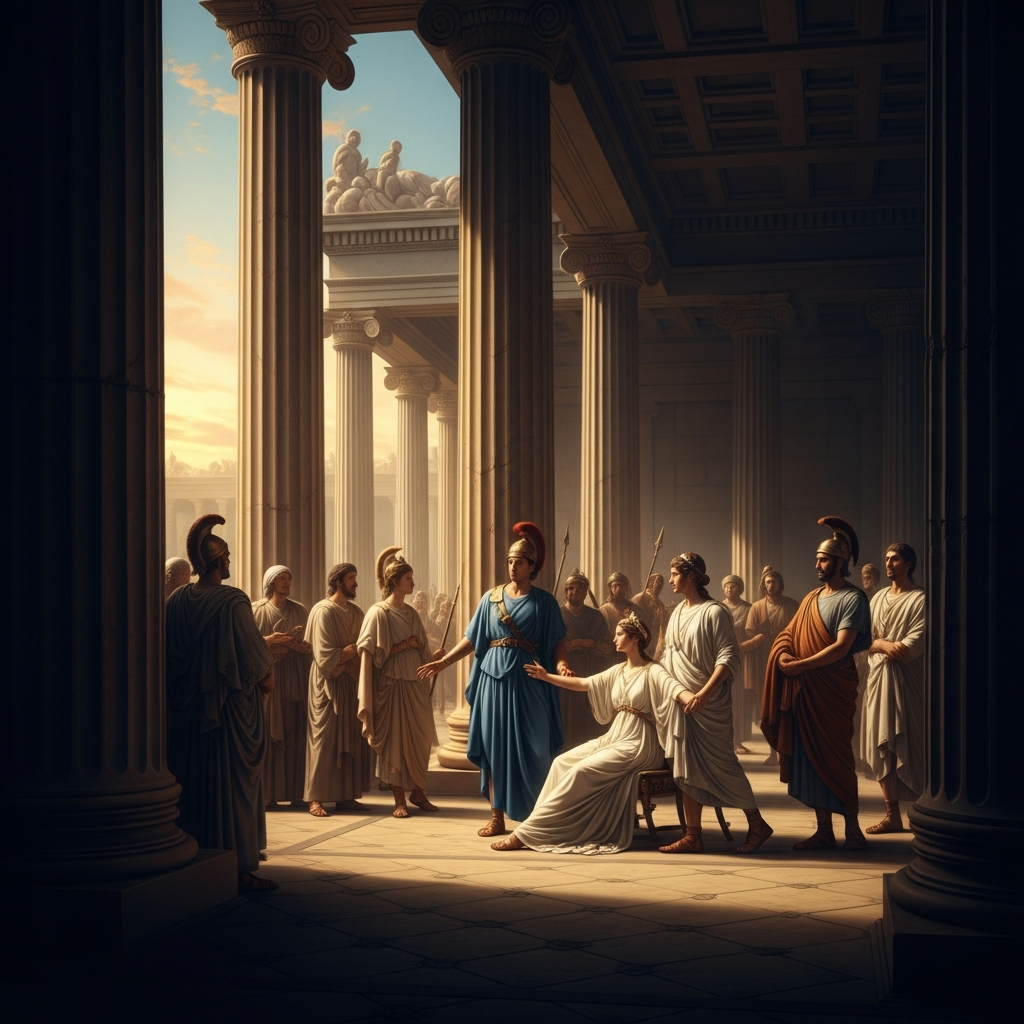
In Rome, the princes’ wives are found feasting with their friends at a late-night party. At Collatia, outside the city, they find Lucretia: spinning wool by lamplight, surrounded by her maids, working while the men are at war. She welcomes her husband and his companions with the warmth of a woman who has nothing to hide and no reason to pretend.
Sextus Tarquinius, the king’s son, takes note of Lucretia. He takes note of her beauty, her virtue, the ease and confidence of a woman entirely at home in her own excellence. He says nothing. He comes back a few days later alone.
She receives him as a guest.
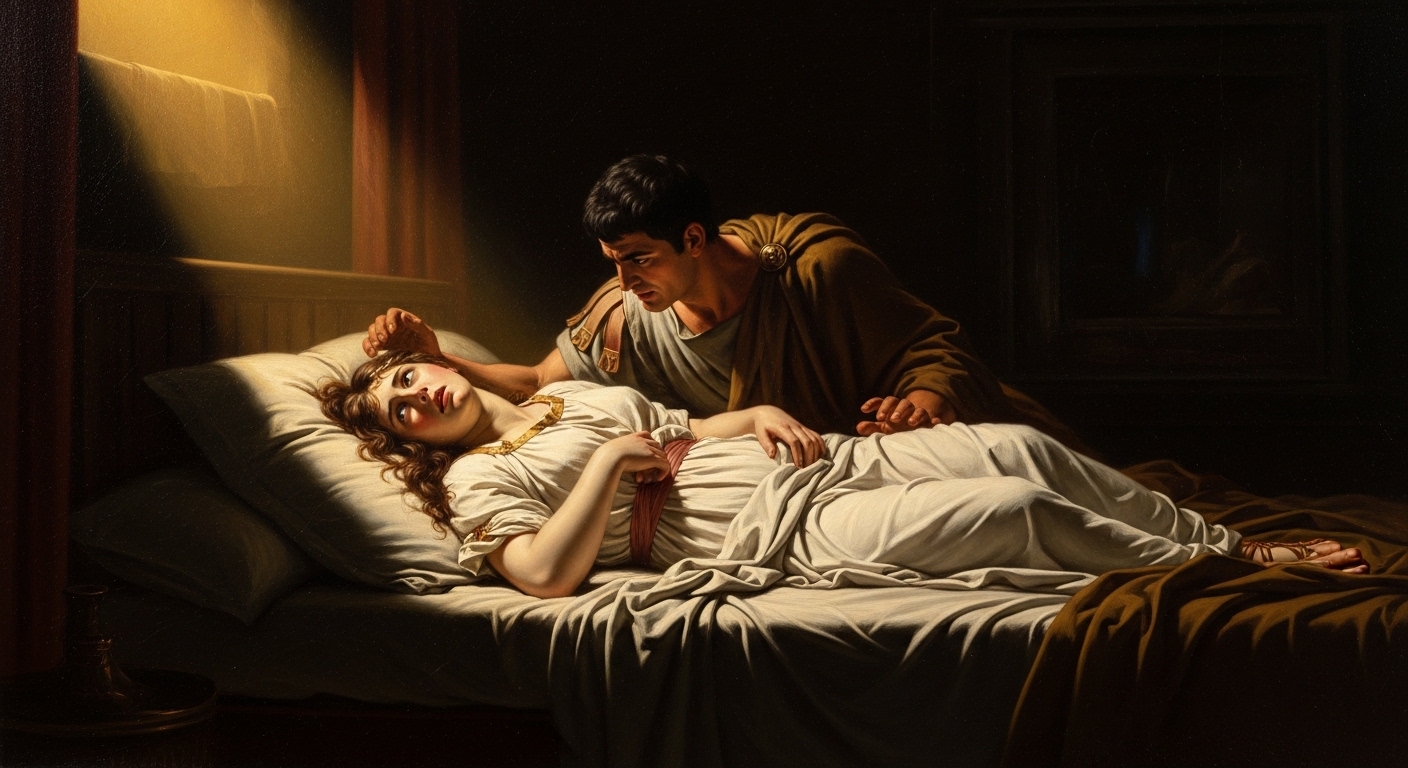
He is the king’s son. She cannot refuse him hospitality. She has him fed and shown to a guest room. In the night, when the household is quiet, he comes to her room with a drawn sword.
What follows is preserved in the ancient sources with a precision that is itself a kind of horror. Sextus Tarquinius threatens her life, then threatens something worse: he will kill her and kill a slave beside her, then tell everyone he found her in adultery. He will destroy her reputation for eternity if she refuses him. Living but shamed versus dead and innocent — her virtue has been constructed as a trap that he springs on her. She cannot escape without loss.
Livy writes, without comment: She was overcome by his persistent lust.
She does not resist. She survives. And in surviving she decides what survival means.
In the morning she sends for her father and her husband.
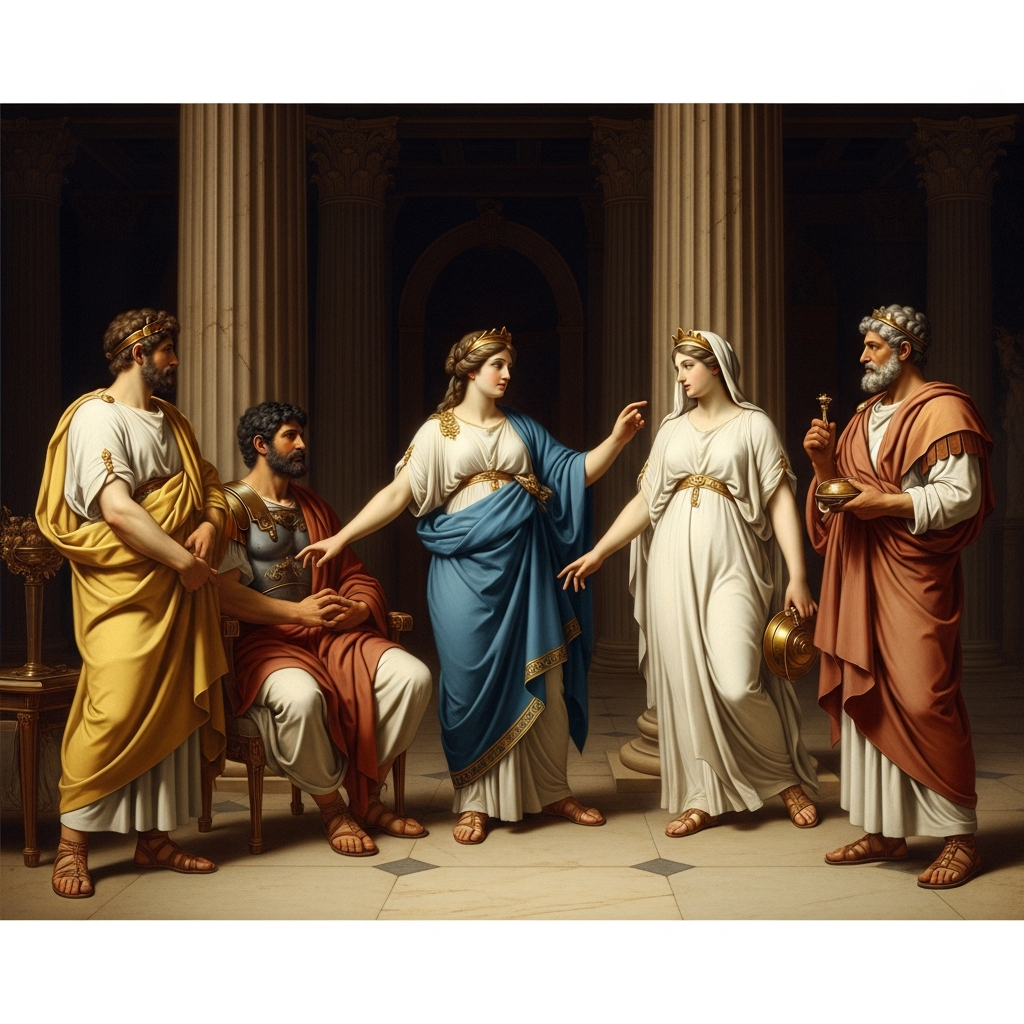
They come with witnesses — Lucius Junius Brutus among them. She is sitting in her room. She tells them what happened. She names Sextus Tarquinius. She is clear and precise and her precision is its own indictment. Then she says the words that will echo through Roman history and all the political philosophy built on it:
What is due to him, you will decide. As for me — though I acquit myself of the sin, I do not free myself from the punishment. No unchaste woman shall henceforth cite Lucretia as her precedent.
She draws a knife and kills herself.
Her father and husband try to stop her. They are not fast enough. They are also, in the Roman tradition that this scene will generate, not the point. The point is what Lucius Brutus does next: he takes the knife from the wound. He holds it up.
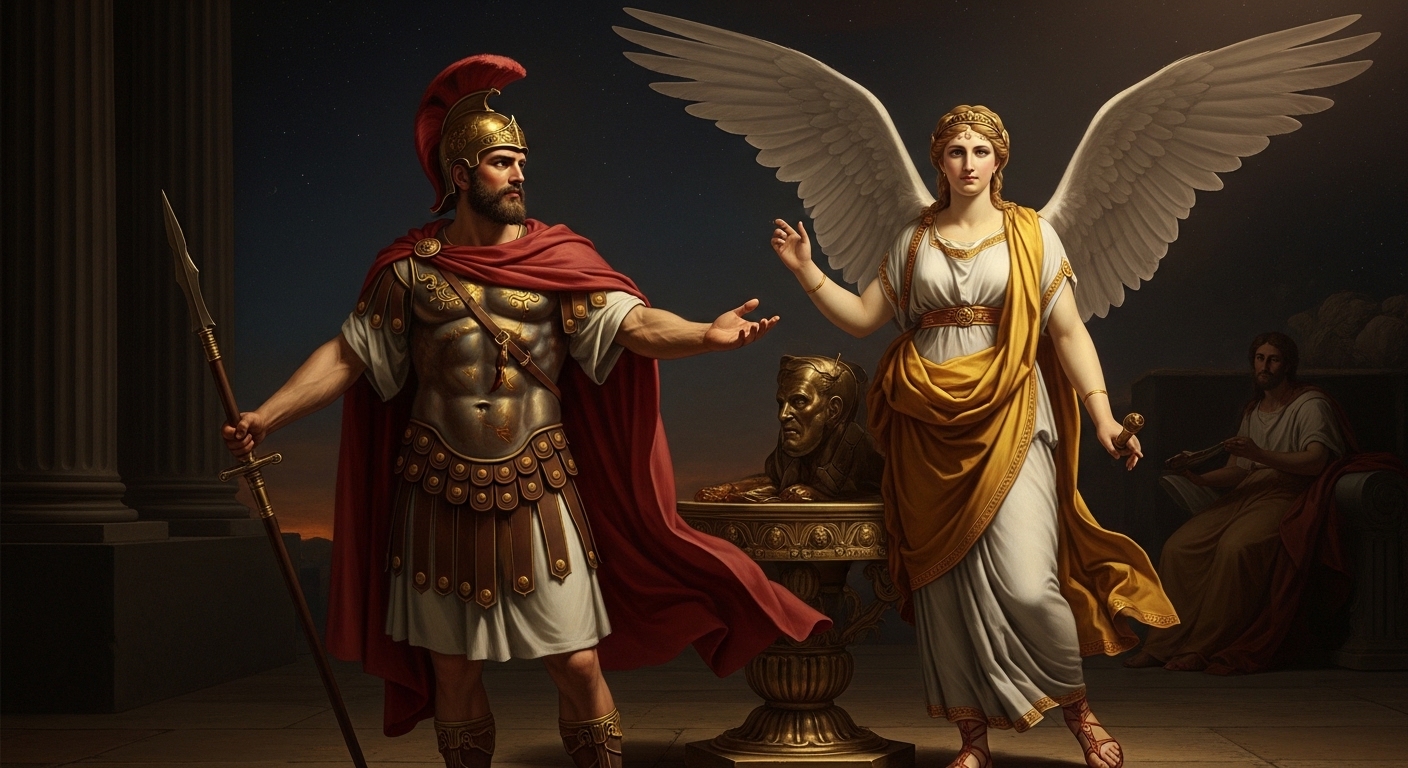
He swears. He swears by this blood — which he calls the most chaste blood before the crime of the king’s son — that he will pursue Lucius Tarquinius Superbus and his whole family by sword, fire, or whatever force he can bring to bear, and that no king will ever again reign in Rome.
He hands the knife to the others. They swear.
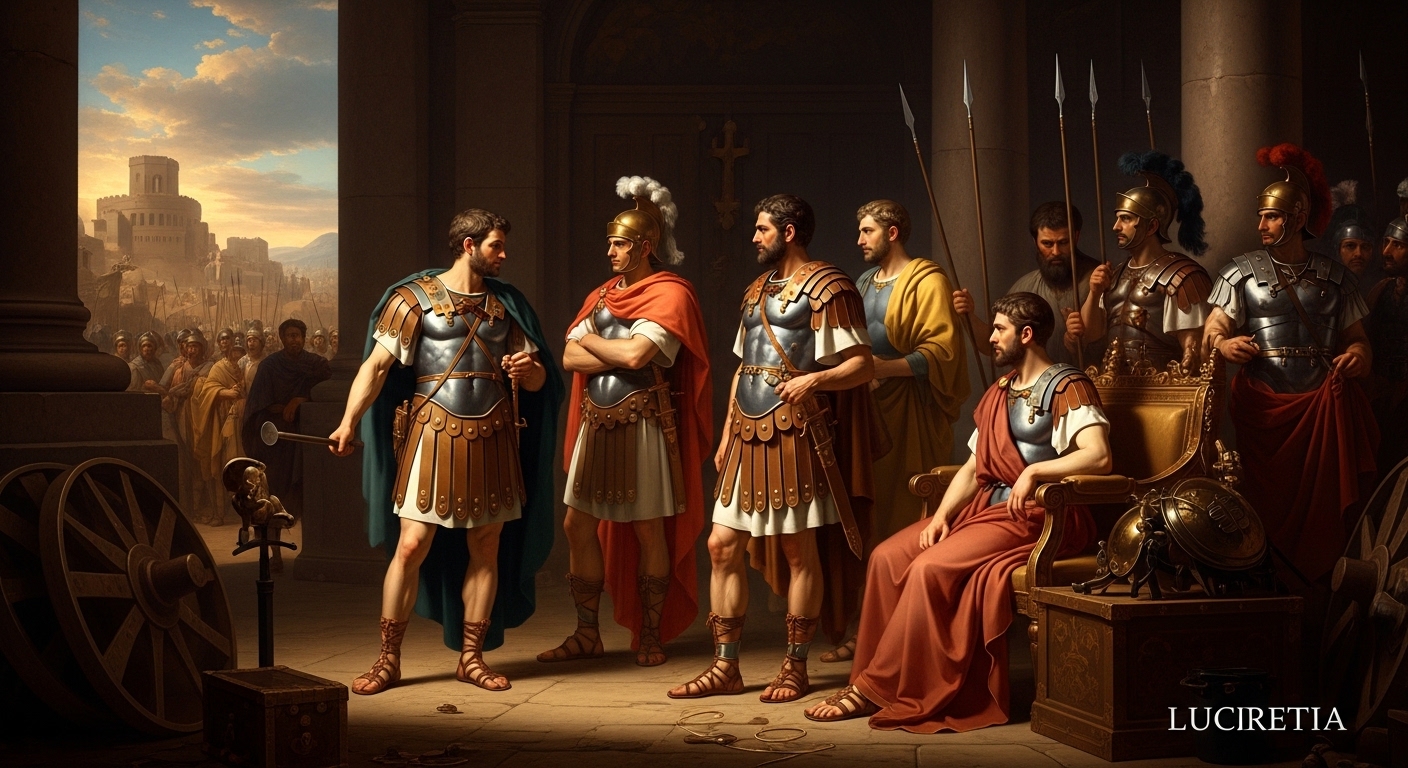
Brutus carries the body to the Forum.
He displays it. He gives a speech. The speech, says Livy, was beyond what you would expect from a man who had spent years playing the fool to protect himself from royal suspicion. He spoke with fury, with precision, with the exact enumeration of the tyrannies of the Tarquinian house. He spoke with the body of Lucretia in view.
The Roman people, looking at what the king’s son had done and what it had required of a woman to respond to it, drive the Tarquins out. Tarquinius Superbus, the king, is barred from the city. His son Sextus flees to Gabii, where he is killed by his personal enemies. The kings are gone.
Two consuls are elected — Junius Brutus and Collatinus — and the Republic begins.
The Republic is made of many things: legal structures, constitutional arrangements, the balance of Senate and magistrates that will govern Rome for five hundred years. But in the Roman imagination it is also made of this: the dead woman on the knife, the blood that Brutus swore by, the moment when a private violation became a public revolution.
Lucretia did not found the Republic. She was the price of it.
Scenes
Echoes Across Traditions
Entities
- Lucretia
- Sextus Tarquinius
- Lucius Junius Brutus
- Collatinus
- Lucretius
- Tarquinius Superbus
Sources
- Livy, *Ab Urbe Condita* I.57-60 (c. 27-25 BCE)
- Ovid, *Fasti* II.685-852 (c. 8 CE)
- Dionysius of Halicarnassus, *Roman Antiquities* IV.64-67 (c. 7 BCE)
- Shakespeare, *The Rape of Lucrece* (1594)