Contents
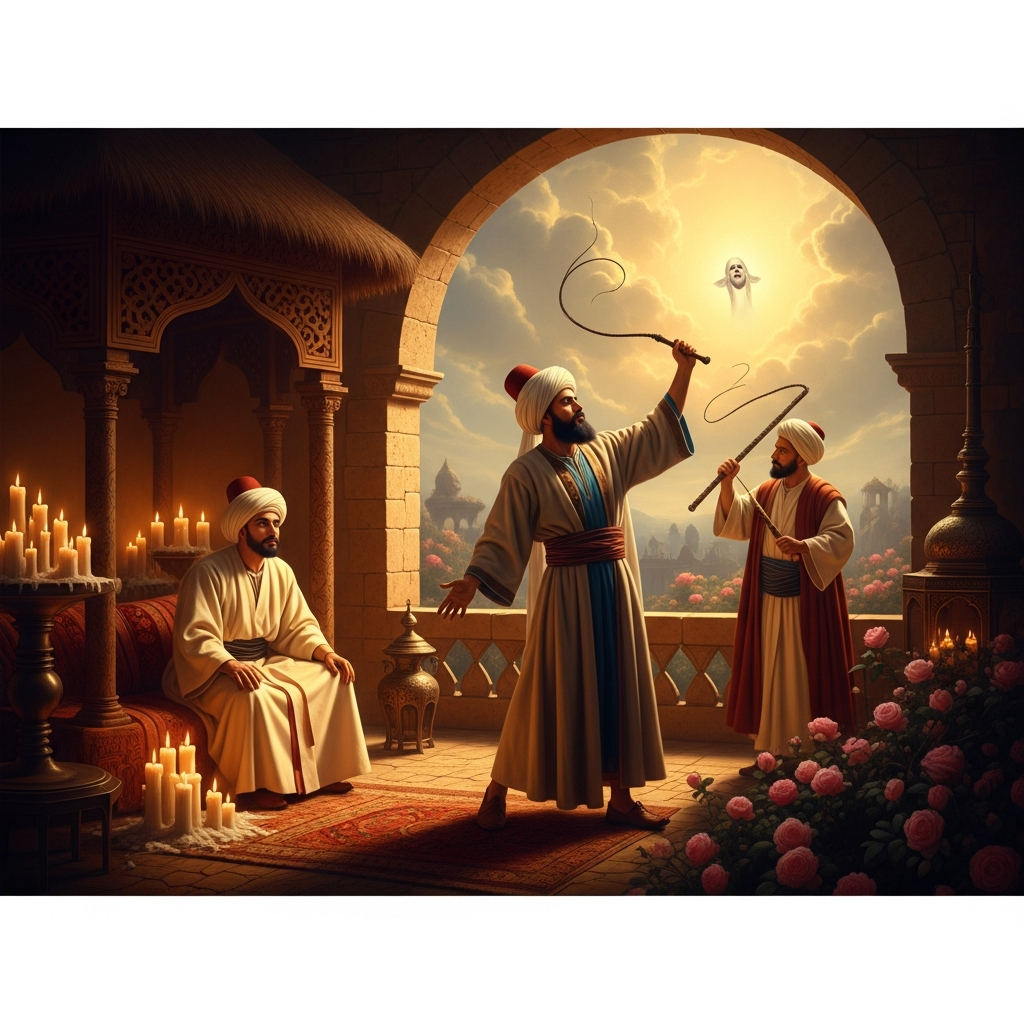
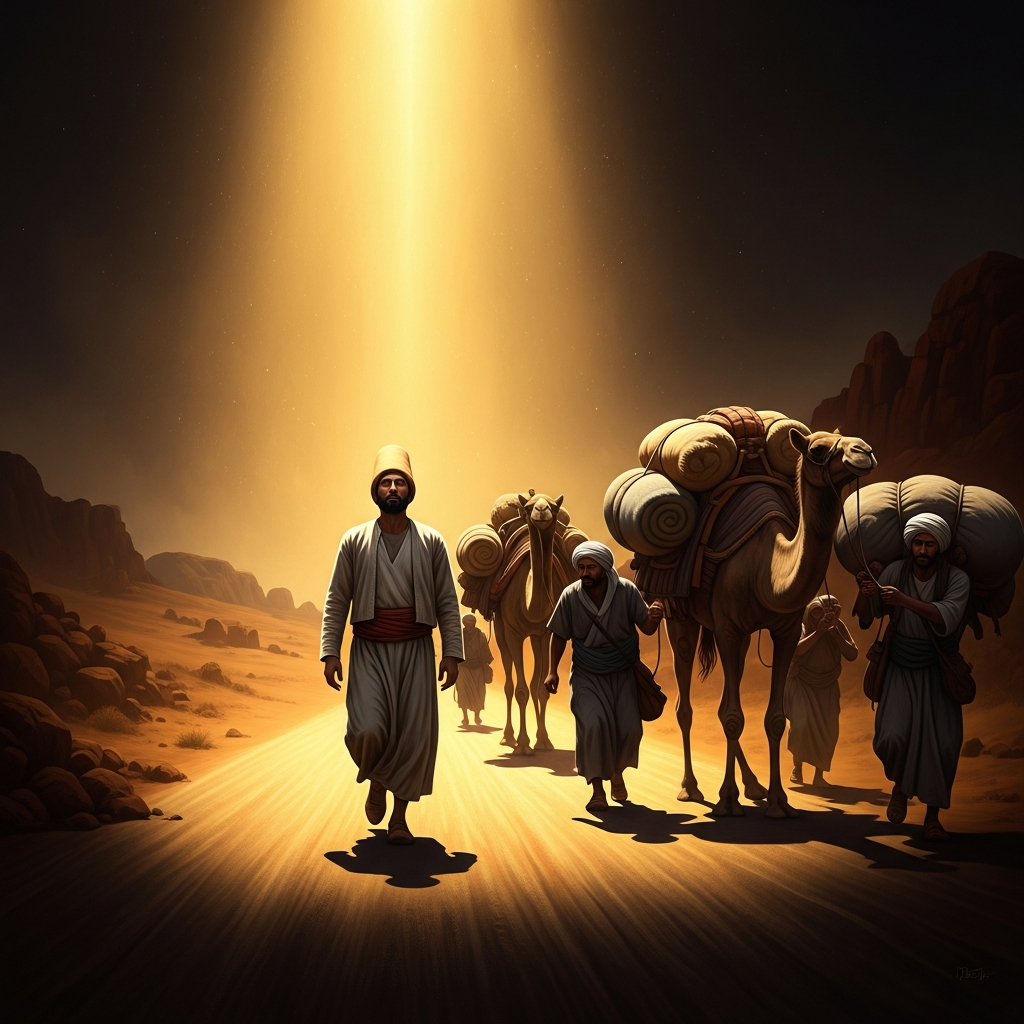
The Sufi masters mapped the inner landscape of the soul's journey toward God into a sequence of stations — from repentance through trust and poverty to surrender — a map that becomes its own teaching: you cannot skip stations, and the arrival at any station shows you a new map.
- When
- 9th–11th century CE — formative period of Sufi systematization, Baghdad and Khurasan
- Where
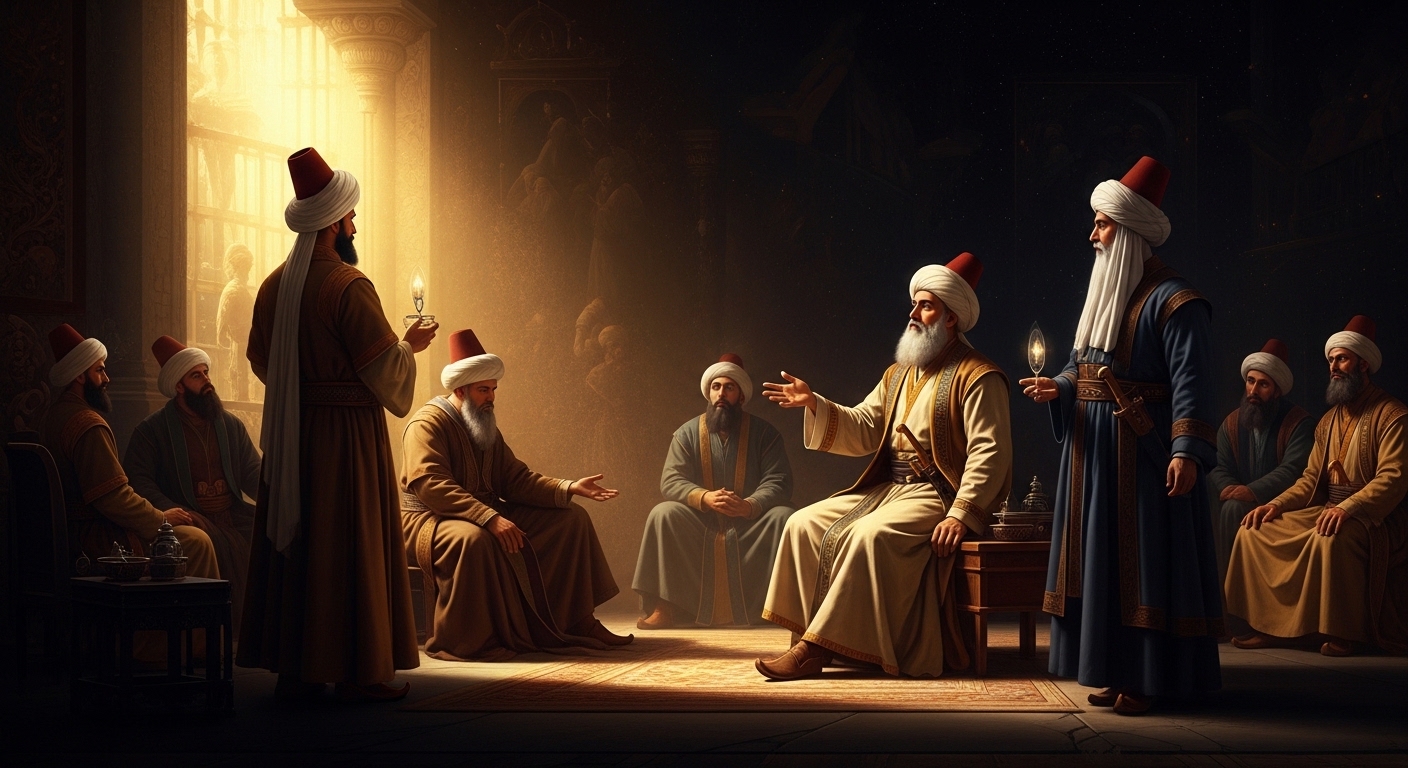
- Baghdad, Iraq — the intellectual center where Sufi doctrine was first systematized
The path begins with a crack.
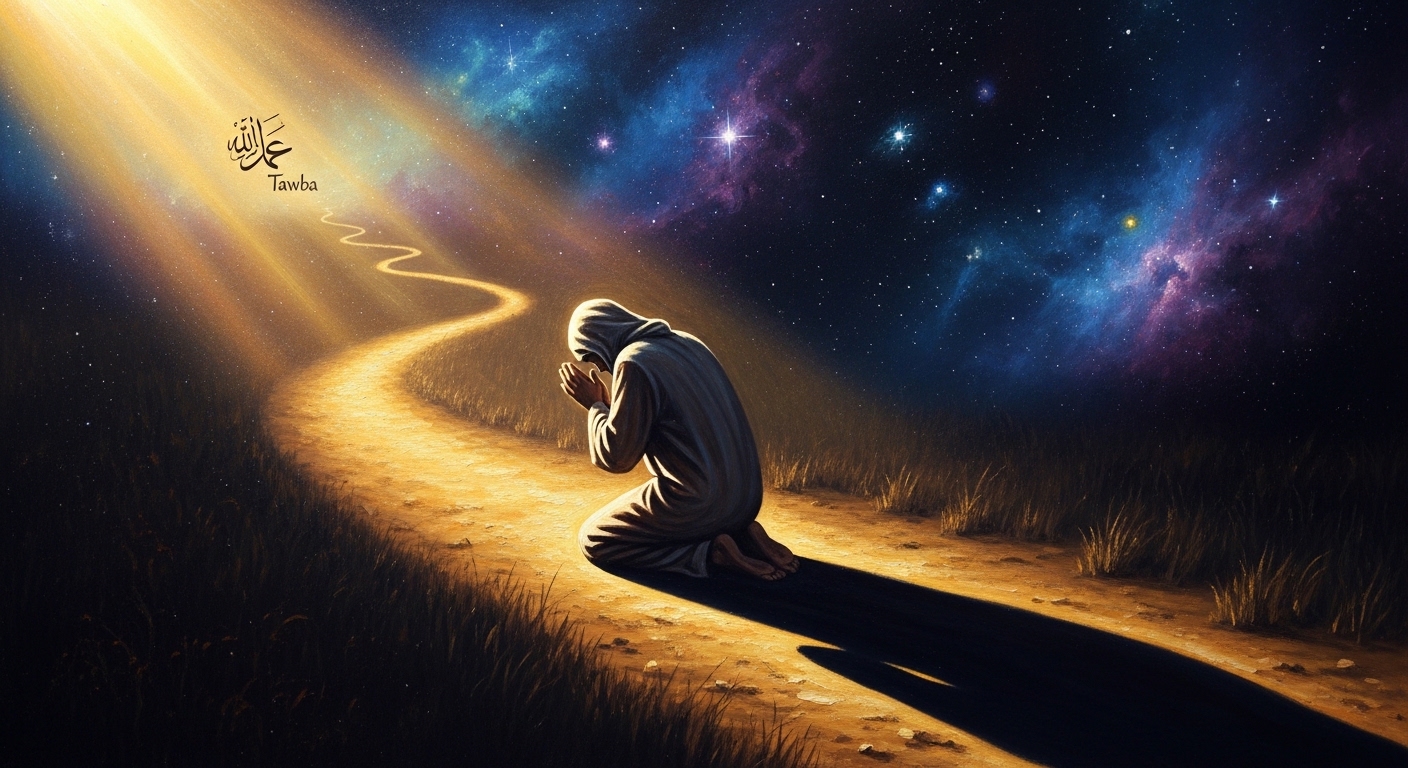
Tawba — repentance — is the first station, and it is not primarily an emotion. The Sufi masters are precise about this. Repentance as an emotion — the feeling of regret for sin — is a common human experience requiring no special preparation. The station of tawba is something more structural: a permanent reorientation of the direction of desire, a turn from the world’s center to a different center. The Arabic root means return — turning back toward what you always should have been facing.
The station is not passed in a single moment of remorse. You inhabit it. You live in it. You discover its edges. You find, after weeks or months of living in tawba, that there are parts of your desire-structure that have not yet turned, that are still aimed at things other than God. The station of repentance is the process of discovering how much of you was not pointing in the right direction.
The stations sequence in the canonical accounts — and there are variations, since different masters counted differently — proceeds roughly as follows.
After tawba comes wara’ — scrupulousness, the careful avoidance of anything doubtful, the expansion of ethical attention from the obviously prohibited to the subtly compromising. After wara’ comes zuhd — renunciation, the progressive detachment from whatever the world offers that is not God. After zuhd comes faqr — poverty, which is not primarily economic but the interior condition of owning nothing, needing nothing, desiring nothing except God.
After faqr comes sabr — patience, the capacity to hold difficulty and uncertainty without either complaint or forced positivity, the quality that allows the practitioner to continue the path when it stops feeling like progress.
After sabr comes tawakkul — trust in God, which is the active surrender of the future to divine providence, not passivity but a radical reconfiguration of the relationship between human planning and divine action.
And at the end, or beyond the numbered sequence, there is rida — contentment, the state in which the soul no longer has preferences between outcomes because it has aligned fully with the divine will. Not resignation — not the defeated acceptance of a person who has given up — but the contentment of a person who has discovered that what God gives is what they wanted before they knew they wanted it.
The distinction between stations and states is architecturally important.
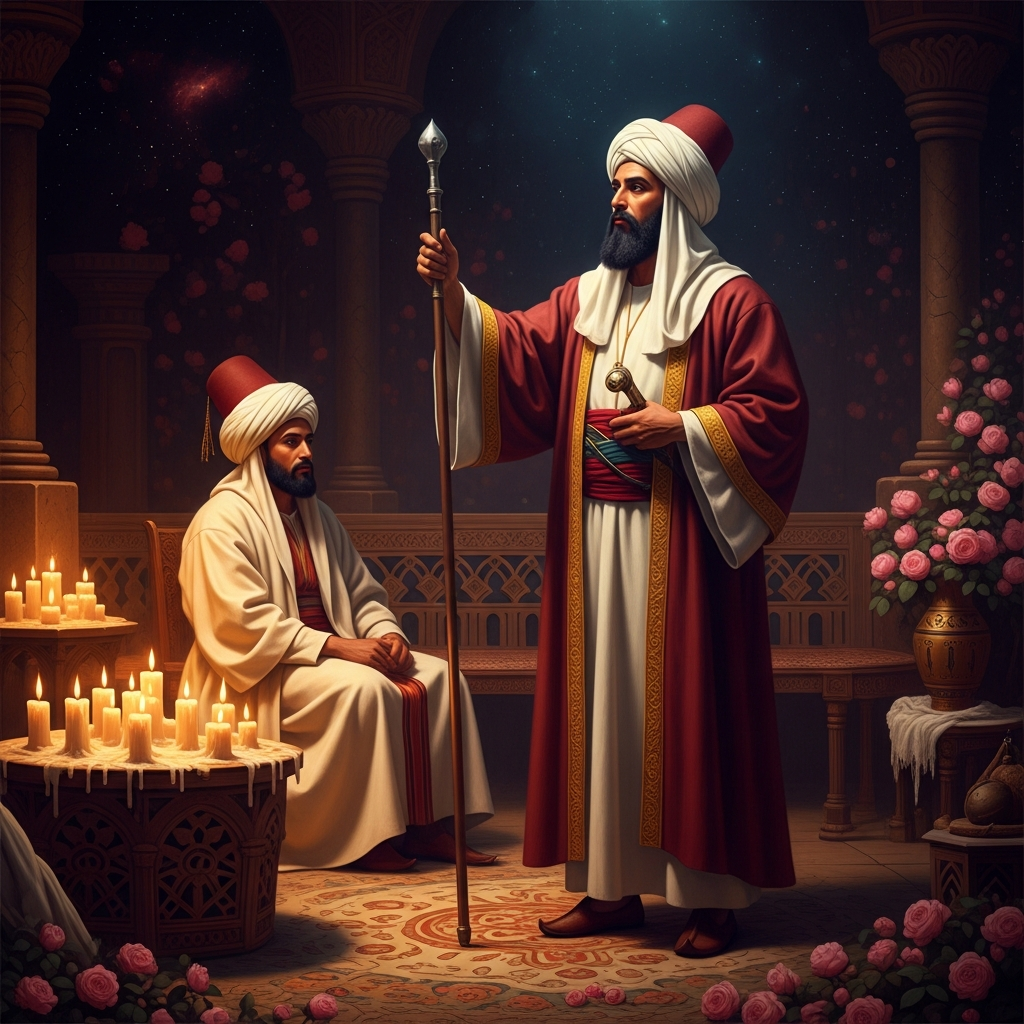
Maqamat (stations) are earned. They are acquired through sustained practice — not once but repeatedly, not in a single great experience but in the accumulated orientation of daily life. You cannot give yourself a station as a gift. You cannot have it bestowed by your master. You inhabit a station only when the qualities it represents have become stable features of your character.
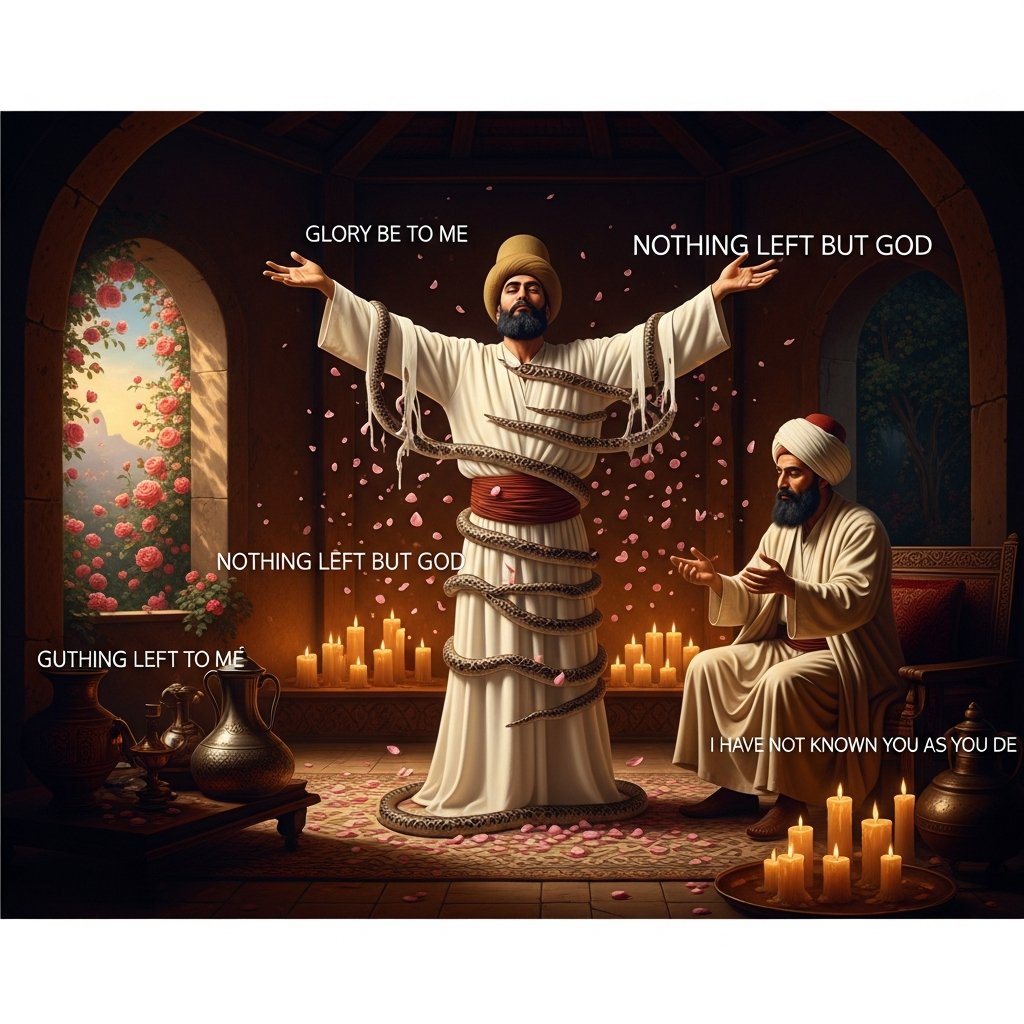
Ahwal (states) come and go without your control. The state of joy (farah), the state of fear (khawf), the state of intimacy (uns), the state of contraction (qabd) and expansion (bast) — these arrive and depart like weather. You cannot produce them by effort. You can only create conditions in which they are more likely to arise. The master’s job is partly to help the student distinguish genuine states from theatrical performances of states — the feeling of expansion from the claim of having it.
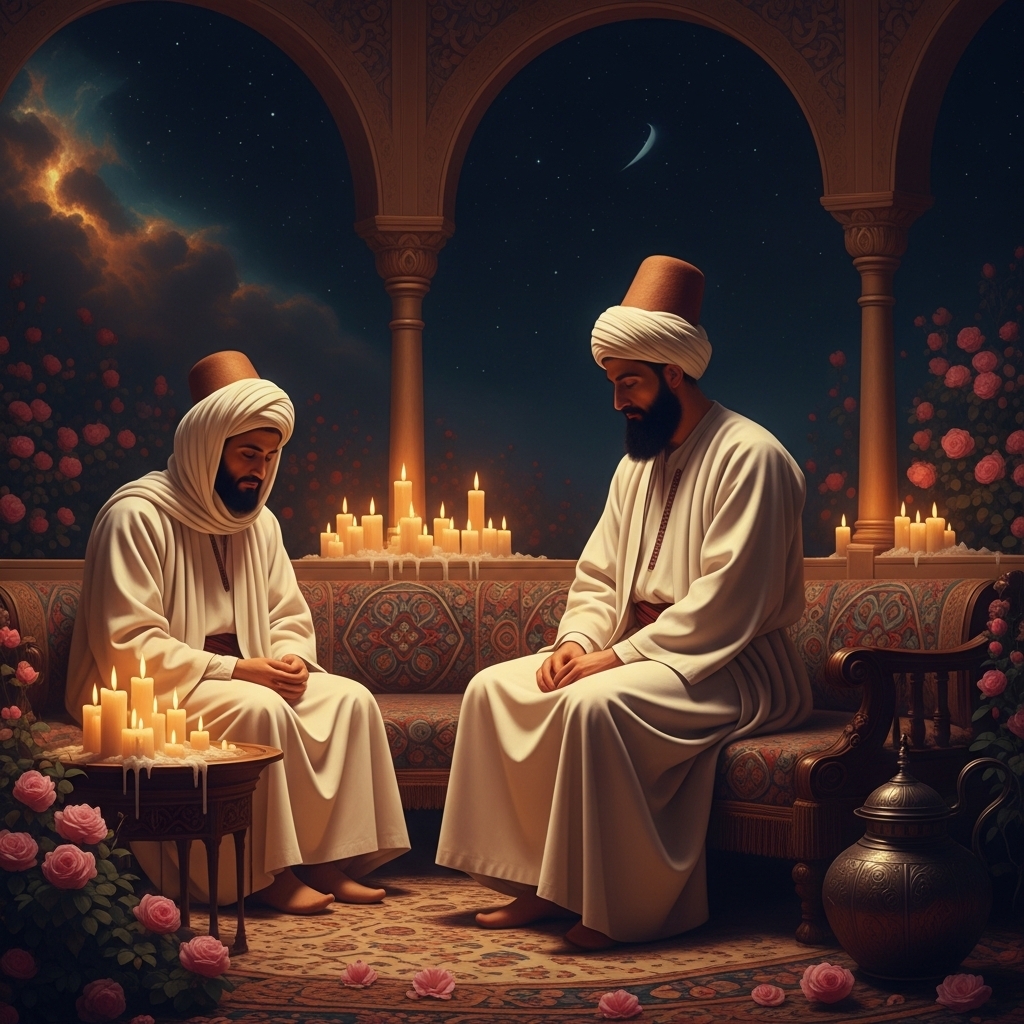
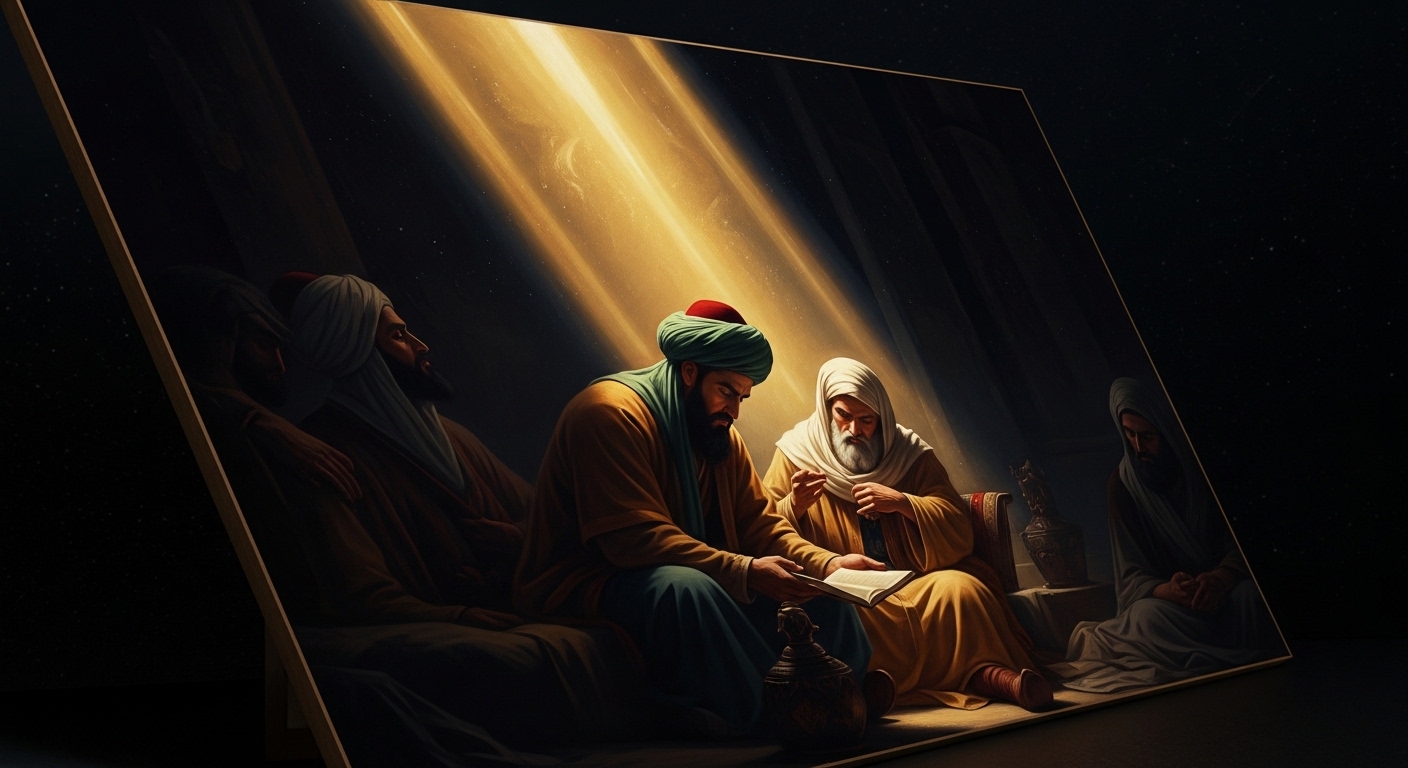
Al-Harith al-Muhasibi, the ninth-century Baghdad teacher, wrote the first sustained account of this kind of interior self-examination. His Riaya — the Observance — is a clinical text: it diagnoses the mechanisms by which the soul deceives itself, catalogues the forms of self-congratulation that masquerade as spiritual progress, and offers specific observational tools for detecting the difference between genuine station and performance.
The maps do not make the journey.
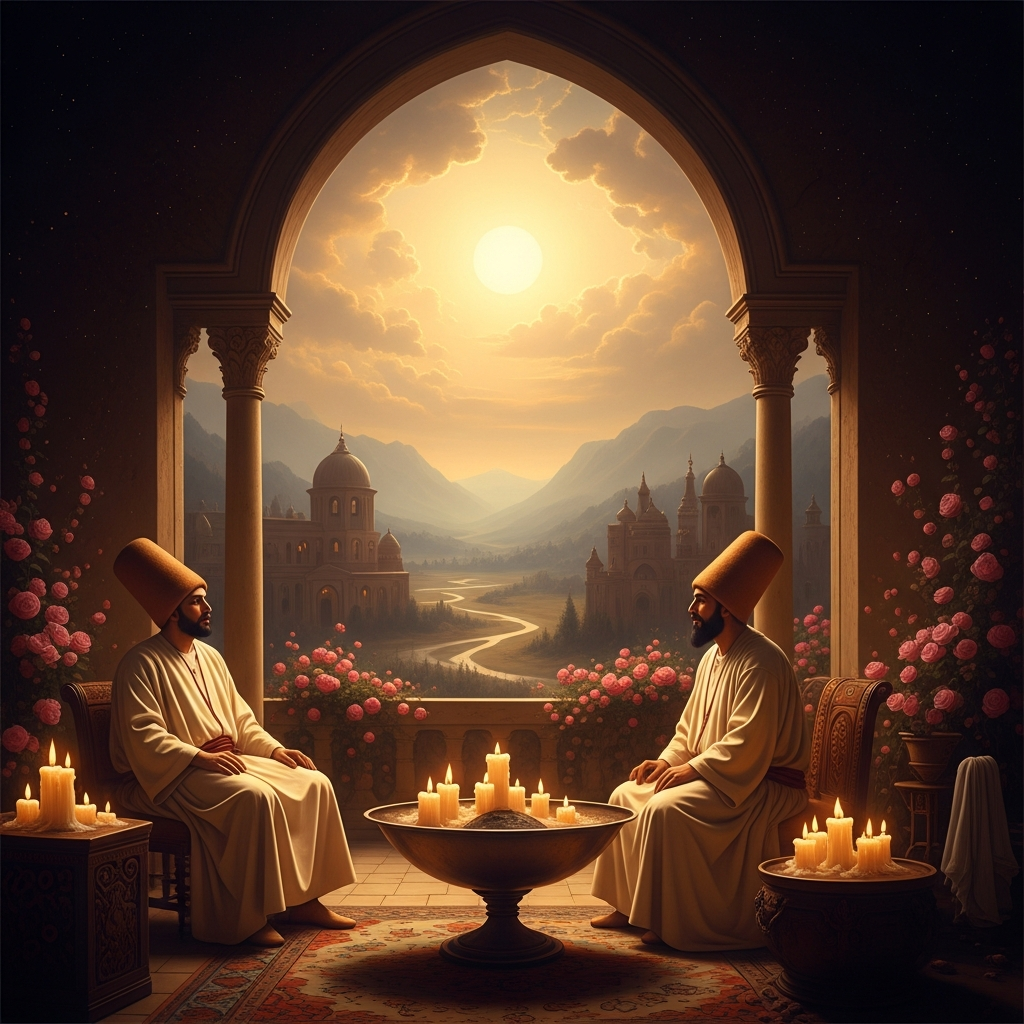
Every master in the tradition knows this and says it differently. The map is useful exactly until you enter the territory, at which point the territory is far more specific than any map and requires a guide who has been there, not a cartographer who has studied maps. The stations are described in the manuals with enough specificity to be recognizable — this is what patience looks like from inside — but not enough to be fabricated. You know the station of sabr not because you have read what it is, but because you have lived three months of difficulty and neither broken nor been crushed, and afterward the quality the books call sabr is a feature of your actual character.
The path begins with a crack in the self that you thought was solid.
You follow the crack down.
Eventually you reach something that does not crack.
That is where the journey began all along.
Scenes
Echoes Across Traditions
Entities
- Al-Harith al-Muhasibi
- Al-Qushayri
- Abu Talib al-Makki
- Al-Ghazālī
Sources
- Al-Qushayri, *Risala fi 'Ilm al-Tasawwuf* (Epistle on Sufism), 1046 CE
- Abu Nasr al-Sarraj, *Kitab al-Luma* (Book of Flashes in Sufism), c. 988
- Al-Ghazālī, *Ihya Ulum al-Din*, Books 31-40 on the saving qualities
- Annemarie Schimmel, *Mystical Dimensions of Islam* (UNC Press, 1975), chapter 3