Contents
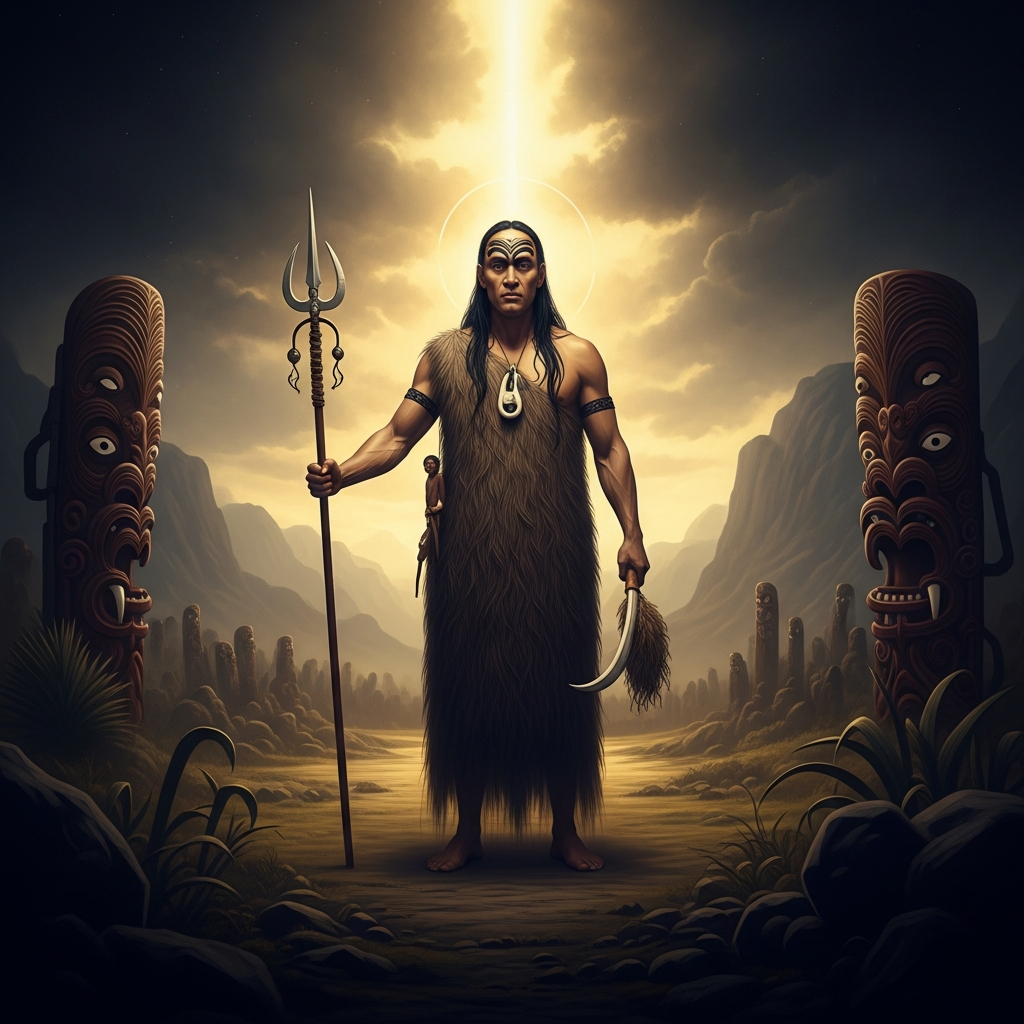
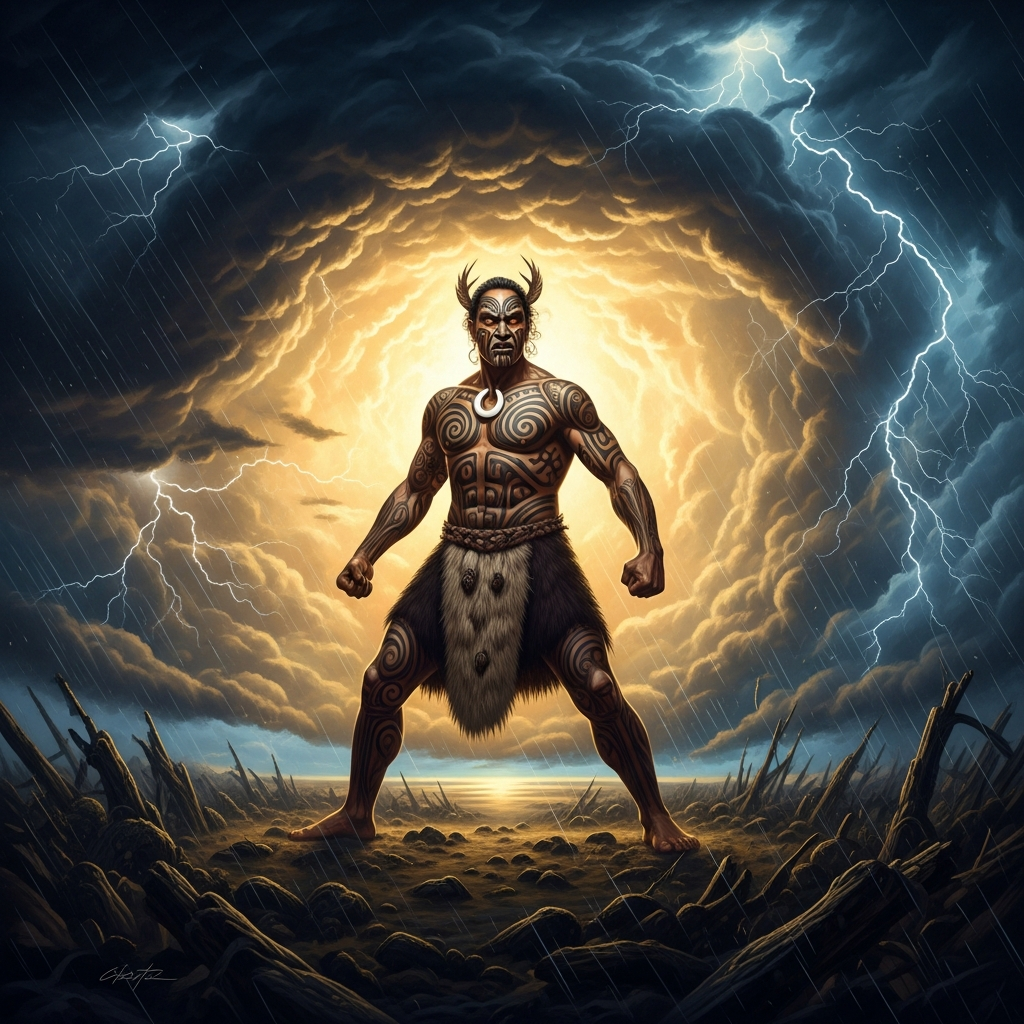
The trickster demigod Māui climbs to the world's rim at dawn and ropes the sun itself, forcing it to slow its crossing so that his mother's bark-cloth can dry and the world's people can live full days.
- When
- mythic time — before the world found its proper rhythm
- Where
- Te Roto-a-Māui, the pit where the Sun sleeps each night — eastern edge of the world
The days are too short.
This is the complaint that starts everything. Māui’s mother Tāranga beats her bark-cloth in the morning and hangs it to dry, but before it can properly set the sun has already bolted across the sky and plunged the world back into darkness. Fish rot before they can be smoked. Kumara plants barely sprout before the light abandons them. Children fall asleep with tasks unfinished. The sun is selfish, or thoughtless, or simply does not know what it has done.
Māui watches his mother curse the fading light and decides the sun needs to be taught a lesson.
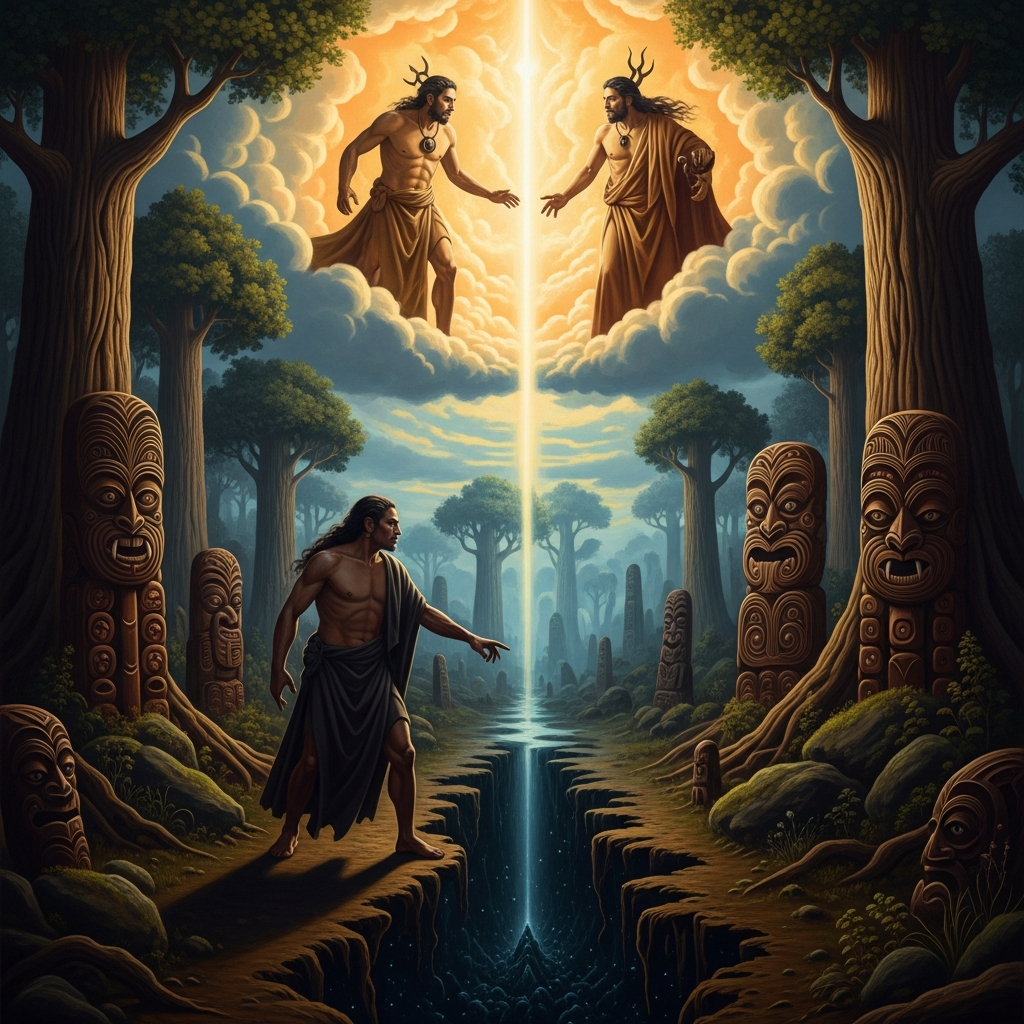
He goes to his grandmother and asks for the magical jawbone that hangs at her side — the jawbone of an ancestor, the first magical weapon, the tool from which all his later miracles will flow. She gives it. He twists rope from the strongest flax he can find, lengths upon lengths of it, enough rope to ring the world. His brothers think he has gone mad. He tells them nothing except that they need to come east, to the pit at the rim of the world where the sun sleeps before it rises.
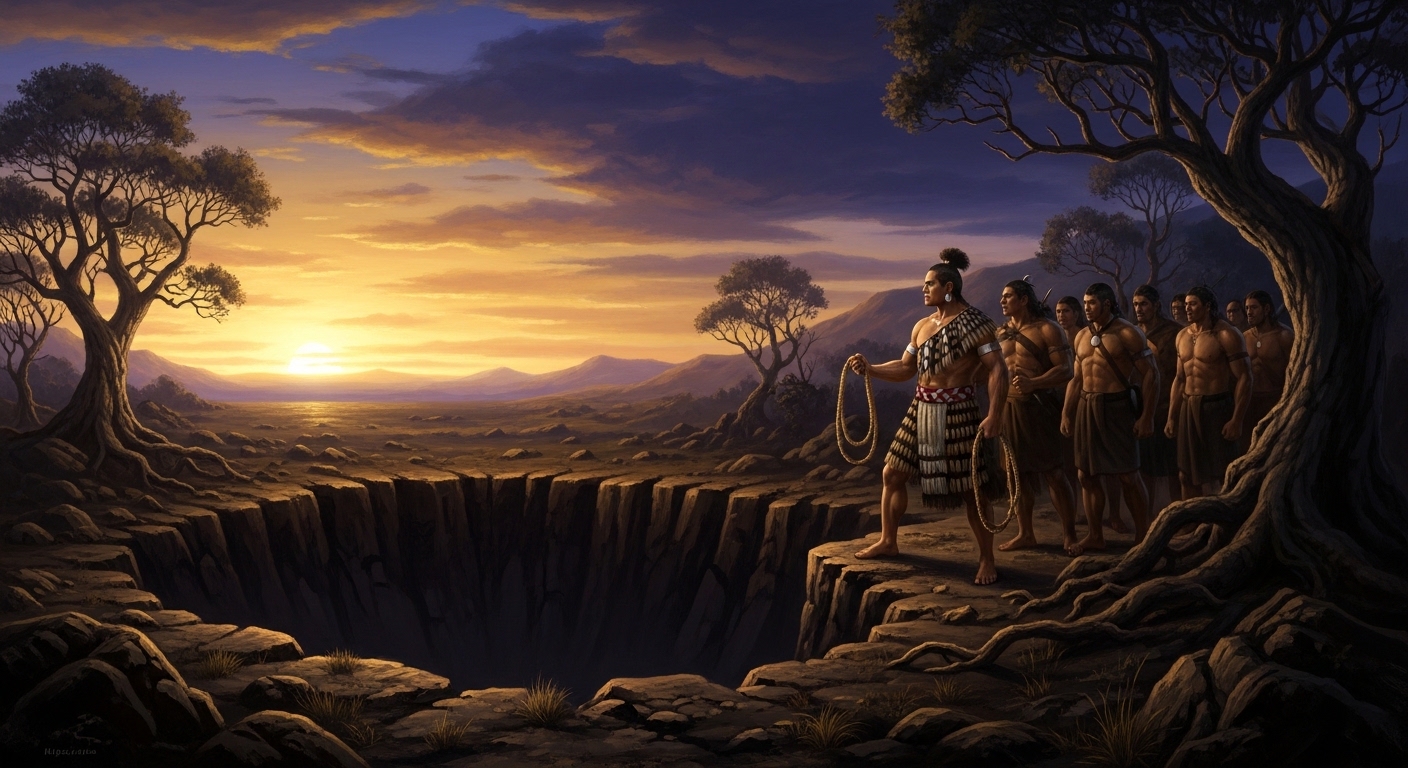
They travel east all night, reaching the great pit in the cold hour before dawn. Māui orders his brothers to hide behind the earthen walls and hold their sections of rope. He takes the longest loop himself and crouches at the entrance. The sky begins to pale. A smell of warmth and burning — the sun’s hair, the breath of the sun — rises from below.
Then the sun heaves itself over the rim.
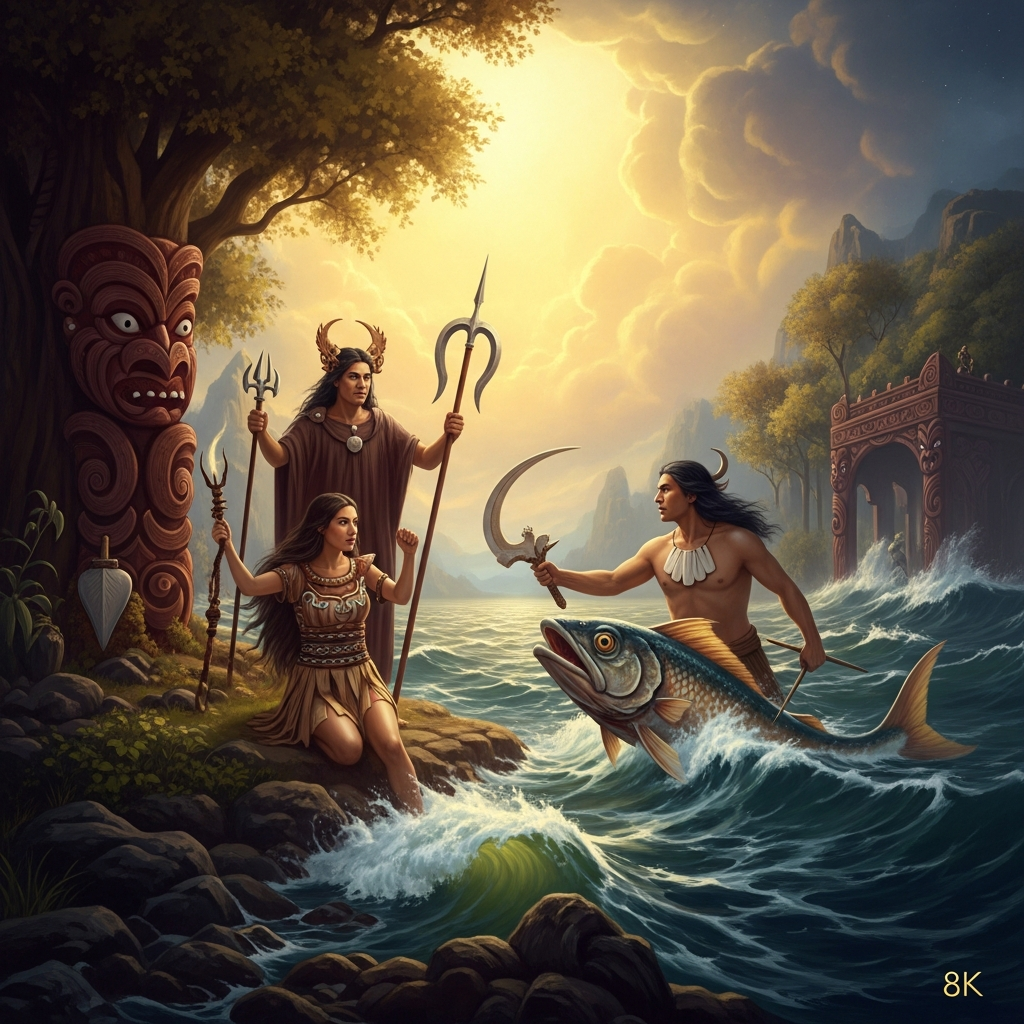
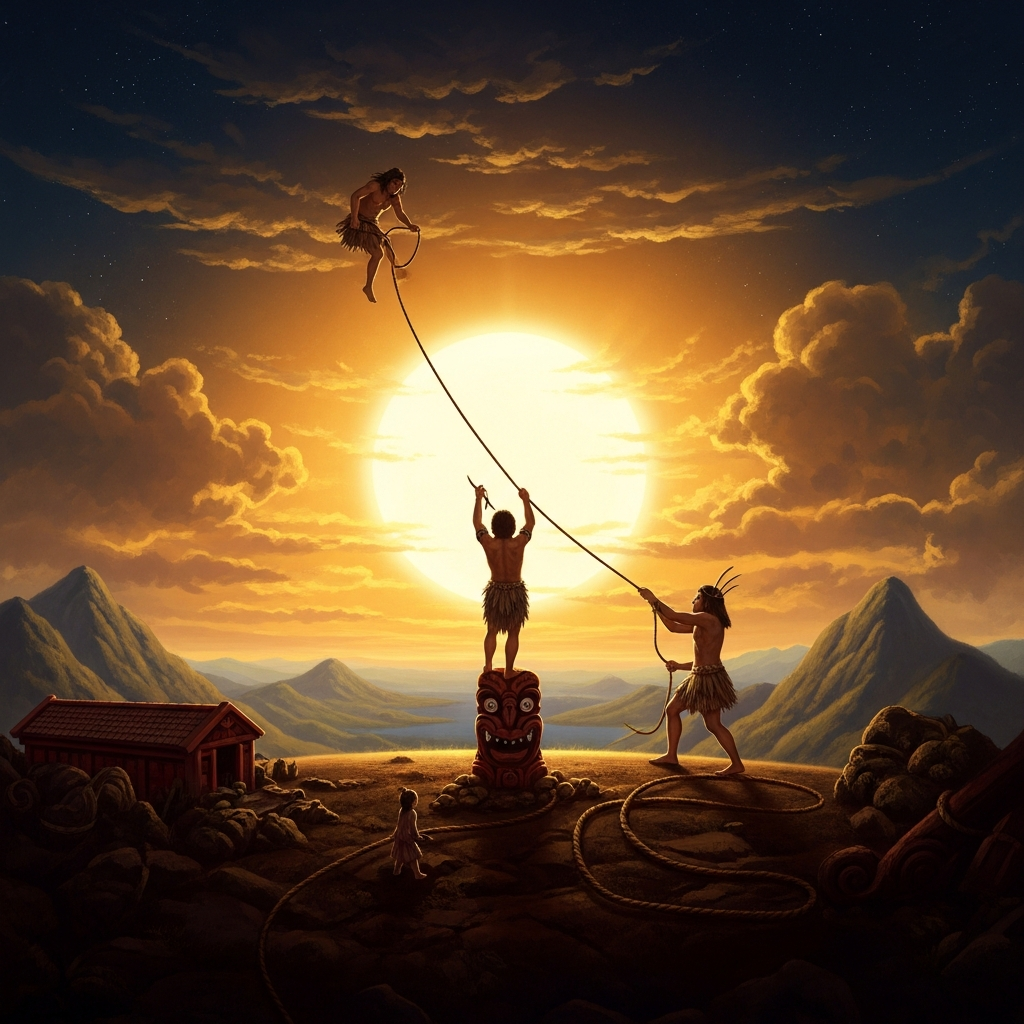
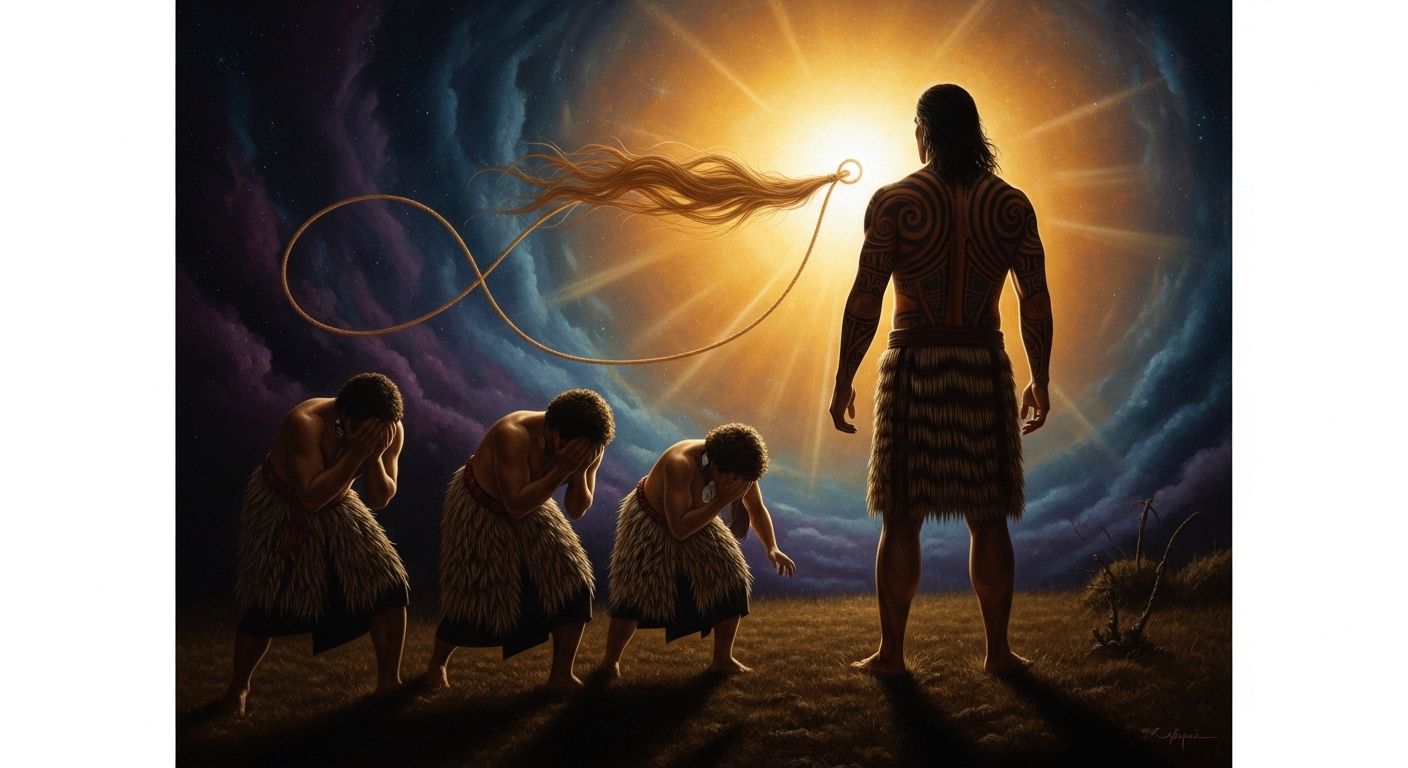
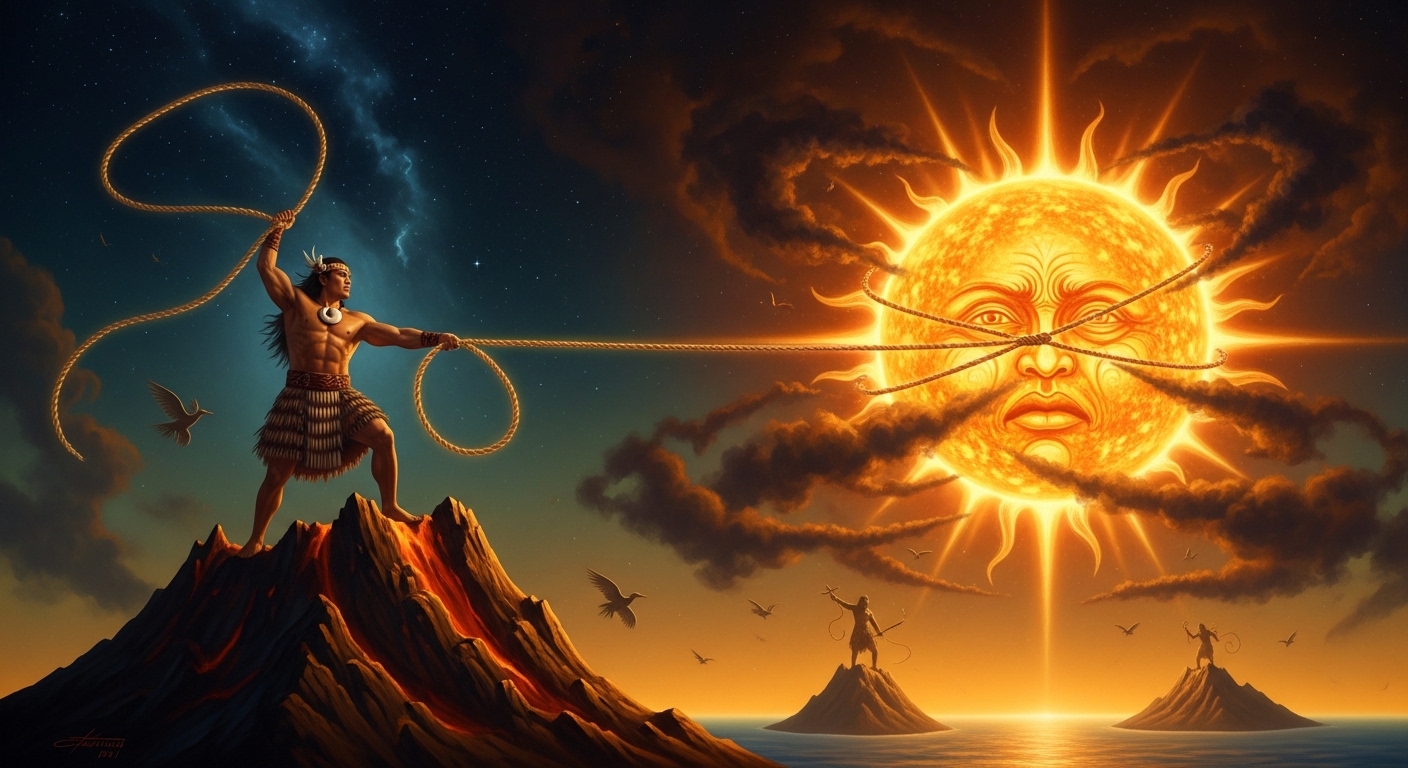
Māui throws the first loop and it catches. He shouts to his brothers: pull. The ropes tighten. The sun bellows, a sound like the world cracking, and thrashes so violently that two of his brothers drop their cords and run. Māui does not drop his. He runs toward the sun — which no one has ever done — and beats it with the magical jawbone. Beat after beat, the sun screaming, the ropes burning, the air tasting of fire and melted light.
The sun stops struggling. It does not die — Māui is not trying to kill it, because a dead sun is worse than a fast one. He negotiates. He beats until the sun agrees to slow its passage, to move at a pace that allows bark-cloth to dry, fish to smoke, kumara to ripen, children to finish their games.
The ropes are loosened. The sun limps across the sky — slower now, and forever after slower in summer when the agreement binds most firmly. Māui’s rope-burns mark the sun’s face, which is why it is streaked with fire at dusk.
His brothers, who ran, are embarrassed. Māui says nothing to shame them. He simply watches the long day unfold.
This is one of several things Māui does that no one else considers possible. Each time he acts from a logic that runs against convention: if the sky is too low, push it up; if fire is owned by one grandmother, steal it; if the sun moves too fast, rope it. The world, in Māui’s understanding, is a set of arrangements that were made by someone and can therefore be renegotiated by someone sufficiently ingenious and stubborn.
The gift he gives his mother is not metaphorical. That evening she lays her bark-cloth on the ground and examines it — fully dry, stiff and good, ready to be worked. She does not know yet what her youngest son has done. She simply picks up the cloth and goes inside.
The day is long enough. For now, the world is the right size.
Scenes
Echoes Across Traditions
Entities
- Māui-tīkitiki-a-Tāranga
- Tāranga
- the Sun (Rā)
Sources
- Sir George Grey, *Polynesian Mythology* (1855)
- Āpirana Ngata, *Ngā Mōteatea* (1959)
- Margaret Orbell, *The Illustrated Encyclopedia of Māori Myth and Legend* (1995)
- Te Ara — The Encyclopedia of New Zealand, 'Māui' entry