The Wayob: The Animal Spirit That Shares Your Soul
Classic Maya period, c. 300-900 CE; concept continues in various forms to present day in Maya communities · Throughout the Maya world; highland Guatemala communities — Chichicastenango, Momostenango
Contents
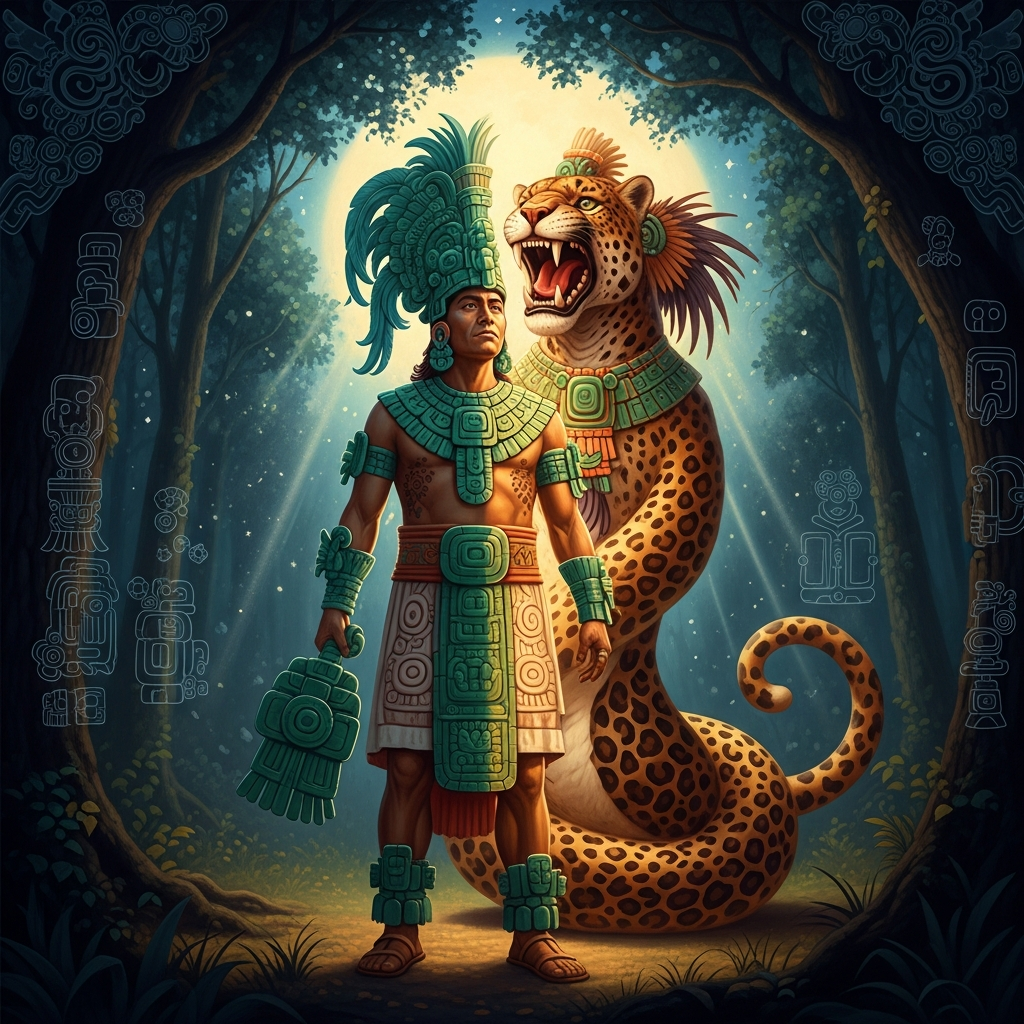
Every Maya person is born with a wayob — an animal companion spirit whose life is bound to theirs, who shares their soul, whose injuries appear on their body and whose death means their death — a theology of selfhood that extends the self into the non-human world.
- When
- Classic Maya period, c. 300-900 CE; concept continues in various forms to present day in Maya communities
- Where
- Throughout the Maya world; highland Guatemala communities — Chichicastenango, Momostenango
Every person has an animal that shares their blood.
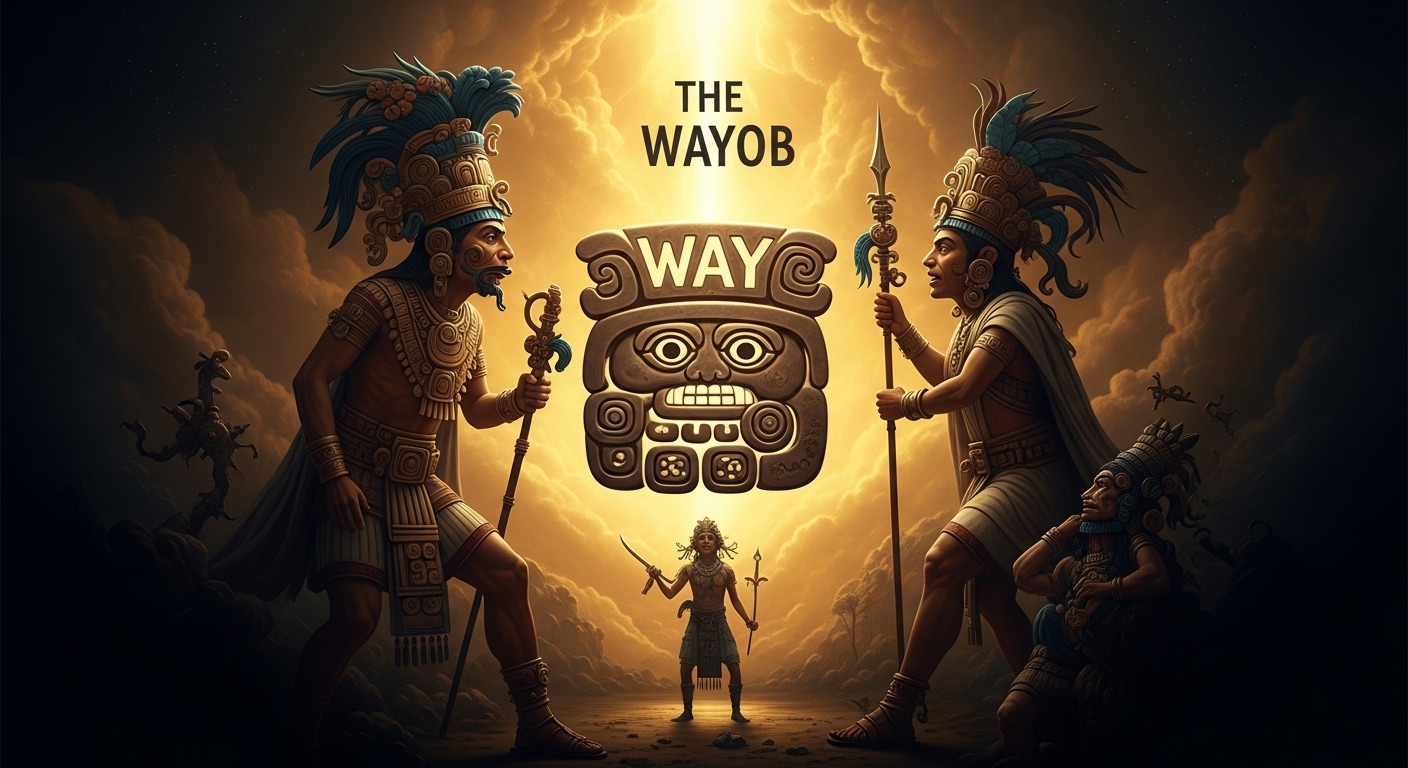
The Maya concept of the wayob — in Classic Mayan the glyph is way, meaning something like to sleep, to transform, to dream — is not straightforwardly translatable. It is rendered variously as nagual (a Nahuatl word), as co-essence, as animal companion spirit, as dream soul. All of these are partial. What the word holds is the belief that the human self extends beyond the human body into the body of a specific animal, and that the two bodies — human and animal — share a single soul with two residences.
When the animal is hurt, you feel it.
When the animal is killed, you die.
This is not a superstition. For the Maya communities where the wayob belief is active, it is a theology of selfhood that has practical implications for how you treat the animals you encounter, how you interpret injuries and illnesses, how you understand the boundary between self and world. The self, in this theology, is permeable. It reaches out from the skin and into the forest.
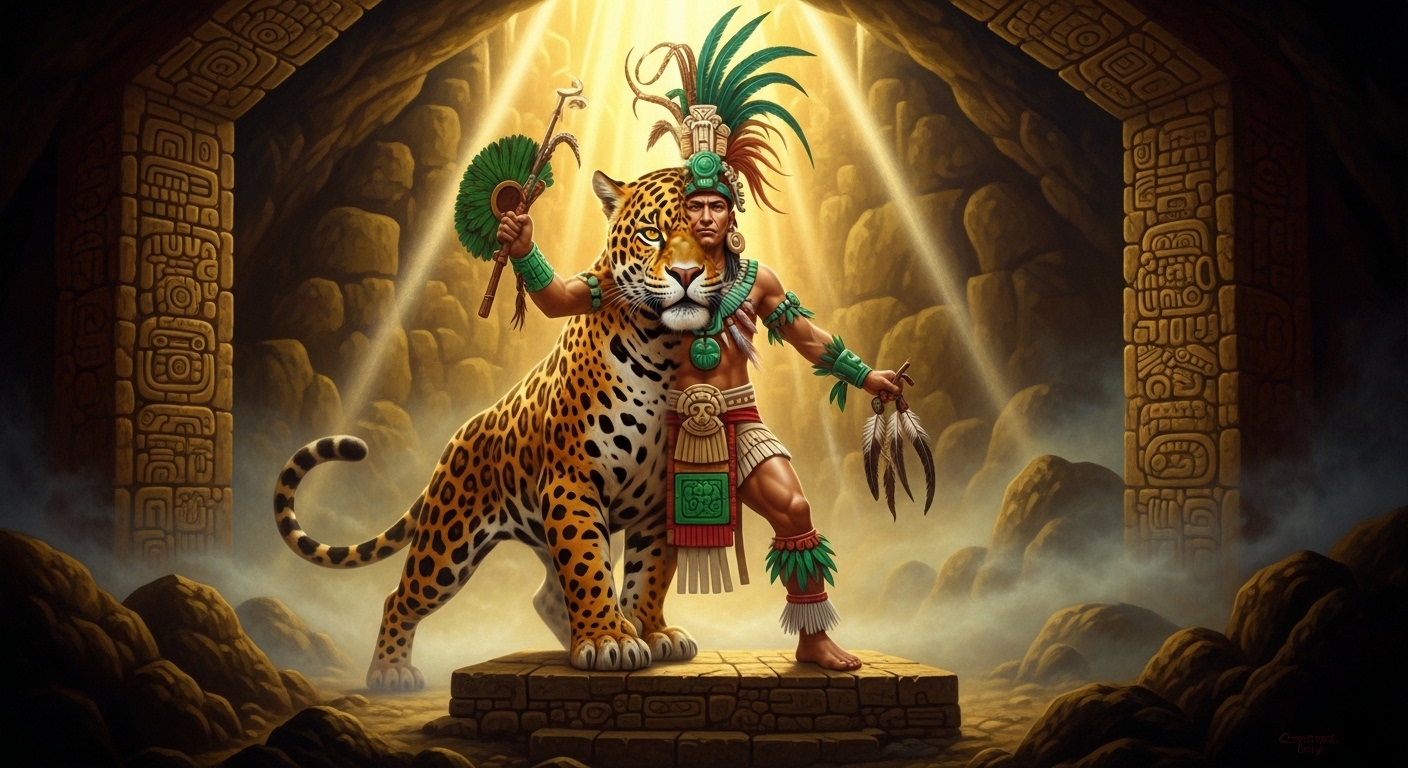
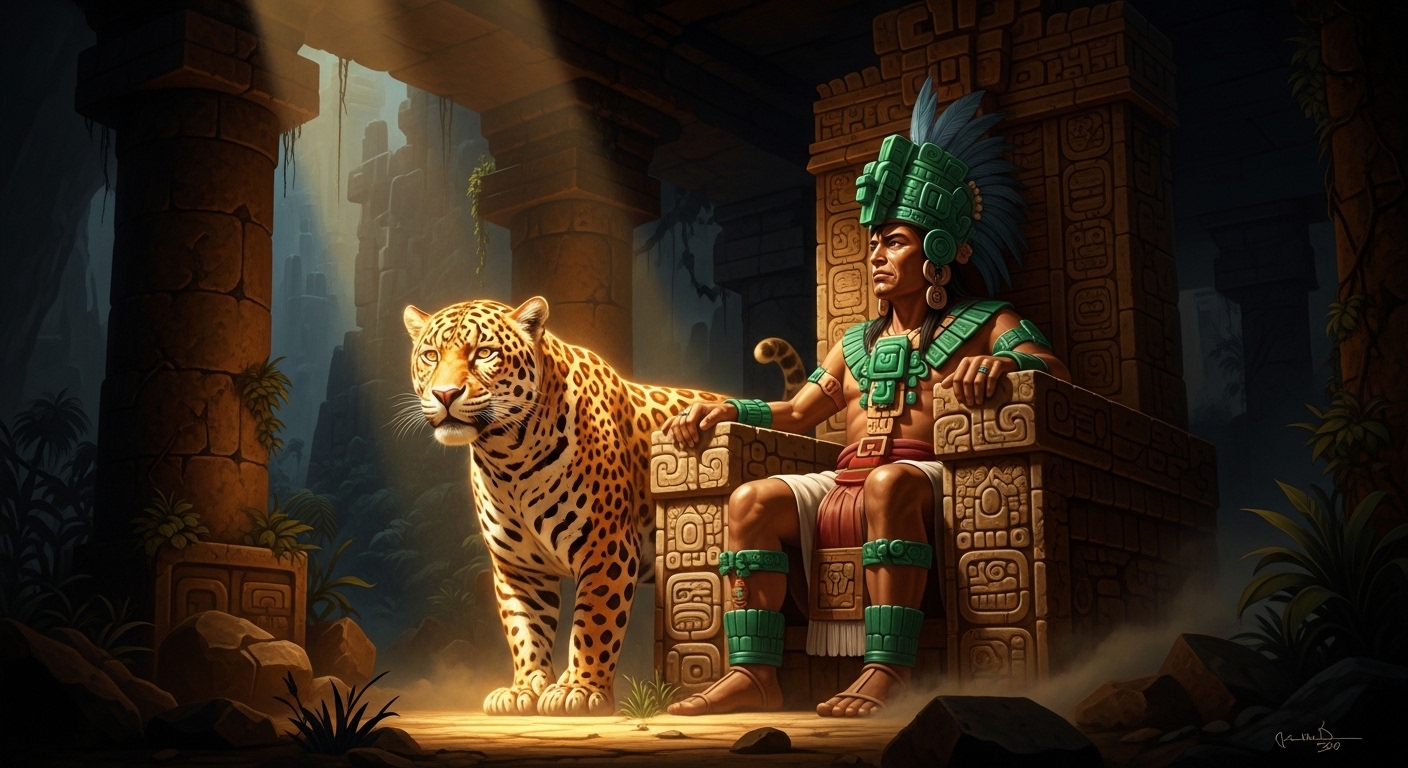
For Classic Maya kings, the wayob was the jaguar.
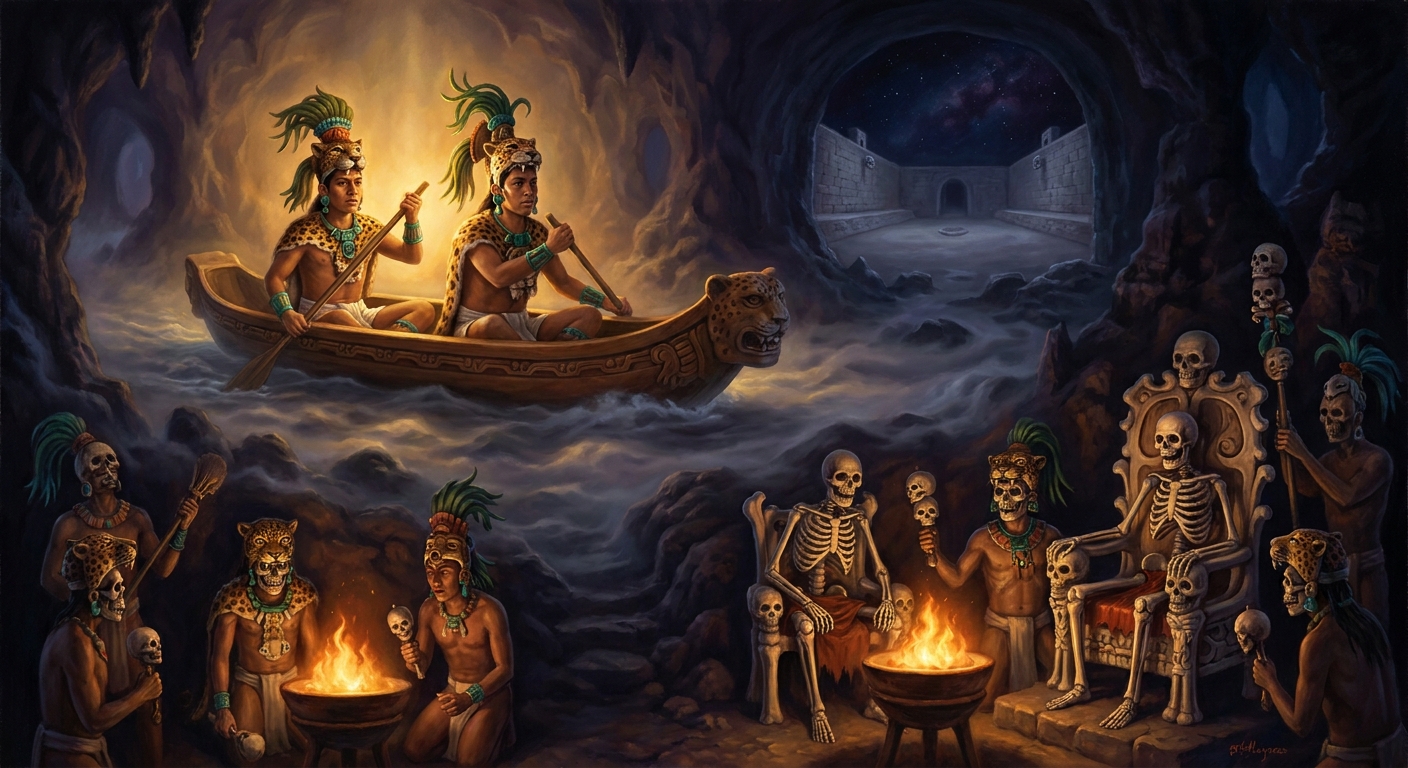
The inscriptions identify royal wayob with the names of dangerous and powerful creatures: jaguars, serpents, skeletal beings, death-associated animals. The king’s power was the jaguar’s power — the apex predator of the Maya lowlands, the spotted tawny body that moves through the night forest without sound, that kills with a single bite to the skull. To share a soul with a jaguar was to have the jaguar’s qualities available: night vision, silent power, the ability to move between the world of the living and the world of the dead (jaguars were associated with the underworld, their spots the stars of the night sky).
The king’s ceremonies often involved transformation into the jaguar wayob — wearing jaguar pelts, dancing in jaguar masks, moving in the patterns associated with the jaguar’s movement. This was not costume. It was the activation of the shared soul, the making-visible of the connection that was always there.
For ordinary people, the wayob was less dramatic but no less real.
A farmer born on a day associated with deer has a deer wayob. A midwife born on a day associated with the quetzal has a quetzal wayob. The daykeeper, consulting the birth calendar, identifies not just the child’s day-sign but the implications of that sign for the animal companion they will carry through life — the creature out in the forest or the milpa or the cloud forest whose movements are their movements, whose dreams are their dreams.
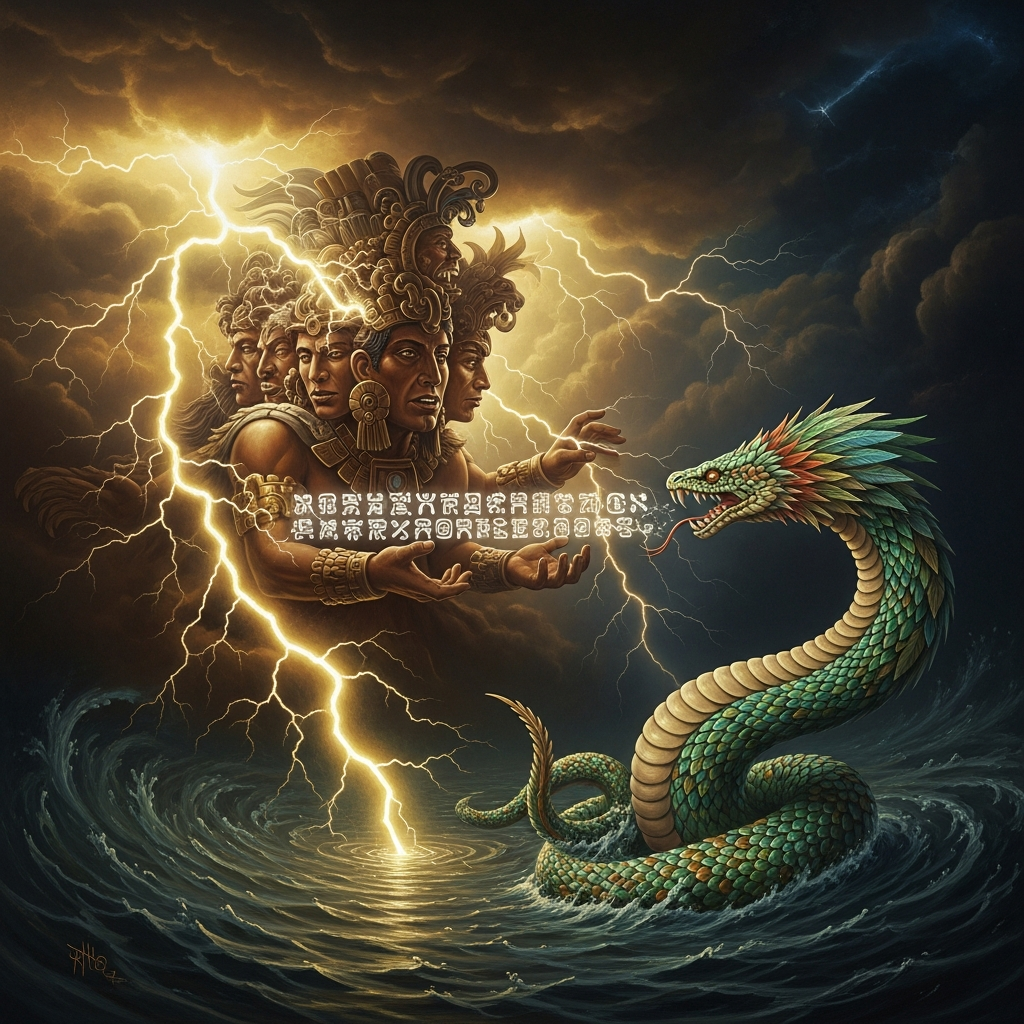
The way glyph in Classic Maya inscriptions appears in connection with deity names in contexts that scholars have interpreted as the deity’s co-essence — the supernatural being that is the god’s own wayob, the aspect of the divine that travels and transforms.
This suggests that the wayob is not only human and animal.
Gods have co-essences too. The deity’s wayob might be a skeletal being, a jaguar with a death’s head, a fire-serpent — the supernatural body that the god can occupy when it moves through the underworld or the waking world in non-primary form. The theology extends: not just every person, but every being has a companion form, a shadow self that shares its soul and travels where the primary form cannot.
The world, in this understanding, is deeply populated.
Every animal in the forest is carrying something with it — not just its own consciousness but the consciousness of the human whose soul extends into it. Every jaguar is also, somewhere, a king. Every deer is also, somewhere, a farmer. The forest is full of people, sleeping in their animal bodies, dreaming the dream that connects them back to the village.
When you meet a jaguar in the forest, you are meeting someone.
You had better treat them accordingly.
Scenes
Echoes Across Traditions
Entities
- the daykeepers
- Maya shamans
- the jaguar wayob of kings
Sources
- David Stuart, *'The Way' Glyph in Maya Inscriptions* in Research Reports on Ancient Maya Writing (1993)
- Barbara Tedlock, *Time and the Highland Maya* (University of New Mexico Press, 1982)
- Gary Gossen, *Chamulas in the World of the Sun* (Harvard University Press, 1974)