Mazu Stands at the Water's Edge
Song dynasty, 960-1279 CE — traditional dates of Lin Mo: 960-987 CE · Meizhou Island, Fujian Province, and the Taiwan Strait
Contents
A young woman on Meizhou Island in Fujian Province falls into a trance while her family is at sea in a storm, carries her drowning brothers home through her dream — and when she dies at twenty-eight, the fishermen begin to see her walking on the water.
- When
- Song dynasty, 960-1279 CE — traditional dates of Lin Mo: 960-987 CE
- Where
- Meizhou Island, Fujian Province, and the Taiwan Strait
She is born not crying.
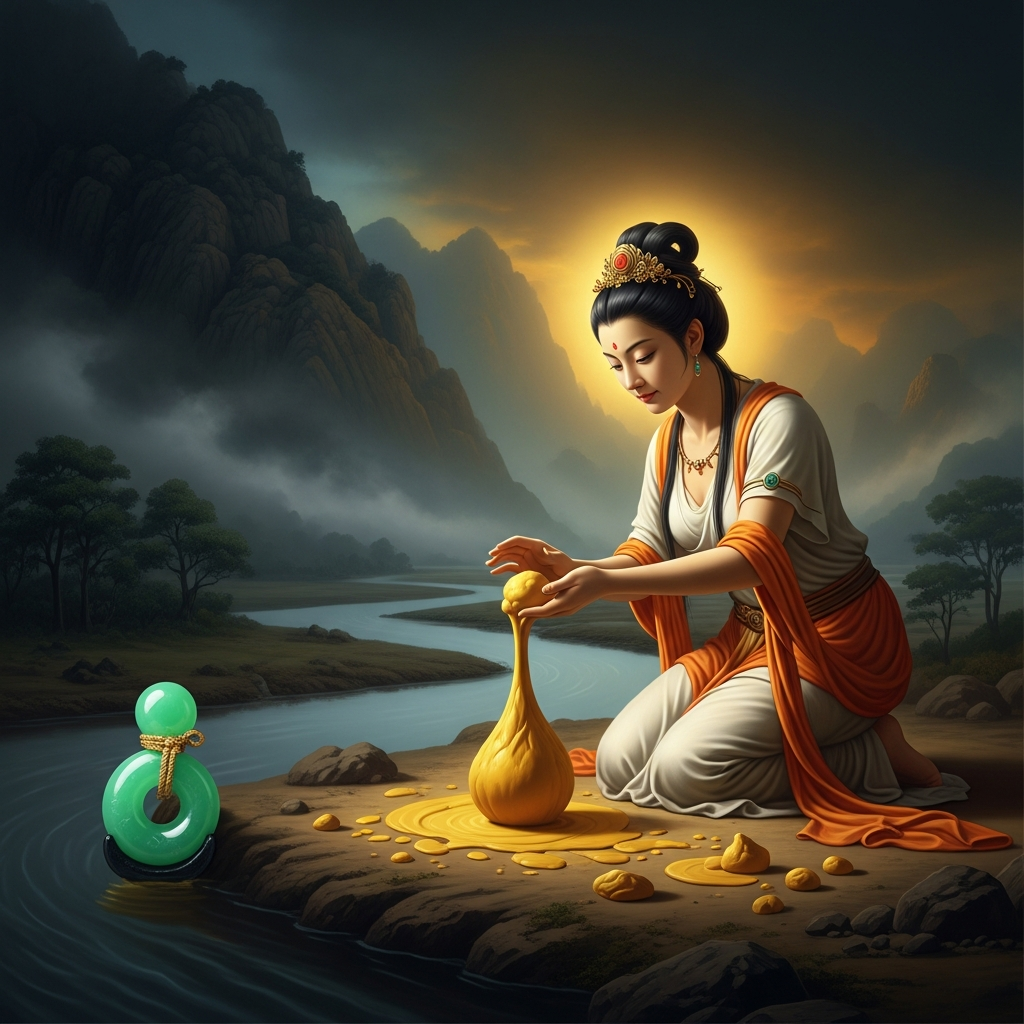
This is the first sign. On Meizhou Island in Fujian Province, in the year 960 CE, the daughter of the Lin family comes into the world in perfect silence and keeps the silence for a month, which is why her parents name her Mo — the silent one. She will speak eventually, but her silence becomes the sign that she is listening to something the rest of the family cannot hear.
She is eight when she begins to study the texts. Not the women’s texts, not the household texts — she reads the Taoist classics, the techniques of meditation, the practices of the inner alchemy that the island’s tradition has been accumulating for generations. Her parents are practical people who are also practical enough to recognize when their daughter is doing something beyond the ordinary and to step back.
The story that everyone knows comes when she is around sixteen.
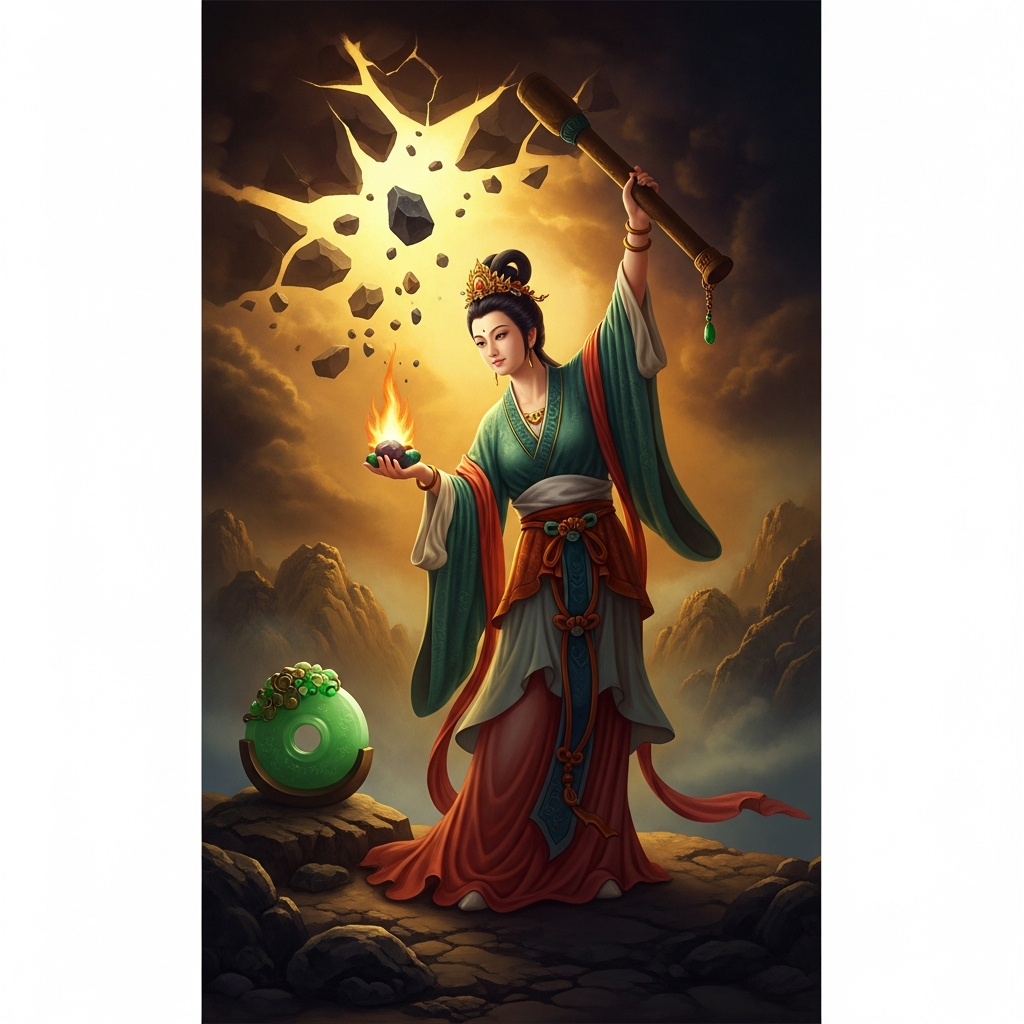
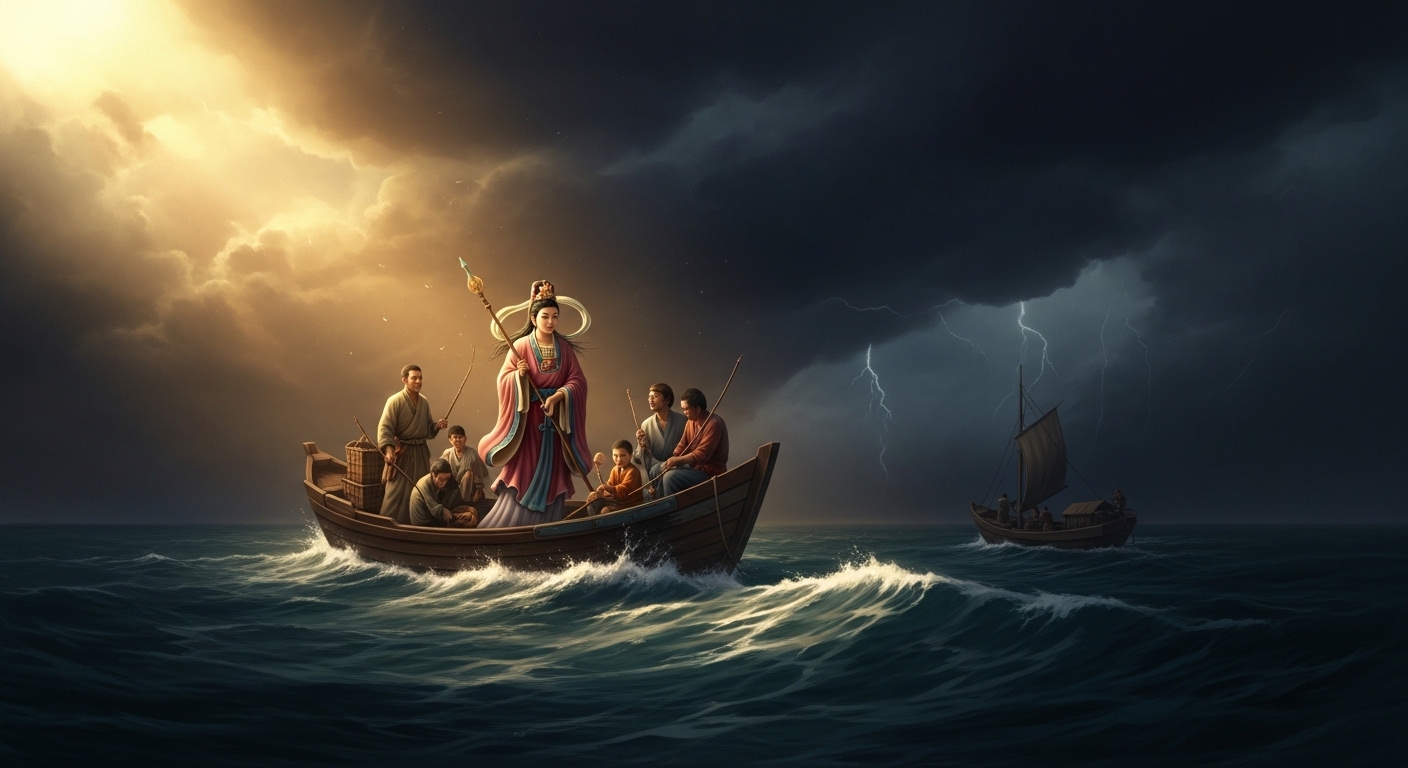
Her father and brothers are out in the Taiwan Strait in their fishing boat when a storm comes down from the north — the kind of storm that the Strait generates, the kind that takes boats without warning. Lin Mo falls into a trance at the loom in her family’s house. Her mother, watching, sees her daughter’s body go still, her eyes close, her breathing slow to almost nothing. Her hands grip something invisible.
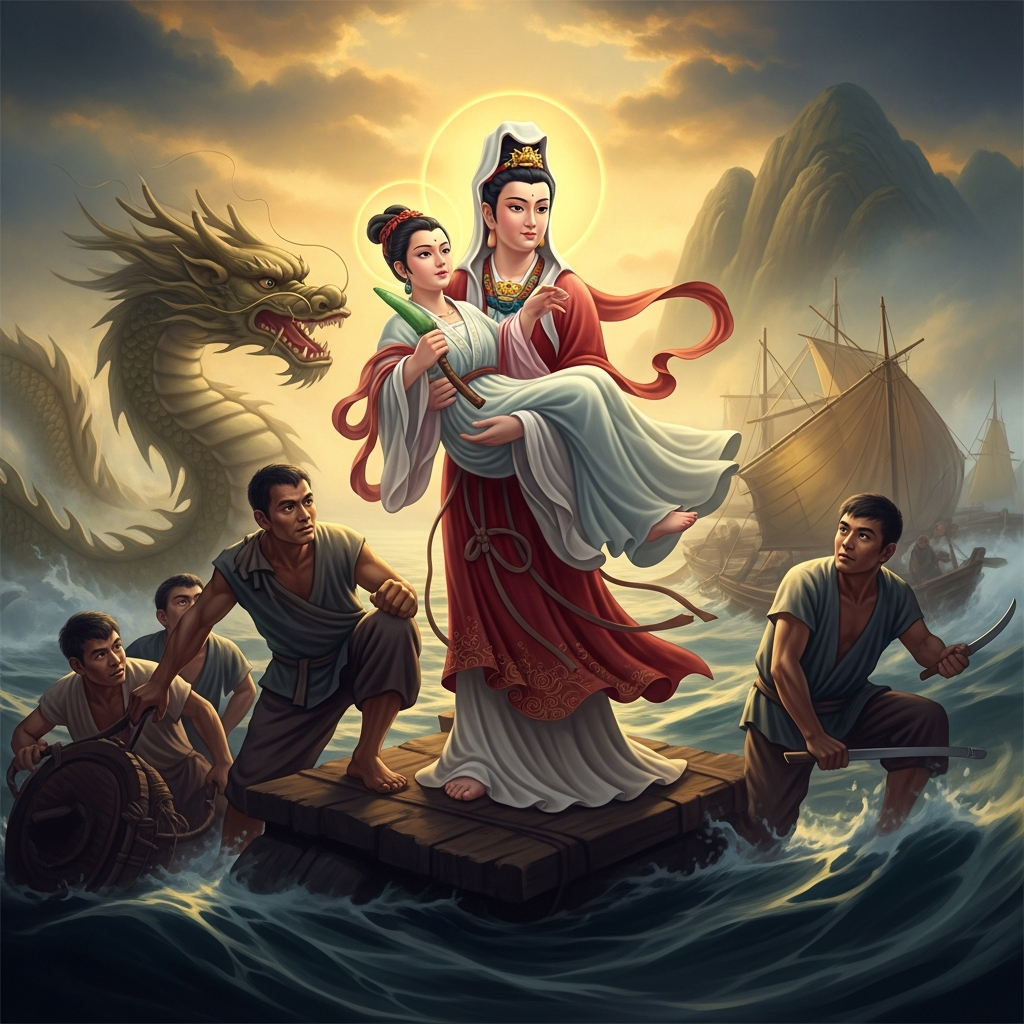
In the trance, Lin Mo is in the storm. She is in the water, which she experiences from above rather than below — she is walking on the surface of the storm-sea the way the tradition’s most powerful practitioners walk on surfaces that ordinary bodies sink into. She finds her father and her brothers. She takes them — holds their boats, guides them — through the storm toward the island.
Her mother, panicking at her daughter’s stillness, shakes her awake. Lin Mo opens her eyes. She says: I almost had them. Her father arrives at the dock safely. Two of her brothers are lost.
The tradition preserves both outcomes. The brothers she saved because her concentration held. The brothers lost because it was broken. The story does not assign blame to the mother. It records the limitation honestly: even the most concentrated intervention cannot save everyone, and the border between what the practitioner can reach and what lies beyond reach is the territory she lives in permanently.
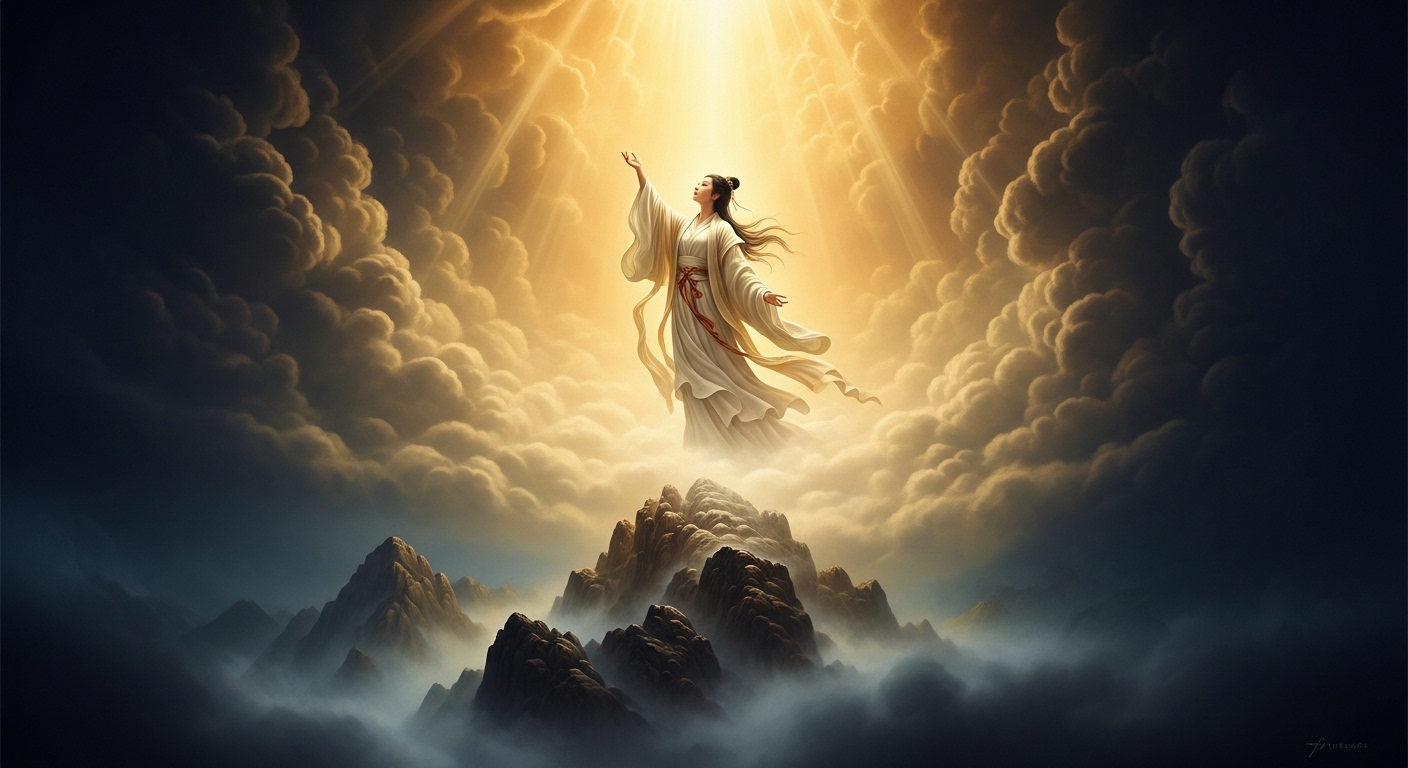
Lin Mo dies at twenty-eight, ascending to heaven on a mountaintop in a cloud. She does not die of illness. She walks up the mountain and she goes. The texts say she was seen ascending, that a cloud received her.
The fishermen begin to see her almost immediately. She appears in storms on the water, her red dress visible in the dark. She appears on the masts of ships that are about to capsize and rights them. She appears to drowning sailors and carries them to the surface. The reports come in from the Taiwan Strait, from the South China Sea, from every stretch of water between Fujian and the overseas ports where the Fujian diaspora has gone.
She is given titles by the Song dynasty, by the Yuan, by the Ming, by the Qing. Each dynasty promotes her: from Miraculous Lady to Heavenly Consort to Empress of Heaven. By the Qing dynasty she is the highest-ranked female deity in the official heavenly bureaucracy. There are over fifteen thousand temples dedicated to her.
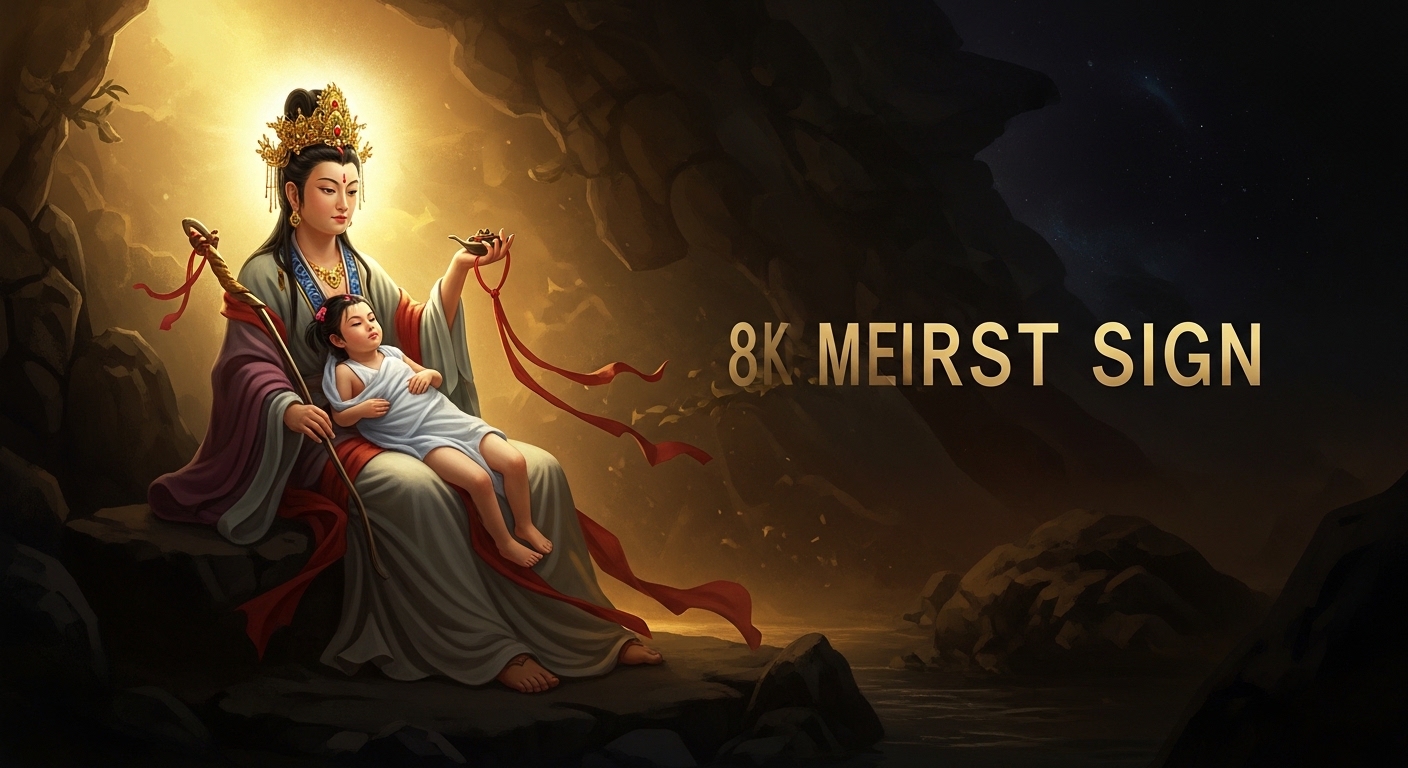
But in every temple, the image is the same: the woman in the red dress standing at the water’s edge, or on the water itself, looking out to sea. Not toward the shore. Toward the place where the boats disappear and do not come back. Standing at the edge of what she can reach, watching for the ones who need her before the edge reaches them.
Scenes
Echoes Across Traditions
Entities
- Mazu (Lin Mo)
- the fishermen of Meizhou Island
- the Dragon King of the Sea
Sources
- Tihou (天后) / Empress of Heaven — official title and extensive hagiographic literature
- Robert Weller, *Unities and Diversities in Chinese Religion* (University of Washington, 1987)
- Kenneth Dean, *Taoist Ritual and Popular Cults of South-East China* (Princeton, 1993)
- James Watson, 'Standardizing the Gods: The Promotion of T'ien Hou Along the South China Coast,' in *Popular Culture in Late Imperial China*, 1985