Contents
The twelfth-century Shirazi mystic Rūzbihān Baqlī kept a diary of his visions for years — a document so dense with beauty, divine faces, and cosmic color that modern scholars debate whether it is the record of a mystic or the greatest work of mystical imagination ever written.
- When
- c. 1128–1209 CE — Shiraz, Persia, under the Salghurid atabegs
- Where
- Shiraz, Fars province, Persia — the city of gardens, roses, and Persian mystical poetry
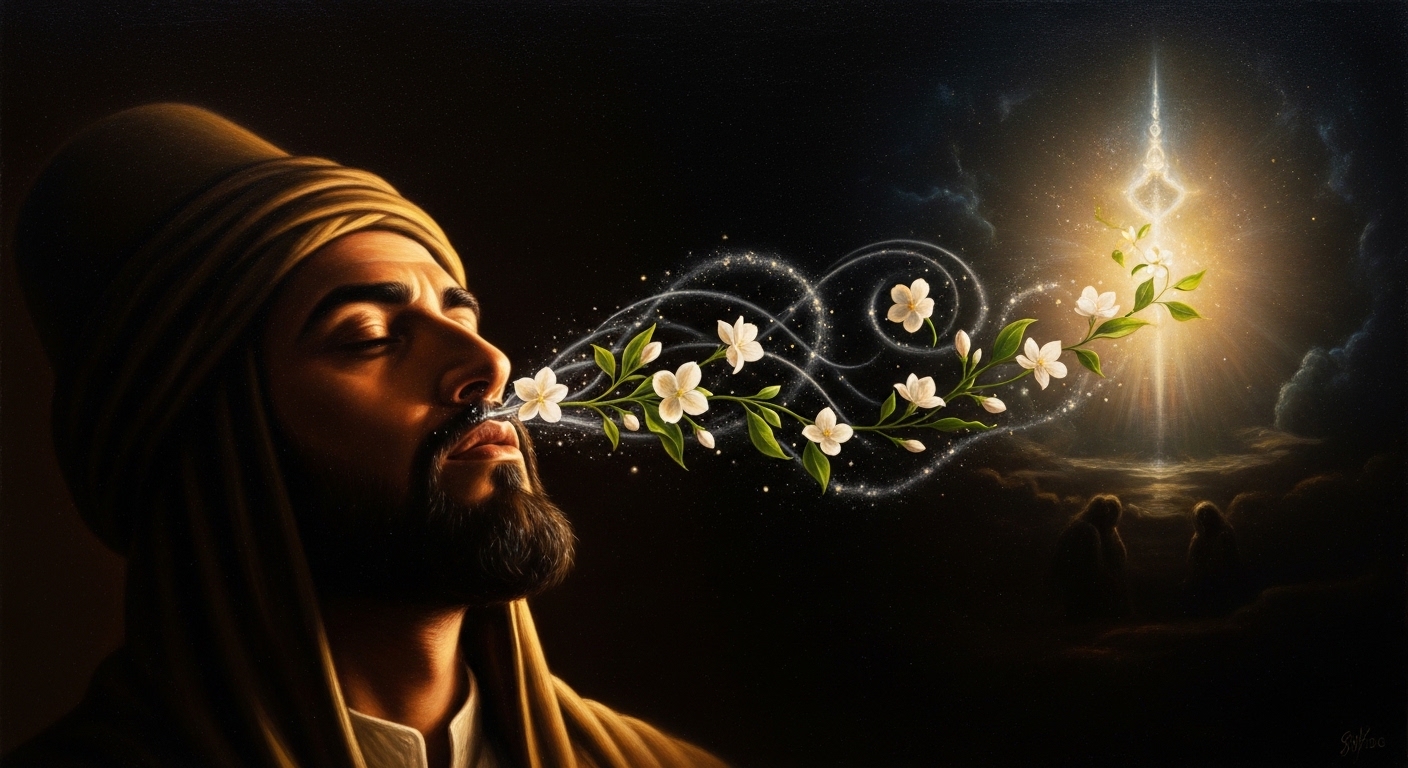
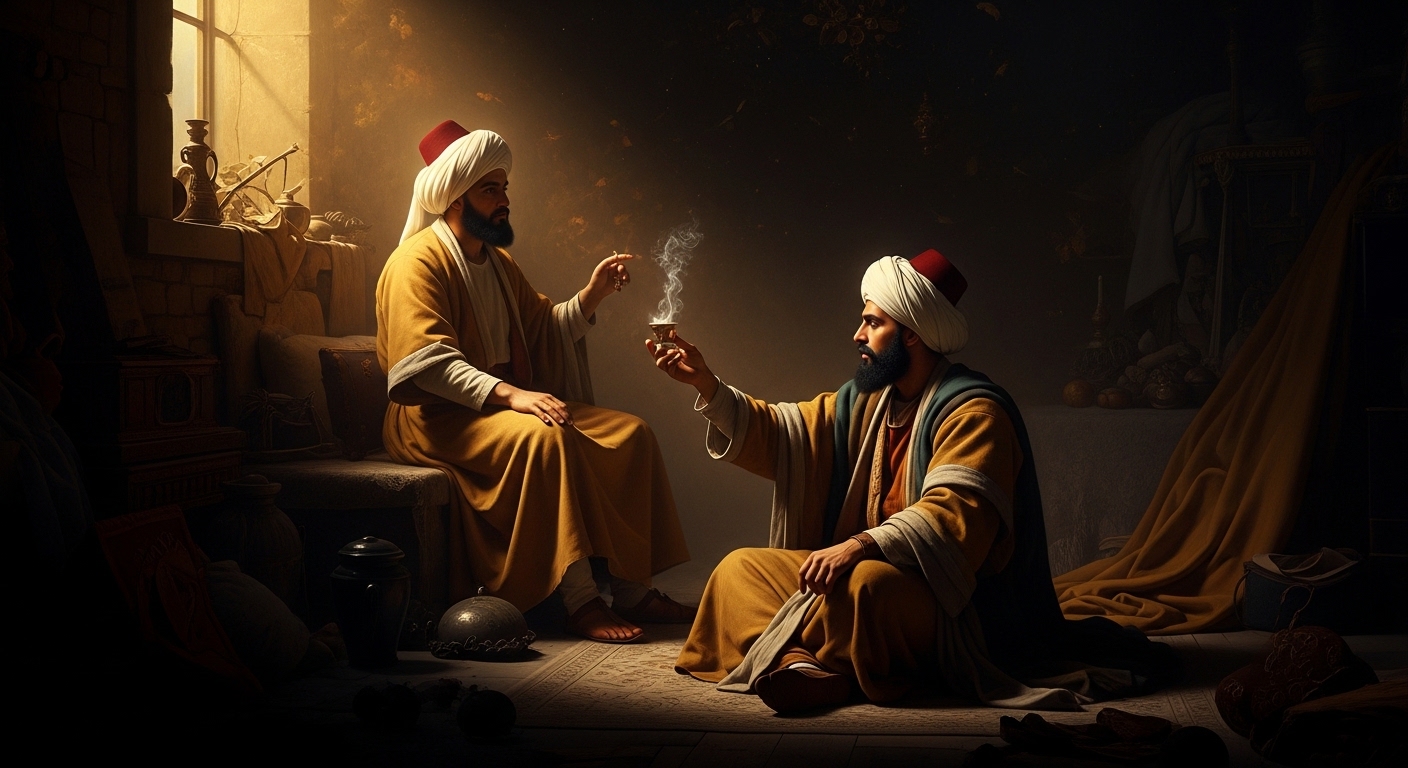
He smells jasmine before the vision arrives.
This is his consistent report: before the divine presence becomes visible, there is the scent of flowers — jasmine, rose, musk — carried on an air that has no natural source. The scent is the herald. The vision follows.
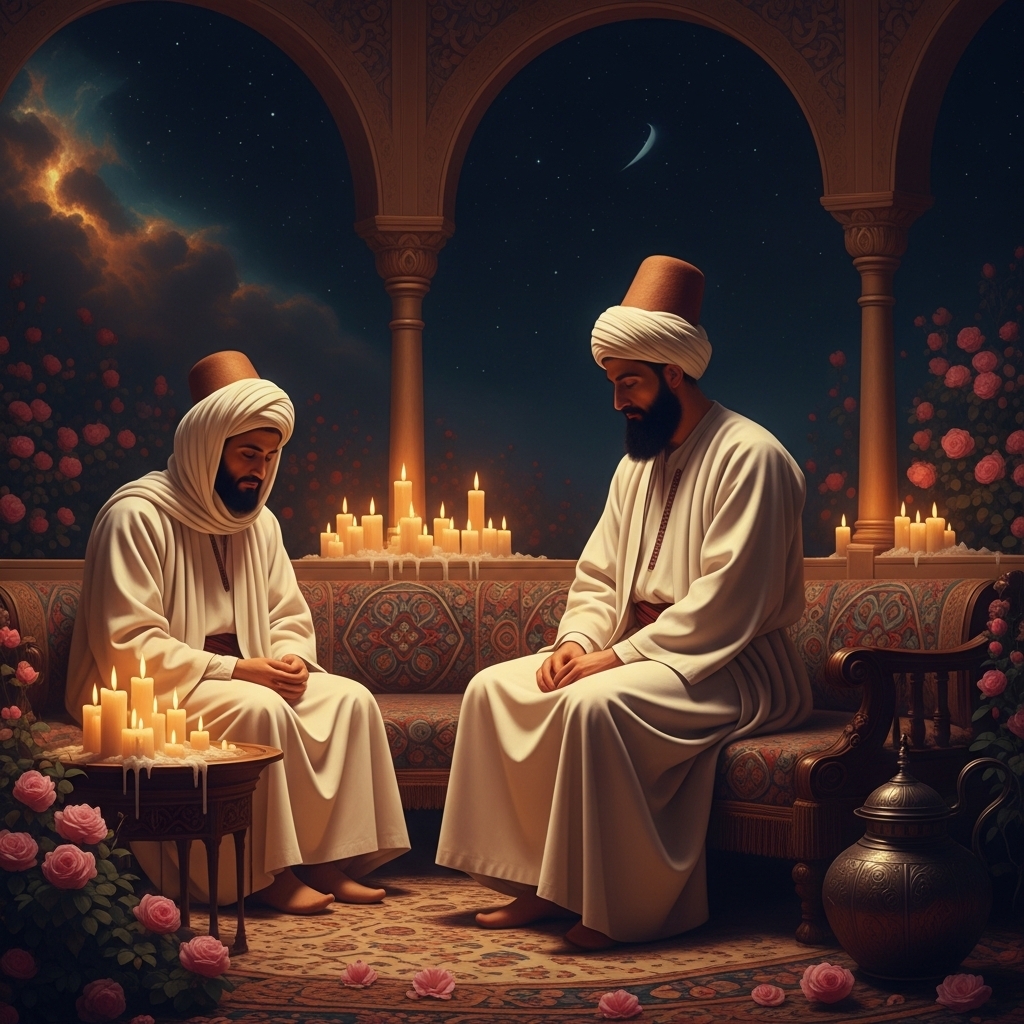
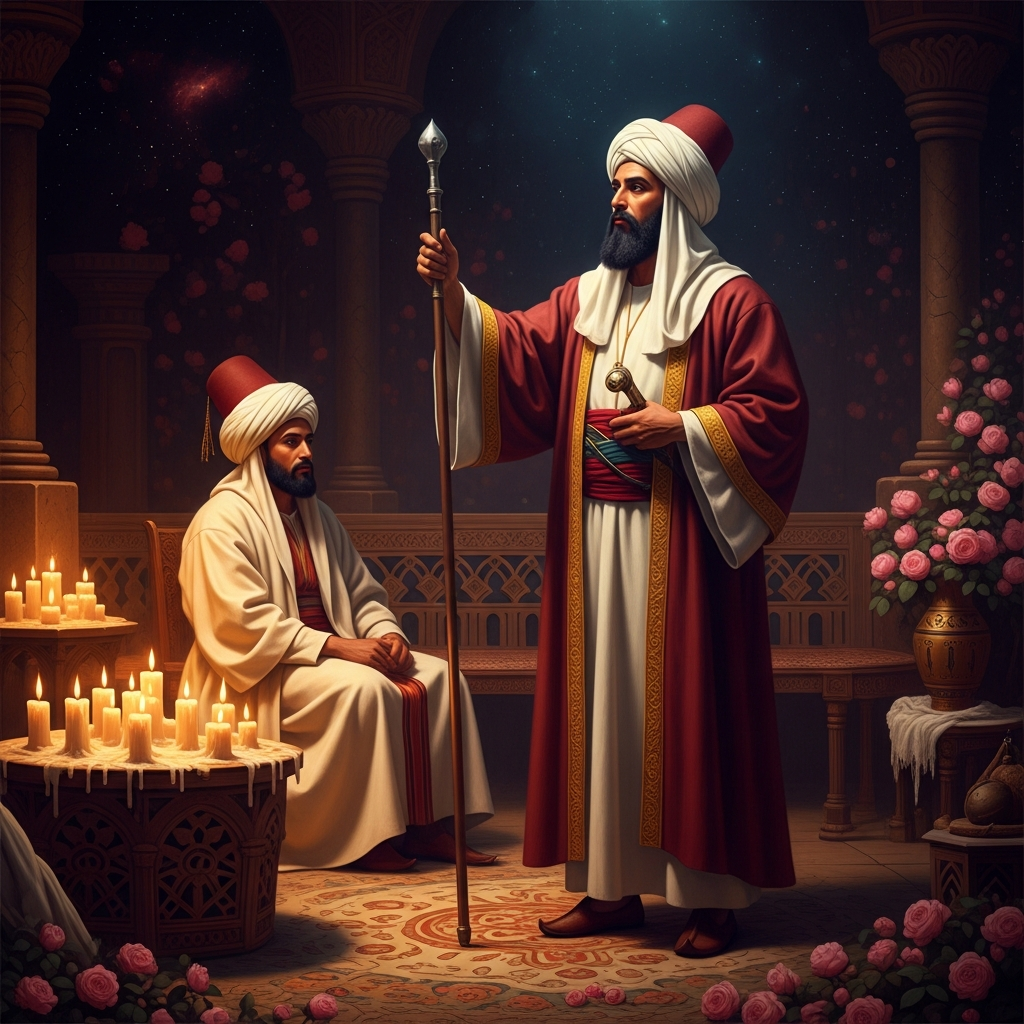
Rūzbihān Baqlī is a Shirazi mystic in the twelfth century, a city-dweller with a teaching circle and a family and the social obligations of a recognized spiritual figure. He runs a Sufi lodge. He has students. He teaches and preaches. And he keeps a private diary of his visions.
The diary is extraordinary.
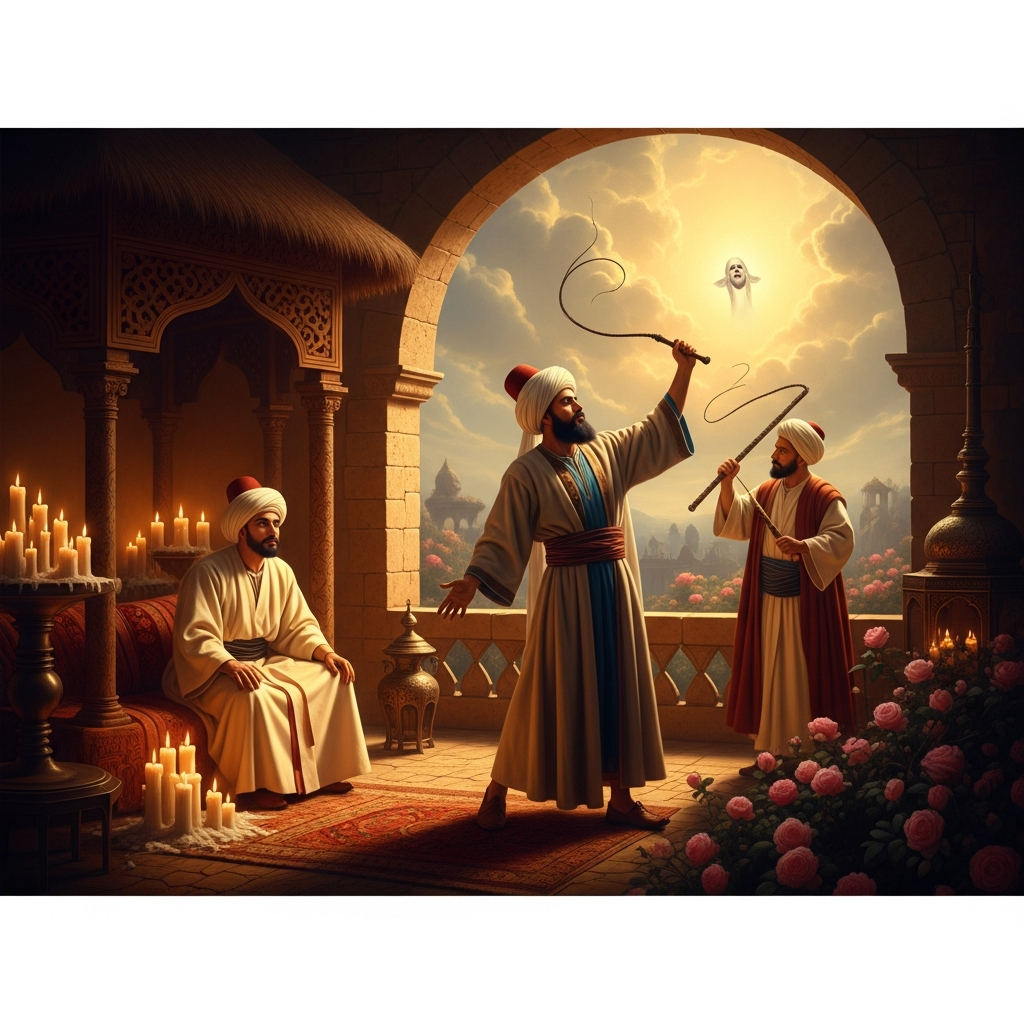
In the Diary of the Spirit — portions of which are preserved in the Kashf al-Asrar — he records in the present tense what he sees during meditation, prayer, and sleep. The visions are not allegorical or symbolic in the way that theological visions typically are presented after the fact. They are sensory. Light pours from shapes. Presences approach with faces. Colors appear that have no names. The divine speaks in his visions with a directness that is more intimate than anything the legal tradition permits in formal theology.
Most controversially: the divine appears to him in forms of human beauty.
This is the theological problem his Abhar al-Ashiqin (Jasmine of the Lovers) addresses directly. The orthodox objection is clear: God is beyond form, beyond likeness, beyond any human image. To claim that God appeared to you in a beautiful human face is dangerously close to anthropomorphism — and in the Islamic context, where the rejection of idolatry is foundational, anthropomorphism carries the charge of shirk, association of partners with God.
Rūzbihān’s defense draws on a long tradition within Islamic mysticism, beginning with the Quranic verse Wherever you turn, there is the face of God (2:115). If God’s face is everywhere, then beauty — especially human beauty — is a legitimate mode of divine self-disclosure. The beautiful human face that the mystic contemplates is not a substitute for God. It is a tajalli, a theophany, an appearance of God within the created register. To love what is beautiful — the Sufi tradition’s constant metaphor of erotic love for divine love — is to see God’s face in the mirror of creation.
The Abhar al-Ashiqin weaves together Quranic exegesis, prophetic tradition, and his own visionary experience into a defense of what he calls ‘ishq, ecstatic love, as the highest mode of divine-human relationship.
He argues against those who say the lover of God must be austere, must maintain distance, must approach the divine only through the proper forms of worship. He says: this is not what the Prophets describe. The Prophets describe an intimacy — Moses speaking to God directly, Abraham called the Friend of God (Khalil Allah), Muhammad’s night journey to within two bow-lengths of the divine — that is not the intimacy of the bureaucrat with the government. It is the intimacy of the beloved with the beloved. The divine invitation to love is an invitation to close distance, not to maintain it.
His own visions are his evidence.
He lives in Shiraz for eighty years, teaching, writing, receiving visions.
The Kashf al-Asrar — the Unveiling of Secrets — is his great work: a massive commentary on the Quran written entirely in the key of mystical experience. Every verse opens onto the landscape of the interior journey. The commentary does not explain the Quran. It allows the Quran to disclose what it is disclosing to someone who is actually in the state the Quran is describing.
He dies in 1209. His tomb in Shiraz is still visited. The jasmine scent his visitors report around the shrine may be from the garden, or may be what he always said it was: the herald of what is coming.
The visions he kept in a private diary became, after his death, some of the most influential mystical writing in Persian literature.
The face he saw in the visions — beautiful beyond what faces are normally beautiful — is still there in the text.
You can smell the jasmine if the wind is right.
Scenes

Echoes Across Traditions
Entities
- Rūzbihān Baqlī
- the divine Beloved in vision
Sources
- Rūzbihān Baqlī, *Kashf al-Asrar wa Mukashafat al-Anwar* (Unveiling of Secrets and Disclosure of Lights), trans. Paul Nwyia
- Rūzbihān Baqlī, *Abhar al-Ashiqin* (Jasmine of the Lovers), trans. Carl Ernst as *The Unveiling of Secrets* (Paulist Press, 1997)
- Carl Ernst, *Ruzbihan Baqli: Mysticism and the Rhetoric of Sainthood in Persian Sufism* (Curzon, 1996)
- Henry Corbin, *En Islam iranien*, vol. 3 (Gallimard, 1971–72)