The First Monastery in Tibet Is Consecrated
c. 779 CE — 8th-century Tibet, imperial period · Samye, Tibet — in the Brahmaputra River valley east of Lhasa, the site of Tibet's first monastery
Contents
King Trisong Detsen, Padmasambhava, and Śāntarakṣita work together to build and consecrate Samye Monastery — Tibet's first Buddhist monastery — overcoming the resistance of indigenous spirits, the king's hostile ministers, and the sheer physical impossibility of building at this altitude.
- When
- c. 779 CE — 8th-century Tibet, imperial period
- Where
- Samye, Tibet — in the Brahmaputra River valley east of Lhasa, the site of Tibet's first monastery
They try to build it in the ordinary way and fail.
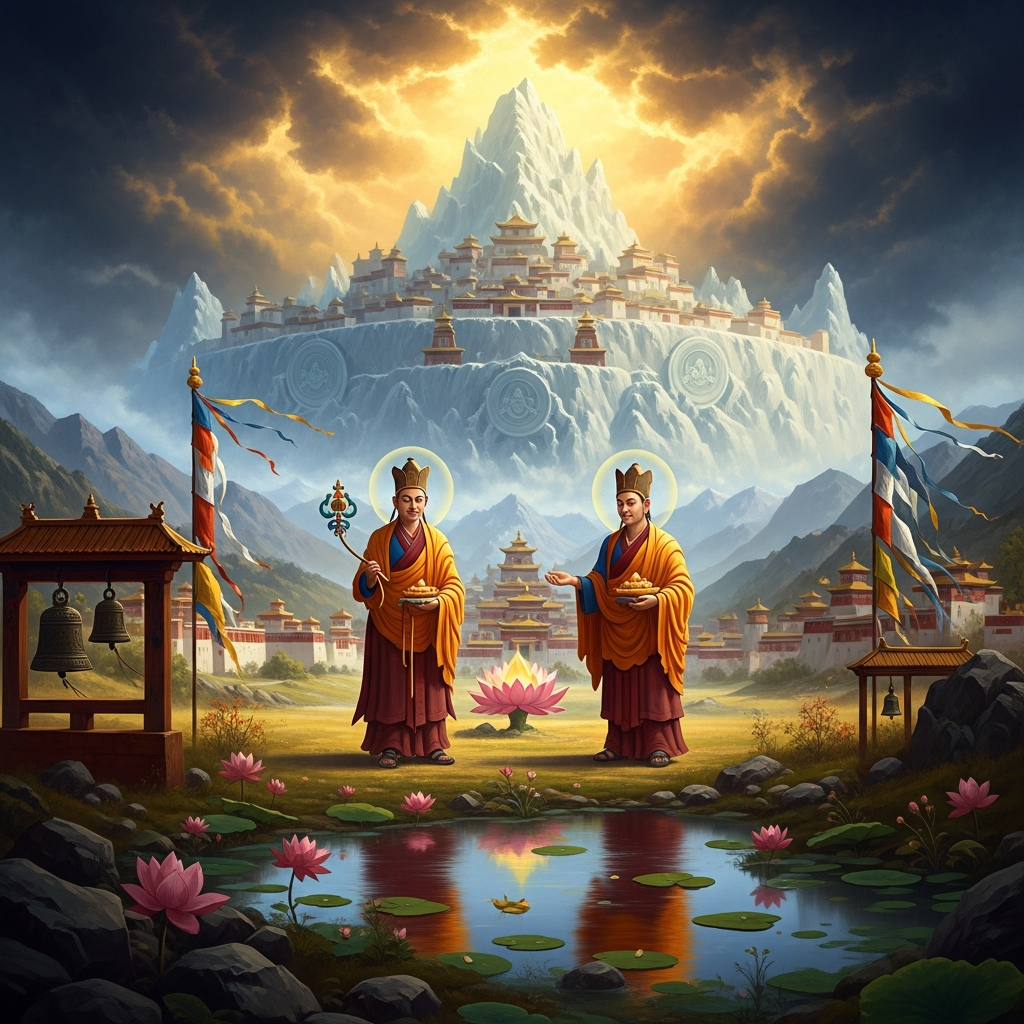
The site is chosen: a flat area in the Brahmaputra valley, sheltered from the worst winds, with good access to river water and the mountain slopes that will provide timber. The design is brought from India — Śāntarakṣita has the architectural knowledge, the understanding of how a Buddhist monastery is organized around a central temple with outlying stupas and subsidiary chapels, the symbolic system that makes the entire complex a three-dimensional mandala.
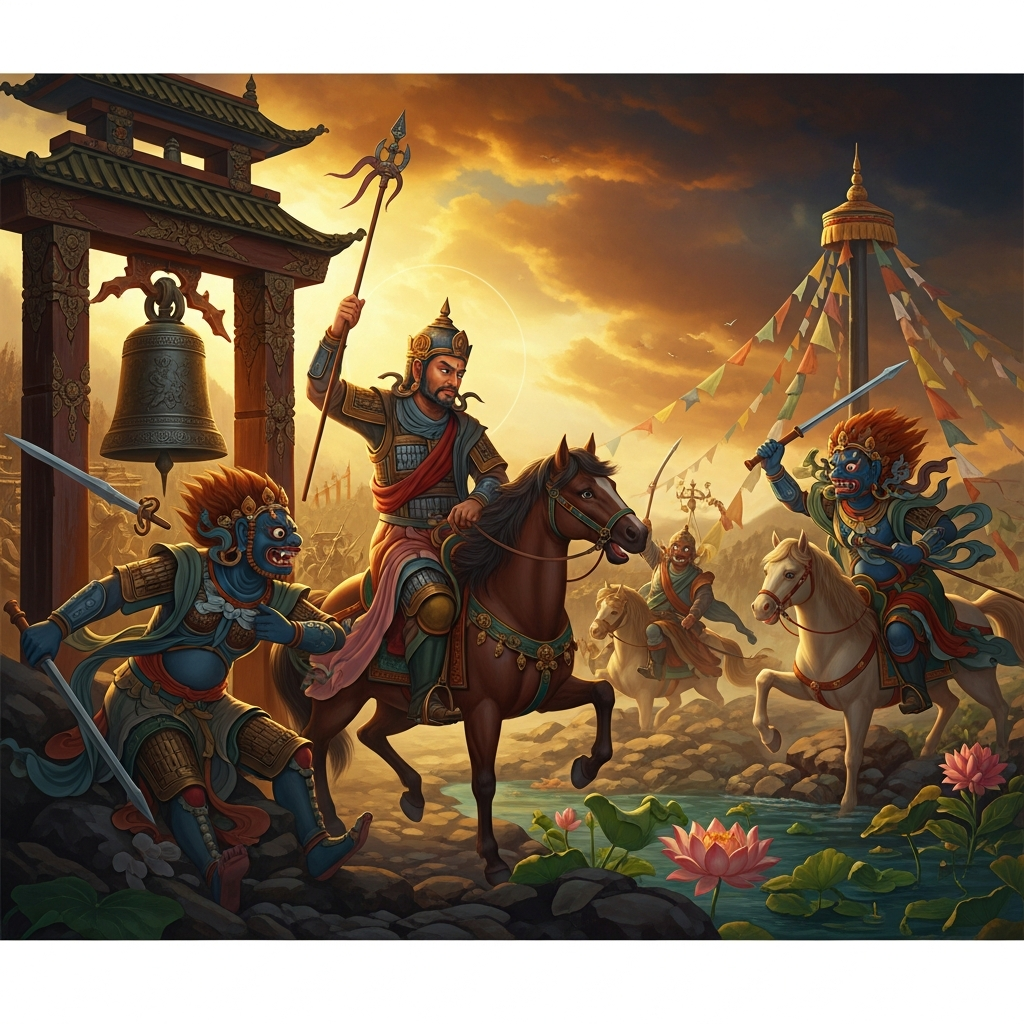
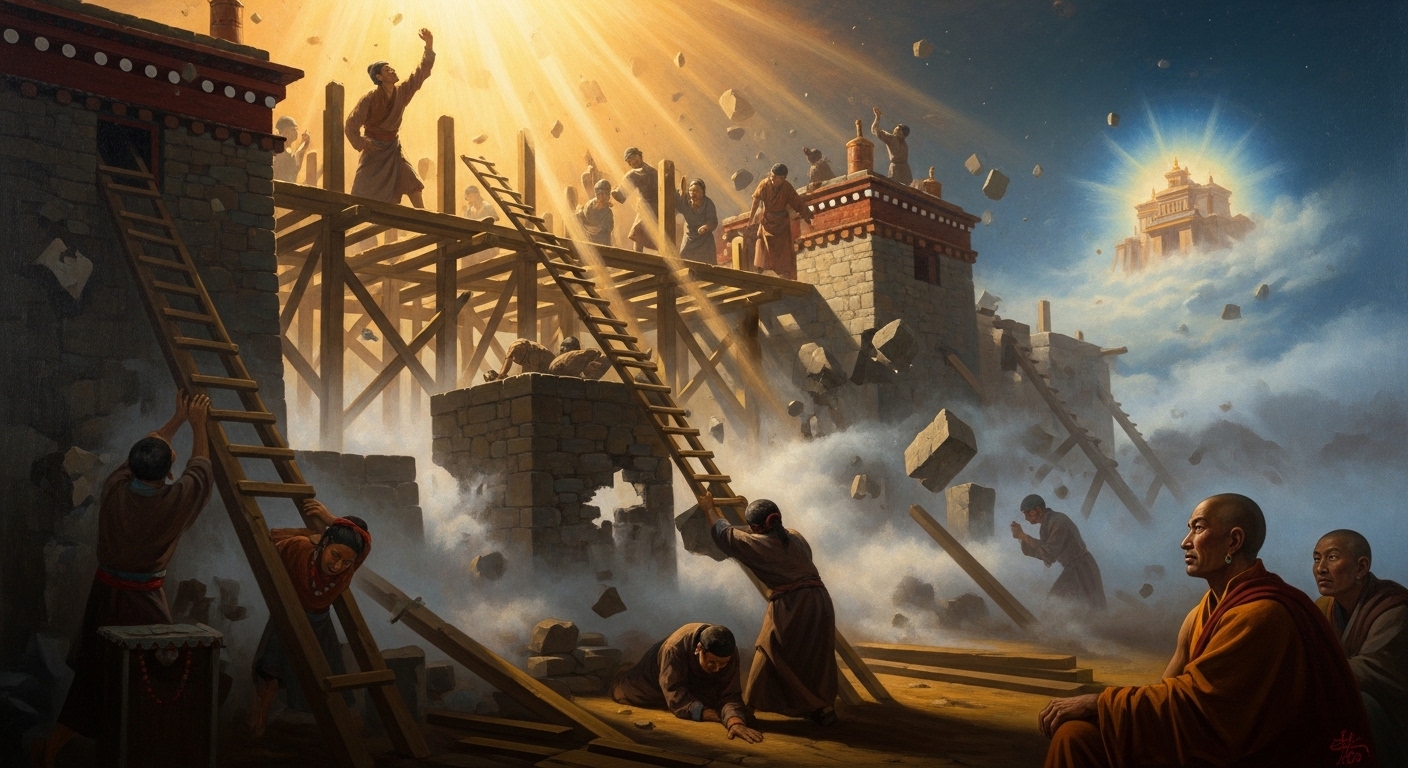
The workers begin. Each night what they build in the day is torn down. Not by human agents — there are no human agents. The foundations collapse. The timber rots in hours. The stones shift from their positions. The indigenous spirits of the valley reject the intrusion of this new sacred space with a consistent, methodical persistence that no amount of guard duty or ritual averting can address.
Śāntarakṣita tells the king: you need Padmasambhava.
He arrives from the south.
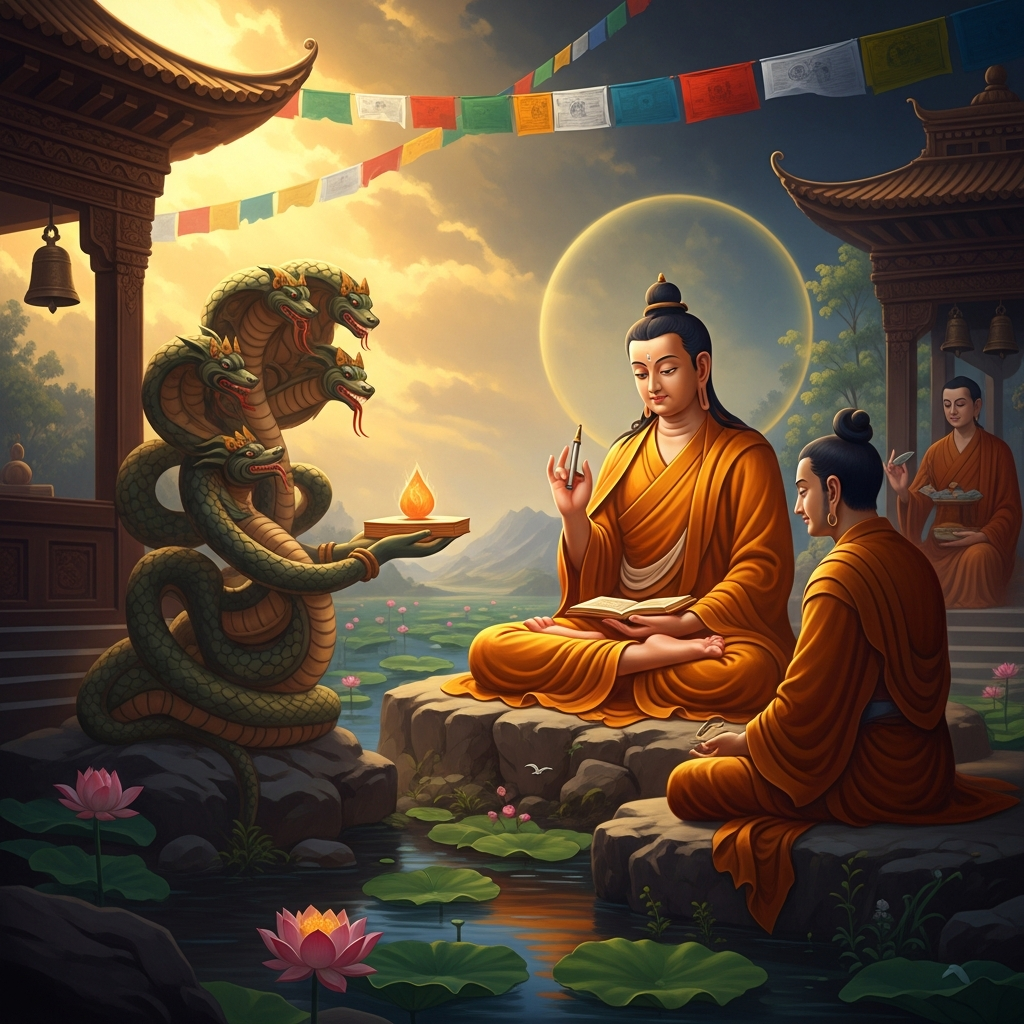
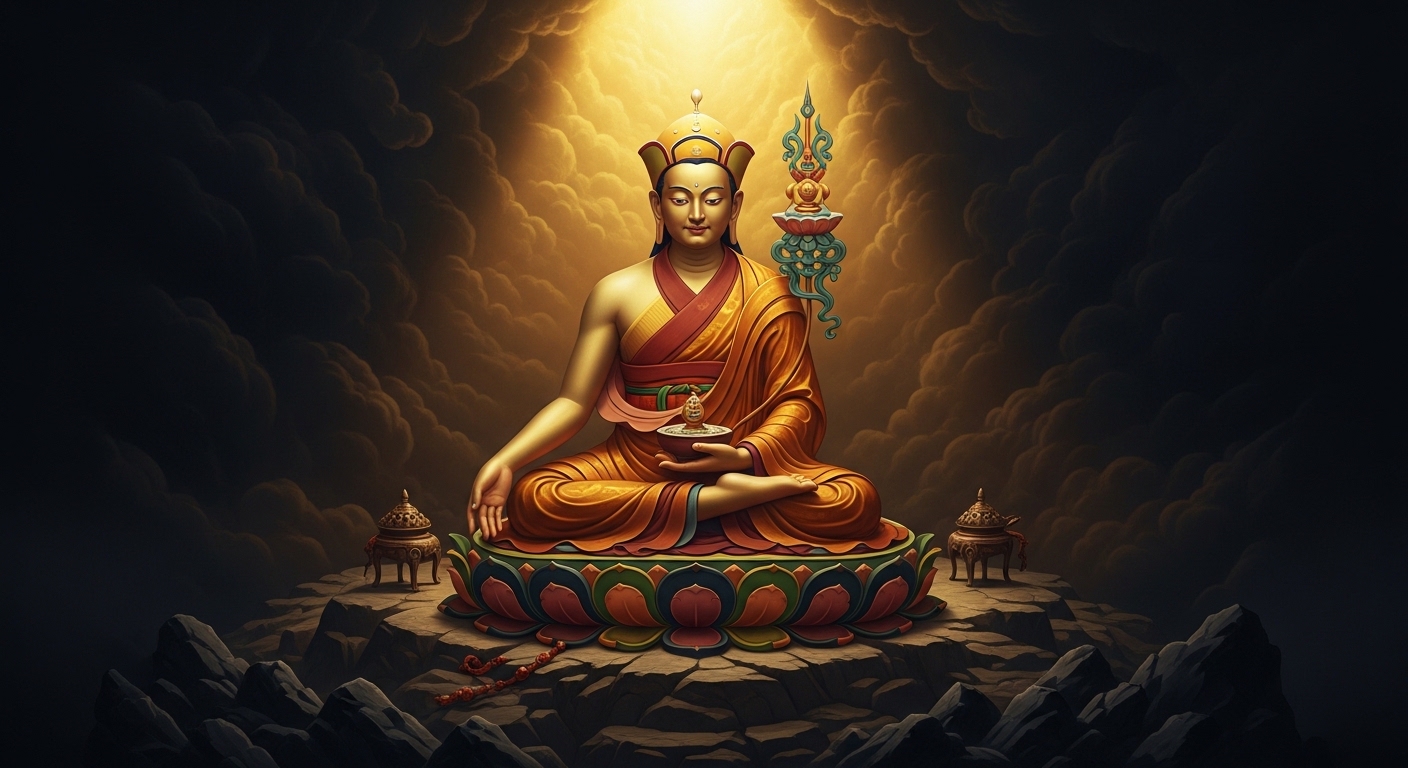
Padmasambhava does not come to build the monastery. He comes to create the conditions in which the monastery can be built. He walks the valley. He identifies the specific spirit beings that are causing the problems — the nagas of the river, the local gods of the hillsides, the tsen who inhabit the rock formations. He addresses each one.
The method is not expulsion. The method is, as always with Padmasambhava, conversion. He meets the spirit of the valley, demonstrates that he is more powerful, extracts the vow of service, and assigns the spirit a new function: protecting the Dharma rather than opposing it. By the time he finishes the circuit of the site, the valley has been transformed from a hostile environment into a protected field.
Construction resumes. Nothing falls down.
The seven tested monks complete the founding.
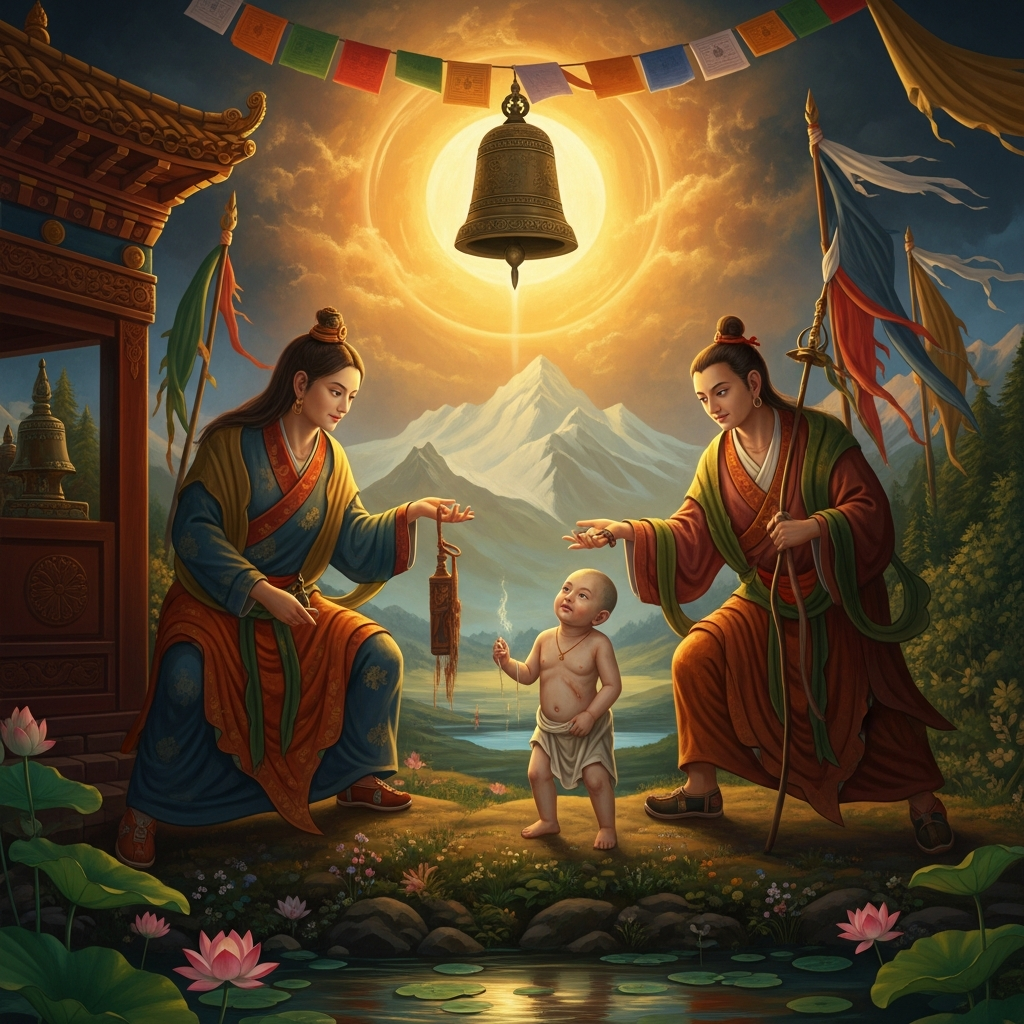
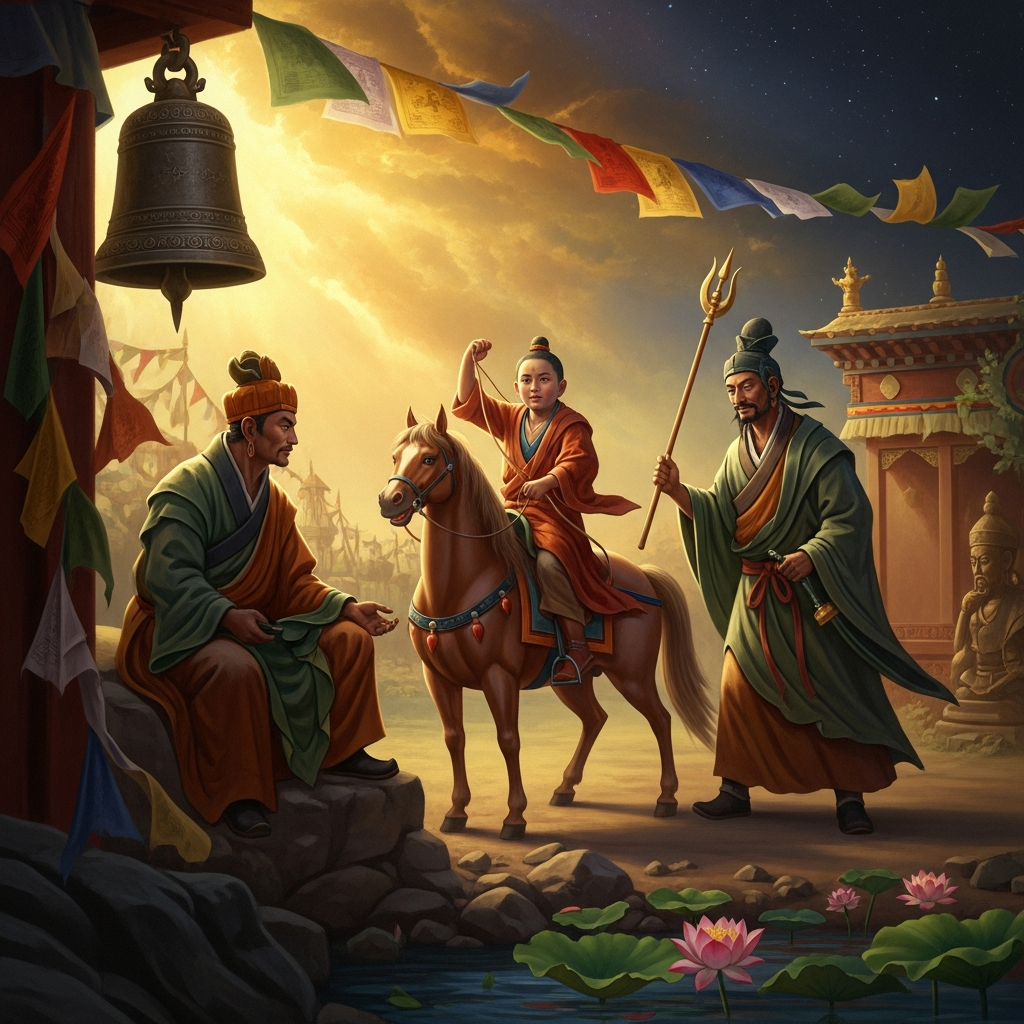
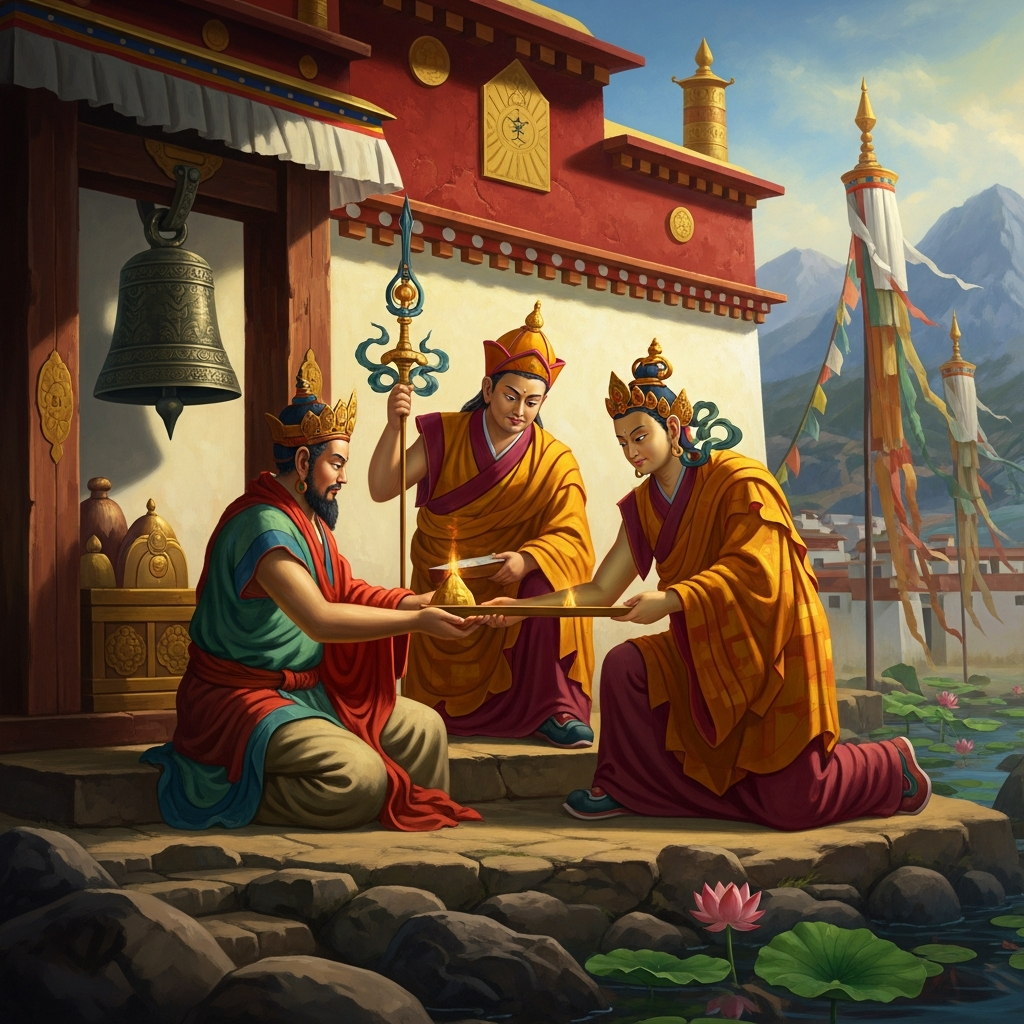
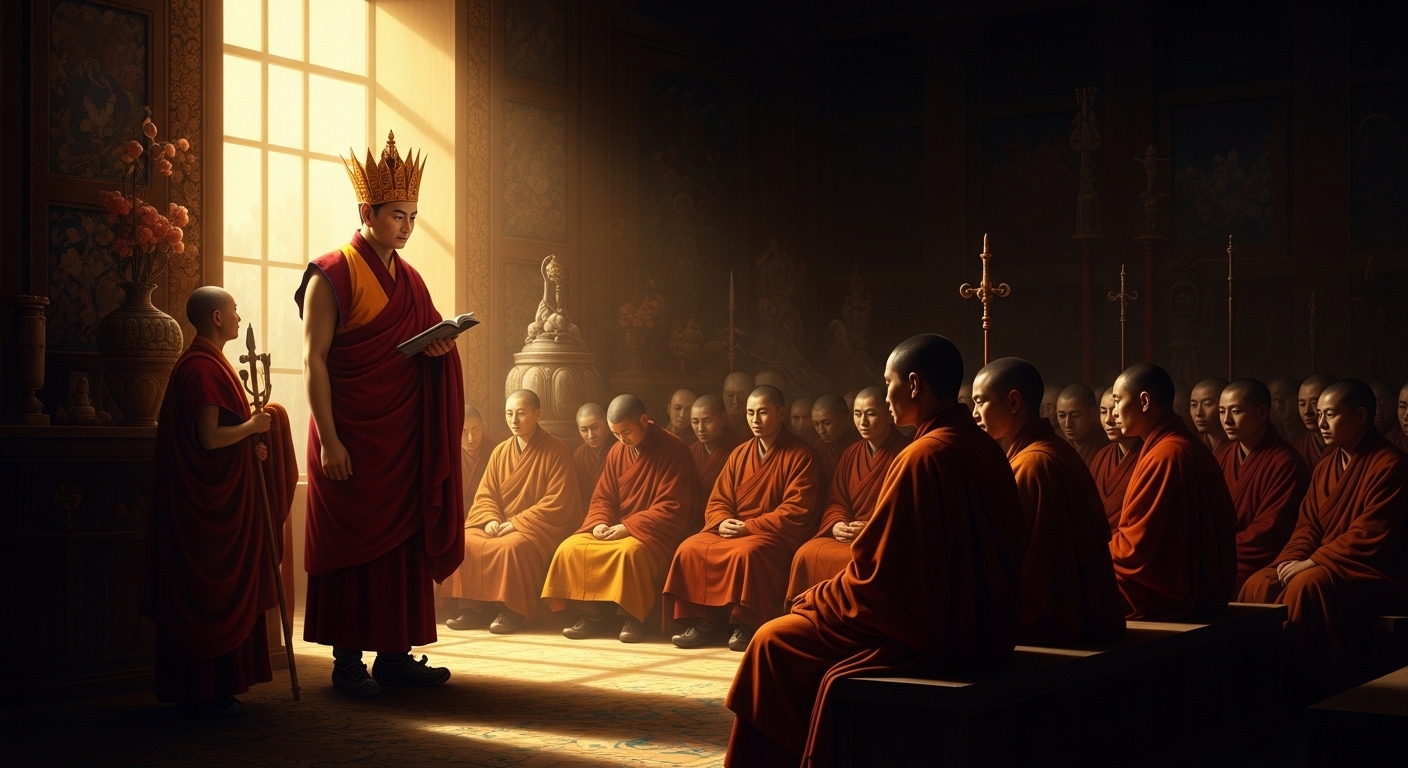
The first ordination of Tibetan monks is tentative: King Trisong Detsen needs to know whether Tibetans can hold the monastic vows — can renounce the ordinary life, maintain the Vinaya discipline, practice sincerely. He selects seven young men from his court and ordains them on a trial basis. Their success will determine whether a Tibetan monastic community is possible.
They are called the “seven tested” — and they pass. They hold their vows. They practice. They demonstrate that the Dharma, which arose in India and was transmitted through India’s languages and institutions, can take root in a different people at a different altitude in a different climate.
The monastery that stands at Samye is built in three styles: the ground floor in Tibetan style, the second floor in Chinese style, the third floor in Indian style — the three great Buddhist civilizations stacked into one building. This is not architectural uncertainty. It is a statement: the Dharma belongs to all three directions, includes all three, is larger than any single culture’s form.
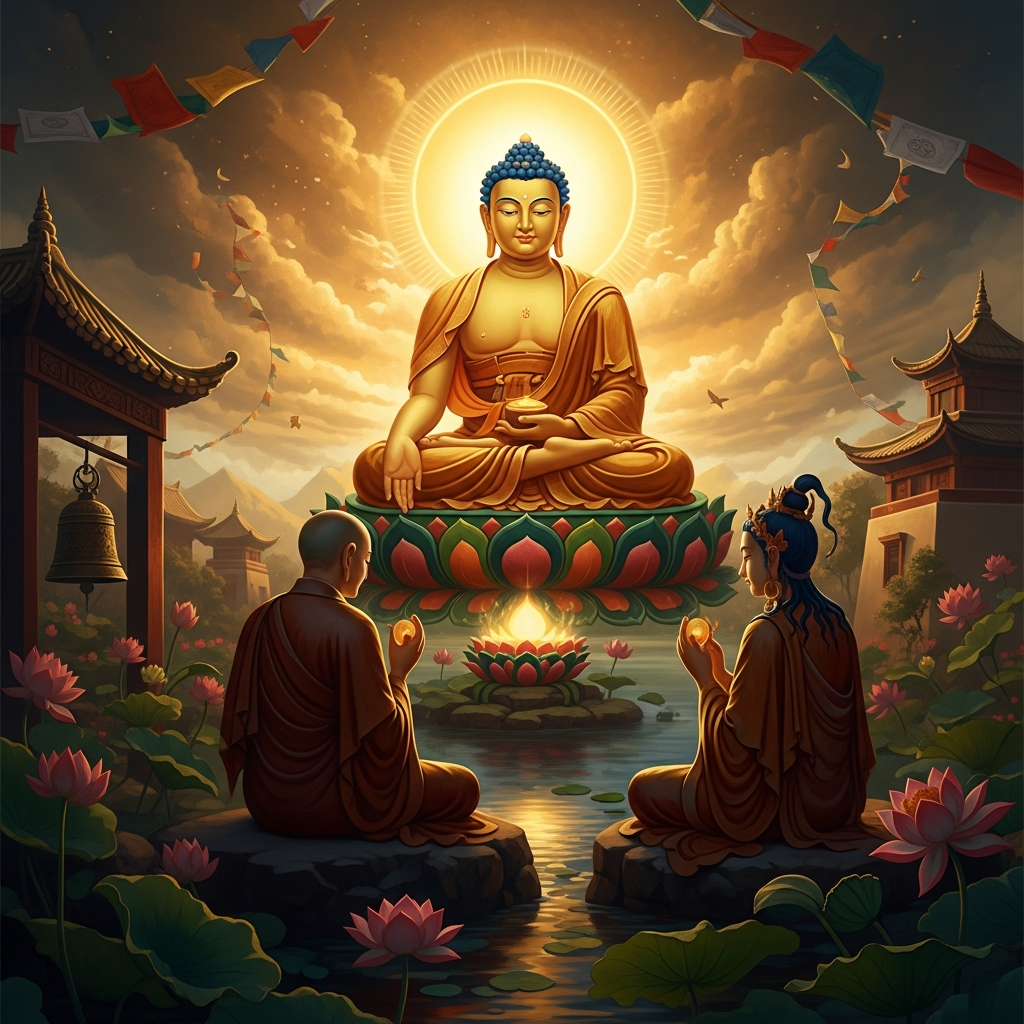
The consecration ceremony fills the valley. Padmasambhava presides. Śāntarakṣita performs the monastic formalities. The king watches. The seven monks are there. The local spirits who have been converted to protectors are also there, invisible but present — the nagas in the river, the hillside gods, the rock spirits, all of them now oriented toward the same thing the monks are oriented toward: the preservation and flowering of the teaching in this new home.
The teaching has found its Tibetan house.
Scenes
Echoes Across Traditions
Entities
- King Trisong Detsen
- Padmasambhava (Guru Rinpoche)
- Śāntarakṣita
- the first seven Tibetan monks (the seven tested)
Sources
- Dudjom Rinpoche, *The Nyingma School of Tibetan Buddhism* (Wisdom Publications, 1991)
- Erik Haarh, *The Yar-luṅ Dynasty* (Gad Publishers, 1969)
- Samten Karmay, *The Treasury of Good Sayings: A Tibetan History of Bon* (Oxford University Press, 1972)