The Shambhala Warrior: Tenderness and Fearlessness
mythic present — the Shambhala warrior teachings as transmitted in 20th-century teachings and their ancient sources · The path of the Shambhala warrior — enacted on the ordinary ground of daily life, in any century, on any continent
Contents
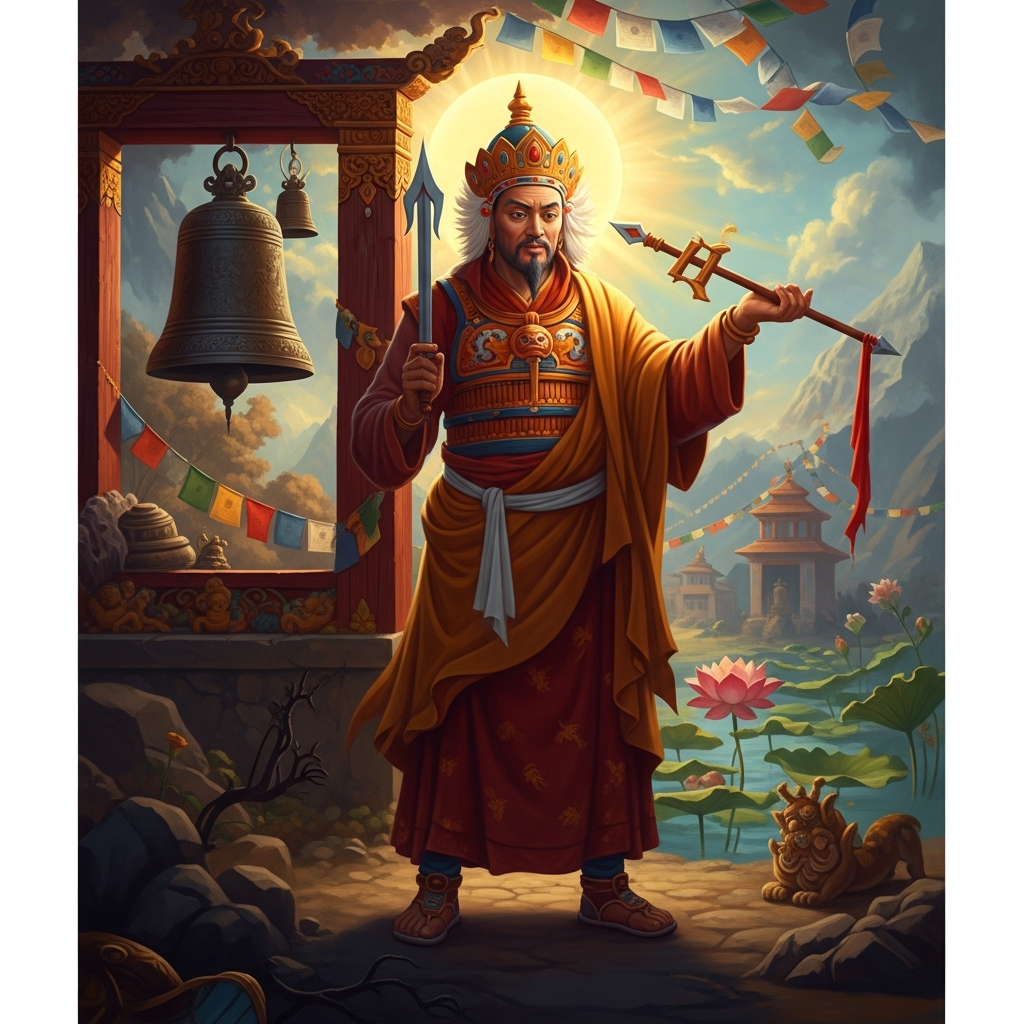
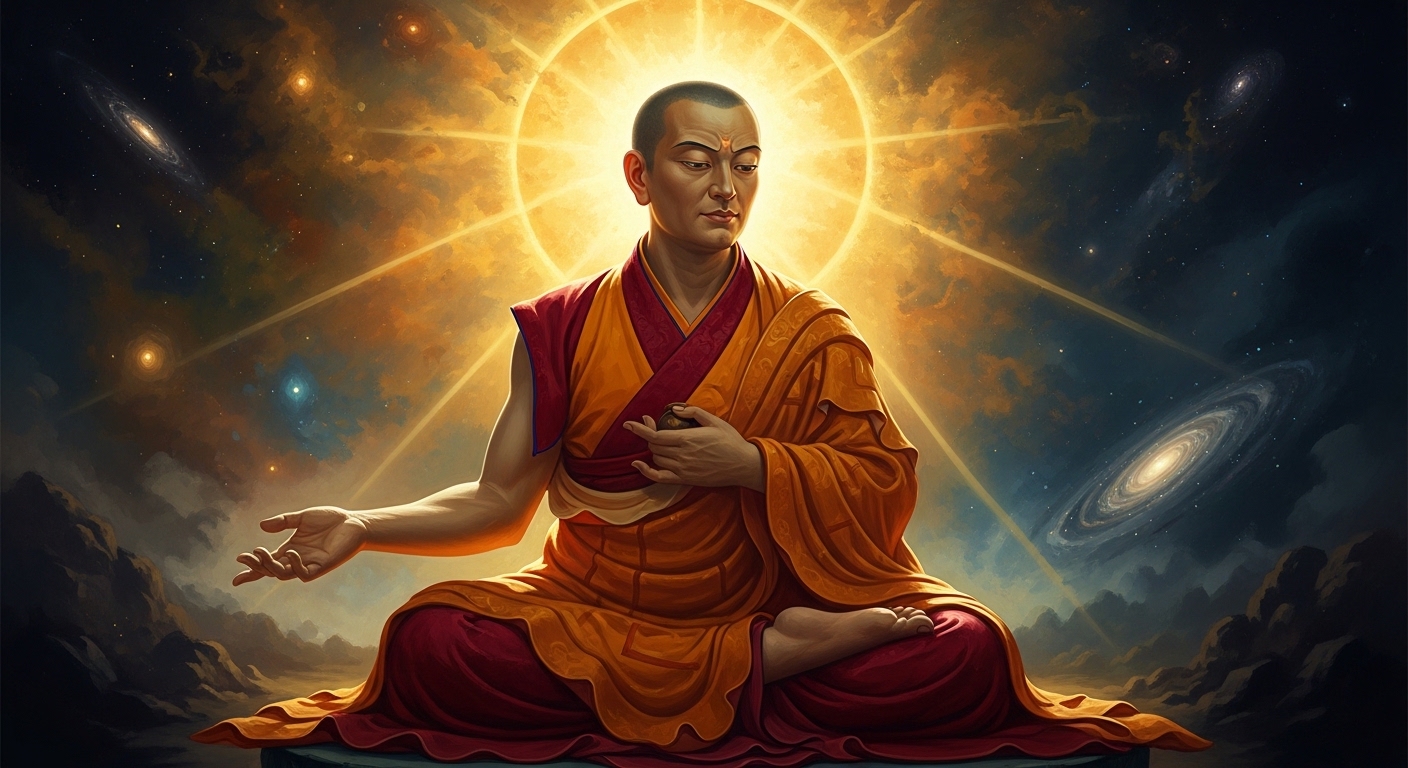
The Shambhala tradition teaches that the true warrior carries two weapons — compassion, which is tenderness in the face of suffering, and prajna, which is fearlessness in the face of confusion — and that these two weapons, together, can meet any darkness.
- When
- mythic present — the Shambhala warrior teachings as transmitted in 20th-century teachings and their ancient sources
- Where
- The path of the Shambhala warrior — enacted on the ordinary ground of daily life, in any century, on any continent
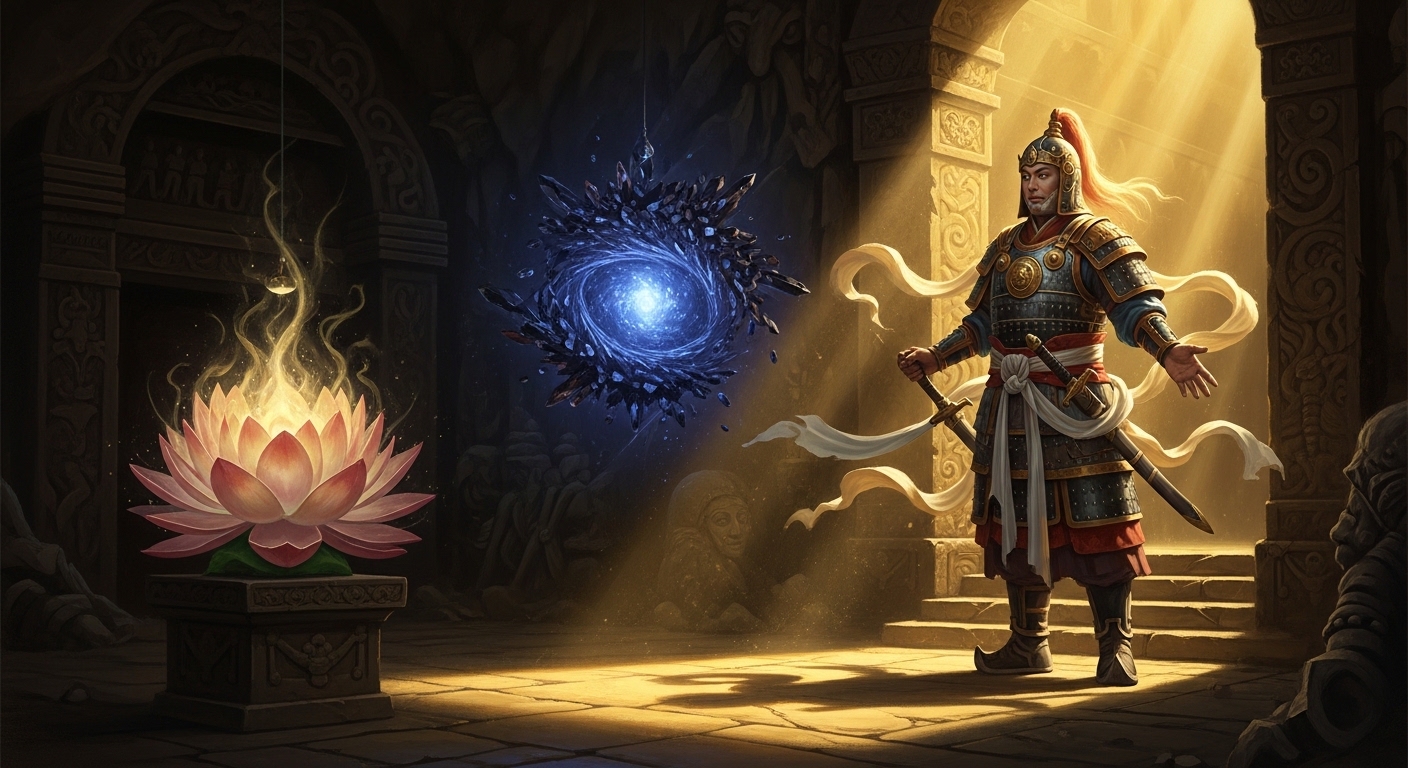
The warrior enters the palace of weapons and finds two things.
This is the vision that the Shambhala texts describe: a palace in which the weapons of the warrior are not swords or arrows but two qualities that the tradition names compassion and prajna. Compassion is the tenderness that arises from complete contact with suffering — the capacity to feel what is difficult without flinching and without hardening. Prajna is the fearlessness that arises from recognizing that confusion, darkness, and aggression are not ultimate — that beneath them is basic goodness, and that basic goodness cannot be permanently destroyed.
The warrior who carries these two weapons does not fight by overpowering the opponent. She fights by being more awake than the confusion she encounters.
This sounds abstract. The Shambhala teaching is concrete about it: the tenderness is not a performance of gentleness. It is what remains when you stop defending yourself against your own grief. It is the moment when you allow yourself to feel how much you love the world and how much the world is suffering simultaneously, without splitting the experience or managing it into something more comfortable. This is an act of courage. It is harder than most physical combat because it requires you to hold open rather than close.
The fearlessness is equally specific.
It is not the absence of fear. The Shambhala tradition is careful here: the warrior who has no fear has simply not encountered something sufficiently frightening, or has numbed herself to the point where fear’s signal is not received. Real fearlessness is the capacity to feel the fear and remain present. The fear is information: it marks the edge of your familiar territory. The warrior moves toward that edge deliberately, not because she is immune to what lives there, but because she has made a commitment to something larger than her own comfort.
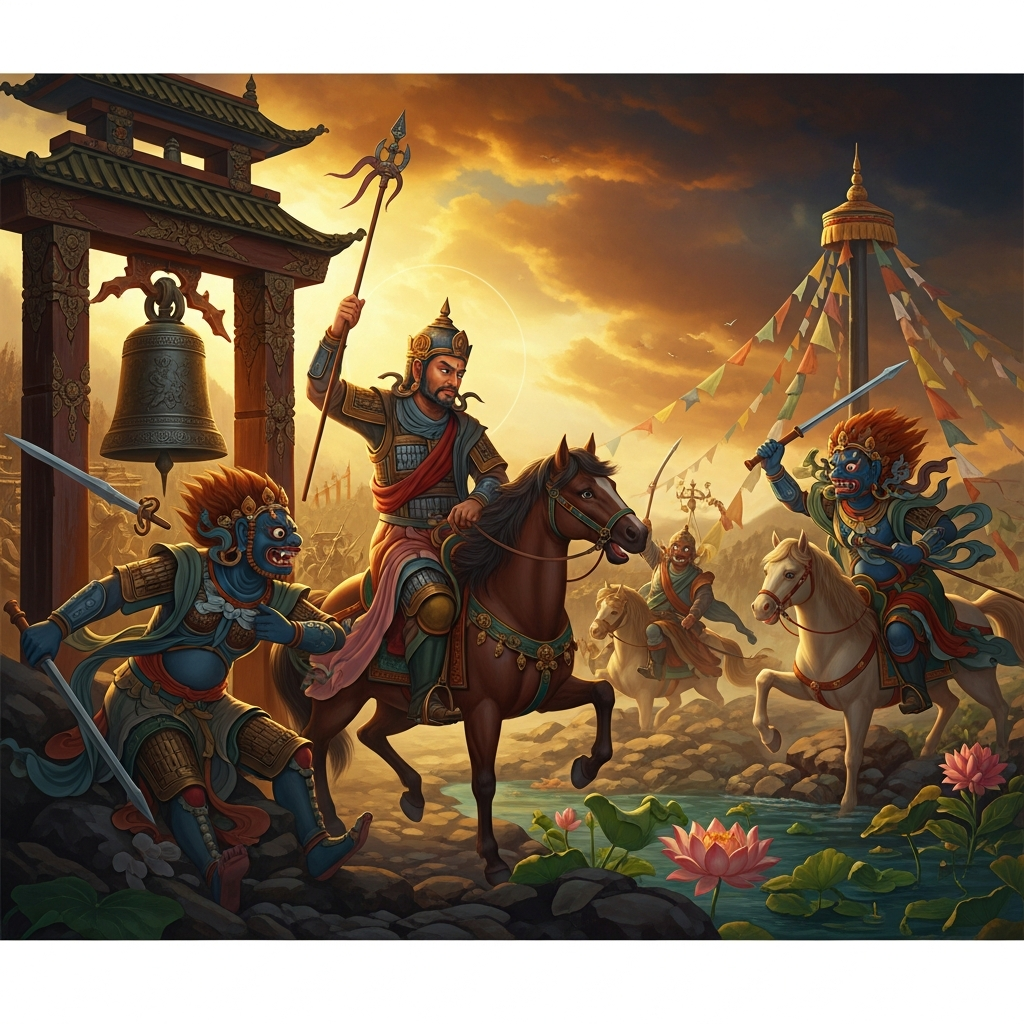
The two weapons together describe a particular movement: toward suffering with an open heart, toward confusion with a clear mind. The movement is toward, not away. The warrior does not retreat from the difficulty of the world. She enters it — the charnel grounds, the battlefields, the offices and hospital corridors and kitchens where the actual suffering of the world is located — and she enters with both weapons drawn.
What the weapons accomplish is presence. The compassion means the suffering is met rather than managed. The prajna means the confusion is seen through rather than believed. Together they create a space in which transformation is possible — not because the warrior imposes transformation, but because genuine presence is itself transformative. The thing that most suffering needs is to be fully witnessed.
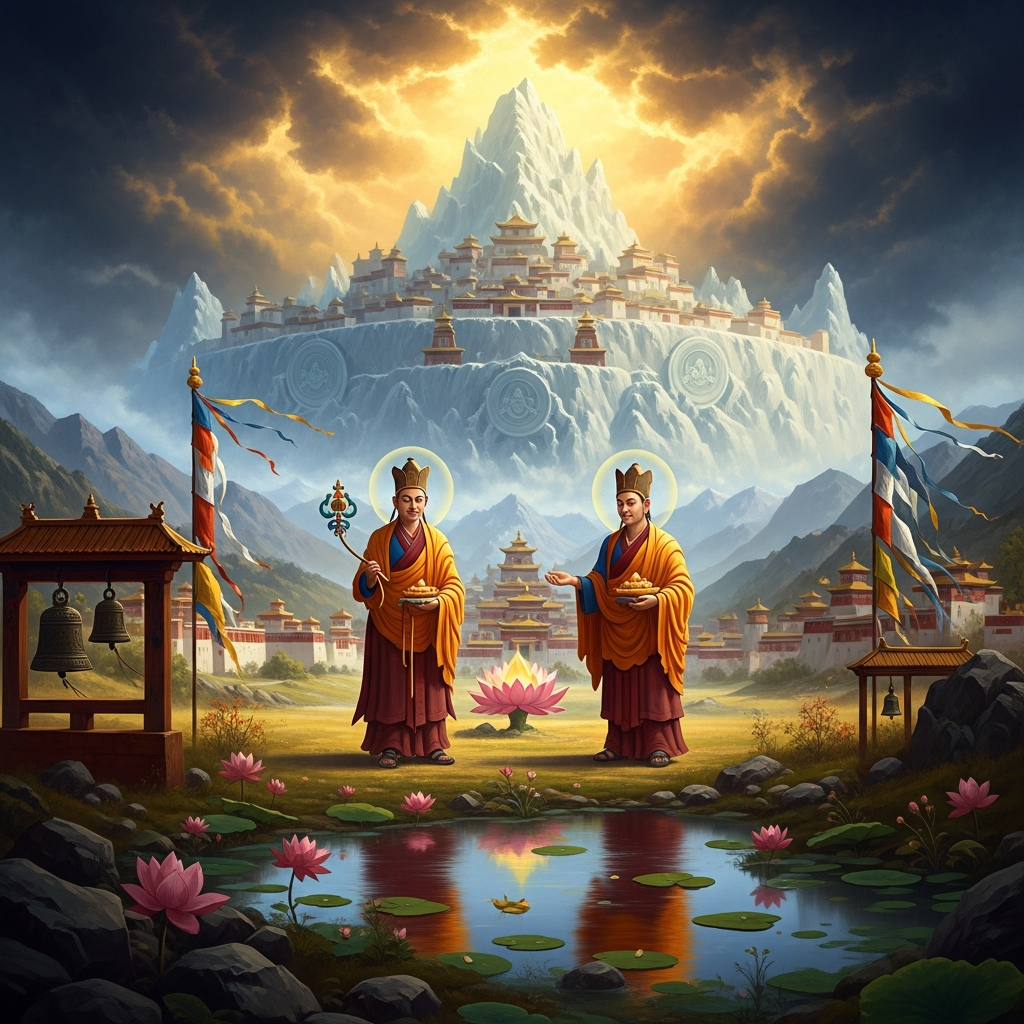
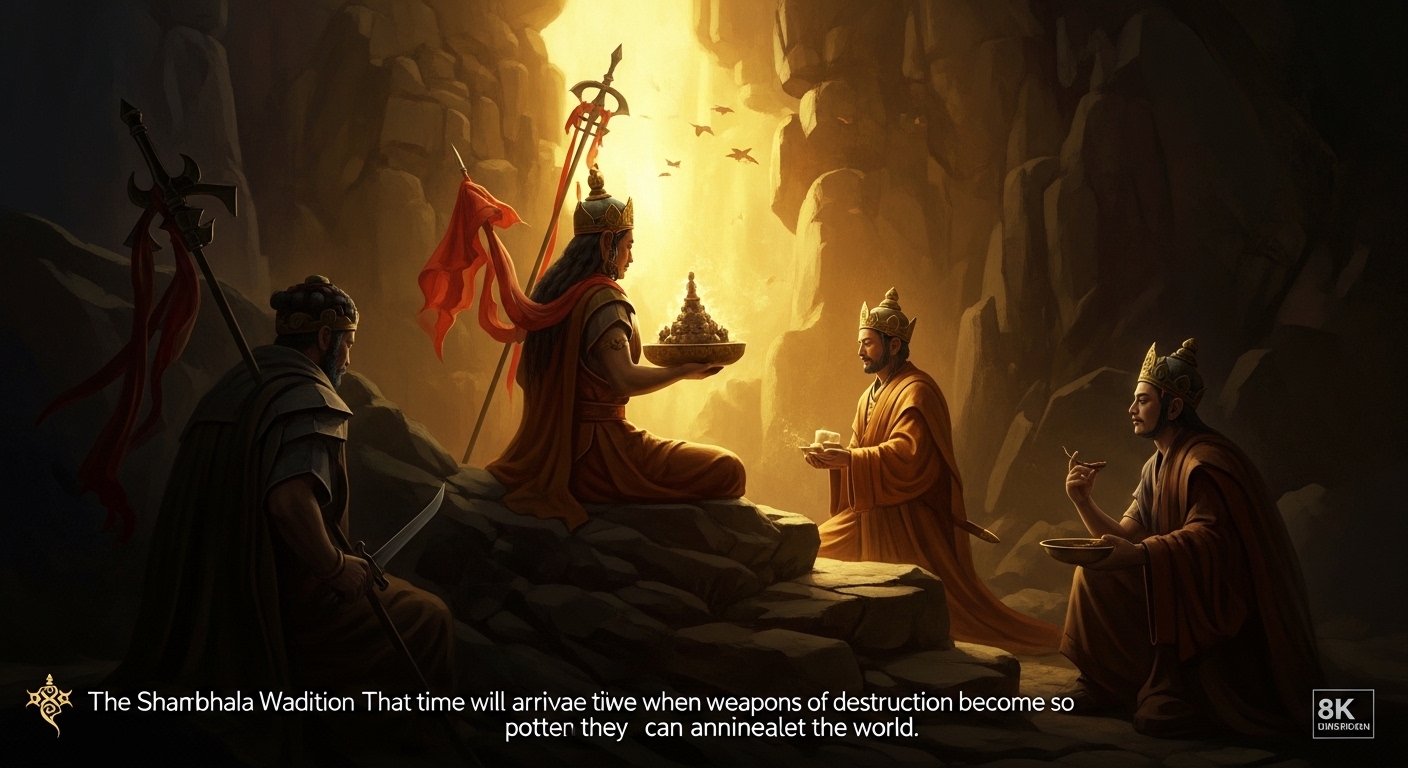
The prophecy in the Shambhala tradition is this: there will come a time when the weapons of destruction are so powerful that they can destroy the world. At that time, the warriors of Shambhala will be needed. They will not be found in mountains or monasteries. They will be found in the corridors of power, in the organizations and institutions where the decisions that shape the world are made.
This is Chogyam Trungpa’s formulation, given in a series of teachings in the 1970s and 1980s that he claimed derived from the ancient Shambhala texts. Whether the formulation is ancient or his own synthesis is disputed; what is not disputed is that it accurately describes a function.
The Shambhala warrior does not withdraw from the world to preserve her practice in conditions of purity. She brings the practice into the most contaminated environments, because those are where the weapons are needed. The palace of weapons is not outside the world. It is the world, recognized by someone who has trained enough to see it that way.
The tenderness that breaks the heart open is the first weapon. The fearlessness that keeps the heart open when it wants to close is the second. Together they are indestructible — not because they cannot be attacked, but because there is nothing in them to destroy.
Scenes
Echoes Across Traditions
Entities
- the Shambhala warrior
- Chogyam Trungpa Rinpoche
- the Rigden king
Sources
- Chogyam Trungpa, *Shambhala: The Sacred Path of the Warrior* (Shambhala, 1984)
- Pema Chödrön, *When Things Fall Apart* (Shambhala, 1997)
- Jeremy Hayward, *Sacred World: A Guide to Shambhala Warriorship* (Bantam, 1995)