The Tengu Who Taught Yoshitsune Swordsmanship
c. 1159-1174 CE — late Heian period, Yoshitsune's childhood on Mount Kurama · Mount Kurama — the sacred mountain north of Kyoto, site of Kurama-dera temple
Contents
The young Minamoto Yoshitsune, hidden as a temple boy on Mount Kurama, meets a great tengu who trains him in the supernatural swordsmanship that will make him Japan's greatest warrior — and most tragic hero.
- When
- c. 1159-1174 CE — late Heian period, Yoshitsune's childhood on Mount Kurama
- Where
- Mount Kurama — the sacred mountain north of Kyoto, site of Kurama-dera temple
He is seven years old when they put him on the mountain.
After the Heiji Disturbance of 1159, the Taira clan has defeated the Minamoto. The Taira leader, Kiyomori, has spared the Minamoto children — a famous act of mercy that will eventually cost him everything. But spared children must be put somewhere safe, somewhere they cannot organize armies. Yoshitsune, the third son of the defeated Yoshitomo, is sent to Kurama-dera, the temple on the mountain north of Kyoto, to become a monk.
The mountain is not just a mountain.
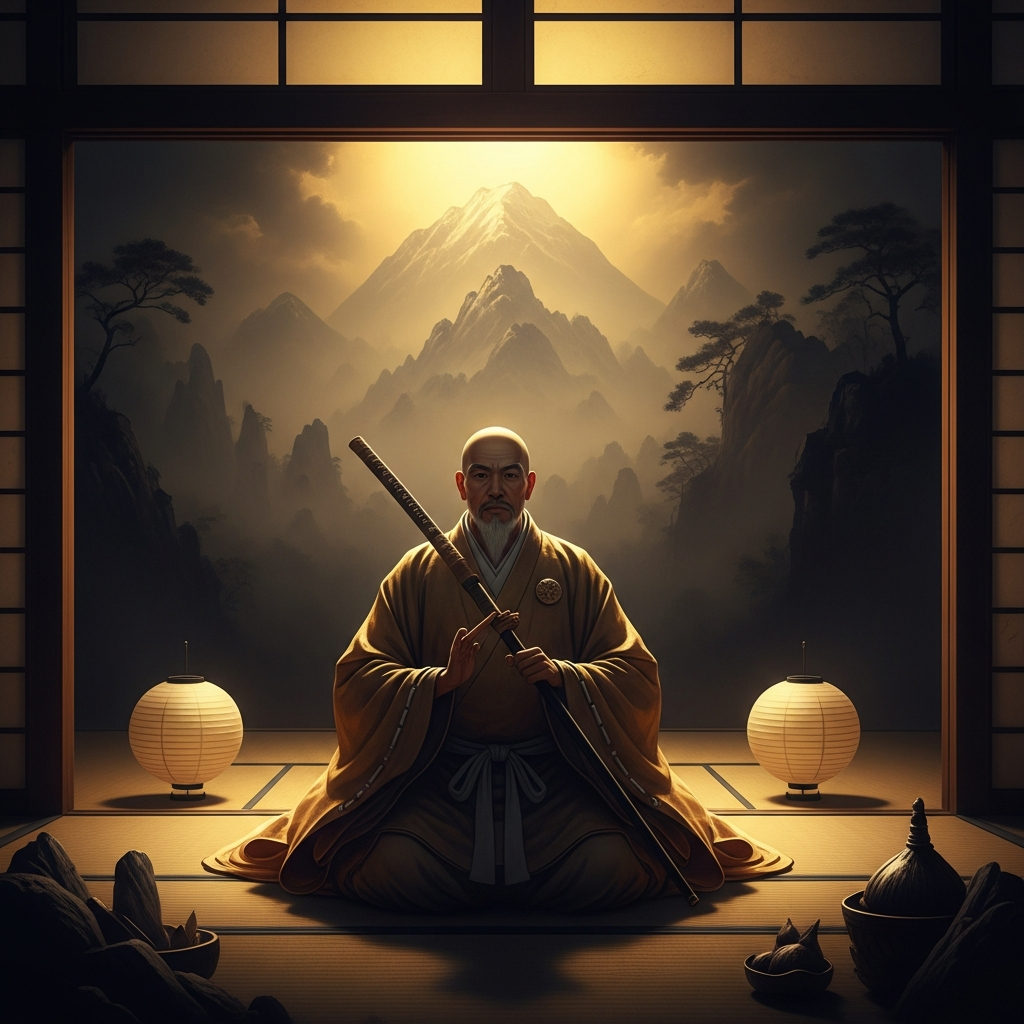
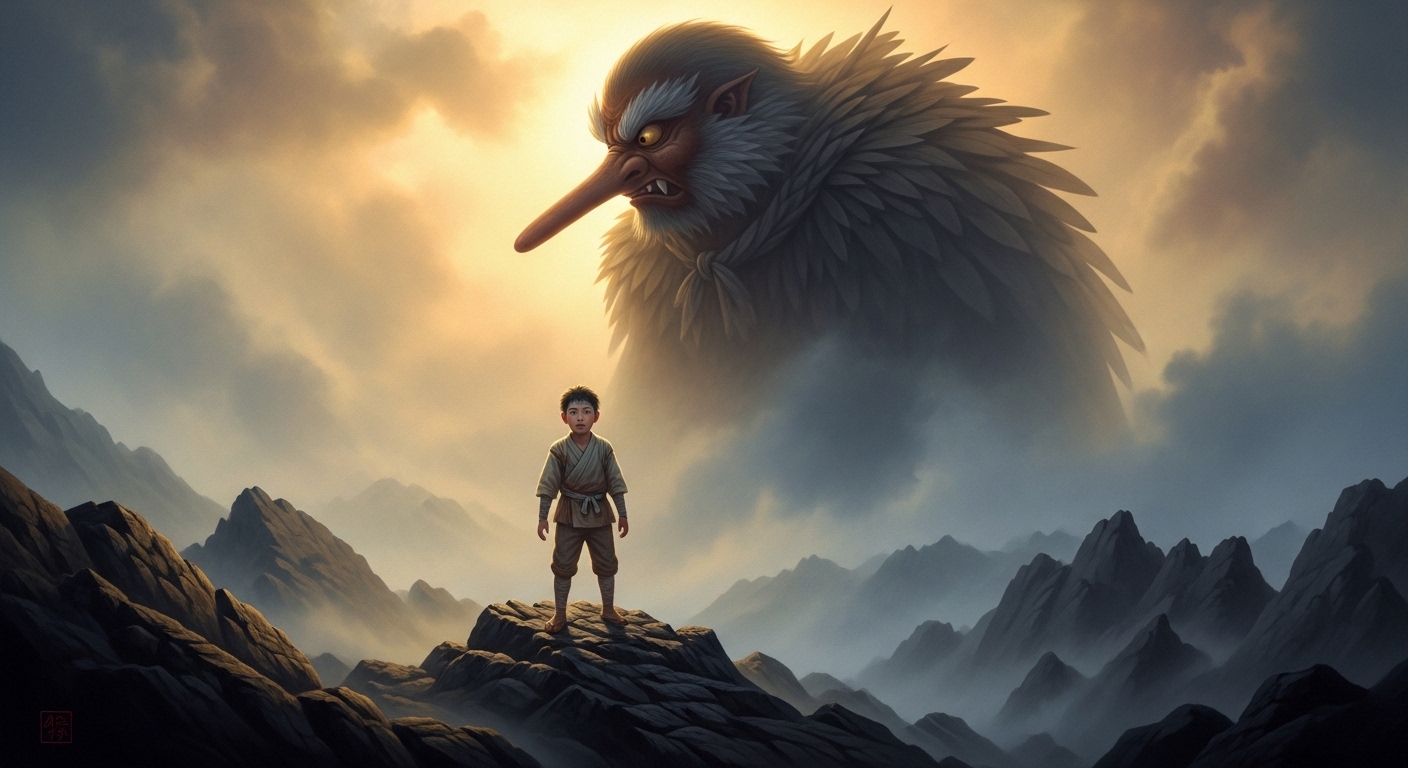
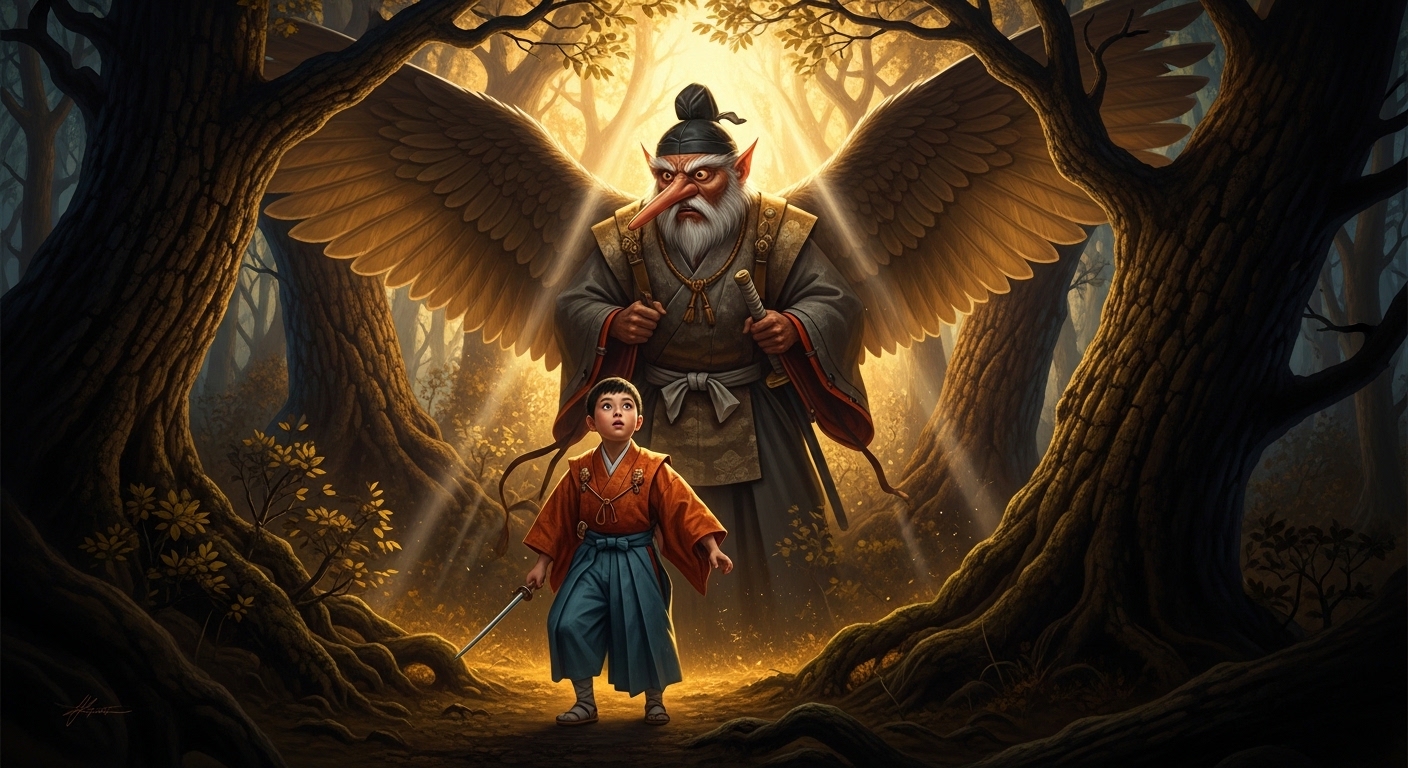
Kurama is the domain of Sōjōbō, the king of the tengu — the mountain spirits who are simultaneously dangerous and sacred, the beings who occupy the space between Buddhist monasticism and something older and wilder. Sōjōbō is the eldest and greatest of them, described in later accounts as white-haired, red-faced, carrying a fan of feathers, with a nose so long it points at the future. He has been on this mountain longer than the temple. The temple was built around him.
The boy Yoshitsune discovers the tengu by accident, or is discovered by him.
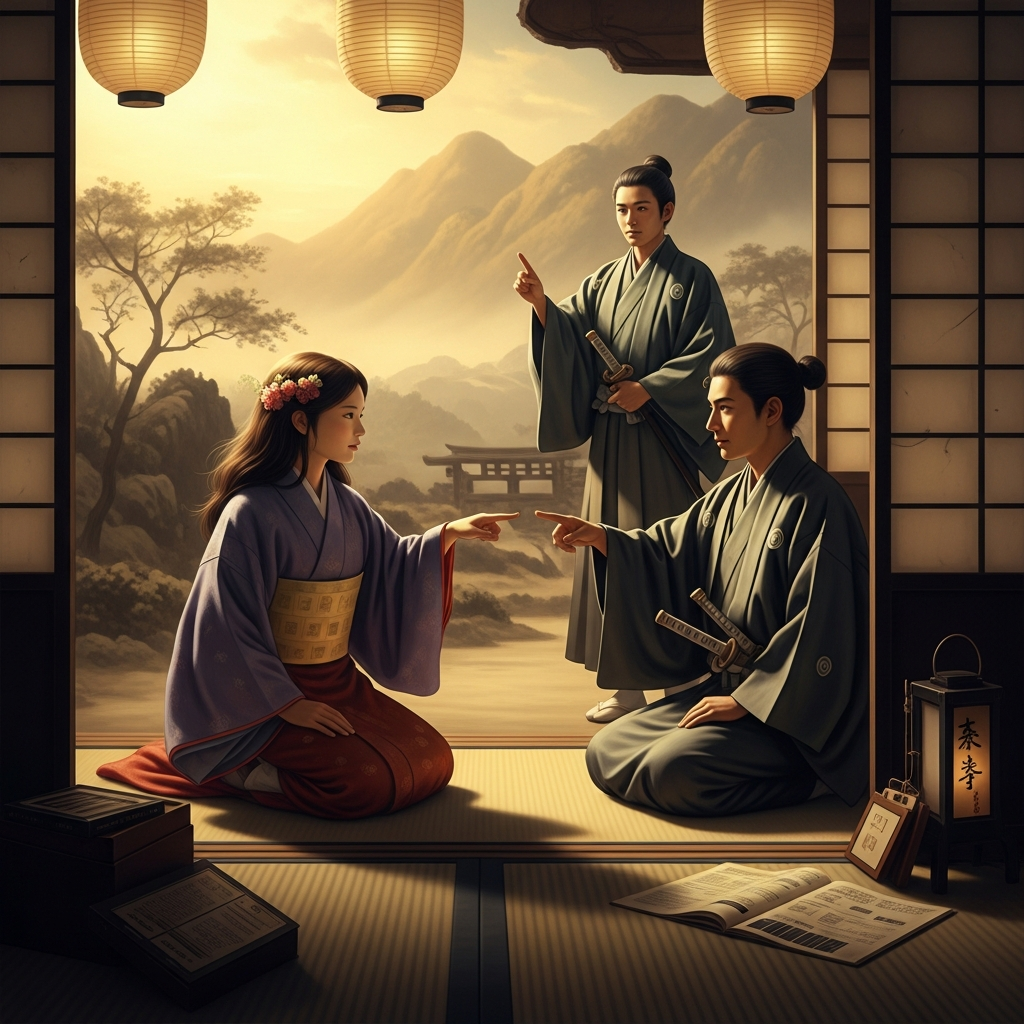
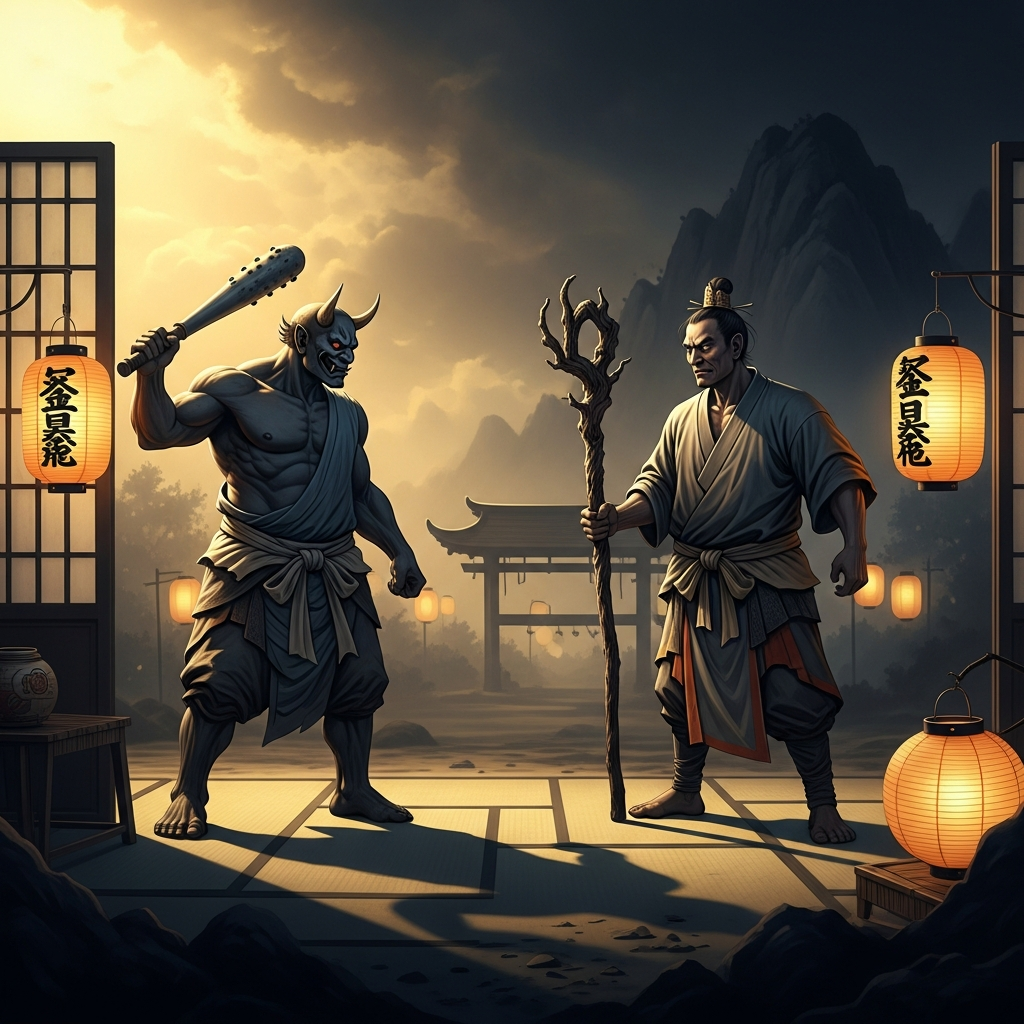
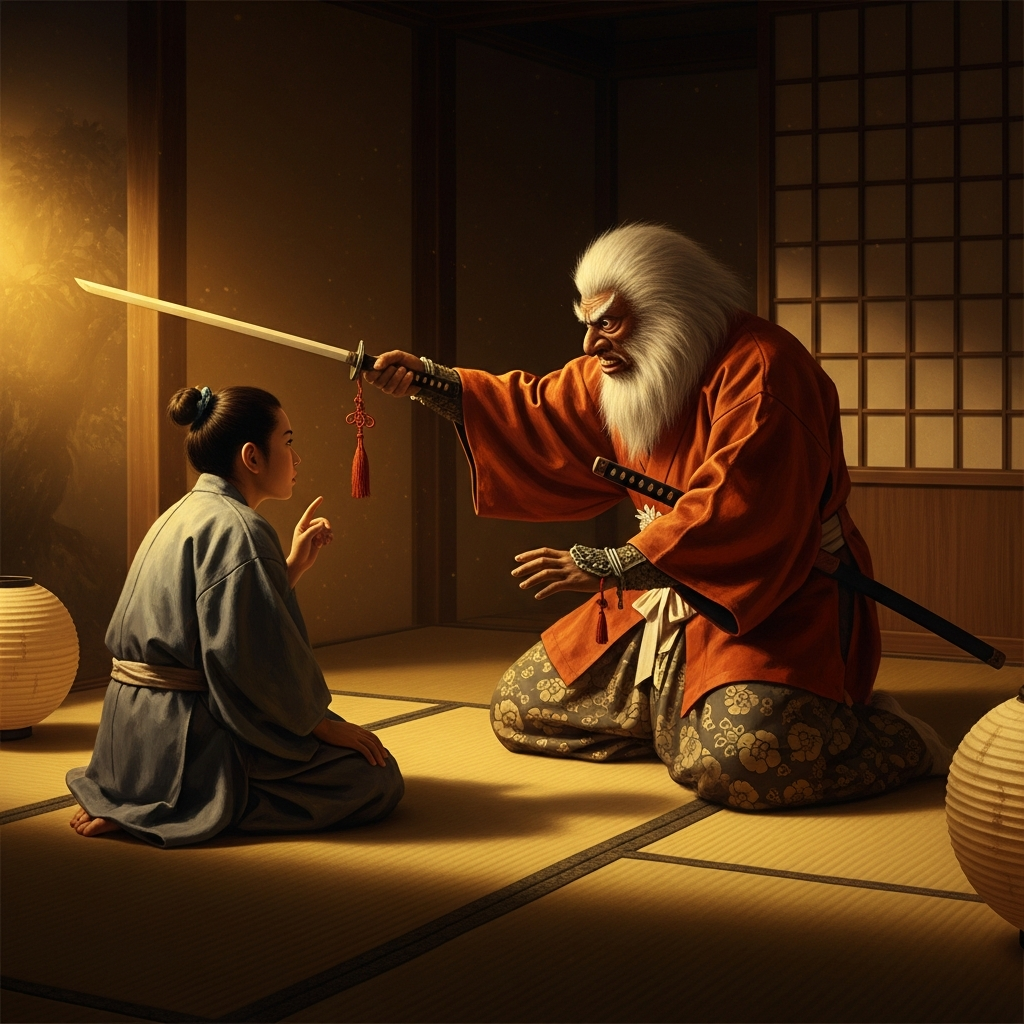
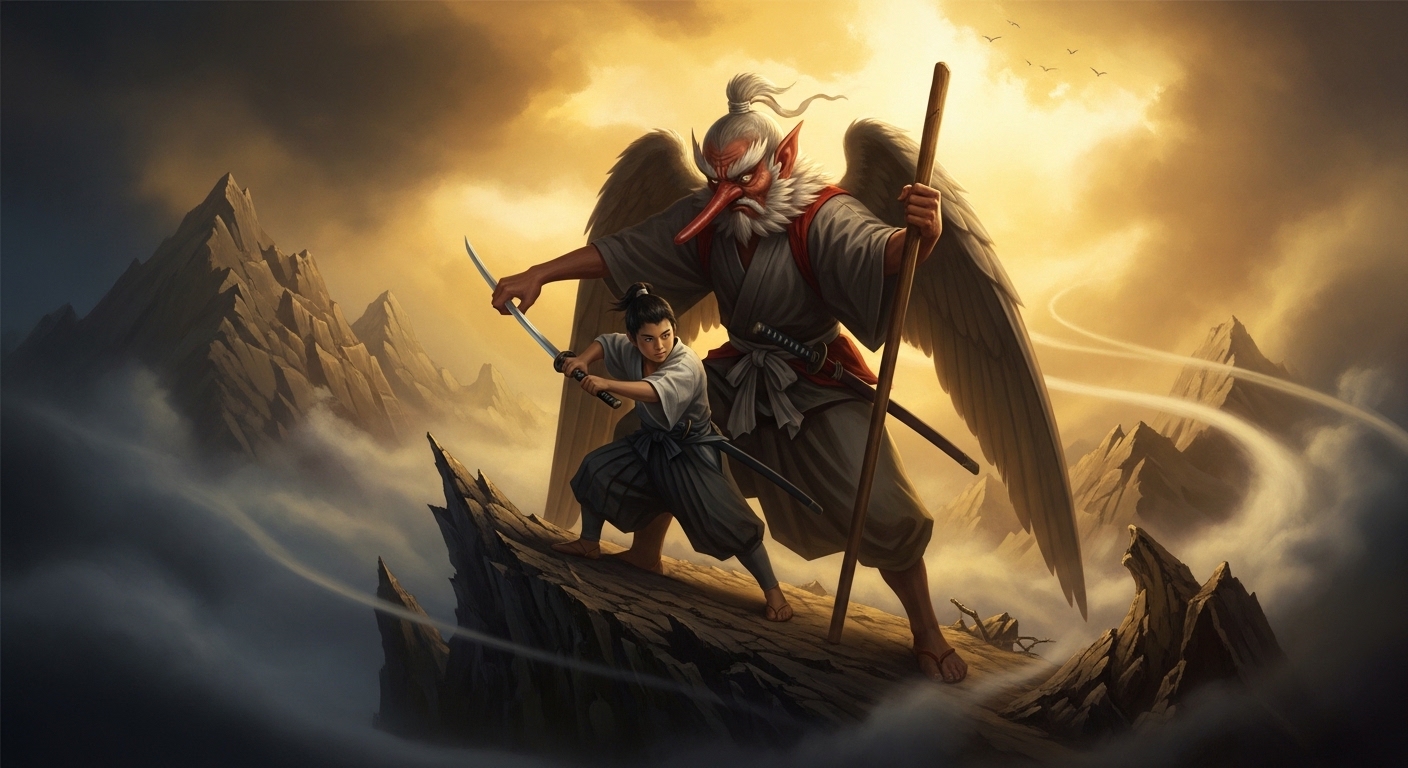
Different accounts place this differently: in some, he finds the tengu in the deep forest above the temple where the monks do not go. In others, Sōjōbō comes to him in a dream. What the accounts agree on is the training: Yoshitsune learns from Sōjōbō in the pre-dawn hours when the monks are still asleep, on the wide flat rocks at the mountain’s height, by moonlight and later by the first light of morning.
What he learns is not ordinary swordsmanship. Ordinary swordsmanship is what men learn from men — the position of the body, the angles of cut, the management of distance. What Sōjōbō teaches is different: the ability to read an opponent’s intention before it becomes movement, the capacity to occupy positions that should be geometrically impossible in a fight, the understanding of combat as a kind of conversation between bodies that happens too fast for the conscious mind to follow.
The accounts describe Yoshitsune fighting in ways that contemporary warriors find uncanny: he jumps over enemy blades, fights from positions above his opponents’ heads, seems to be in multiple places at once. The chroniclers call his technique hiten no jutsu, the art of flying — not literal flight, but movement so fluid and unexpected that it resembles a being unbound by gravity.
The mountain shapes him. The tengu teaches him. The monks, growing suspicious of the boy’s absences, know nothing.
When he is sixteen he leaves Kurama. He goes north to Hiraizumi in Ōshū, to the powerful Fujiwara family who will sponsor his eventual rise. He fights under his brother Yoritomo’s banner when the Genpei War erupts in 1180. He becomes the general who wins every battle: the Uji River crossing, Ichi-no-tani where the Taira flee their camp in panic, Yashima where he fires from the sea, Dan-no-ura where the Taira are annihilated.
He wins everything except his own life.
Sōjōbō taught him how to fight. No one taught him how to stop. No one taught him the things the tengu of Kurama, living above the human world on their mountain, did not need to know: how to manage a brother’s jealousy, how to survive politics, when to yield.
The mountain training made him invincible in combat.
The world below the mountain had different weapons.
Scenes
Echoes Across Traditions
Entities
- Minamoto no Yoshitsune
- Sōjōbō (Great Tengu of Mount Kurama)
- Benkei
- the monks of Kurama Temple
Sources
- Gikeiki (Chronicle of Yoshitsune), 14th century
- Heike Monogatari (Tale of the Heike), c. 13th century
- Stephen Turnbull, *The Samurai: A Military History* (Osprey, 1977)
- Helen McCullough, trans., *Yoshitsune: A Fifteenth-Century Japanese Chronicle* (Stanford, 1966)