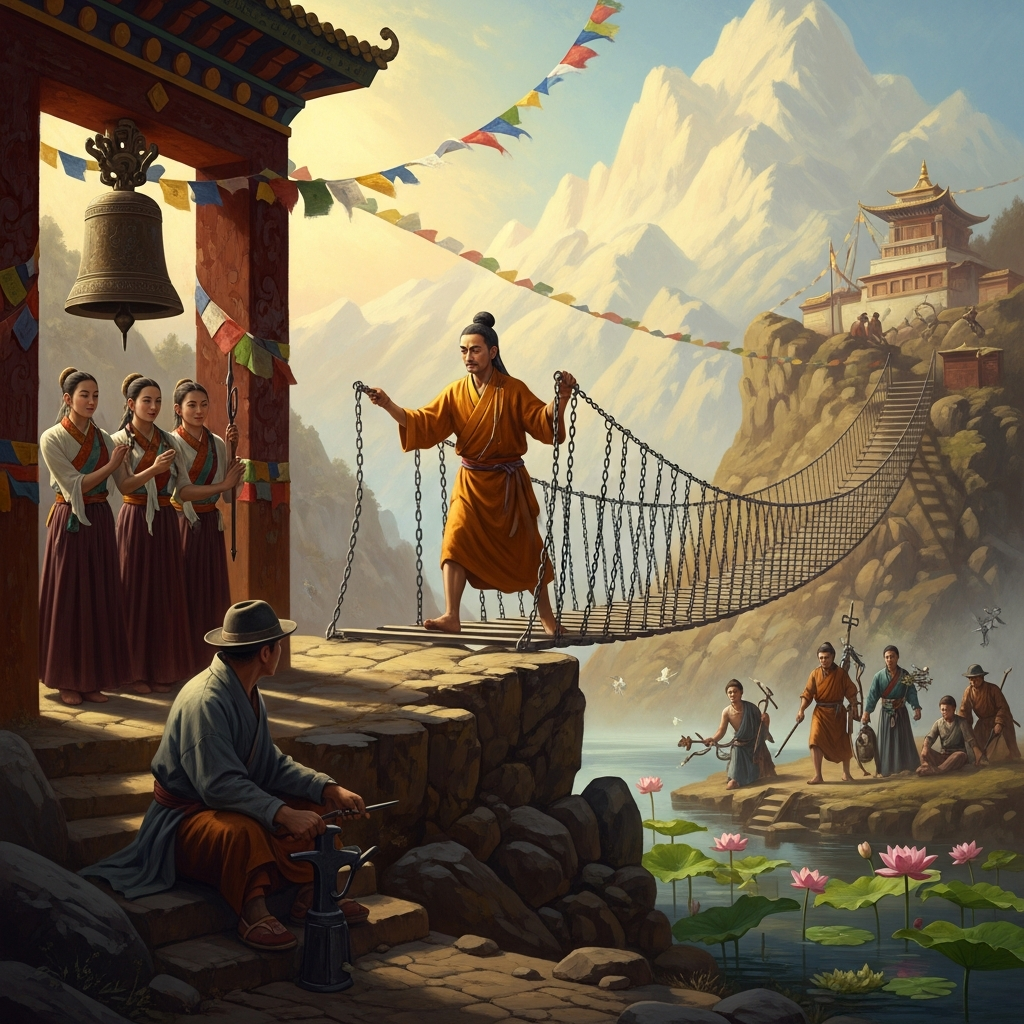
Thangtong Gyalpo Builds Bridges of Iron Chains
c. 1385–1464 CE — 15th-century Tibet and Bhutan · Tibetan mountain river gorges — the Yarlung Tsangpo, Kyichu, and other rivers of the Himalayan watershed that cut impassable gorges through the range
Contents
A 15th-century Tibetan saint and engineer crosses the Himalayas barefoot to forge iron suspension bridges across unmountable rivers, funding each bridge through theatrical performances that become the origin of Tibetan opera.
- When
- c. 1385–1464 CE — 15th-century Tibet and Bhutan
- Where
- Tibetan mountain river gorges — the Yarlung Tsangpo, Kyichu, and other rivers of the Himalayan watershed that cut impassable gorges through the range
He walks across Tibet without shoes.
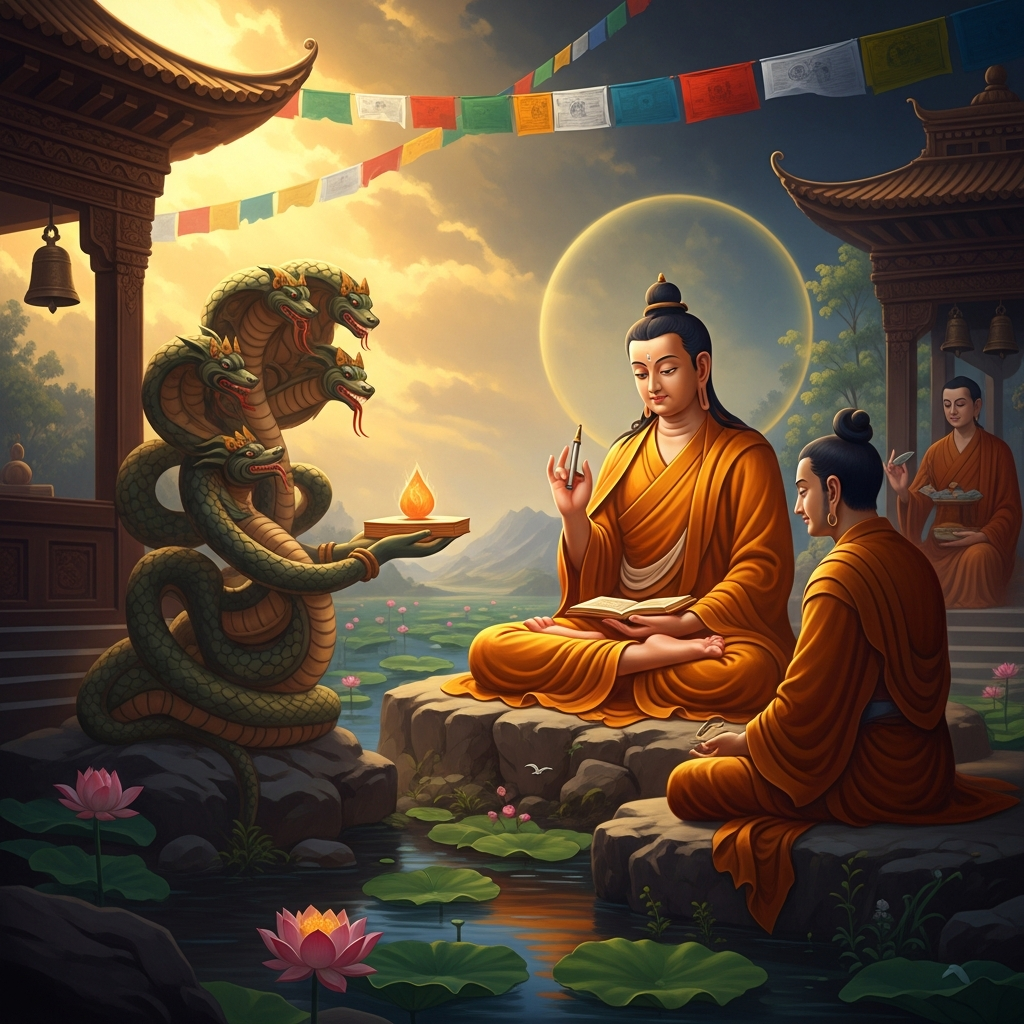
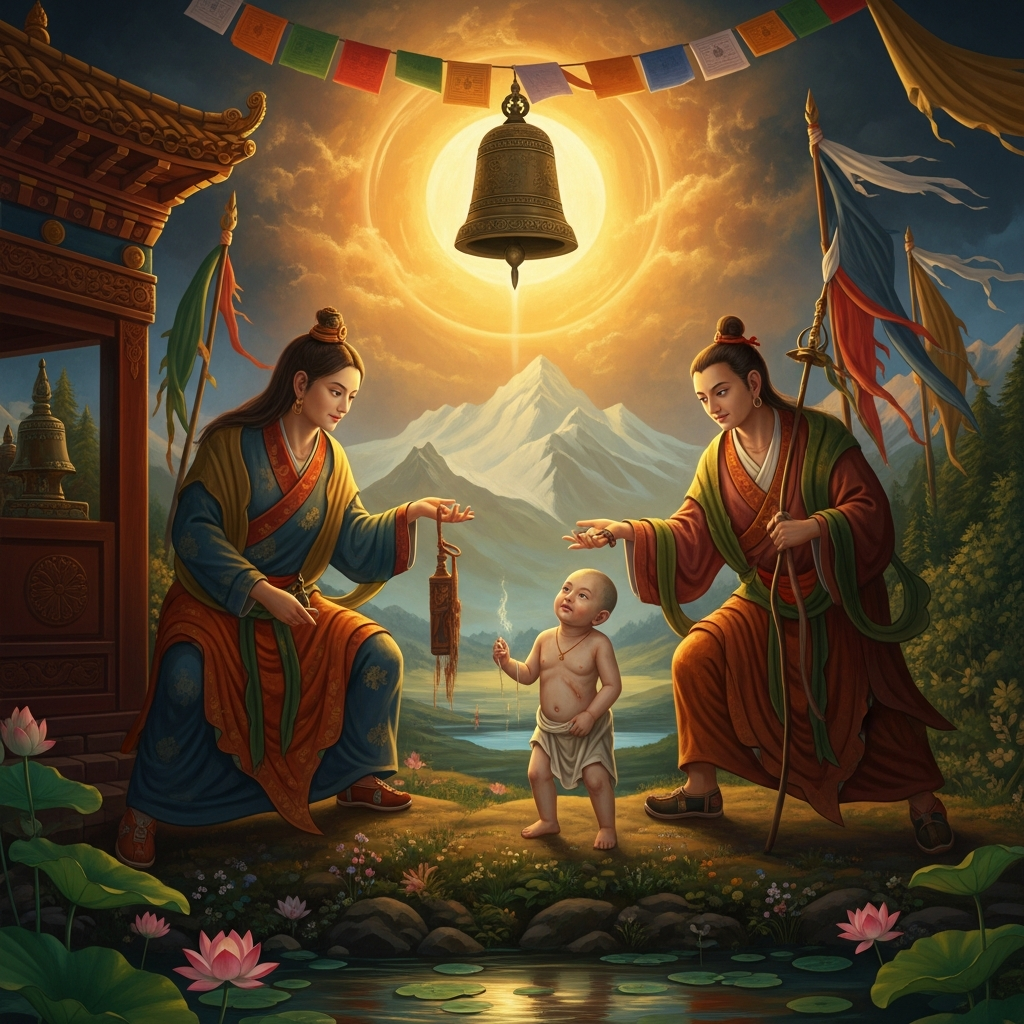
This is not unusual for wandering yogis, but Thangtong Gyalpo is unusual even among wandering yogis. He is large — the accounts consistently describe his physical size, his white hair, his laugh. He carries an iron chain. He has been walking the mountain river gorges for years, looking at the places where rivers cut through the plateau in gorges too steep and fast for ordinary crossings, watching pilgrims die in the attempt.
He decides to build bridges.
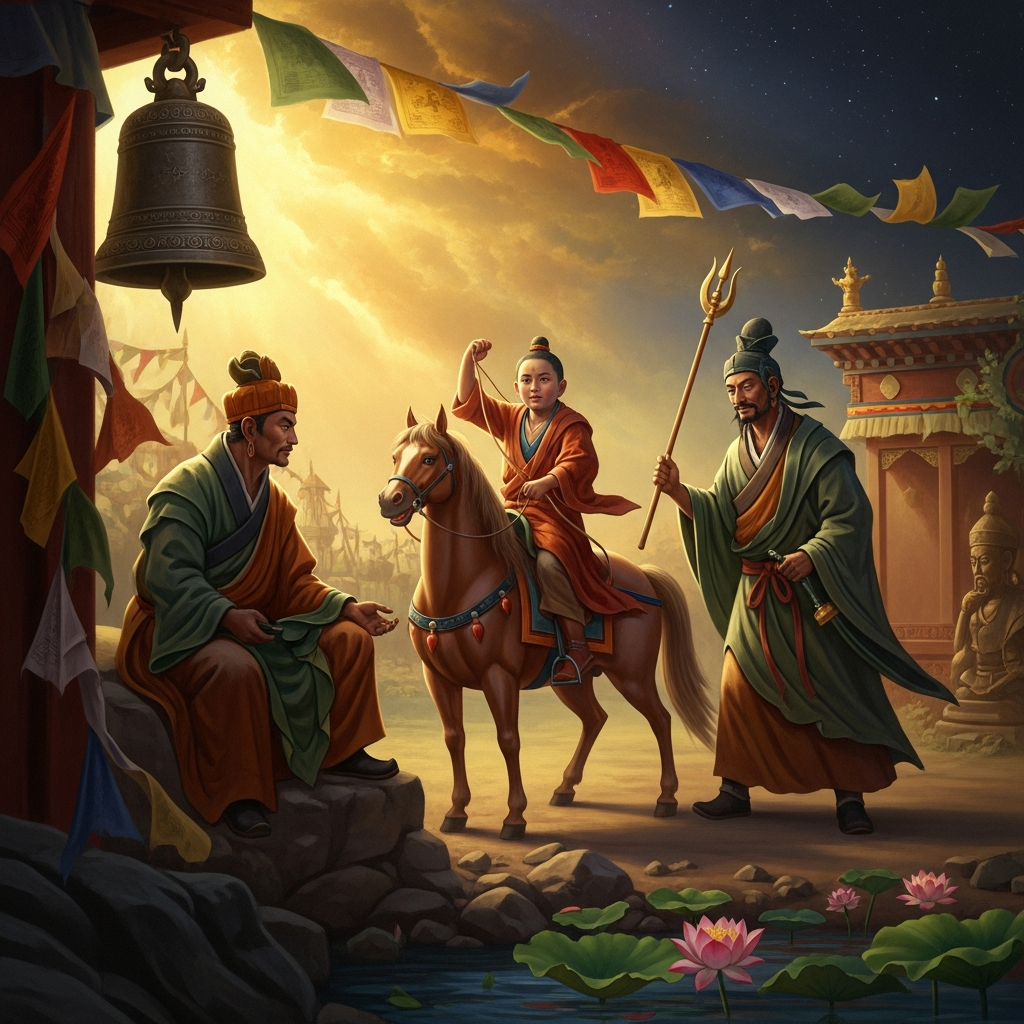
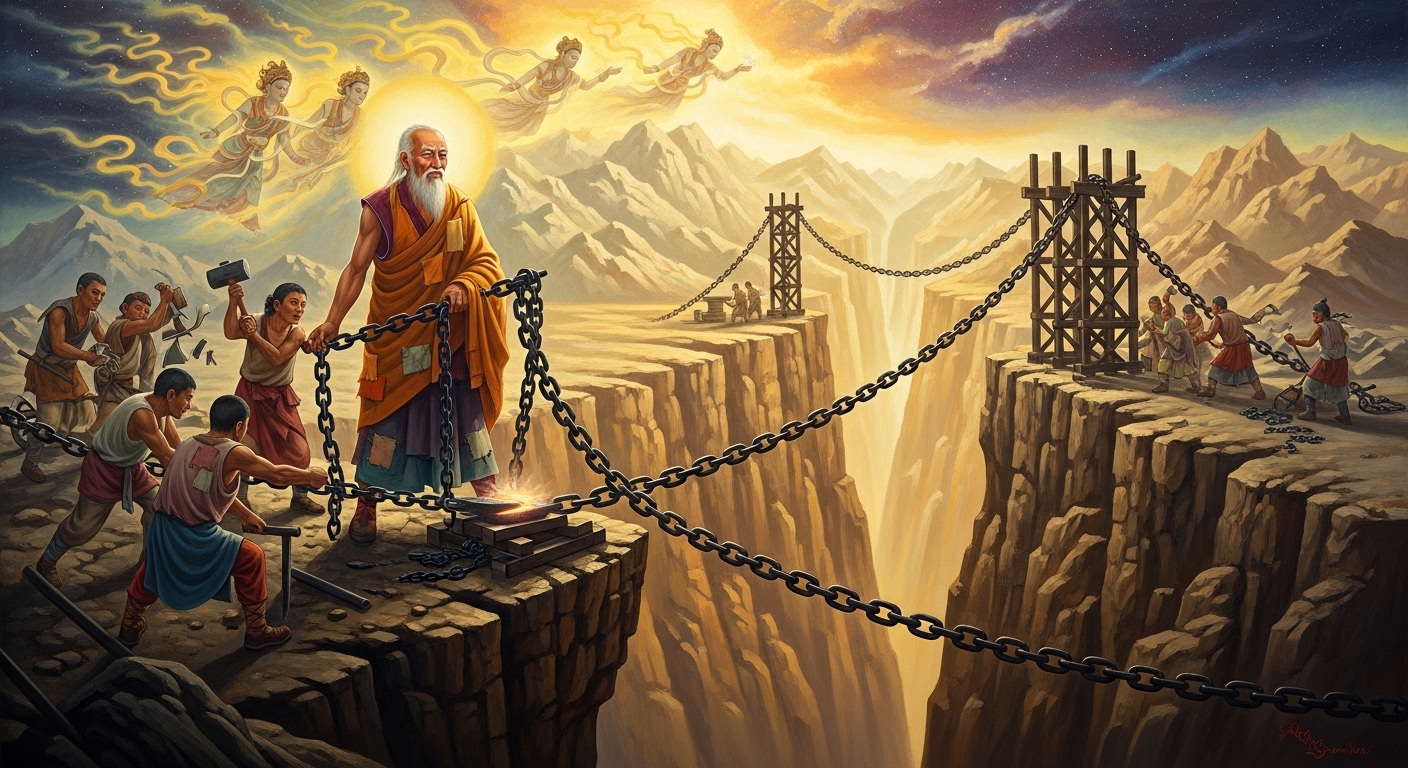
This decision is not followed by fundraising or institutional support. It is followed by iron forging. He finds the blacksmiths — the garzipas, hereditary metal workers who hold the technical knowledge for working iron in a fuel-scarce environment. He convinces them that the bridges are worth building. He watches them work and learns enough to direct the work. The design he arrives at is the suspension bridge: iron chains stretched between rock anchors on opposite banks, with wooden planking laid across. It is not a new technology in the world — suspension bridges exist in China and in South Asia — but it is new in Tibet, and it requires both the technical knowledge and the will to execute it in terrain that makes every other kind of construction impossible.
The problem is money.
Iron is not free. Skilled metalworkers are not free. Wood for planking is scarce at Tibetan altitudes. He needs donations, and donations at the scale of a major engineering project require something that ordinary mendicant practice cannot provide. He needs to perform.
He recruits seven sisters — the tradition names them the daughters of a noble family who have been following his teachings — and he creates a theatrical form. The performances combine song, dance, dialogue, and mask work, with stories drawn from the great Buddhist teaching tales: Jataka stories, Milarepa episodes, narratives of kings and renouncers. He performs these stories in town squares and monastery courtyards across Tibet, collecting donations after each performance.
The performances work. They work because they are genuinely moving — the sisters, trained by a man with the instincts of a great teacher, perform with the same combination of precision and abandon that characterizes Thangtong Gyalpo’s practice. People come to be entertained and leave having donated iron.
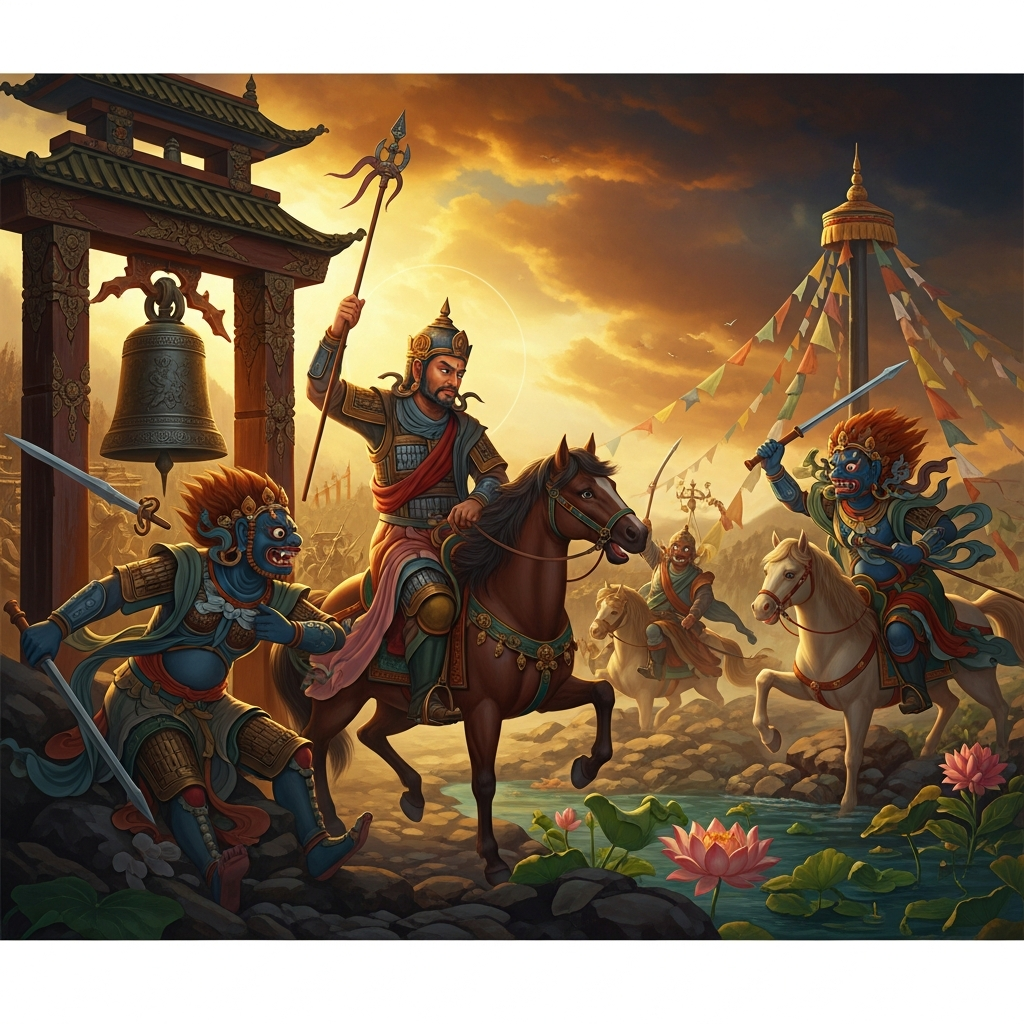
This is the founding of Lhamo, Tibetan opera. The form he creates — masked performers, sung narration, slow elaborate movement, narratives from Buddhist history — survives intact to the present day, performed at Tibetan New Year and monastery festivals throughout the Himalayan world.
The bridges survive longer than the performances.
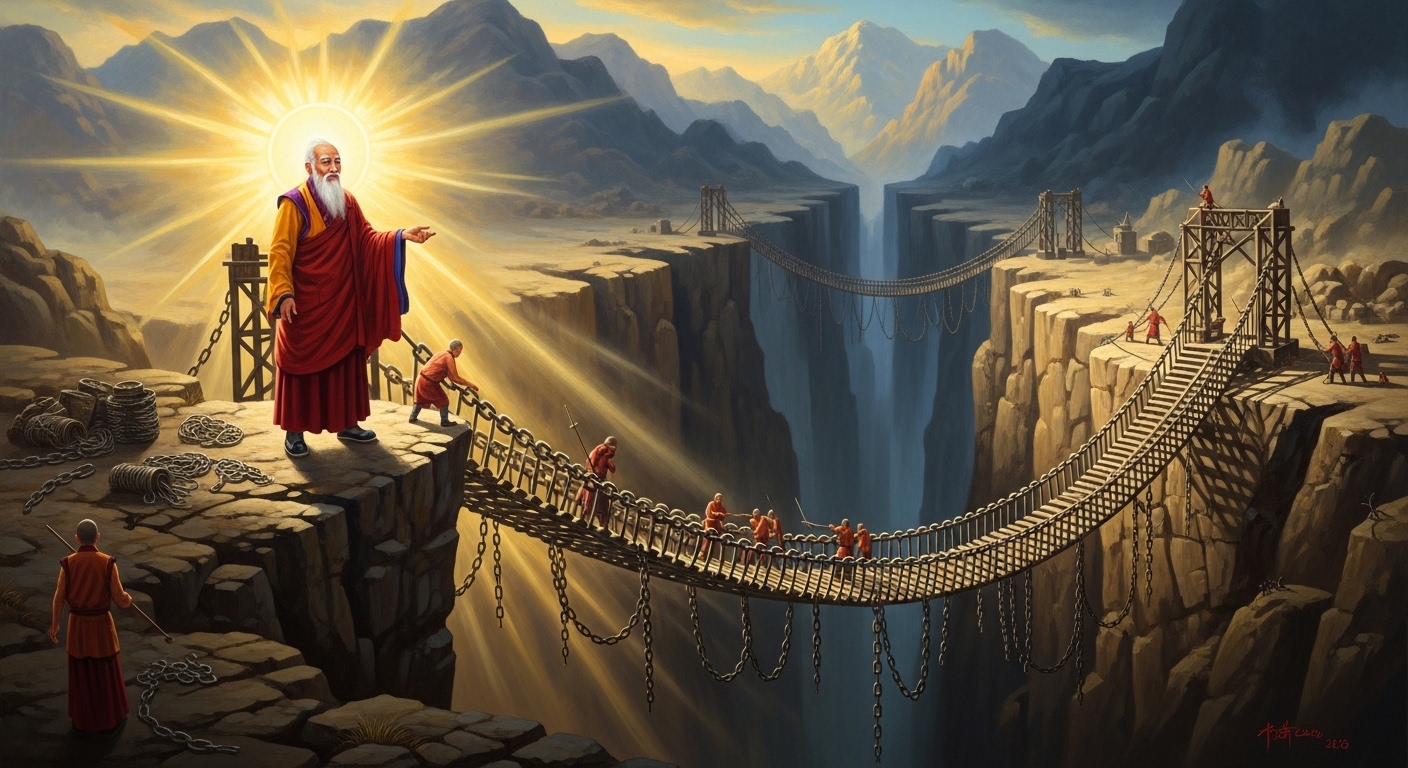
He builds, across his long life — he is said to have lived over a hundred years — at least fifty-eight iron chain bridges in Tibet and Bhutan. Many of them still stand, or stood until recent centuries. Some cross gorges where there is no other crossing for days of travel in either direction. The pilgrimage routes he opened by building them changed the practical geography of Himalayan Buddhism: monasteries that were previously accessible only to the hardiest travelers became reachable by ordinary pilgrims, old people, people carrying things.
He is revered as a Medicine Buddha emanation in Bhutan to this day, where some of his bridges still serve. The image that appears in his iconography is specific: a white-haired old man holding an iron chain, large and laughing. Not a saint in the conventional posture of meditation but a builder in the posture of work.
The iron chain he carries is not symbolic. It is the literal material of his practice — the chain that crosses the river, the chain that saves the pilgrim, the link between what is separated, forged in fire, laid across the abyss.
Scenes

Echoes Across Traditions
Entities
- Thangtong Gyalpo
- the seven dancing sisters who become his performers
- the blacksmiths of eastern Tibet
Sources
- Cyrus Stearns, *King of the Empty Plain: The Tibetan Iron-Bridge Builder Tangtong Gyalpo* (Snow Lion, 2007)
- Rene de Nebesky-Wojkowitz, *Tibetan Religious Dances* (Mouton, 1976)