Virginia: The Father Who Killed His Daughter for Her Freedom
Traditional date 449 BCE — the end of the Decemvirate and the restoration of the Roman Republic · Rome — the Forum, the butcher's stall near the temple of Cloacina
Contents
The decemvir Appius Claudius, mad with desire for the free-born girl Virginia, arranges for her to be claimed as a slave — and her father, unable to free her by law, kills her with a butcher's knife rather than let her be enslaved.
- When
- Traditional date 449 BCE — the end of the Decemvirate and the restoration of the Roman Republic
- Where
- Rome — the Forum, the butcher's stall near the temple of Cloacina
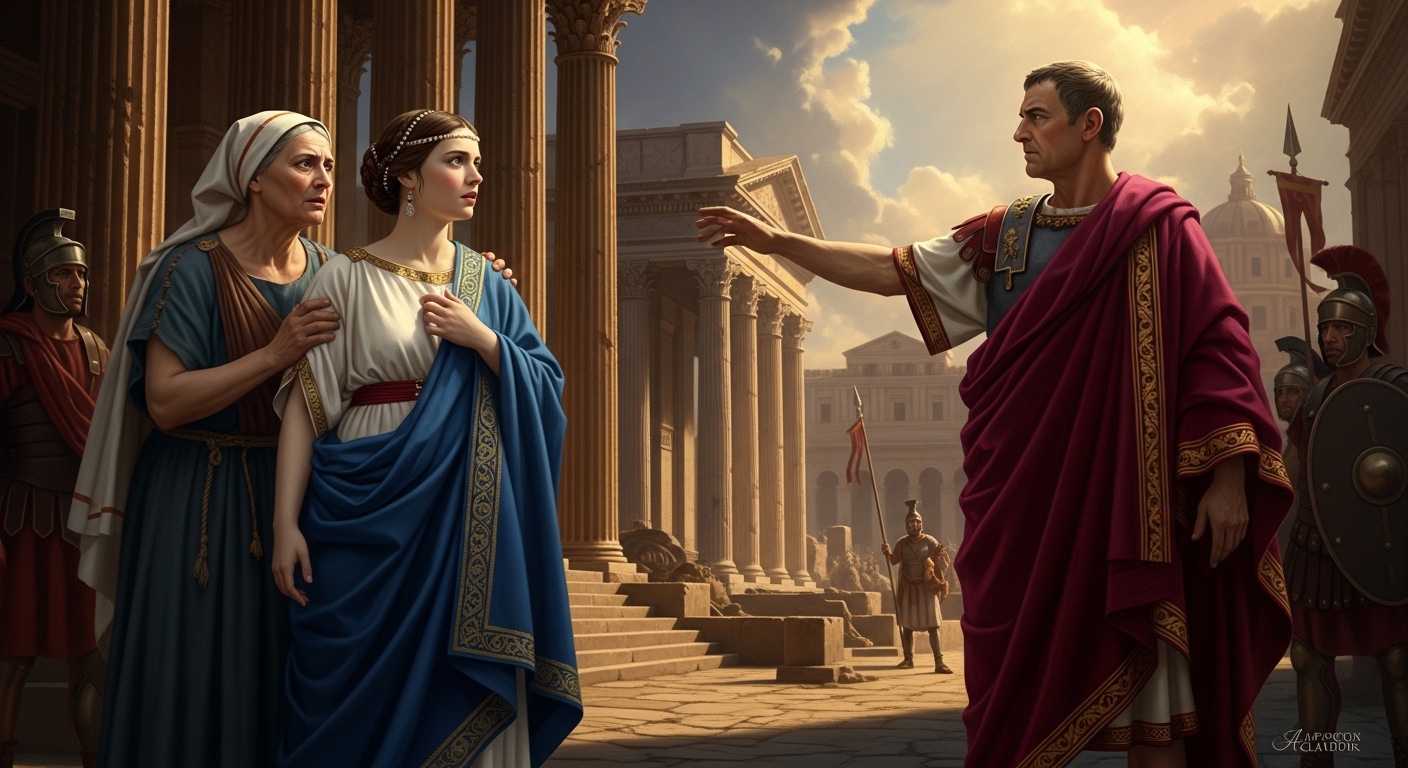
She is in the Forum with her nurse when Appius Claudius sees her.
Virginia is the daughter of Lucius Virginius, a soldier serving with the army at Mount Algidus. She is engaged to a former tribune named Icilius. She is, in all the sources, described as beautiful, which is not the relevant fact but is apparently the precipitating one.
Appius Claudius is the most powerful man in Rome. He is the last surviving member of the Decemviri — the ten-man commission that replaced the regular magistracy to write Rome’s laws, who then refused to give up their power. The Twelve Tables, Rome’s foundational legal code, were written under the Decemviri. Then the Decemviri used the laws to entrench their own tyranny, and the commission that began as a reform became an oligarchic coup, and all of this has been building for two years.
Appius Claudius wants Virginia. He does not want to simply take her, because she is a free citizen and legally beyond his casual reach. He arranges something more devious: he instructs one of his clients, a man named Marcus Claudius, to claim Virginia as a slave — specifically, to claim that she was born of a slave woman who was his property, which would make Virginia legally his property and therefore transferable to Appius.
The claim is false. Everyone knows it is false.
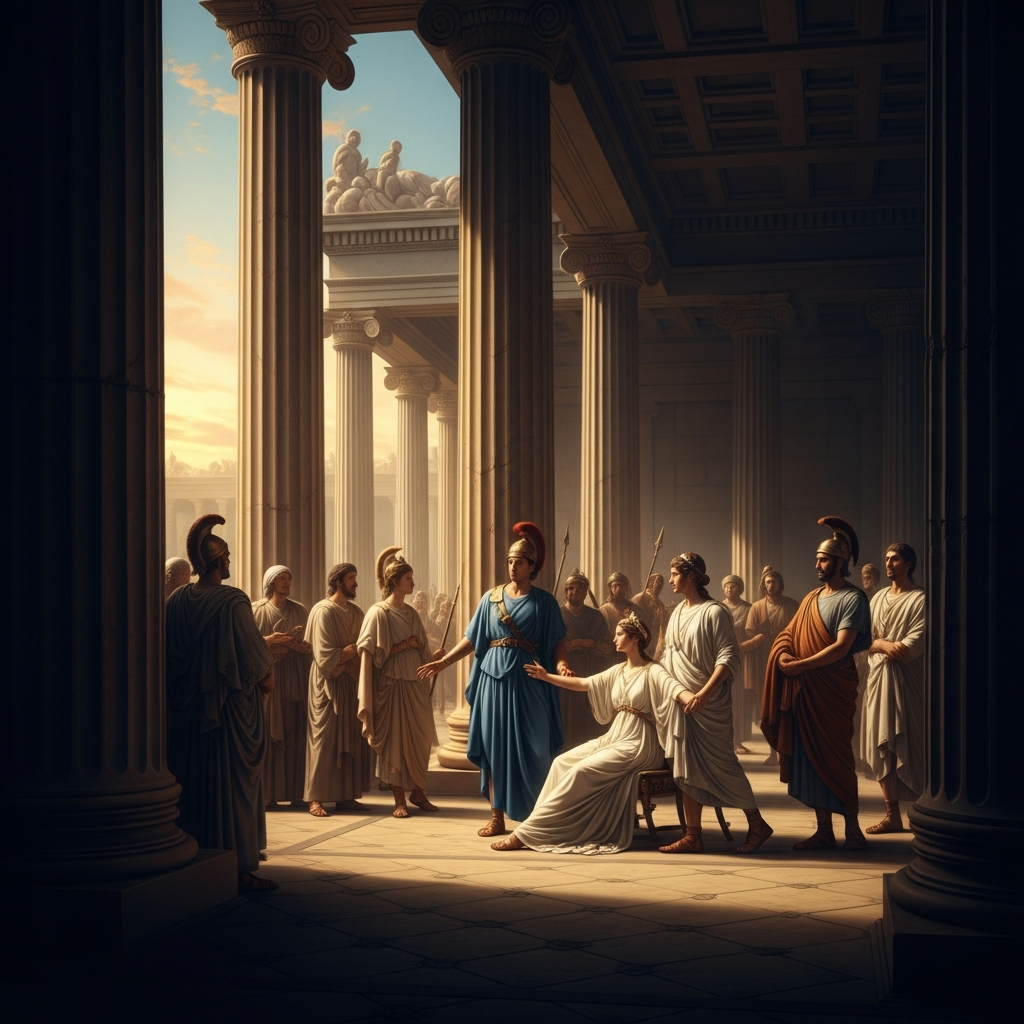
Virginius rushes from the army to Rome when he receives word. He appears in the Forum with Virginia. The witnesses he brings confirm her free birth. The evidence is clear. The law is clear.
But Appius Claudius is the judge, and Appius Claudius has already decided.
His ruling: Virginia must go with Marcus Claudius pending resolution of the ownership claim. He invokes a legal technicality. He has Icilius, Virginia’s fiance, physically restrained when he protests. He uses the full apparatus of decemviral power to transfer custody of a free girl to the man who will hand her to Appius.
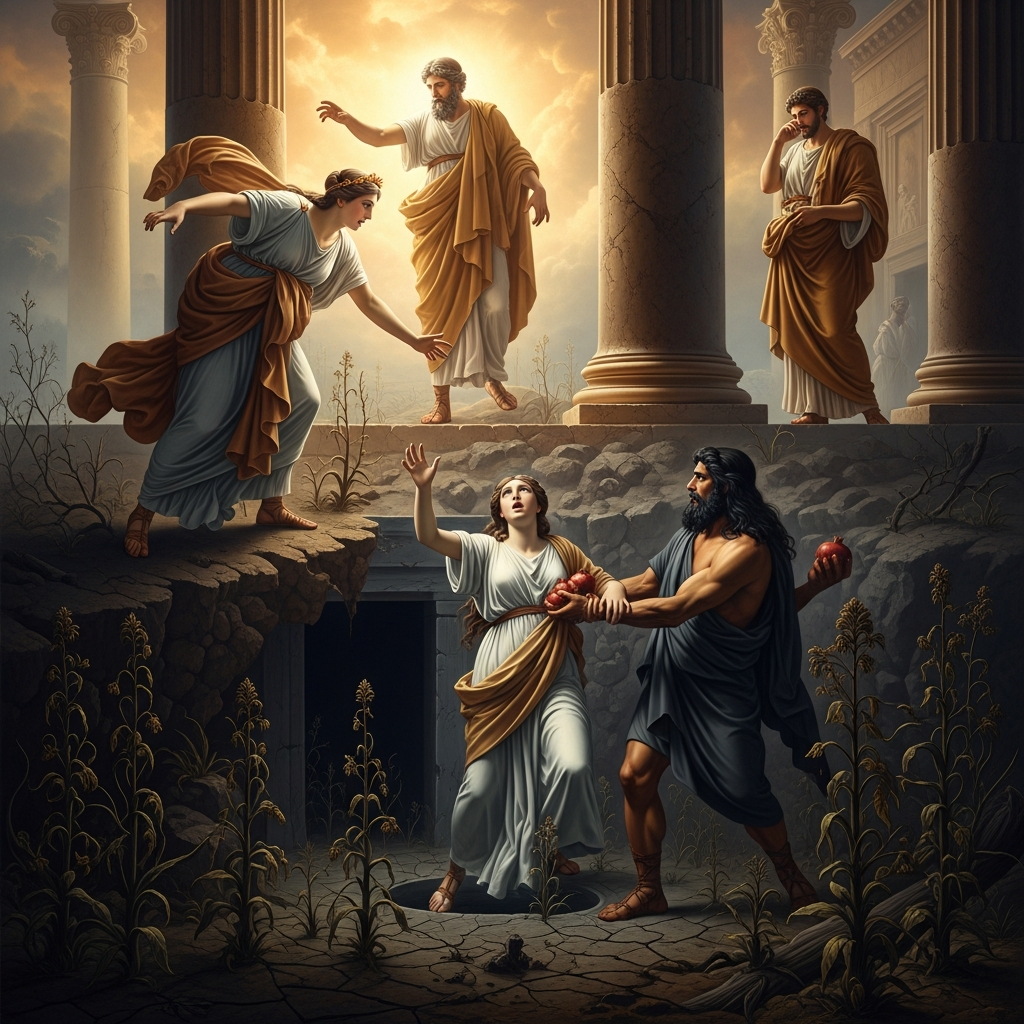
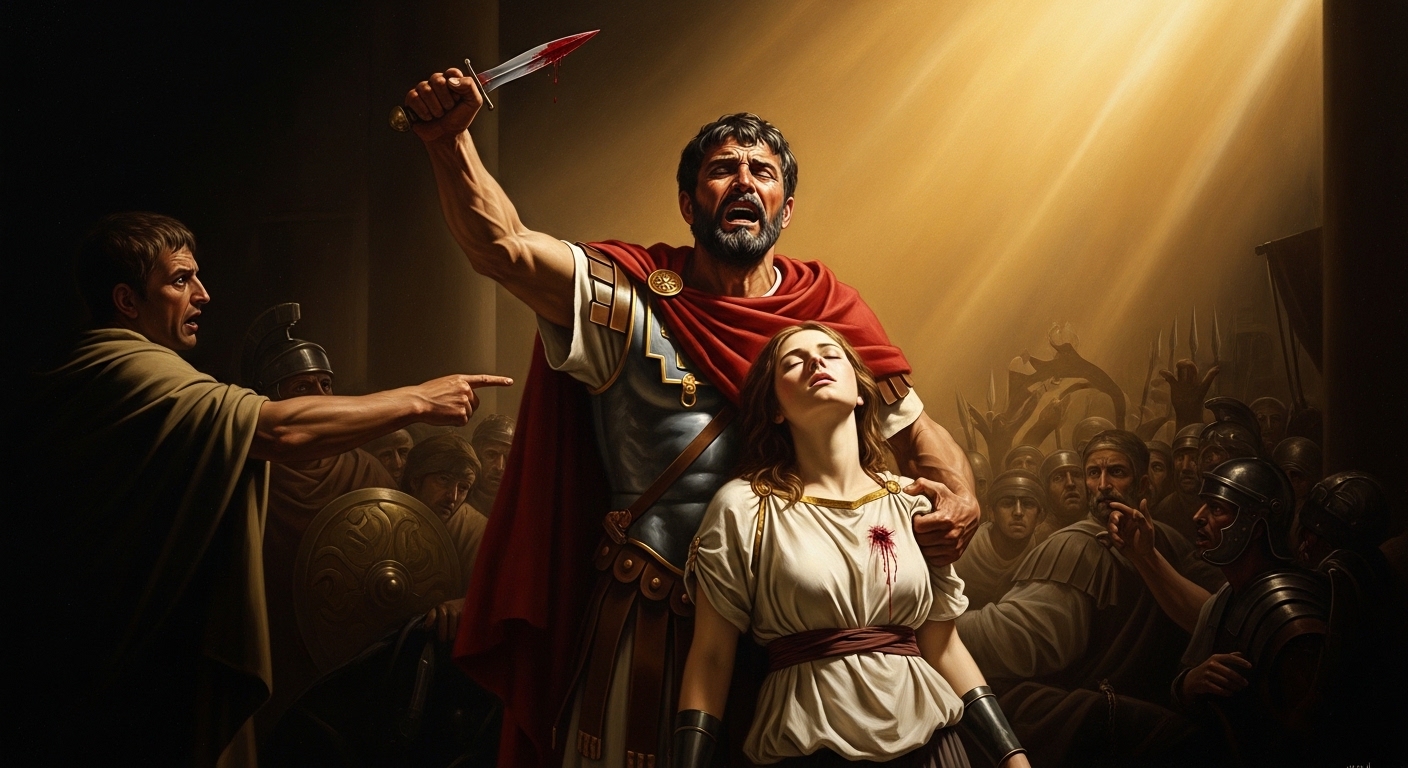
Virginius asks permission to speak privately with Virginia before she is taken. He takes her aside, to the butcher’s stalls at the edge of the Forum near the temple of Cloacina. He tells her: this is the only freedom I can give you now.
He picks up a butcher’s knife.
He kills her.
He drives the knife into her breast, and then he turns with the bloodied knife and says: Appius, with this blood I devote you and your life to destruction.
He runs through the crowd with the knife. The crowd parts. The soldier who has just killed his own daughter in the Roman Forum to prevent her enslavement is not a man anyone stops.
He reaches the gate. He rides to the army.
What happens at the army is what happened after Lucretia: the soldier tells the story to men with weapons. The Decemviri are overthrown within days. Appius Claudius is arrested, tried, imprisoned, and dies before his trial concludes — whether by suicide or by execution the sources do not agree. The regular magistracy is restored. The crisis that Virginia’s death precipitated ends the tyranny that produced it.
The tradition does not dwell on what Virginia thought.
She is young — Livy implies she is approaching marriageable age, around twelve to fourteen by Roman reckoning. She may not have understood what her father was doing until the knife was raised. She had no recorded consent in the matter. Her father made a calculation: slavery under Appius Claudius versus death in the Forum. He chose death.
Later Romans, including Livy, present this as an act of love and liberty. The word libertas — freedom — appears repeatedly in Livy’s account in connection with Virginia’s death. She is freed by the knife. The city is freed by her death.
Modern readers struggle with this, as they should. The story is exactly the story it appears to be: a man destroys what he loves rather than see it owned by someone else. Whether this is the highest expression of Roman libertas or the deepest expression of Roman potestas — the absolute legal power of the father over his household — is a question the Roman tradition refused to distinguish between.
The knife was in his hand. The choice was his. She was the price.
Scenes
Echoes Across Traditions
Entities
- Virginia
- Virginius
- Appius Claudius
- Icilius
- the Decemviri
Sources
- Livy, *Ab Urbe Condita* III.44-49 (c. 27-25 BCE)
- Dionysius of Halicarnassus, *Roman Antiquities* XI.28-46 (c. 7 BCE)
- Valerius Maximus, *Memorable Deeds and Sayings* VI.1 (c. 30 CE)