Yeshe Tsogyal: The Woman Who Completed the Tantras
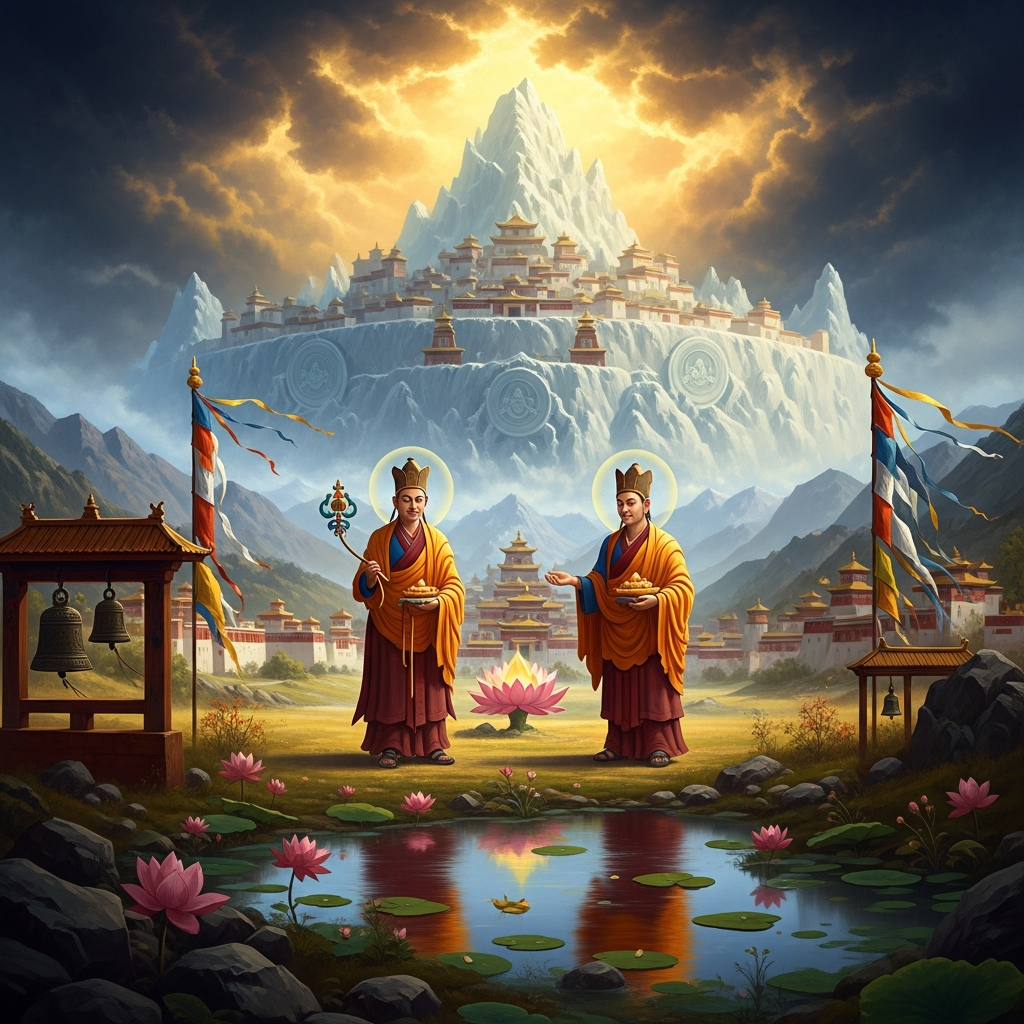
c. 757–817 CE — 8th-9th century Tibet, imperial period · Zhotö Tidro cave in Drigung, central Tibet — her principal retreat cave above a hot spring, and the roads and mountain passes of Tibet where she hides the terma
Contents
A princess given to Guru Rinpoche as a consort becomes not merely his companion but the practitioner who endures more severe austerities than any of his male students, encodes his complete teachings in hidden *terma* treasures, and achieves enlightenment in her own right.
- When
- c. 757–817 CE — 8th-9th century Tibet, imperial period
- Where
- Zhotö Tidro cave in Drigung, central Tibet — her principal retreat cave above a hot spring, and the roads and mountain passes of Tibet where she hides the terma
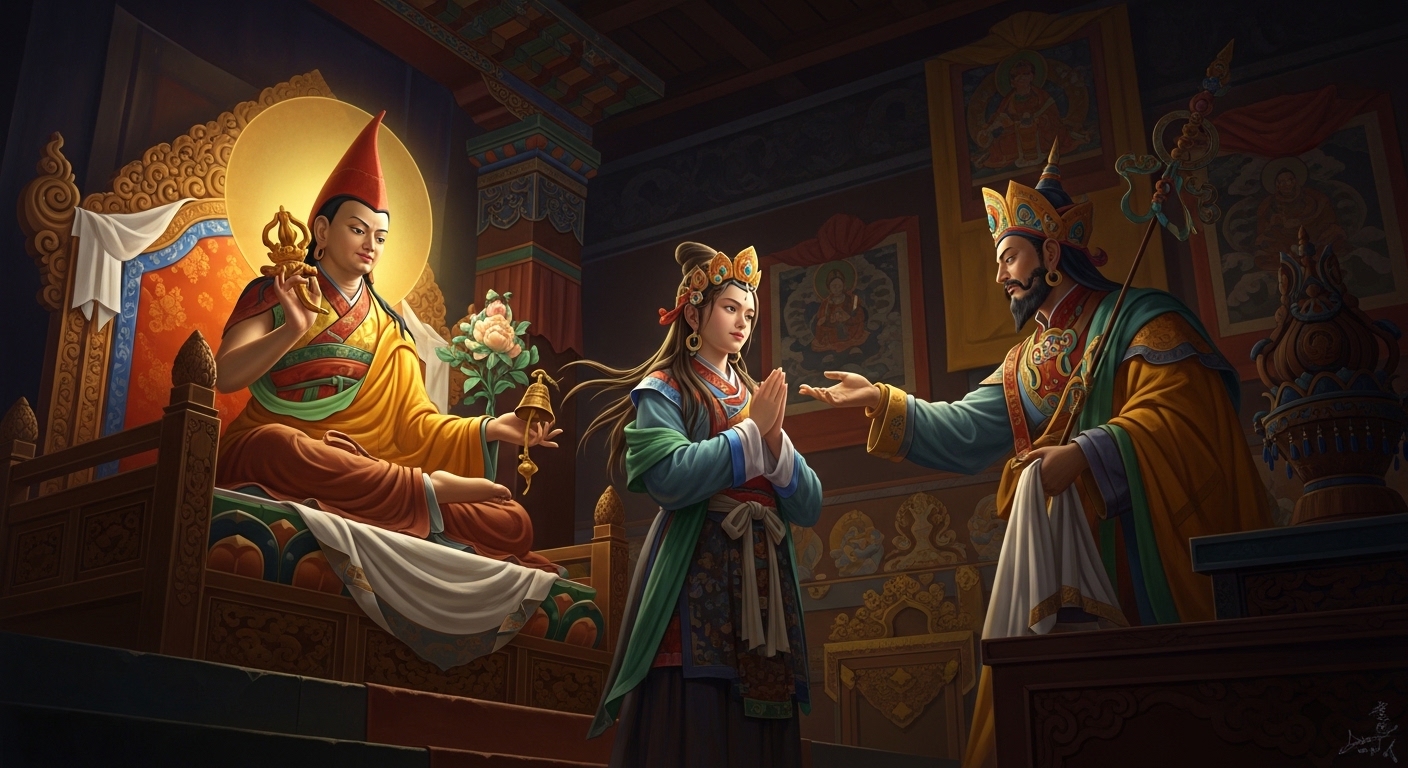
She is given to Guru Rinpoche by the king.
This is the entry point the biographers record: Yeshe Tsogyal — daughter of the Kharchen clan, already recognized for her extraordinary beauty and intelligence, already sought by multiple noble suitors — is given to the Indian tantric master as a consort by King Trisong Detsen. The king is trying to make the teachings work. He believes, correctly, that Padmasambhava requires a female partner for the advanced tantric practices he has brought from India, a consort who can serve simultaneously as companion, co-practitioner, and vessel.
What the biographers also record is what happens next: the woman who is given as a vessel becomes the master.
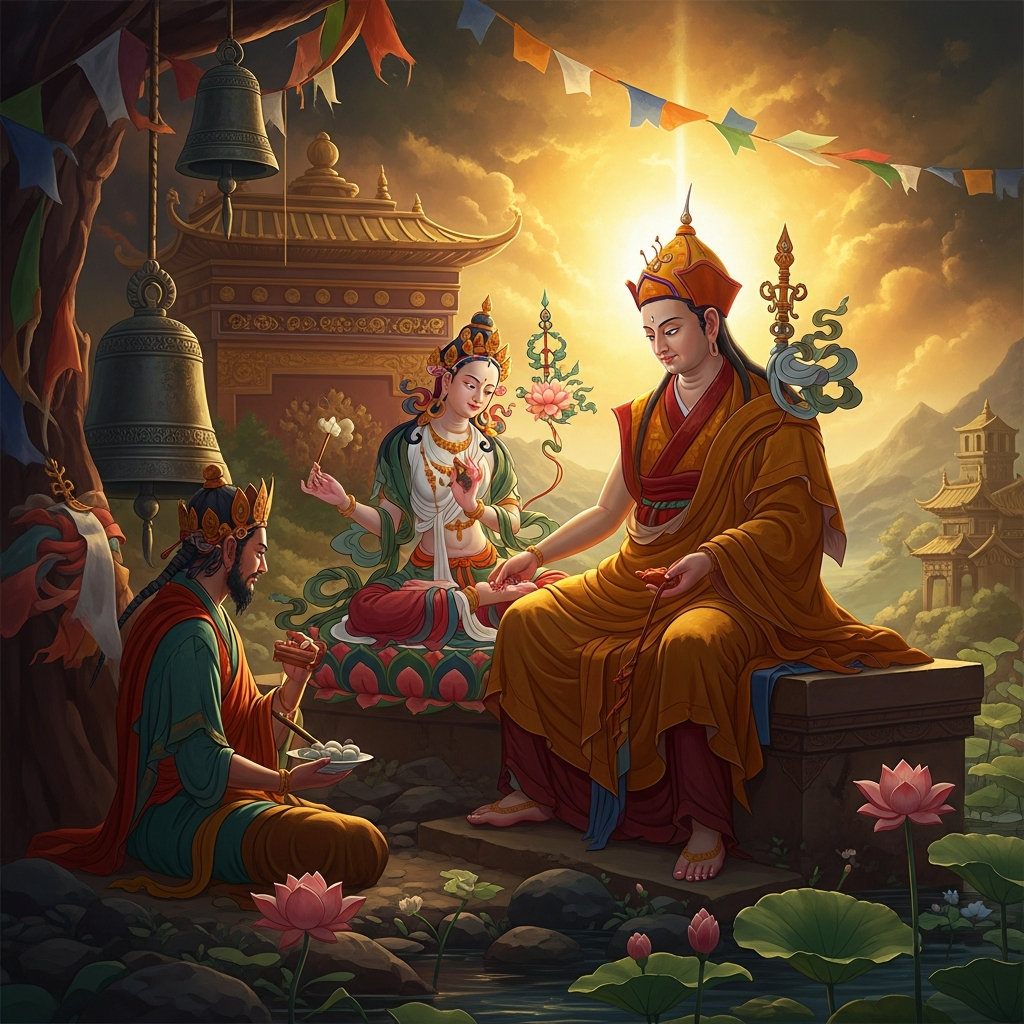
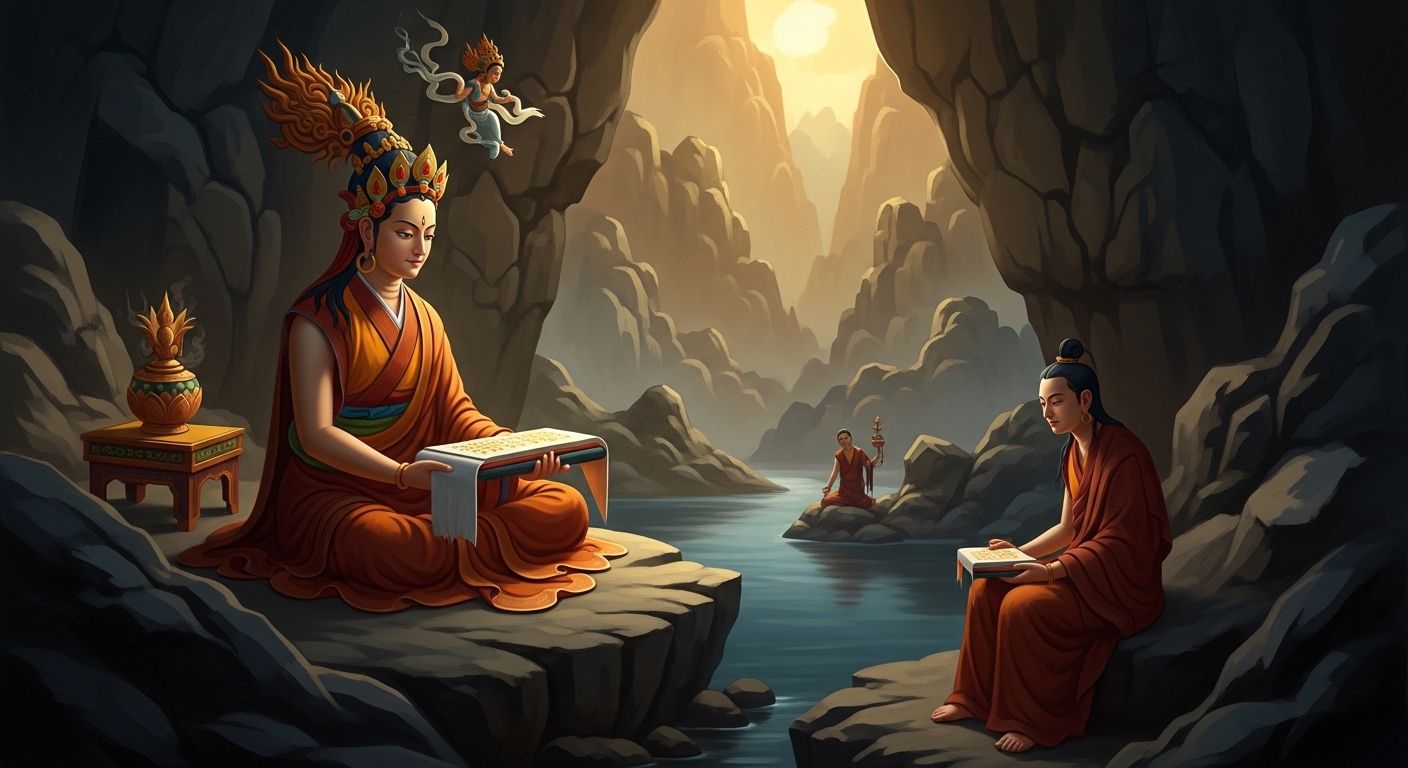
She does not become the master easily. She does not become the master because of her beauty or her royal birth or because Padmasambhava promotes her. She becomes the master because she undertakes austerities that the men around her cannot or will not match. In the cave at Zhotö Tidro she practices for years without interruption. She goes periods without food that the accounts describe in terms consistent with the longest documented human fasts. She practices tummo — inner heat yoga — in conditions cold enough to kill an untrained person. Her body becomes the evidence of her practice, the way Milarepa’s green body was the evidence of his.
The bandits find her on the road.
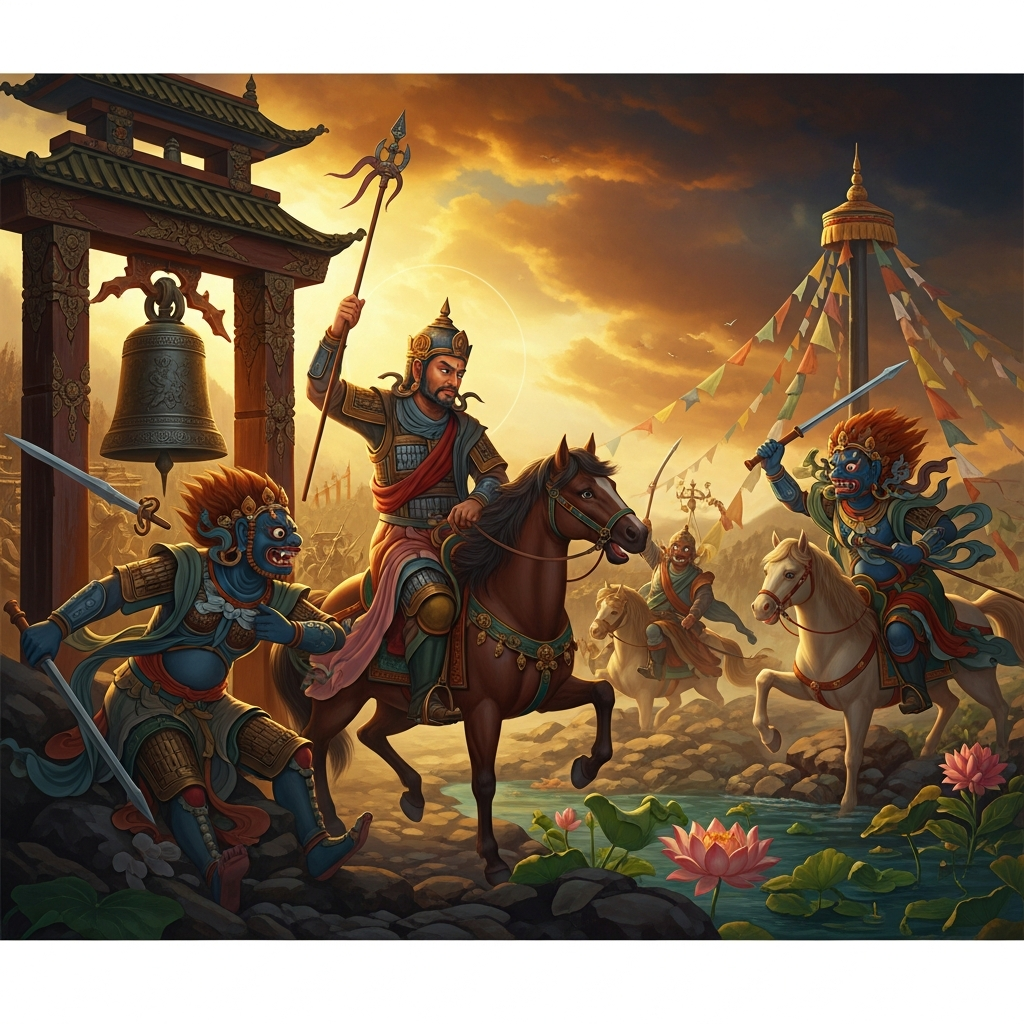
She is carrying Padmasambhava’s instructions to a hiding place in a distant mountain. A group of seven men attacks her. They are not spiritual beings — they are ordinary bandits who see a woman traveling alone and see an opportunity. They beat her. They assault her. The accounts are direct about this: she is seriously injured.
What they do not anticipate is that she turns the assault into practice.
This is the moment in her biography that readers of every century find either astounding or incomprehensible or both. She takes the experience of violation and injury and applies to it the precise technique she has learned for transforming suffering into realization — not because she approves of what is happening, not because she has transcended the pain, but because she has achieved a relationship to experience in which all experience, without exception, becomes the fuel of practice. The seven bandits, when they finish and leave, walk away from a woman who is lying in the road practicing a level of Vajrayana that few of Padmasambhava’s male students have achieved.
She gets up and continues to the mountain.
The terma are her life’s work.
Under Padmasambhava’s direction, she encodes his complete teachings into texts and objects and conceals them in locations throughout Tibet — in cliff faces, in the beds of lakes, in the minds of reincarnate lamas who will carry them unconsciously until the time for their revelation comes. Each terma is matched to a future moment: this teaching will be needed in the fourteenth century; this one in the nineteenth; this one will be found only when a specific practitioner is born who has the capacity to receive it.
She is, in other words, programming the future of Tibetan Buddhism. The library she creates does not sit in a building. It sits in the landscape and in the stream of future incarnations. When tertöns — treasure-revealers — discover texts in subsequent centuries, they are receiving transmissions that Yeshe Tsogyal deposited specifically for them, in the eighth century, with perfect knowledge of when they would be needed.
She achieves what the tradition calls the rainbow body, though the accounts of her death are less dramatic than Padmasambhava’s: her body, as she ages and practices, simply becomes less substantial. She does not shrink and die like ordinary people. She dissolves, gradually, in the way that morning fog dissolves when the sun reaches it — still there, still recognizable, then not.
The teachings remain. Every Nyingma practitioner who opens a terma text opens something she hid. Every practitioner who calls on the dakinis receives, in part, a transmission that she arranged. She is not remembered; she is active.
Scenes

Echoes Across Traditions
Entities
- Yeshe Tsogyal
- Padmasambhava (Guru Rinpoche)
- King Trisong Detsen
- the bandits who beat and assault her
Sources
- Yeshe Tsogyal, *Lady of the Lotus-Born*, trans. Gyalwa Changchub and Namkhai Nyingpo (Shambhala, 1999)
- Tarthang Tulku, *Mother of Knowledge: The Enlightenment of Ye-shes mTsho-rgyal* (Dharma Publishing, 1983)
- Judith Simmer-Brown, *Dakini's Warm Breath* (Shambhala, 2001)