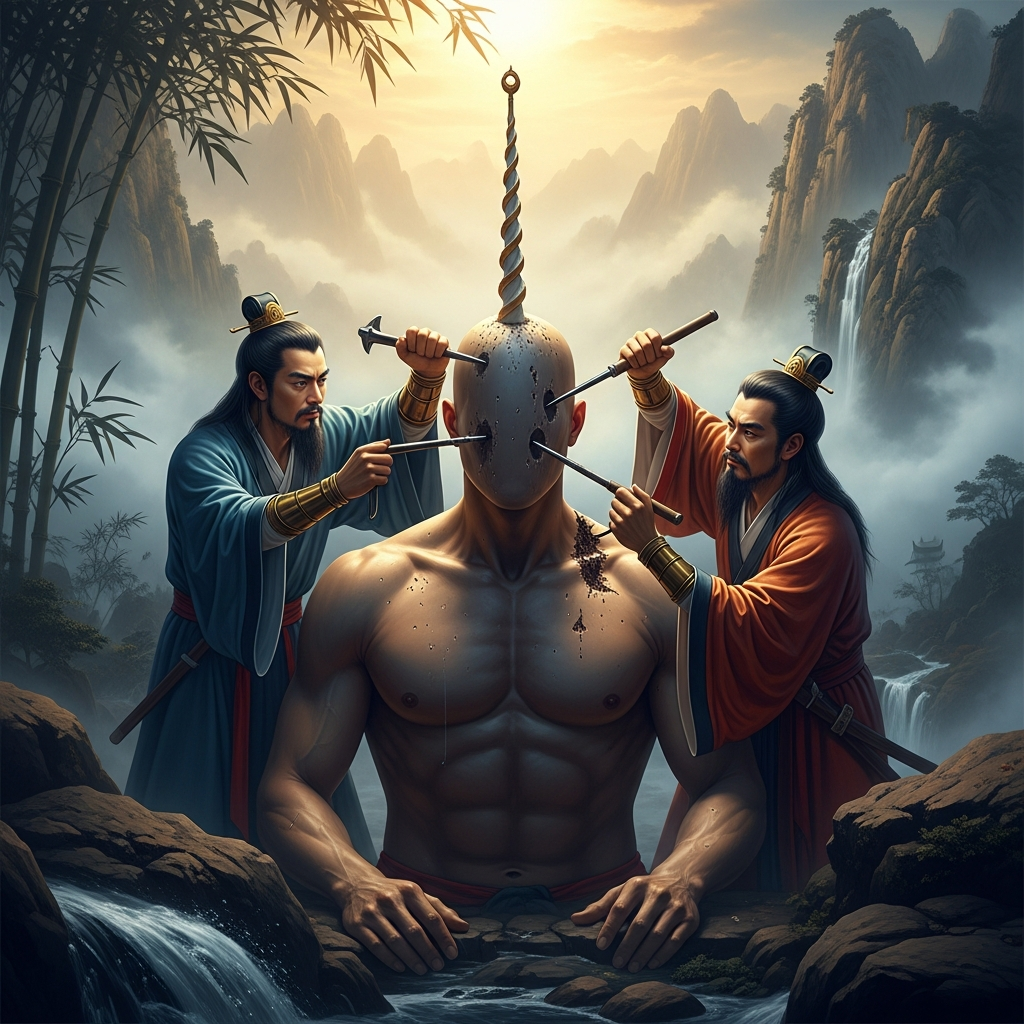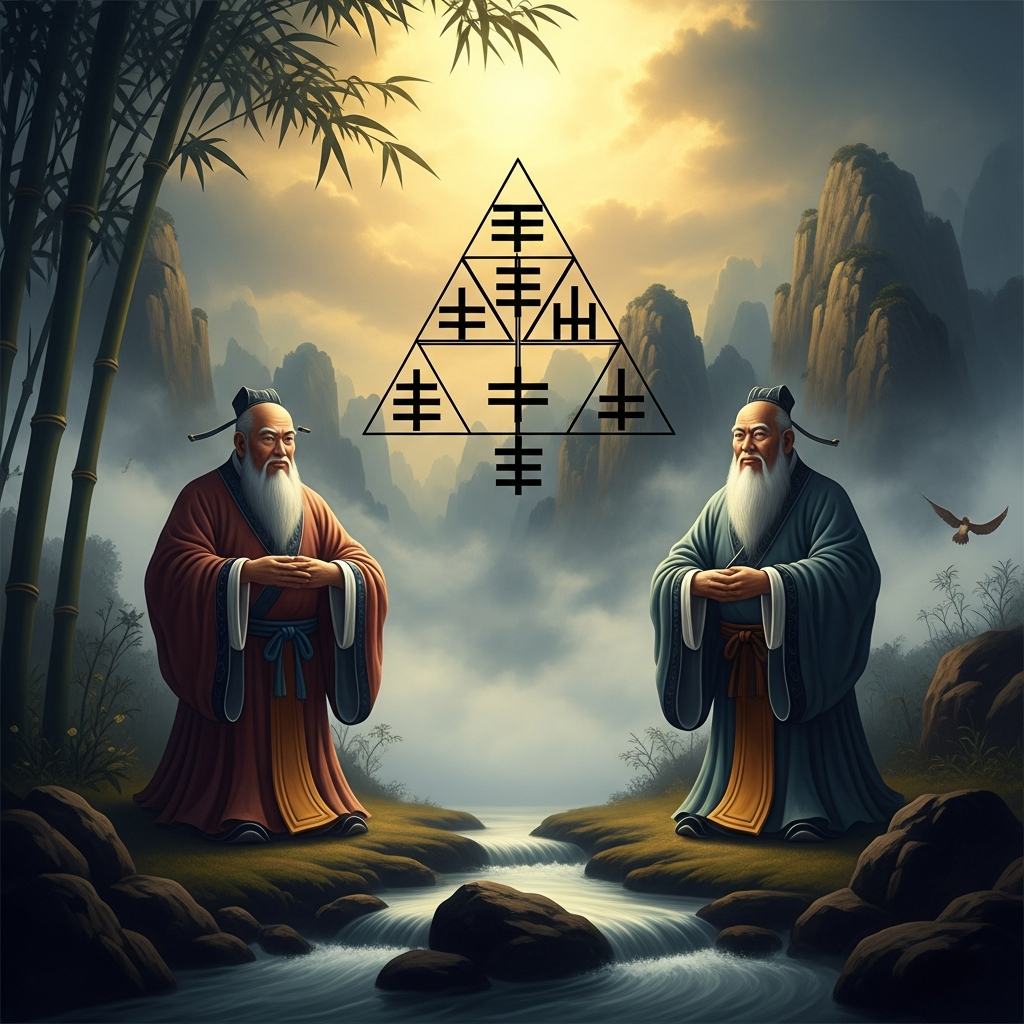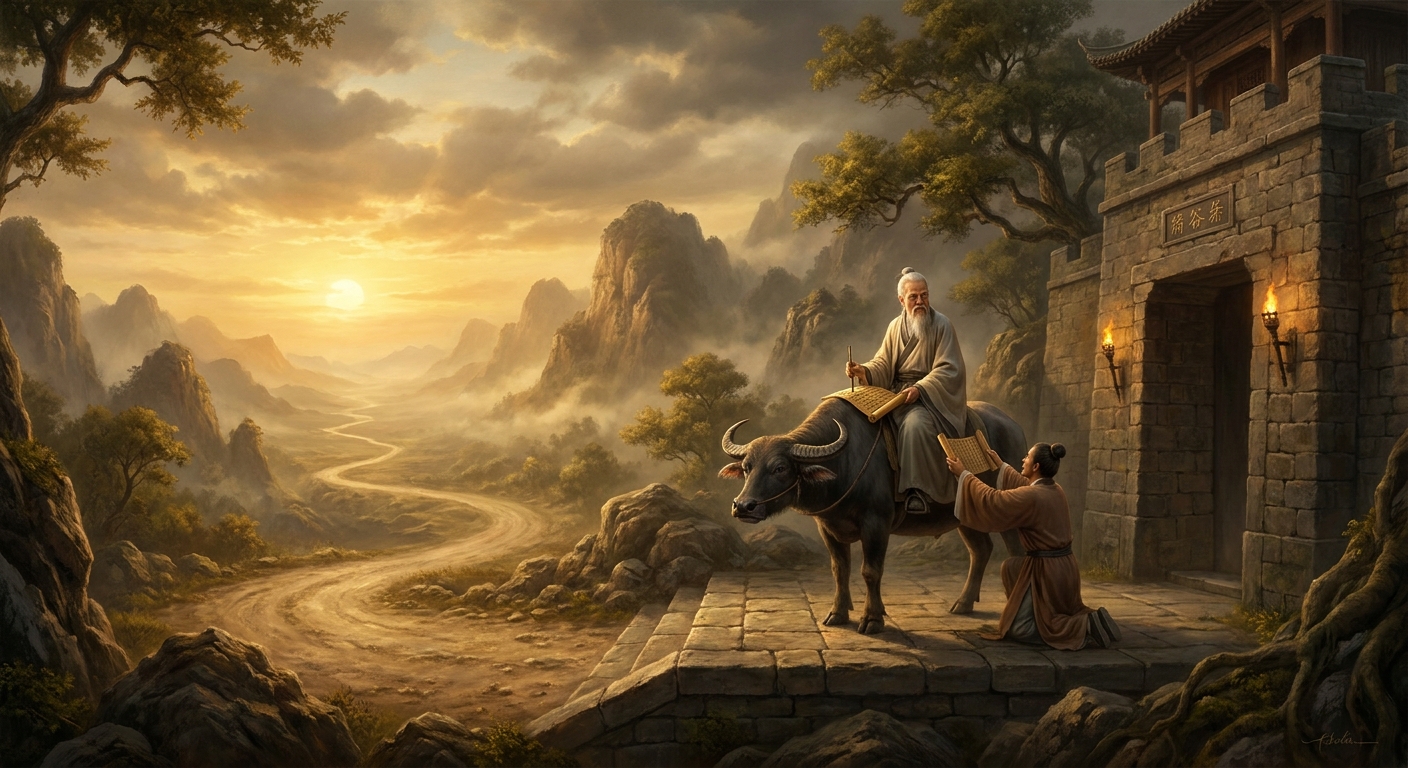
Zhuāngzǐ Sings at His Own Wife's Funeral
c. 369-286 BCE — the period of the historical Zhuangzi · Zhuāngzǐ's house — the setting of the confrontation with his friend
Contents
When Zhuāngzǐ's wife dies, his friend Huizi finds him sitting with a bowl between his knees, singing — and Zhuāngzǐ explains that grief is not wrong, only that he has followed grief all the way through to what grief finds at the bottom.
- When
- c. 369-286 BCE — the period of the historical Zhuangzi
- Where
- Zhuāngzǐ's house — the setting of the confrontation with his friend
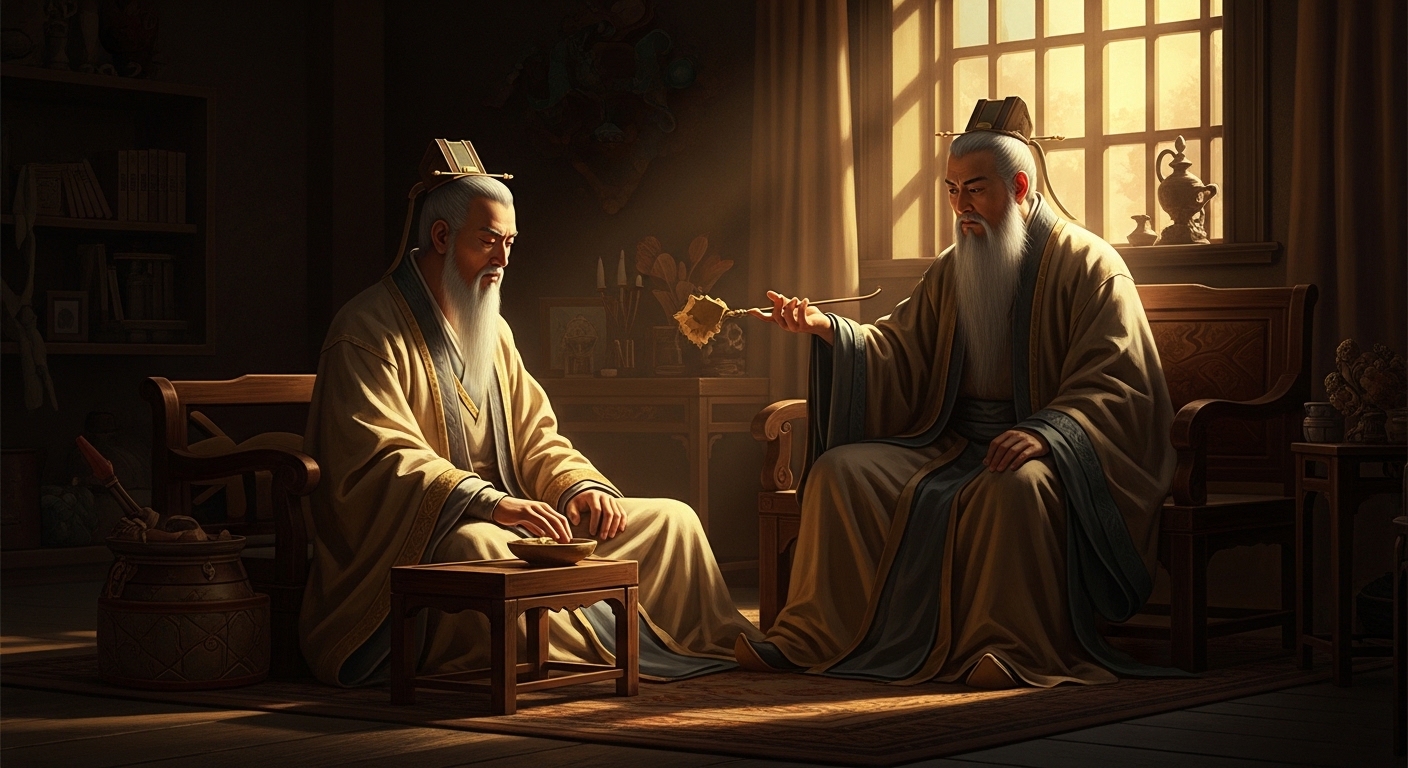
Huizi finds him squatting by his wife’s body, singing.
He has a bowl between his knees and he is drumming on it and singing. Not a mourning song — a song of the kind you sing when you are thinking, working something out, following a thought to where it leads. Huizi watches from the doorway. He is Zhuāngzǐ’s oldest friend and most consistent interlocutor, the logician to Zhuāngzǐ’s mystic, the man who has argued with him for decades about whether fish are happy and whether a white horse is a horse and whether the same river is the same river. He has never seen anything quite like this.
He enters. He confronts his friend. He says: she lived with you, she raised your children, she has grown old with you. To not weep for her death — that would be enough. But to sit here singing: is this not too much?
Zhuāngzǐ sets down the bowl.
He says: no. I did grieve. When she first died, I wept. Of course I wept. I am not a stone.
But then, he says, I followed the grief to where it begins. I thought about her origin — where she came from before she was born. Before she had a body, she had no body. Before she had a spirit, she had no spirit. Blended together in the vast undifferentiated beginning, something changed, something coalesced, and she came to have a spirit, and then she came to have a body, and then she came to have a life.
Now, he says, another change. Another transformation. She has gone from life back into the undifferentiated, the way autumn becomes winter, the way winter becomes spring. She has gone back to the place where all these forms originate, the place that is not absence but the fullness before form — the hundun, the chaos, the beginning that is also the end.
If I followed her into that transformation wailing and lamenting, he says, I think I would be failing to understand what is happening. I am not weeping. I am singing. I am following the transformation to where it leads.
Huizi does not accept this entirely. He is a logician and the argument has the shape of rationalization — the grief sublimated into philosophy, the philosopher performing equanimity. The tension between them is the productive tension that runs through the entire Zhuangzi: the logician who wants clear categories and the mystic who dissolves categories.
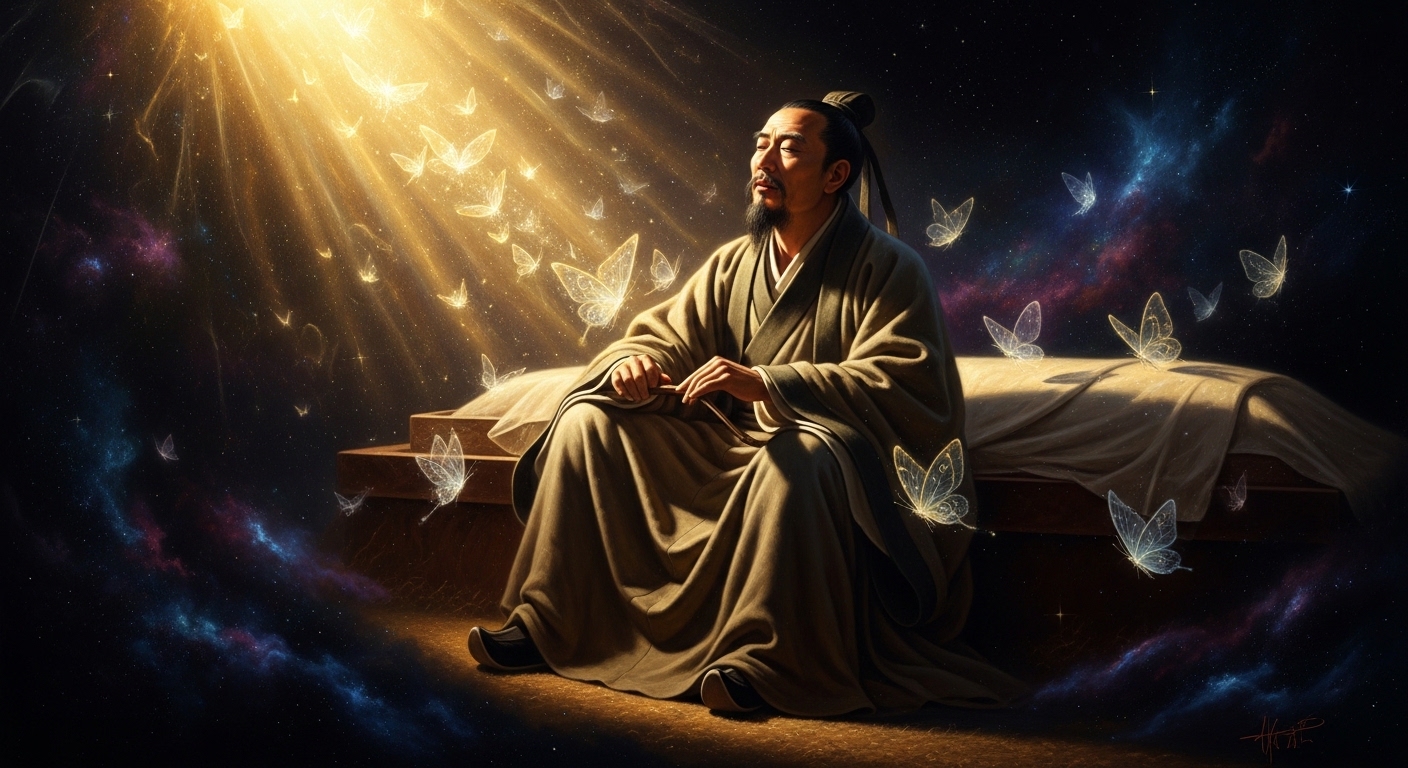
But the passage survives because it describes something real that people who have sat with death have sometimes experienced: that there is a place in grief, if you follow it far enough, where the grief becomes something else. Where the loss becomes the recognition of a pattern — the same pattern that the cook saw in the ox’s joints, the same transformation that is operating in the butterfly dream. The loss is real. The grief is real. And following them all the way through, rather than turning back at the intensity of the emotion, produces something that looks from outside like singing over a bowl, but is actually the full arrival at the place the grief was heading.
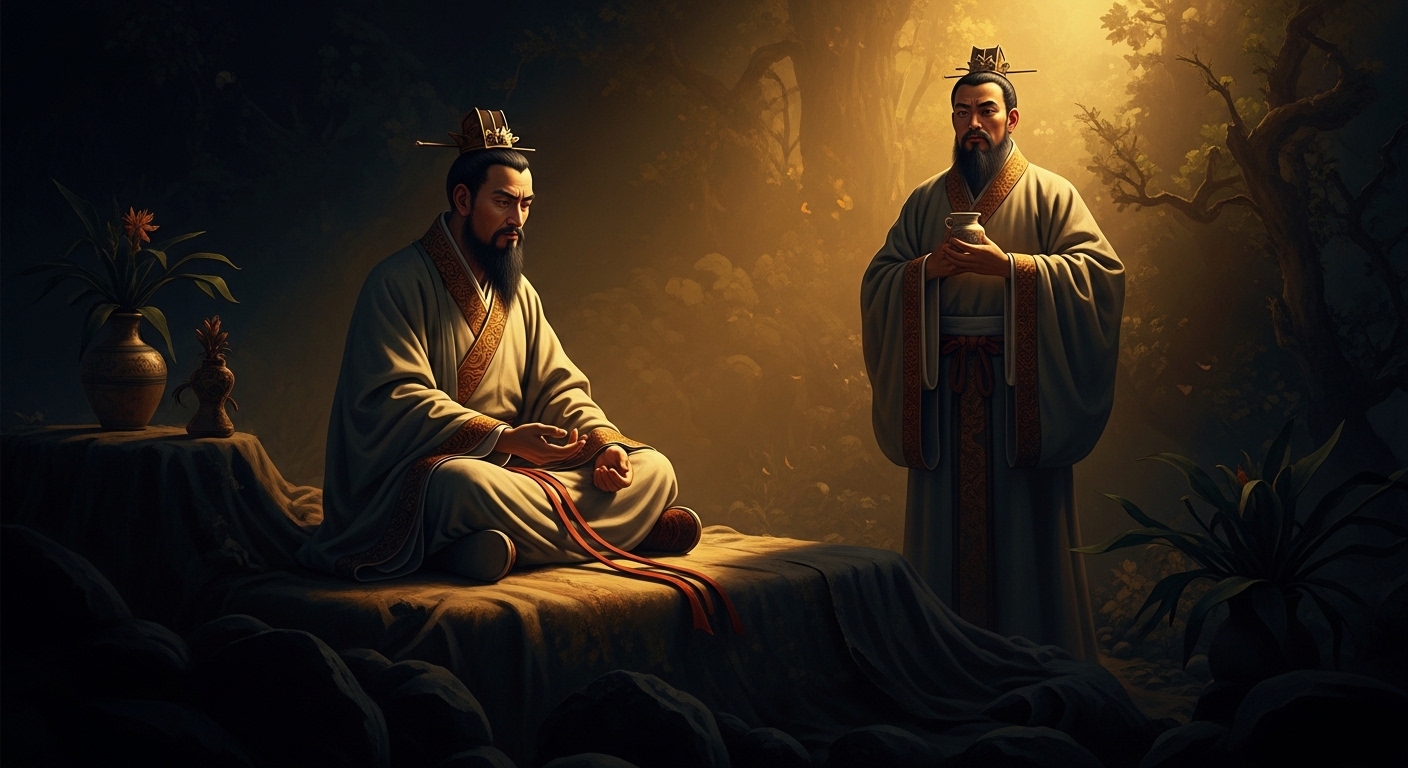
Zhuāngzǐ later requests that he himself not be buried. He asks his students to let heaven and earth be his coffin, the sun, moon, and stars be the jade and pearls of his burial goods, the ten thousand things be his grave goods. When his disciples say they are afraid the vultures and kites will eat him, he says: above ground, the birds eat me; underground, the ants eat me. You would take from the birds to give to the ants. Is that fair?
He dies the way he lived: following every thought to where it actually goes, singing over what he finds there.
Scenes
Echoes Across Traditions
Entities
- Zhuāngzǐ
- Huizi
- Zhuāngzǐ's wife
Sources
- Zhuangzi (莊子), Outer Chapters, chapter 18 — 'Perfect Happiness'
- Burton Watson, trans., *The Complete Works of Chuang Tzu* (Columbia, 1968)
- A.C. Graham, trans., *Chuang-Tzŭ: The Seven Inner Chapters* (George Allen & Unwin, 1981)
- Brook Ziporyn, trans., *Zhuangzi: The Essential Writings* (Hackett, 2009)