Contents
Every winter on the shortest night, the Shalako — towering sacred beings twelve feet tall, the couriers of the rain gods — walk into Zuni Pueblo and spend the night dancing in houses specially built for them, blessing the people and the houses with rain and fertility.
- When
- Annual — late November/early December, the winter solstice period; continuous practice
- Where
- Zuni Pueblo, New Mexico — the ancient village on the Zuni River
They come at dusk.
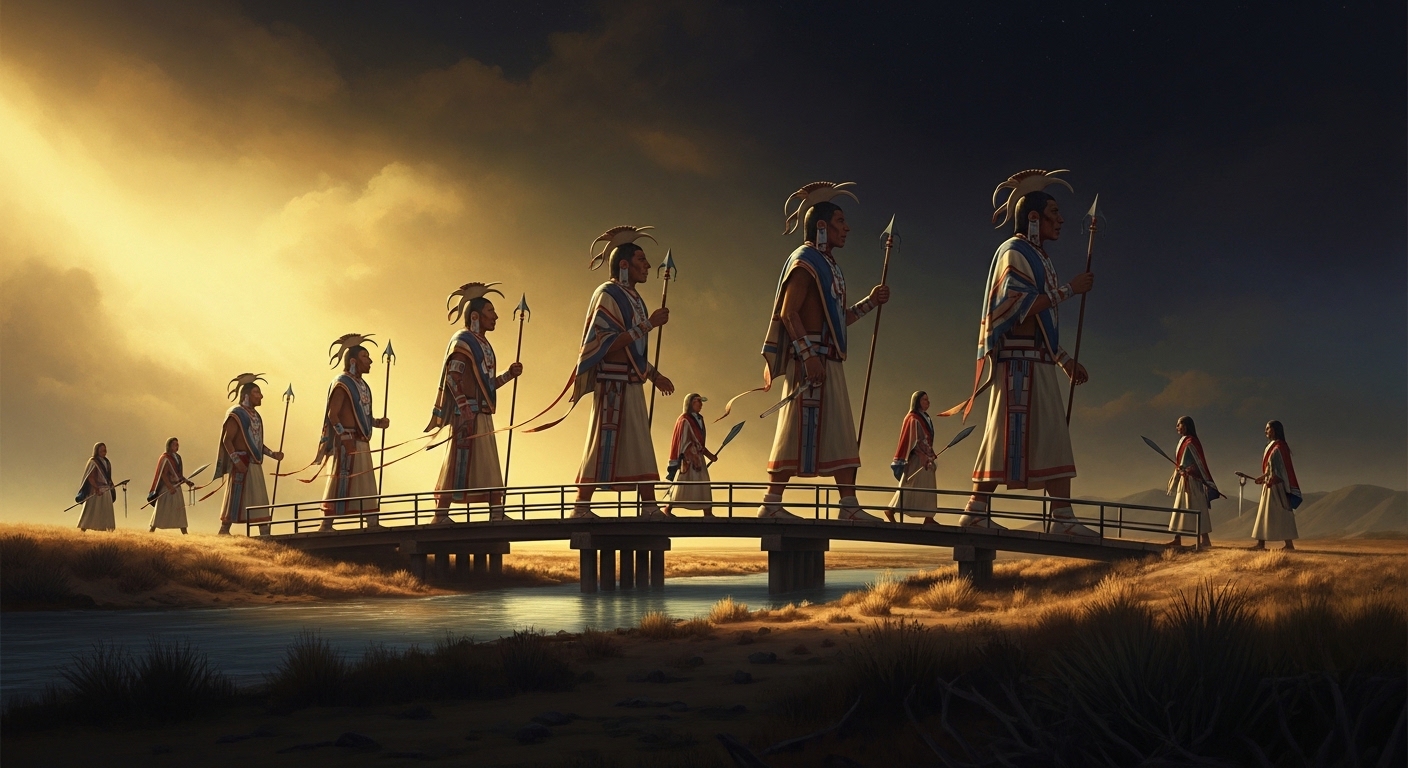
The announcement of the Shalako’s approach is made hours before they are visible — a figure crossing the bridge over the Zuni River, then another, then six, each one enormous, each one preceded by its attendants, each one moving with the particular deliberate motion of something too large to hurry. The people of Zuni stand along the road and watch them come in.
Each Shalako is approximately twelve feet tall.
The body is built around a long pole that the dancer carries on a cross-shoulder harness, invisible inside the construction. The head is an elaborate mask with a snapping beak that opens and closes — the sound carries through the cold night air like a percussive punctuation to the drumming. The whole figure is decorated: feathers, turquoise, embroidered cloth, the eyes of the mask wide and shining. Six of them walk through the village in the winter dark.
Six houses have been specially built or renovated for their visit.
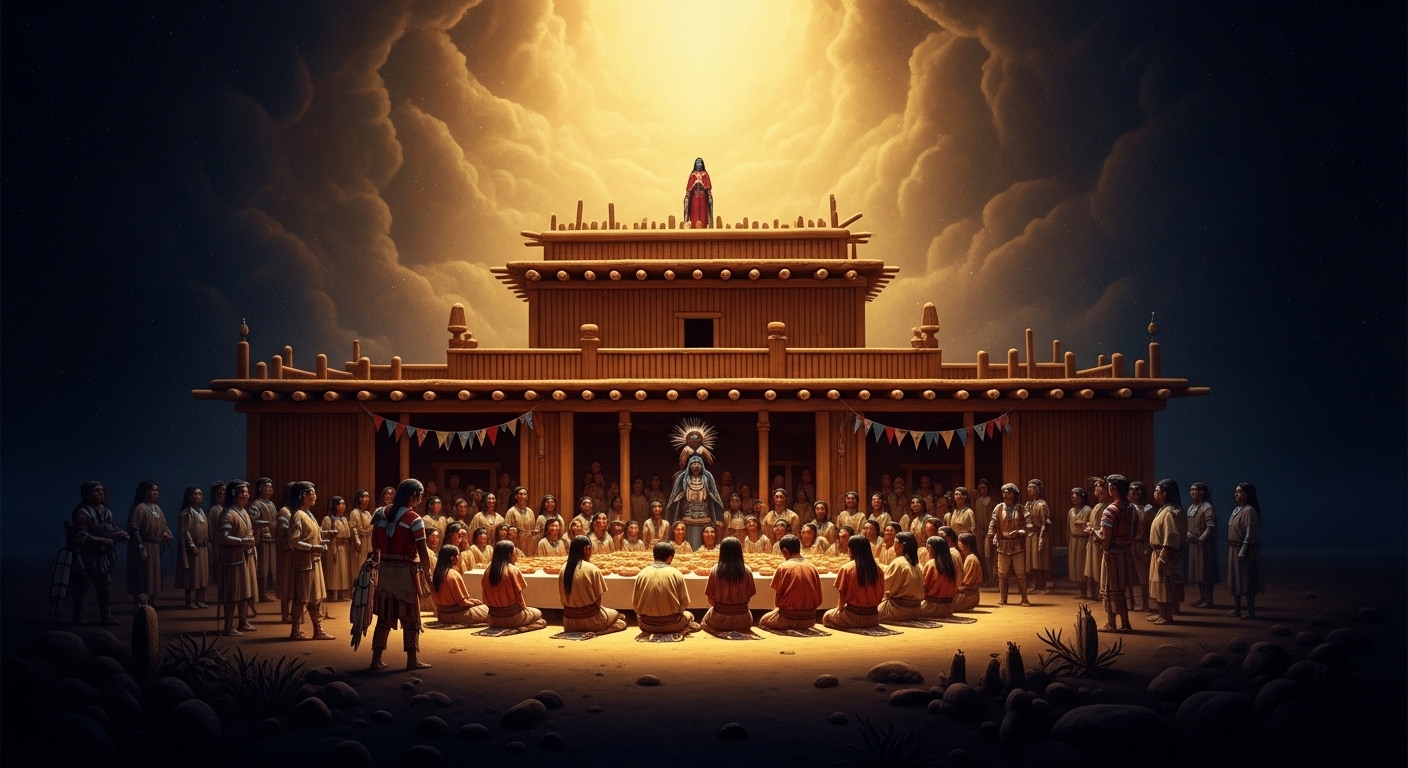
Building a Shalako house is an enormous honor and an enormous responsibility — the family must provide food for hundreds of guests through the night, must have the house properly consecrated, must be prepared to host a being of tremendous sacred power for the entire night from dusk to dawn. The house is prepared for a year. The family has been in ceremony for months, their lives organized around the arrival of the being who will bless their house.
The Shalako enters.
Inside the house, the ceremony begins. The Shalako dances — the enormous figure circling the interior of the house, the beak snapping rhythmically, the attendants singing and drumming. The songs are the specific songs that belong to this ceremony, this being, this night. They are asking for rain in the coming year. They are blessing the house with the presence of the sacred, the same way that a church is blessed by the presence of the holy or a home is blessed by the attendance of the divine.
The family feeds everyone who comes.
Hundreds of people move through the six houses through the night. The cooking has been going since the previous day. The food is ceremonial giving: the family’s abundance is the family’s blessing expressed.
At dawn, when the night is finally thinning toward the east, the Shalako prepare to leave.
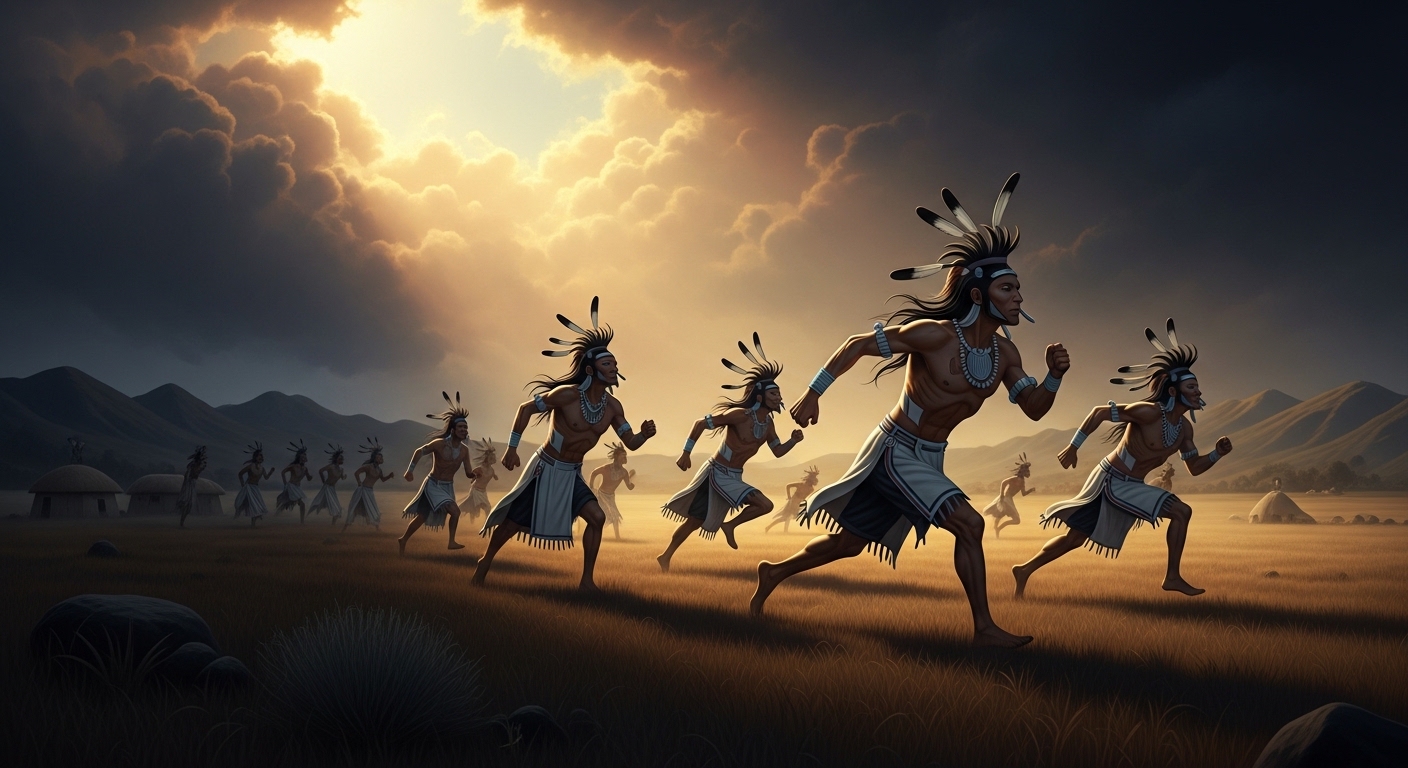
There is a final race — the Shalako run. The Shalako, which have been stately and deliberate all night, run across the fields west of the village with surprising speed. The race is a prayer for rain: the faster the Shalako run, the more abundant the rain in the coming year. The watchers cheer and call out prayers.
Then the Shalako cross the bridge.
They disappear into the landscape.
The Council of the Gods takes them back to their home at the sacred lake. The houses they blessed will prosper. The rain will come. The relationship between the Zuni people and the beings who send rain has been renewed for another year.
The six houses stand empty in the morning light.
The feathers in the rafters move in the draft.
The Shalako will return.
Scenes
Echoes Across Traditions
Entities
- the Shalako (six sacred beings)
- the Council of the Gods
- Pautiwa (the Sun Priest of the Council)
- the host families
- the Zuni people
Sources
- Ruth Benedict, *Patterns of Culture* (Houghton Mifflin, 1934)
- Matilda Coxe Stevenson, *The Zuñi Indians* (Bureau of American Ethnology, 1904)
- Edmund Ladd, *Zuni Social and Religious Organization* (Smithsonian, 1979)