Category: Luck Origin: Ancient Rome, Greece Traditions: Roman, Greek, Christian, Islamic, Slavic Risk: Bad Luck
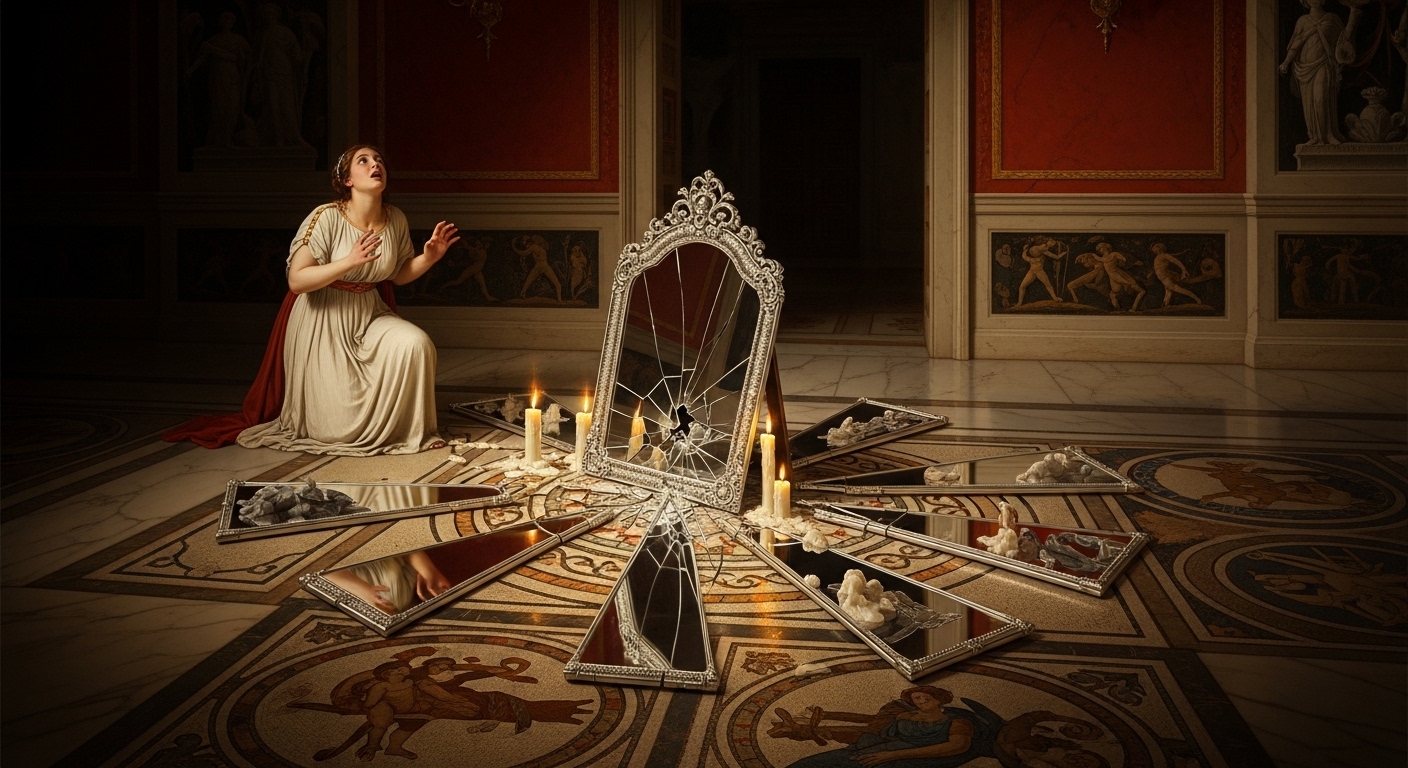
The seven-year bad luck penalty for breaking a mirror originates with Roman physicians who taught that health cycled in seven-year intervals. A mirror, reflecting the soul’s image, could damage the soul when shattered — and seven years were needed for the soul to regenerate.
Ancient Greeks and Romans saw mirrors as tools of divination. Shattering one didn’t just destroy an object; it ruptured the connection between the visible world and the spirit realm. The soul, partially trapped in the reflection, was now fragmented.
In medieval Christian Europe, mirrors were associated with vanity (a deadly sin) and occasionally with devil’s glass. A broken mirror could release whatever spirits were trapped inside. The seven-year timeline absorbed into Christian moralizing about punishment for pride.
Islamic tradition doesn’t assign a specific “seven years” penalty but historically treated mirrors with similar caution — covering them during death rites to prevent the departing soul from becoming trapped. Slavic traditions include covering mirrors after a death for 40 days (the soul’s journey period).
Counter-ritual: In several traditions, grinding the broken glass to dust, burying it, or throwing it into running water “disperses” the bad luck. The water carries the soul fragment away safely.