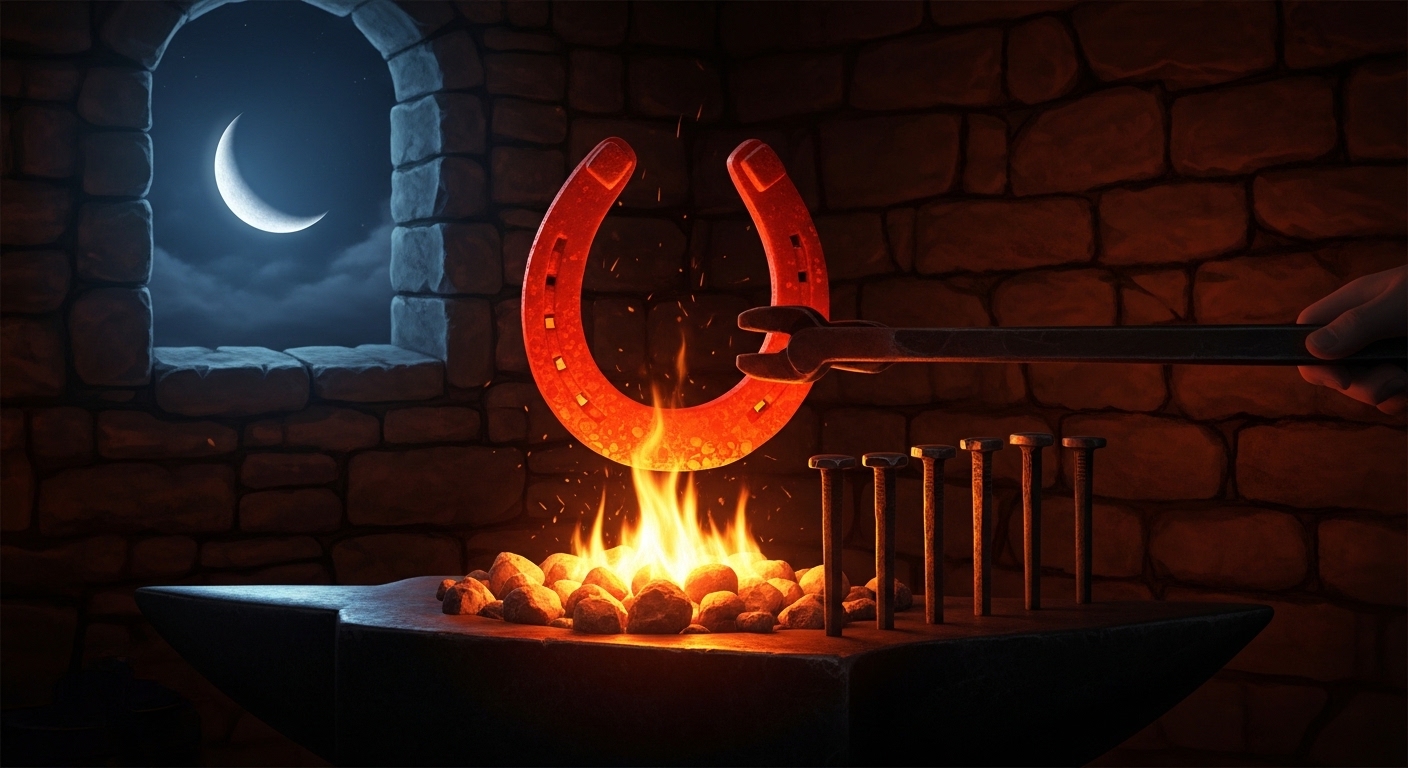
Category: Protection Origin: Ancient Greece, Celtic Europe Traditions: Celtic, Roman, Christian, Islamic, Romani Risk: Protective / Good Luck
The horseshoe’s protective power derives from three independent sources that converged:
Iron apotrope: Iron was universally believed to repel supernatural beings — faeries, demons, djinn — because iron was forged with fire (sacred), and its magnetic property seemed supernatural. A horseshoe is iron shaped and heated — doubly potent.
Crescent / moon connection: The shape echoes the crescent moon, itself a symbol of protection and divine feminine power in Egyptian, Greek, Roman, and Islamic traditions. Placing a horseshoe above a doorway positioned the crescent to “catch” and hold good luck (hence the dispute over which way it hangs — opening upward holds luck in; opening down lets it fall out and protects the threshold below).
Seven-nail tradition: Horseshoes were typically attached with seven nails — a sacred prime number in Jewish, Christian, and Islamic frameworks. Romani tradition held that a horseshoe found by chance (not bought) and hung with its original nails was maximally protective.
Saint Dunstan legend (Christian): The English patron saint of blacksmiths allegedly shoed the Devil’s own hoof, then only released him after extracting a promise never to enter a home with a horseshoe. This folk legend cemented the horseshoe’s status in Christian England.