Category: Numbers & Time Origin: Chinese linguistic culture Traditions: Chinese, Japanese, Korean, Vietnamese Risk: Bad Luck
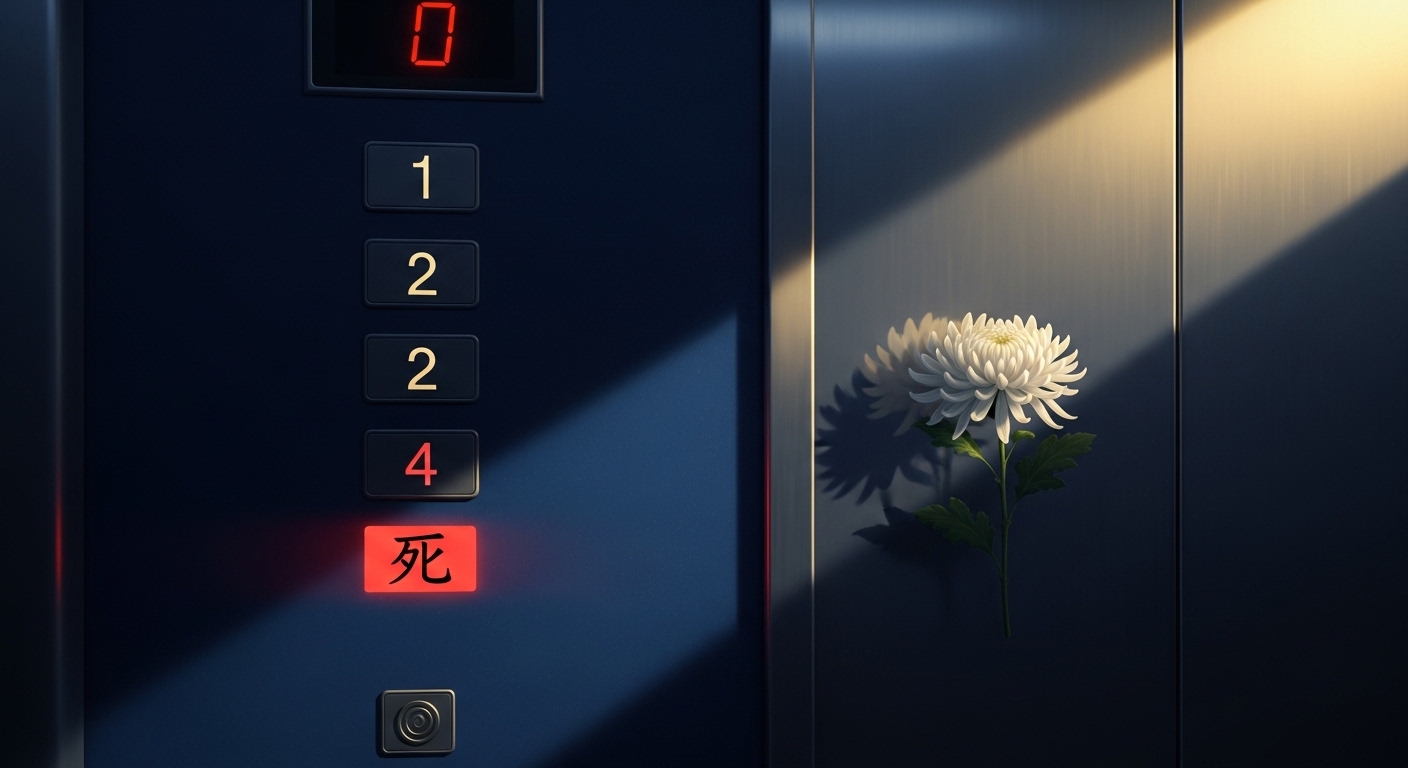
In Mandarin, Cantonese, Japanese, and Korean, the word for “four” sounds nearly identical to the word for “death” (sì / si / shi). The resulting phobia — tetraphobia — manifests architecturally, commercially, and socially:
Buildings routinely skip floor 4 (and 14, 24, 40-49) — elevator buttons jump from 3 to 5. Hospital rooms avoid the number. Phone numbers with multiple 4s are sold at a discount. The number 8, whose word sounds like “prosperity,” commands a premium — the 2008 Beijing Olympics opened at 8:08 PM on 8/8/08.
This is not mere anxiety but embedded theology: death is the greatest cosmic disruption. Avoiding its name is preventive magic — the same logic behind calling the devil “the adversary” rather than by name, or avoiding the word “cancer” in some Mediterranean traditions.
Cross-tradition echo: In Western tradition the parallel is number 13. Both represent the one integer that disrupts a perfect cultural set (12 apostles, 12 months, 12 zodiac signs in West; 3 as a perfect number in East). The culture projects its theological anxiety onto the number that doesn’t fit.