Combat Profile
Pride's Fall
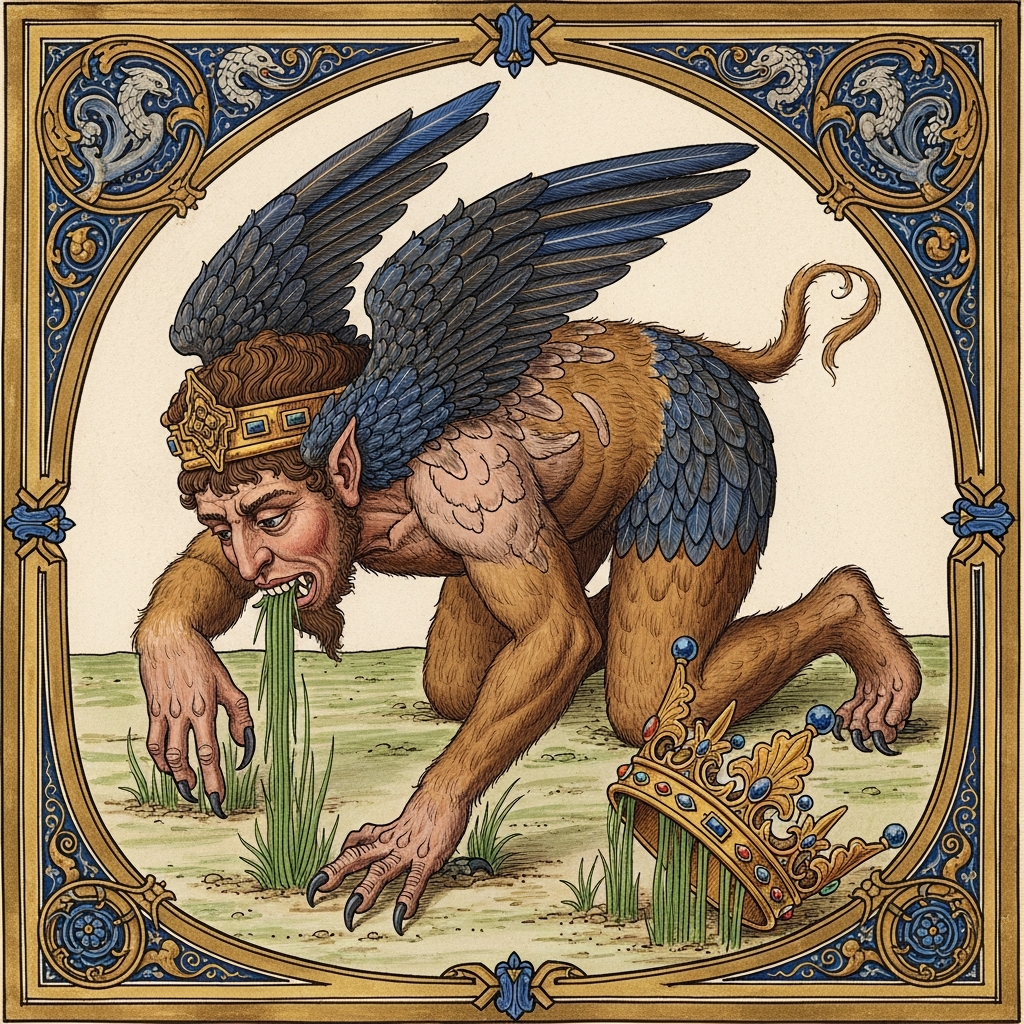
transforms into a bestial form for 7 rounds, gaining massive ATK but losing all SPR, only ending through divine judgment or self-recognition
Empire's Curse
conquests grant temporary power but invite divine madness; each victory accumulates corruption that eventually breaks the user's sanity until repentance restores clarity
Pride ("Is not this the great Babylon I have built?" -- Dan 4:30)
The most complex villain-to-convert arc in the OT. Nebuchadnezzar destroyed Solomon’s Temple, carried Judah into exile, and built the most powerful empire in the ancient Near East. But Daniel interpreted his dreams, and God humbled him spectacularly: “He was driven away from people and ate grass like the ox. His body was drenched with the dew of heaven until his hair grew like the feathers of an eagle and his nails like the claws of a bird” (Dan 4:33). After seven years of madness, he looked up and acknowledged God: “Now I, Nebuchadnezzar, praise and exalt and glorify the King of heaven” (Dan 4:37). The destroyer of the Temple ended his story worshipping the Temple’s God. His statue dream (Dan 2) outlines a prophecy of successive empires (Babylon → Persia → Greece → Rome) that remains central to eschatology.
1 min read
2 Kings 24-25; Daniel 1-4; Jeremiah 39-43