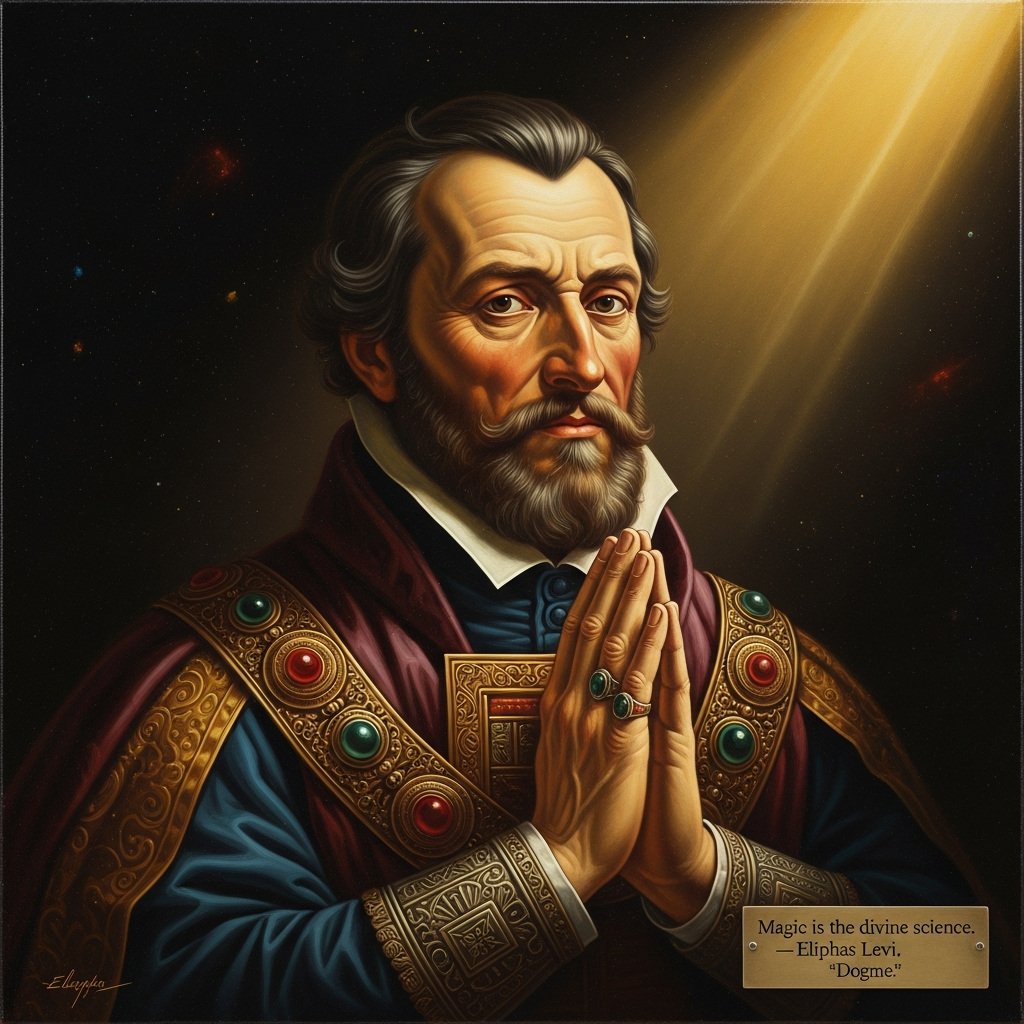
Combat Profile
Hermetic Synthesis
Levi fuses disparate mystical traditions into unified frameworks, allowing him to bridge incompatible magical systems and grant practitioners access to forbidden correspondences.
Ceremonial Authority
Levi's systematic codification of occult practice grants all rituals performed within his sphere of influence +2 potency and clarity, though they become bound to rigid symbolic structures.
His scholarship is often inventive rather than rigorous; his historical claims (e.g., Tarot's Egyptian origins) are frequently wrong but became canonical anyway
“Magic is the divine science.” — Eliphas Levi, Dogme
Born Alphonse Louis Constant (1810), trained for priesthood, ordained a deacon, then dismissed for falling in love, Levi spends his life rebuilding Western magic from the ground up. He bridges Renaissance magic and the modern occult revival. Without Levi: no Golden Dawn; without Golden Dawn: no Crowley; without Crowley: no modern ceremonial magic. His Tarot-to-Hebrew-letter mapping — largely his own invention (Levi, Dogme et Rituel, Book II) — founds every later esoteric Tarot system (see Tarot.md). His Baphomet image (1856) — goat head, torch, breasts, SOLVE et COAGULA on arms — becomes occultism’s most recognizable icon, even though it is Levi’s invention, not a medieval Templar artifact. The Templars almost certainly never worshipped “Baphomet.”
1 min read
Levi, *Dogme et Rituel de la Haute Magie* (1854-56); *Histoire de la Magie* (1860); *La Clef des Grands Mystères* (1861)