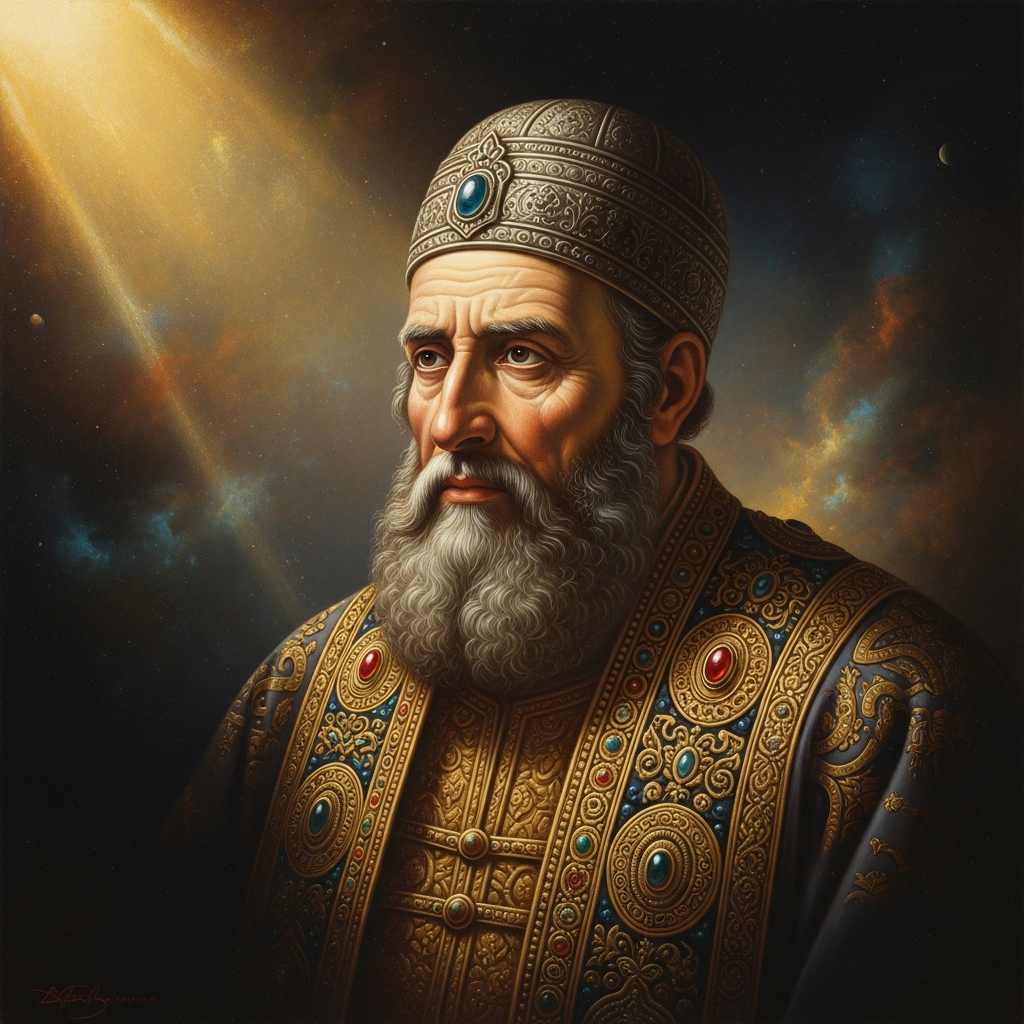
Combat Profile
Golden Rule Illumination
reveals the ethical core of any dispute, forcing all parties to see through the eyes of their opponent and seek reconciliation.
Sage's Wisdom
all attempts at deception or cruelty within Hillel's presence are weakened, and those who seek genuine understanding gain insight and clarity.
Patience perceived as weakness by adversaries; outshone in legal stringency by Shammai
“If I am not for myself, who will be for me? But if I am only for myself, what am I? And if not now, when?” — Pirkei Avot 1:14
The most quoted rabbi in Jewish history. Hillel arrived in Jerusalem from Babylon broke, slept on rooftops to listen to Torah lectures through the skylight, and rose to become Nasi of the Sanhedrin (Pirkei Avot 1:13). His school’s lenient contextual readings became the dominant tradition; the stricter House of Shammai survives in the Talmud mostly to be argued against. His Golden Rule formulation predates Jesus’s “do unto others” by roughly two generations.
1 min read
Mishnah, Avot 1:12-14; Shabbat 31a; Talmud passim