Combat Profile
Khalsa Initiation
bestows sacred initiation upon worthy warriors, permanently elevating their spiritual and martial prowess through baptism of the double-edged sword
Eternal Guruship
even in absence of physical form, continues to guide the faithful through the Guru Granth Sahib as the living Guru of the Sikh people
Lost all four sons -- two killed in battle, two bricked alive into a wall by the Mughal governor of Sirhind for refusing to convert. Survived assassination attempts but died from a delayed assassin's wound in 1708
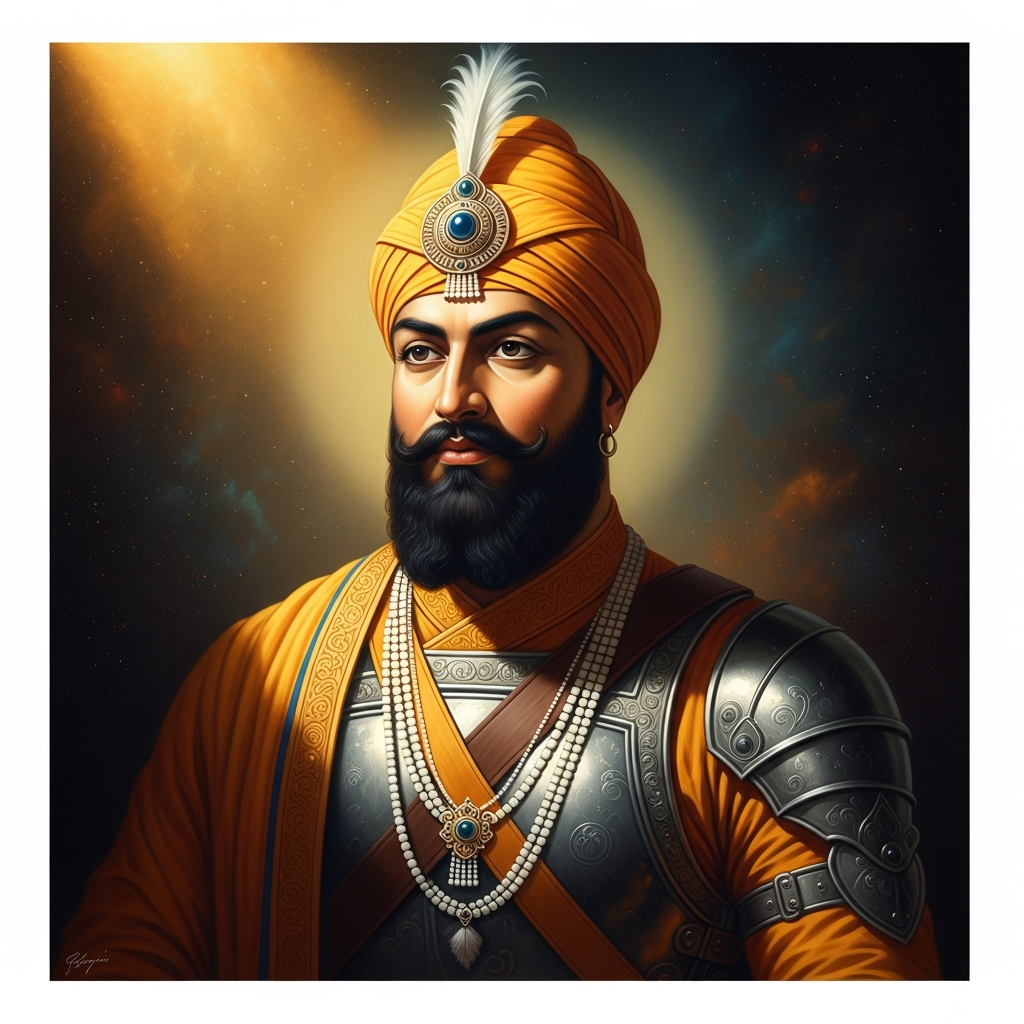
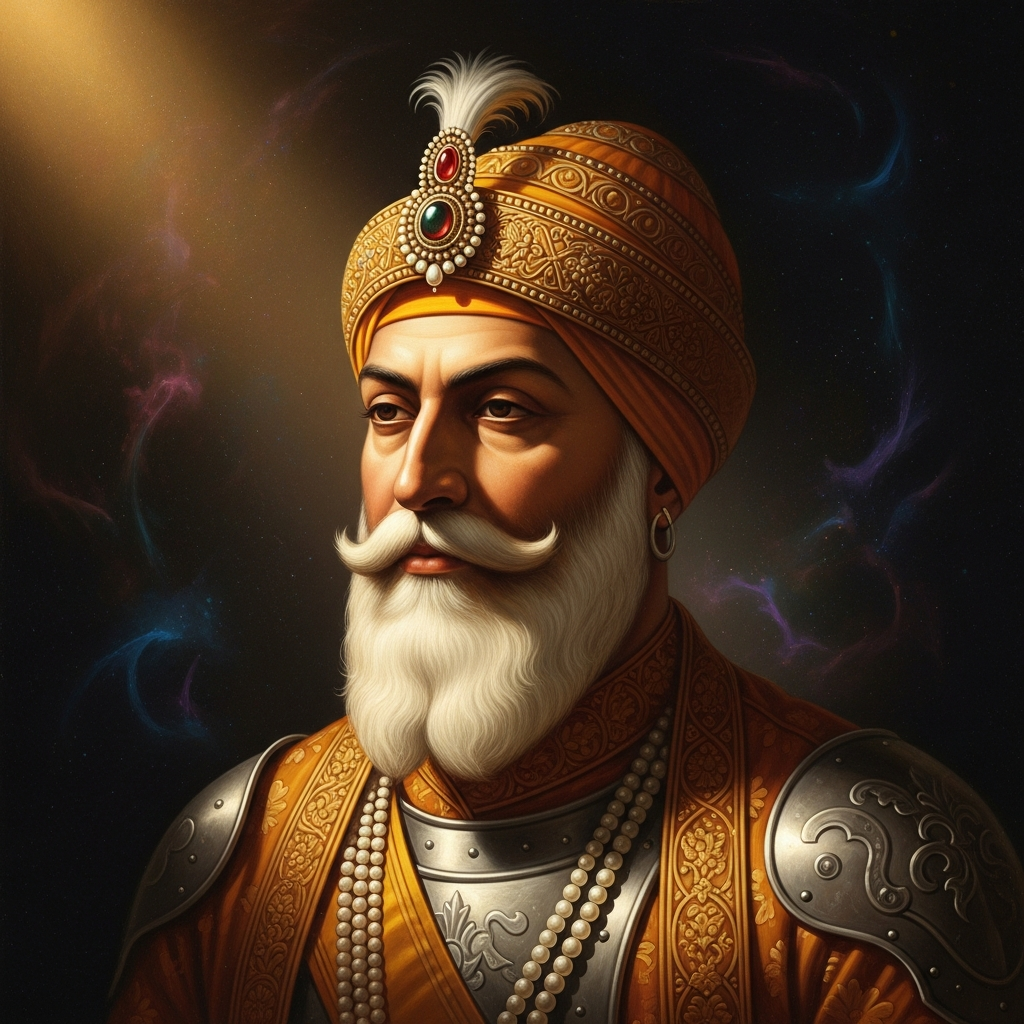
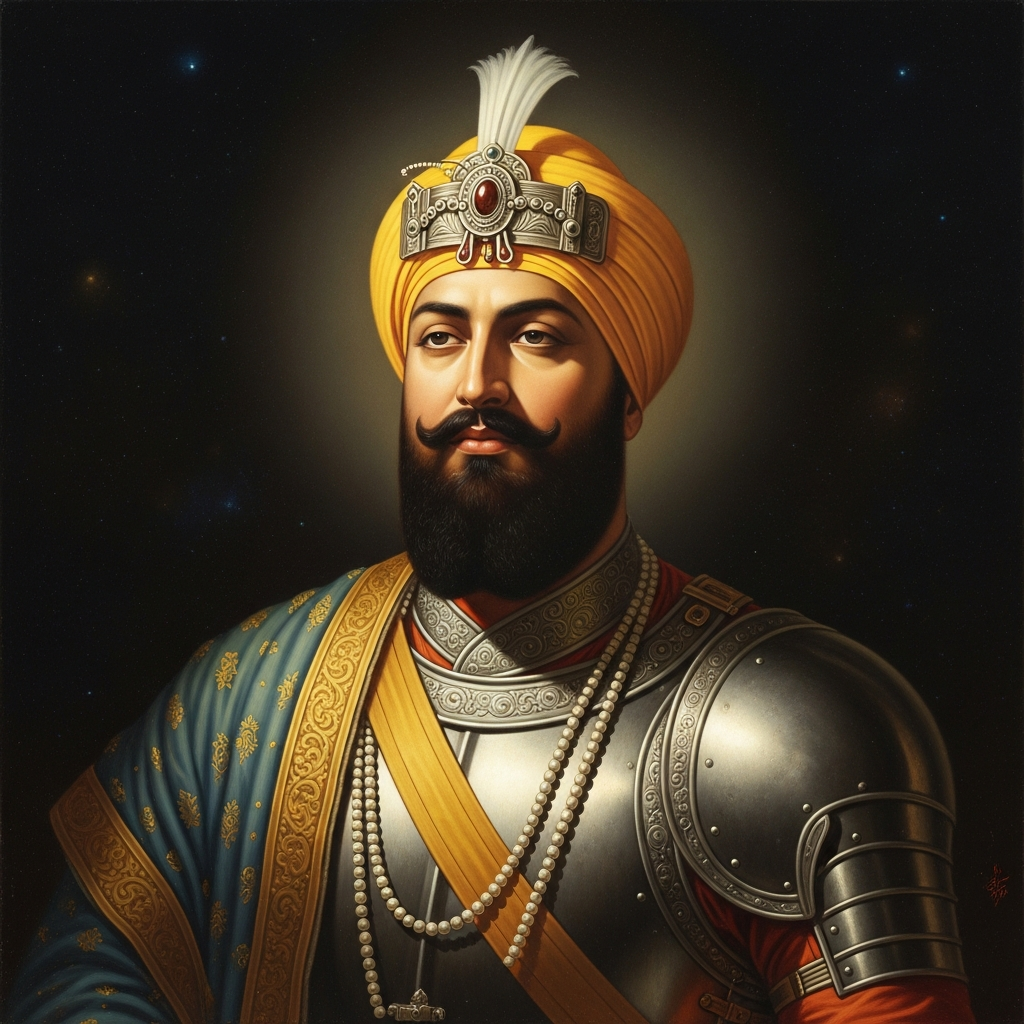
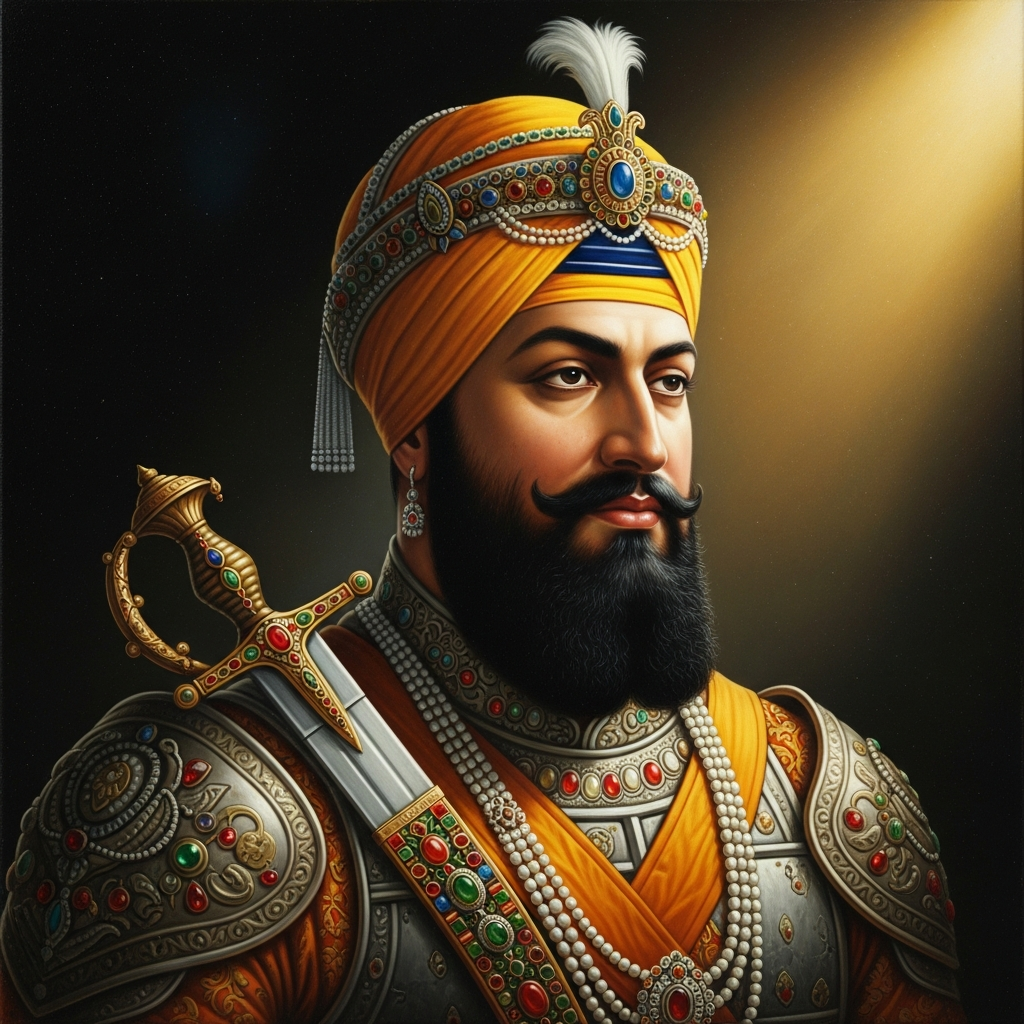
| Sacred Colors | Saffron (sacrifice), Blue (neela — the Nihang warriors carry his blue color tradition), Gold | | Sacred Number | 10 (Tenth Guru), 1699 (the year of the Khalsa founding — de facto the Year One of the Khalsa), 5 (the Panj Pyare — Five Beloved Ones, the founding Khalsa), 4 (four sons, all sacrificed — chaar sahibzaade) | | Consort(s) | Mata Jito Ji (first wife; died 1700), Mata Sundari Ji (second wife; long outlived him), Mata Sahib Devan Ji (third wife — the symbolic mother of the Khalsa) | | Sacred Sites | Anandpur Sahib (Punjab — site of the Khalsa founding; one of the five Takhts), Patna Sahib (Bihar — birthplace; Takht Sri Patna Sahib), Nanded (Maharashtra — site of his death; Takht Sachkhand Sri Hazur Sahib), Hemkund Sahib (Himachal Pradesh — high-altitude site associated with his past-life meditation) | | Festivals | Guru Gobind Singh Ji Gurpurab (birthday — Poh Sudi 7, December/January; massive global celebrations), Vaisakhi (April 13 — founding of the Khalsa; the most politically significant Sikh festival), Hola Mohalla (martial arts festival at Anandpur he founded) | | Iconography | Depicted as an armored warrior-saint in full battle attire — saffron chola (robe) and armor; distinctive plumed kalgi (turban aigrette); hawk on wrist or shoulder; two swords; on horseback in blue or gold; his image is the most iconographically elaborate and varied of all the Gurus | | Period | 1666–1708 CE; Tenth Guru 1675–1708 | | Region | Punjab and wider North India (his military campaigns ranged widely); Anandpur, Nanded, and Patna Sahib are his primary sacred sites; the Khalsa he founded now exists on every continent |
“Sava lakh se ek ladaun, tabe Gobind Singh naam kahaun.” — “When one Sikh fights against 125,000, then I shall be called Gobind Singh.” — attributed to the tenth Guru
The architect of the Sikh community as it exists today. The decision to close the line of human Gurus and vest the Guru-ship in the scripture and the community is one of the great structural decisions in religious history — a deliberate refusal of personality cult, of dynastic succession, of any further human mediation between the disciple and the Word.
2 min read
*Dasam Granth*; *Bachittar Natak*; Sikh tradition