Combat Profile
Veil of Nightmares
Temporarily obscures reality for all witnesses, forcing them to confront their deepest fears and hidden truths
Illusionist's Dominion
All deceptions gain strength in darkness; truth becomes malleable in the presence of the unconscious mind
Disorientation; the Moon shows nothing clearly, and the traveler may walk in circles forever
“My God, my God, why hast thou forsaken me?” — Matthew 27:46
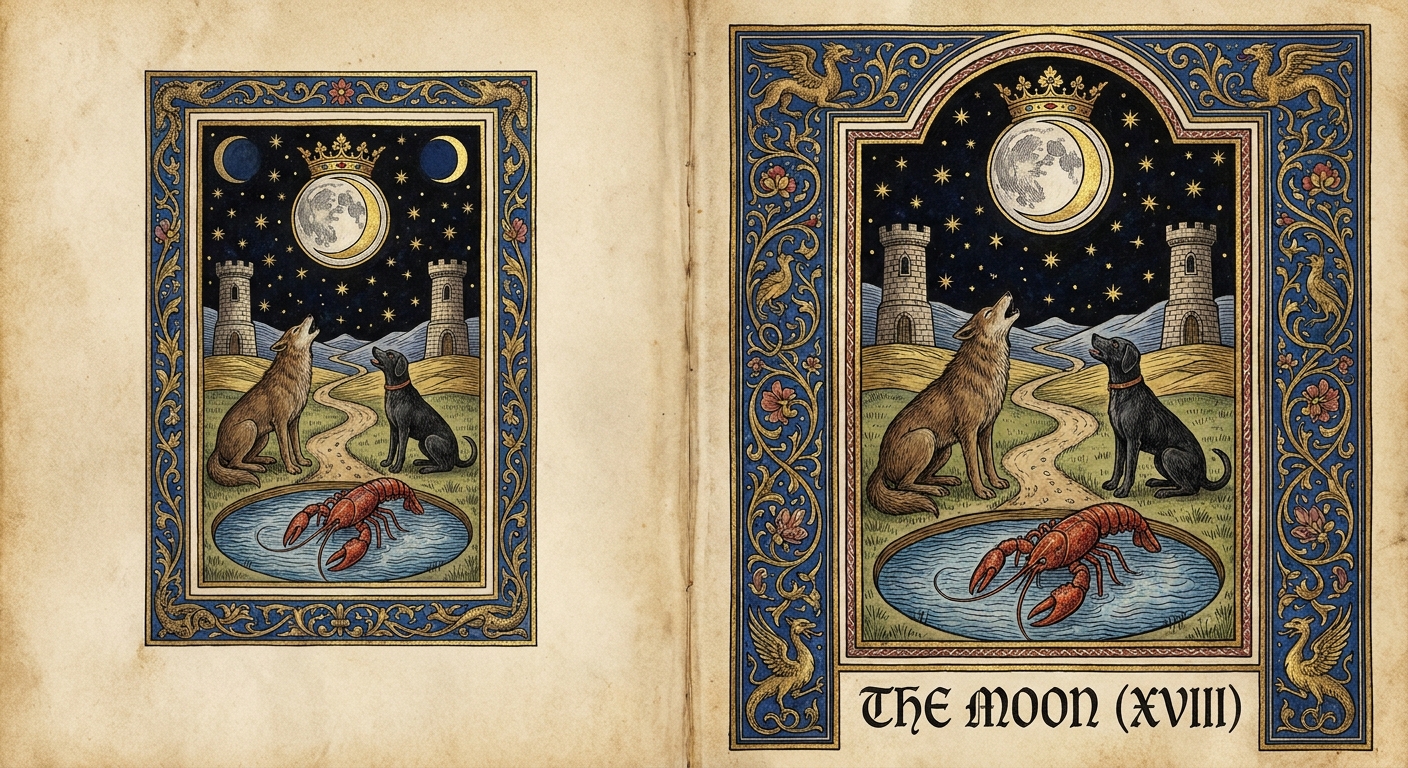
Lore: A full moon hangs between two towers, dripping fifteen drops of dew (the fifteen gradations between new moon and full in Hebrew calendar reckoning). A dog and a wolf howl at the moon from either side of a path — the domesticated self and the wild self, both agitated, both unable to see clearly. A crayfish crawls out of a pool at the base of the image (the unconscious stirring, something primitive and pre-verbal rising to the surface). The path winds between the towers and disappears into the distance. There is no guide, no lantern (unlike the Hermit), no star (that was the last card) — only reflected light, shadows, and fear. The Moon is the Dark Night of the Soul described by St. John of the Cross: the stage of spiritual development where God withdraws all comfort and the seeker must walk by faith alone, without consolation, without certainty, through terrain that shifts and deceives.
Biblical Parallel: The Garden of Gethsemane — Jesus sweating blood, asking the Father to “take this cup from me,” the disciples falling asleep, the night closing in (Luke 22:39-46). The Dark Night of the Soul (St. John of the Cross, 16th century) — the mystic’s experience of God’s apparent absence. Psalm 22: “My God, my God, why have you forsaken me? Why are you so far from saving me?” Israel wandering in the wilderness for forty years (Numbers 14:33-34) — lost, complaining, unable to see the Promised Land.
1 min read
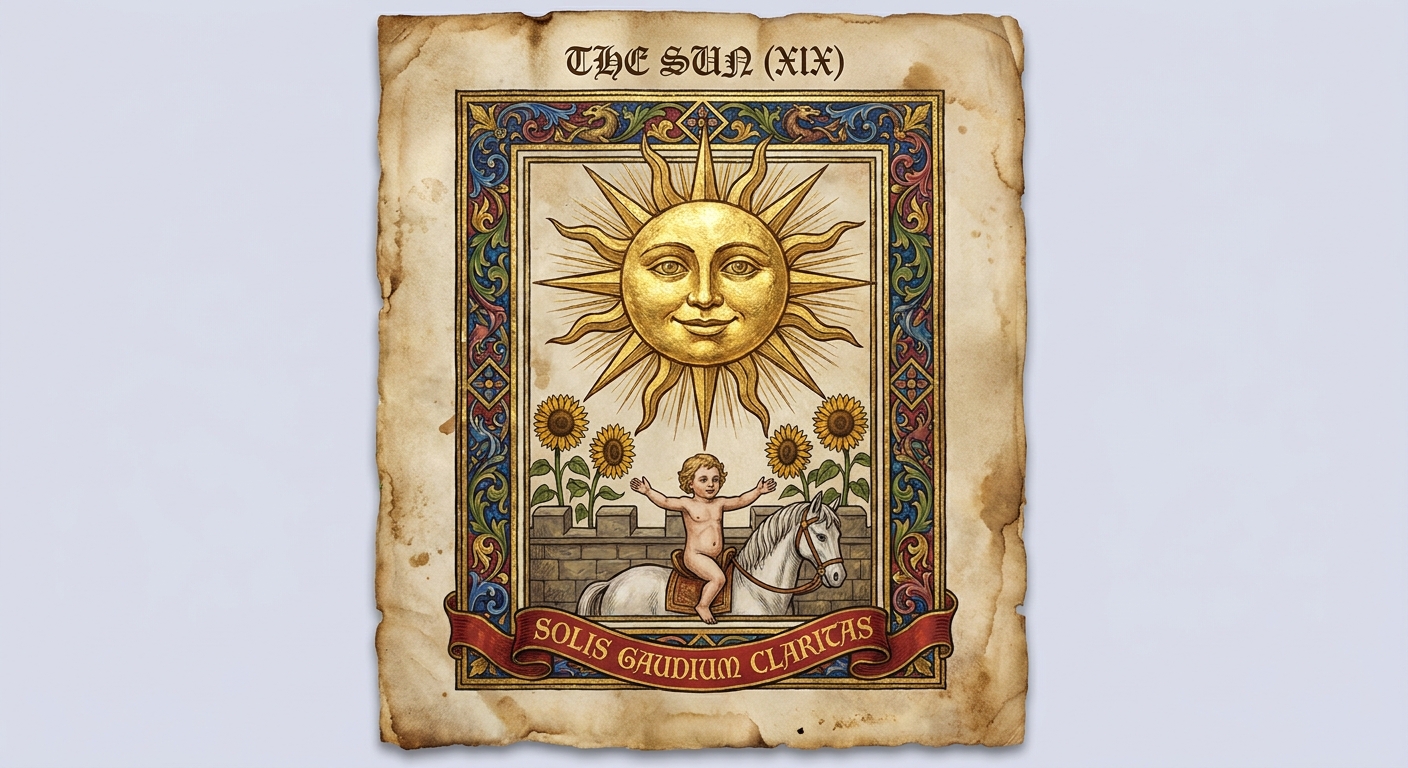
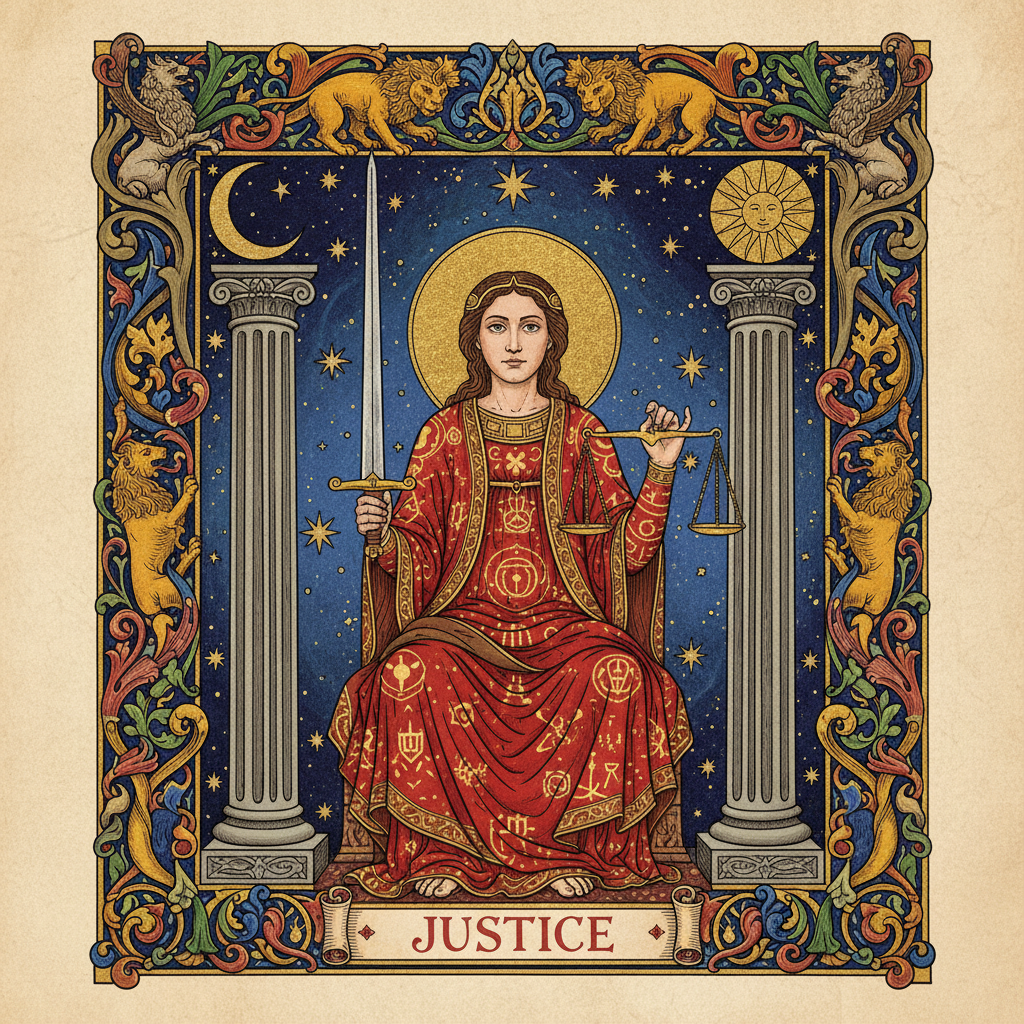
The Sun (XIX) -- clarity dispels illusion; Justice (XI), which insists on seeing things as they are
Rider-Waite-Smith deck; Golden Dawn; lunar symbolism across traditions