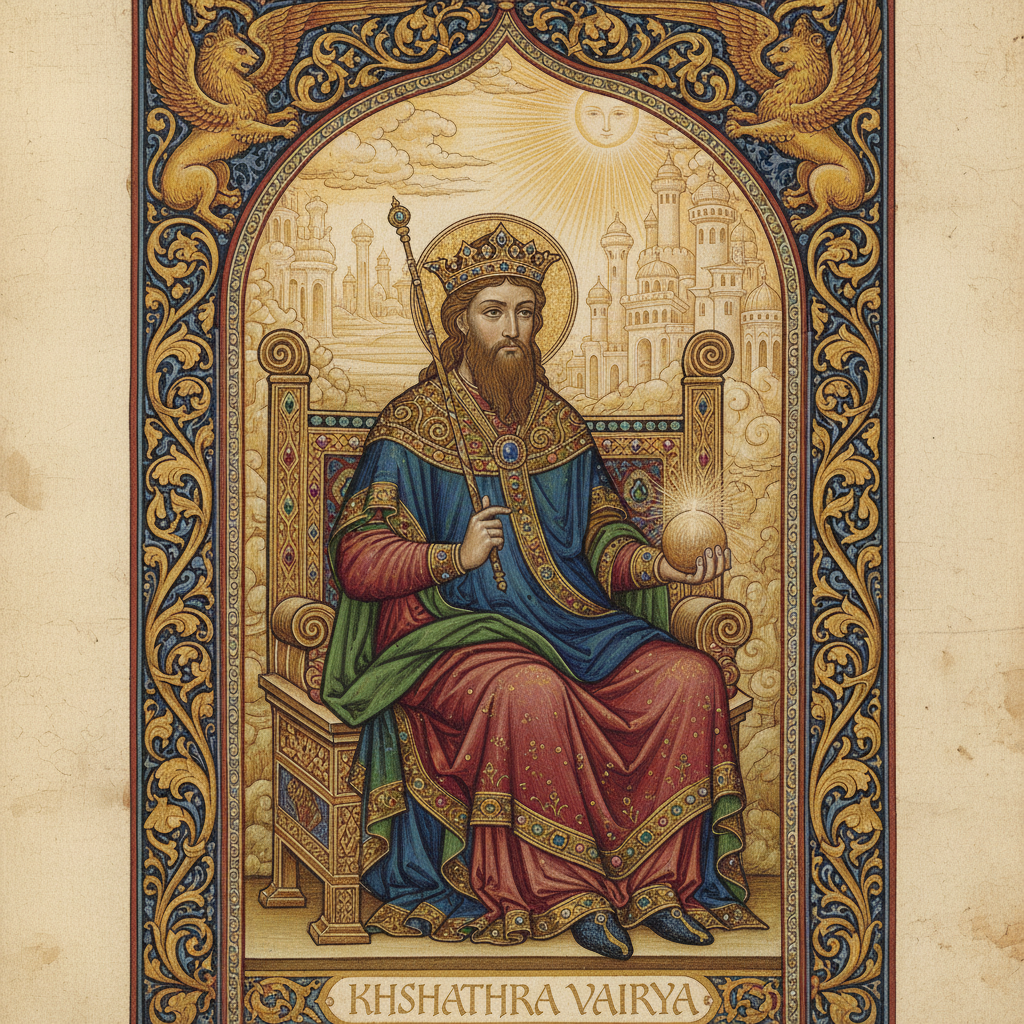
Combat Profile
Divine Dominion
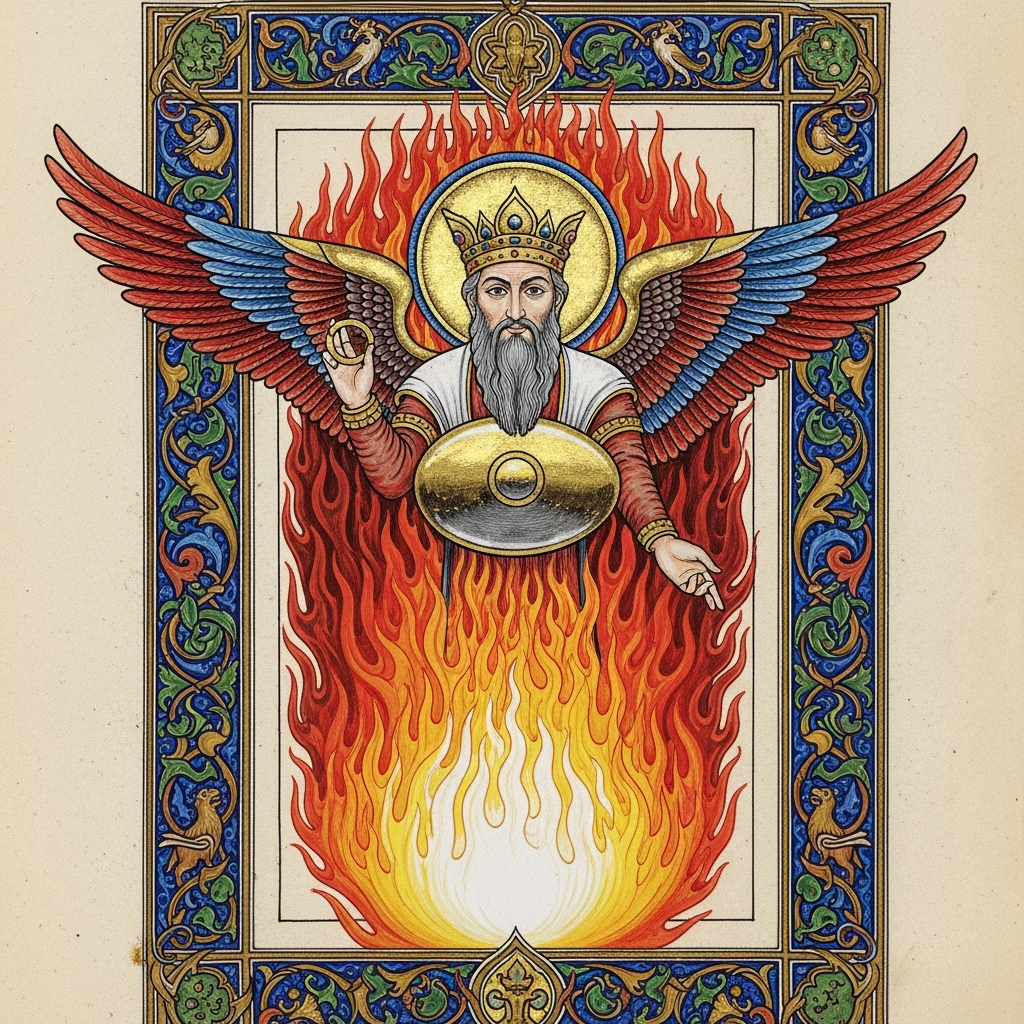
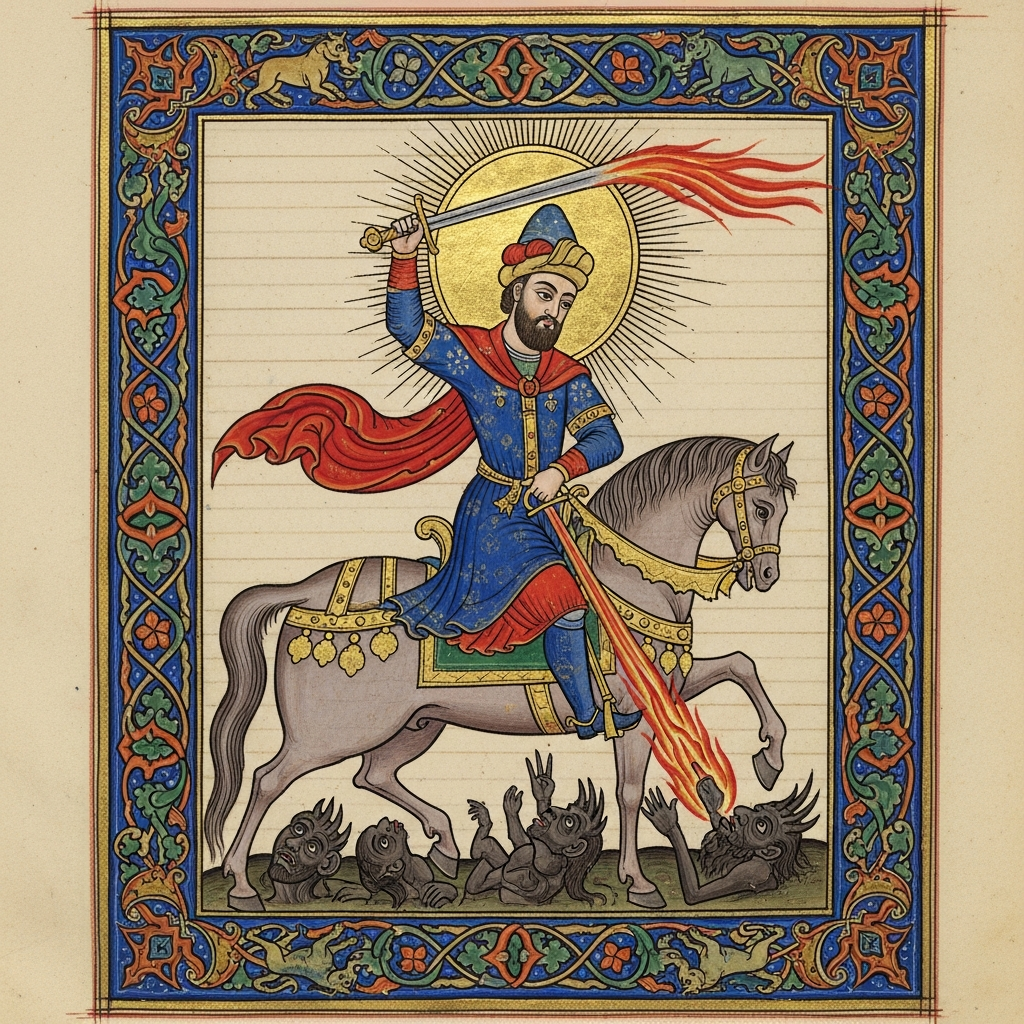
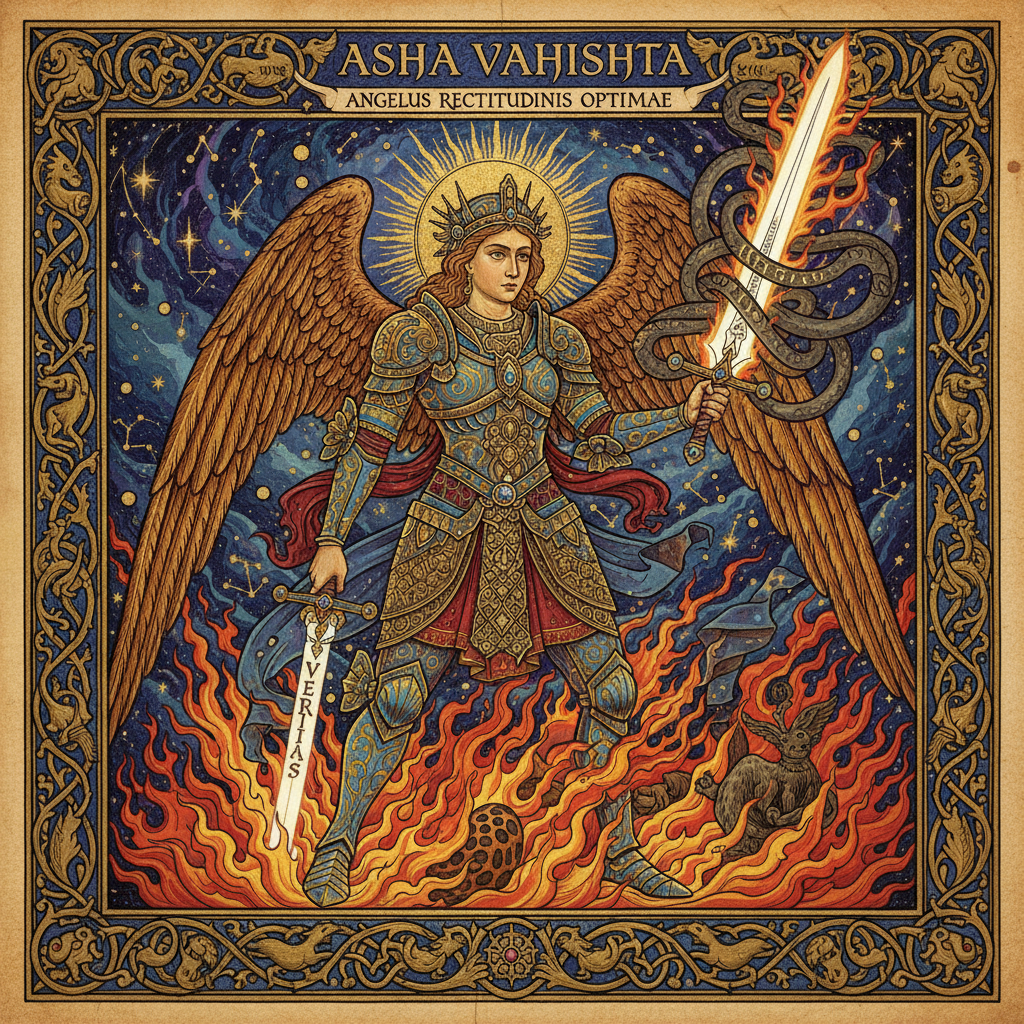
Khshathra Vairya grants absolute authority over metallic kingdoms and celestial order, reshaping laws of sovereignty to favor righteousness.
Holy Immortal
As an Amesha Spenta, Khshathra Vairya exists beyond mortal decay and constantly reinforces cosmic justice through divine radiance and immutable authority.
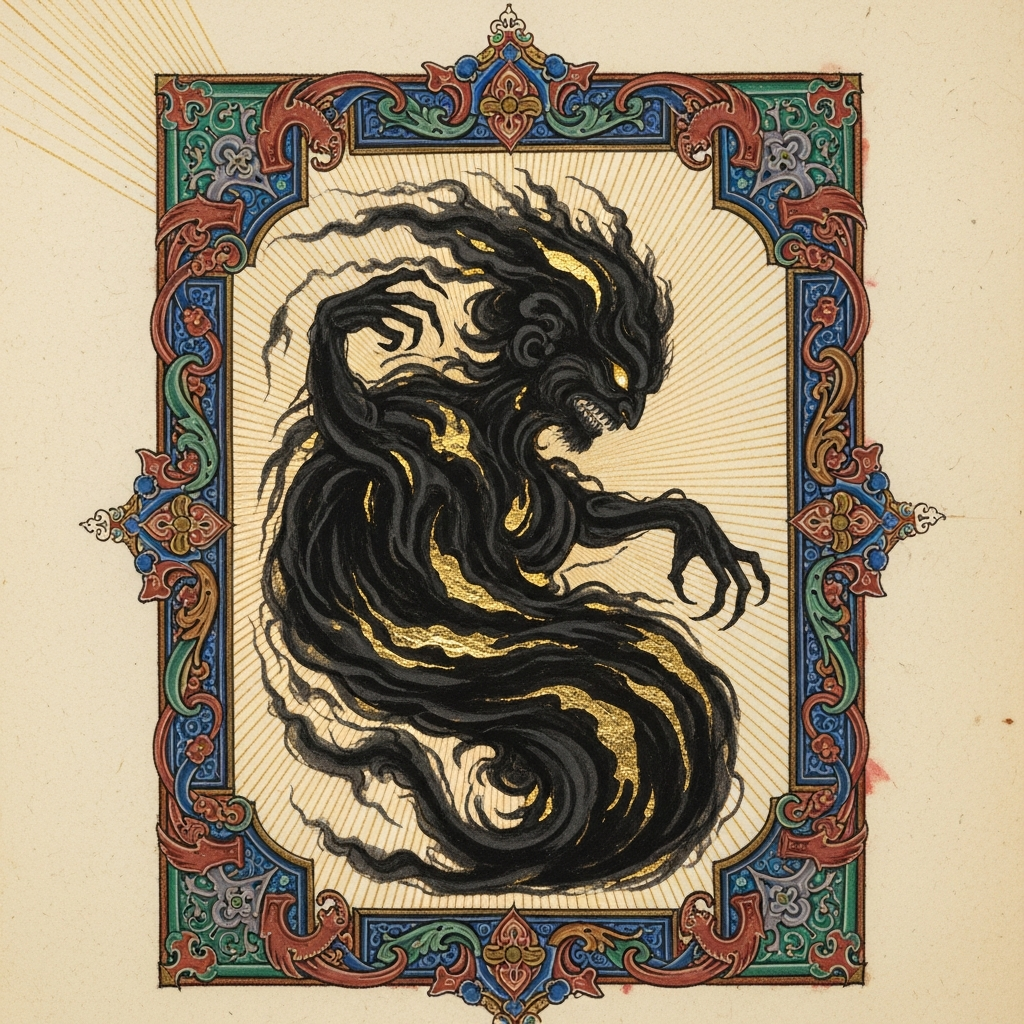
Saurva (Daeva of misrule and tyranny)
“That divine dominion which Mazda has established through truth — the kingdom in which one gives to the poor.”
Lore: Khshathra Vairya (“Desirable Dominion”) is the Amesha Spenta of God’s kingdom, righteous rule, and the protection of the weak. He governs metals and the sky in the physical world, and represents the ideal of just governance in the moral world. His kingdom is not of this earth — it is the coming divine order that will be established when evil is finally defeated.
Parallel: → The Kingdom of God / Kingdom of Heaven. The concept of a coming divine kingdom where righteousness reigns — the “Kingdom of God” that Jesus preached — has its theological roots in Khshathra Vairya. The eschatological vision of God’s kingdom replacing earthly injustice is Zoroastrian before it is Jewish or Christian.
1 min read
Tyranny, oppression, unjust rule
Gathas (Yasna 28:3, 31:4, 51:1); Zamyad Yasht