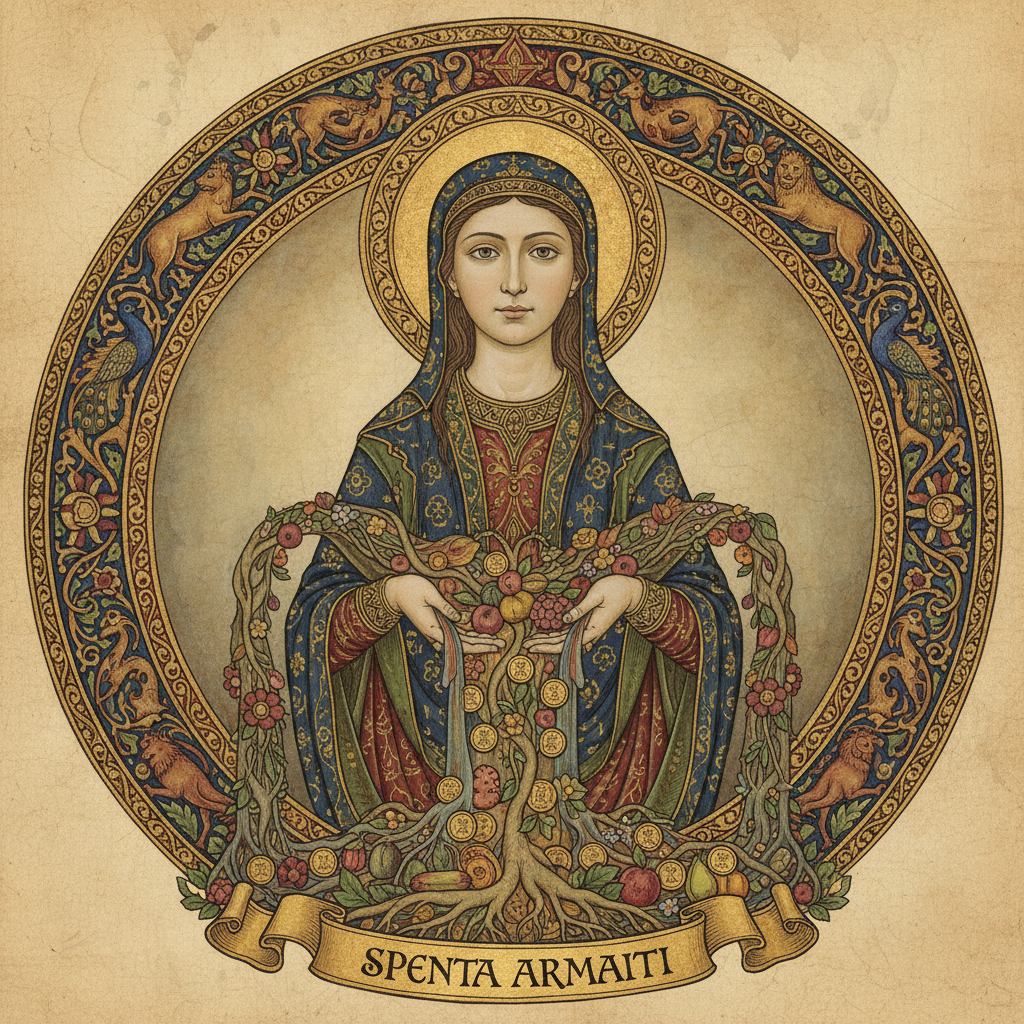
Combat Profile
Divine Devotion
grants all allies sanctified protection and increases their spiritual resistance against corruption and falsehood
Earthly Wisdom
passively strengthens the bonds between mortals and the sacred earth, rendering her allies grounded and resistant to manipulation
Taromaiti (Presumption/False Pride)
“Spenta Armaiti, the Earth itself, awaits the one who tends her with truth and righteousness.”
Lore: Spenta Armaiti (“Holy Devotion” or “Right-Mindedness”) is the only explicitly feminine Amesha Spenta — the daughter of Ahura Mazda. She governs the Earth and embodies the virtues of devotion, humility, and faithful service. She represents the feminine aspect of divine wisdom, the nurturing and sustaining power of God.
Parallel: → Sophia / Holy Wisdom. The feminine divine principle that appears in Proverbs 8 (“Wisdom was with God before creation”), the Wisdom of Solomon, and later in Gnostic traditions as the fallen Sophia. The concept of a feminine divine emanation associated with Earth and wisdom has Zoroastrian roots. Also parallels the Shekinah in Kabbalistic Judaism — the feminine “presence” of God. Compare also the Shakti principle in Hindu tradition — the feminine creative energy that sustains existence.
1 min read
Arrogance, impiety, spiritual neglect
Gathas (Yasna 28:3, 31:9, 38:1); Vendidad