Abaddon and the Fifth Trumpet: The Locusts from the Pit
The Fifth Trumpet — one of the final seals of the Apocalypse of John, written c. 95 CE · The Bottomless Pit (Abyssos) · the earth for five months
Contents
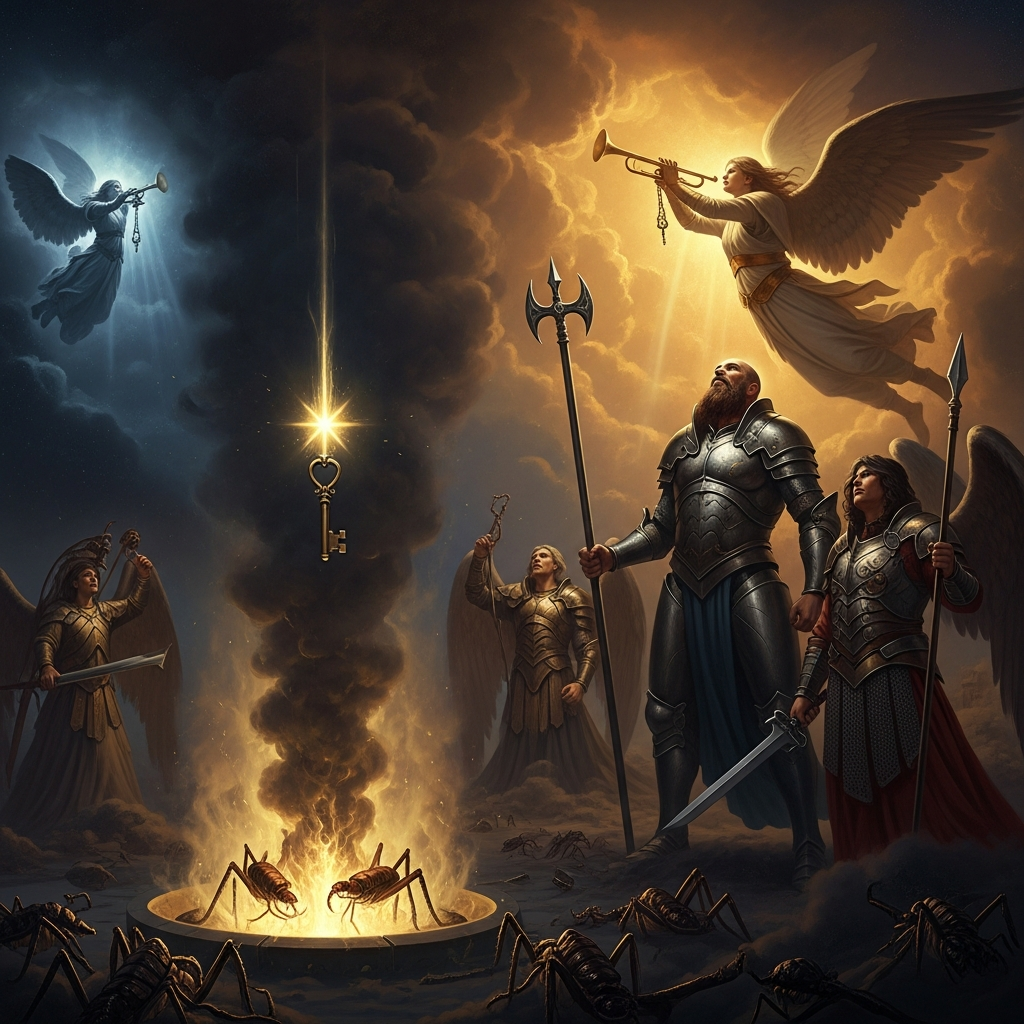
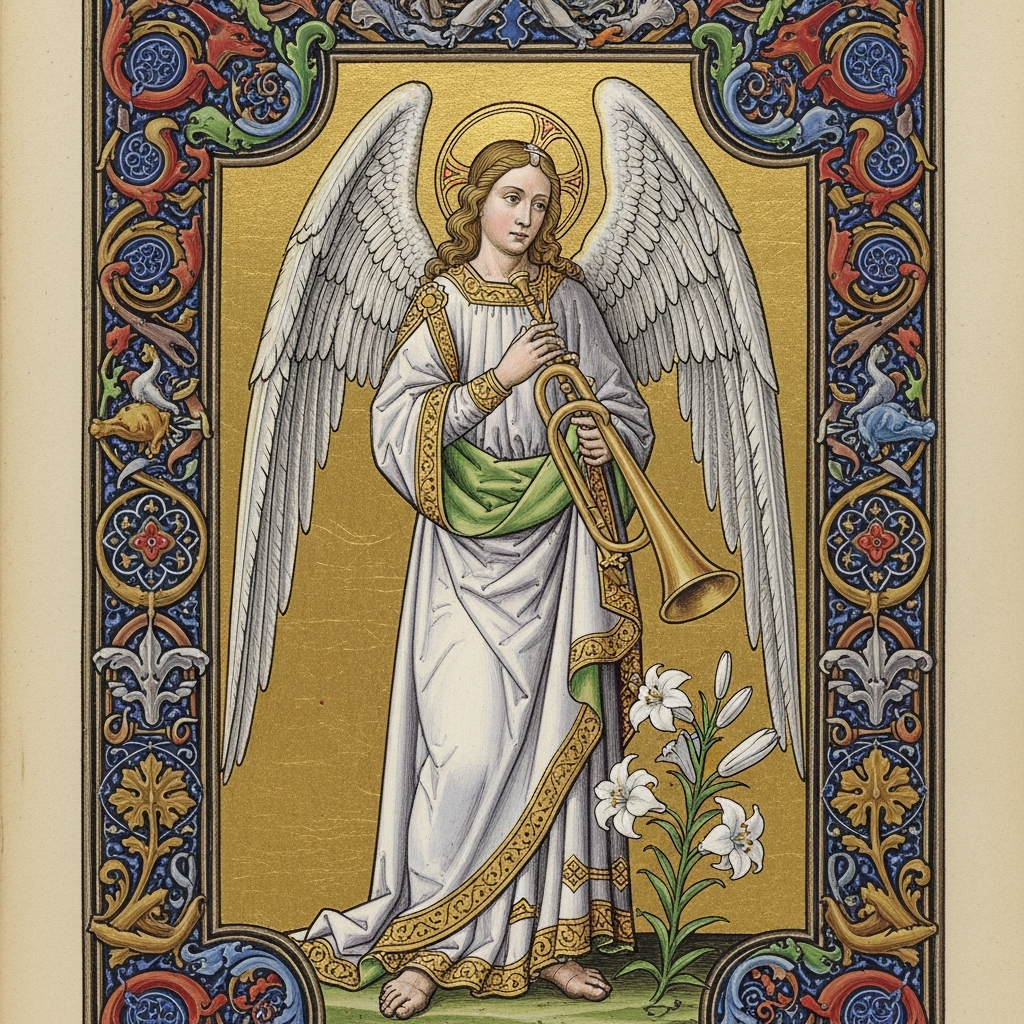
When the fifth angel blows his trumpet, a star falls from heaven with a key. The Bottomless Pit opens. Smoke pours out thick enough to darken the sun. From the smoke come locusts — but not locusts. They have faces like men, hair like women, teeth like lions, and stingers like scorpions. Their king is Abaddon. They are permitted five months.
- When
- The Fifth Trumpet — one of the final seals of the Apocalypse of John, written c. 95 CE
- Where
- The Bottomless Pit (Abyssos) · the earth for five months
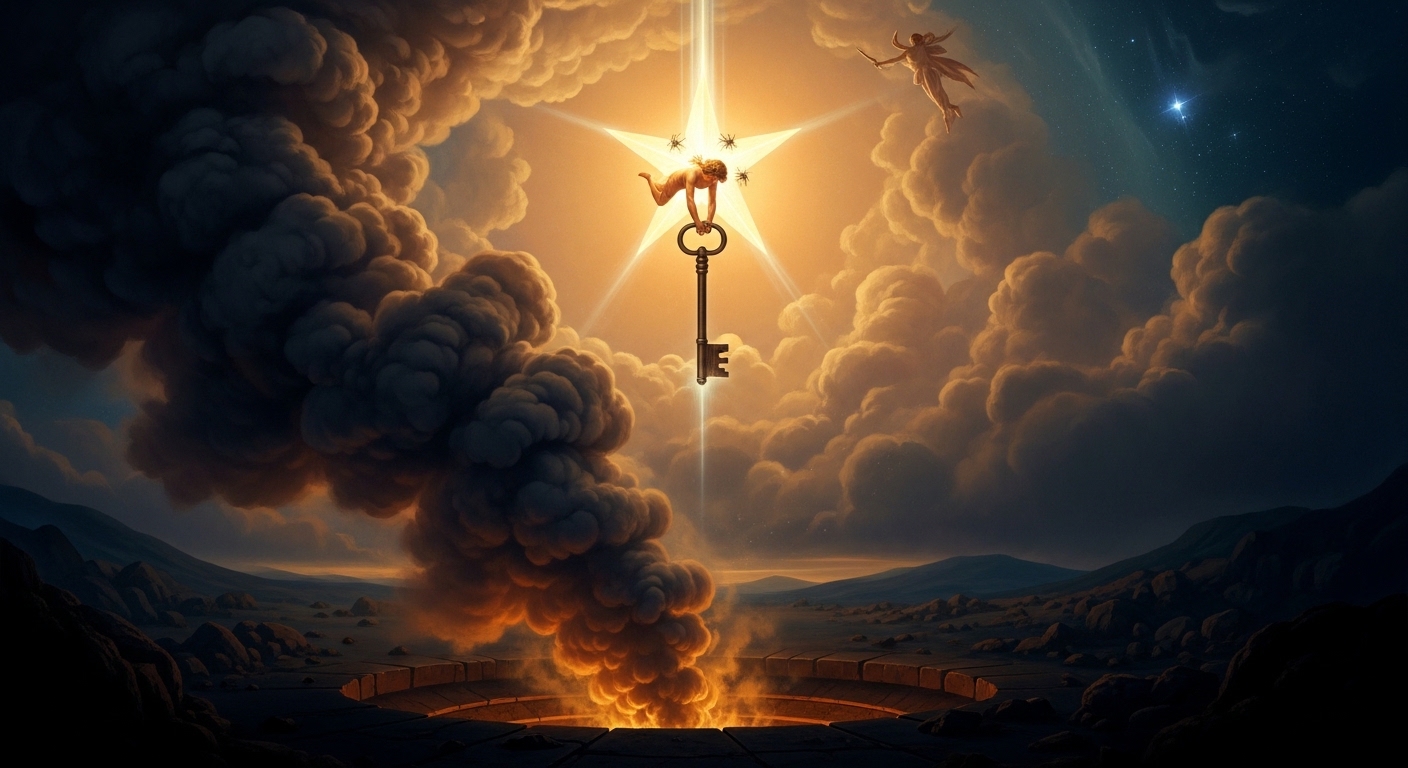
The trumpet sounds, and a star falls.
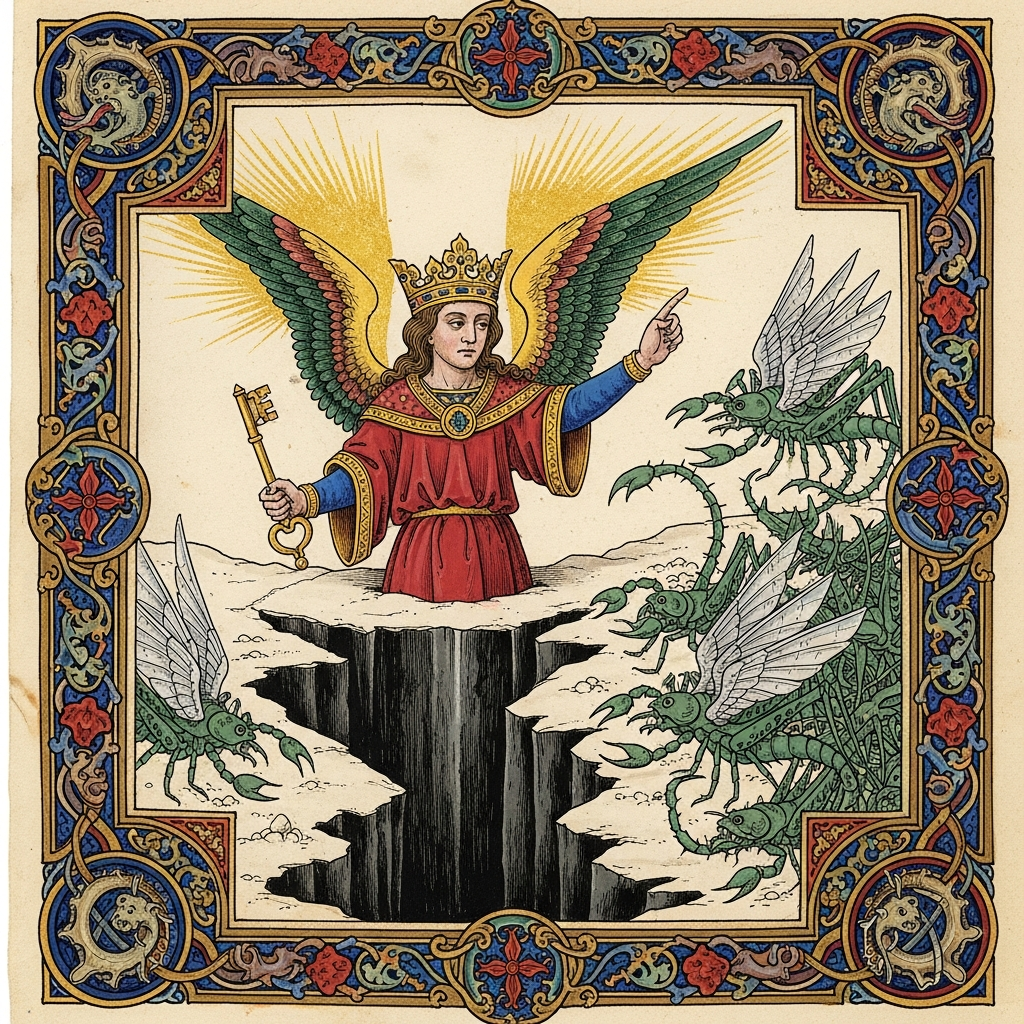
The grammar of the ninth chapter of Revelation is careful about this: the star did not fall, as stars fall. It was given a key. The passive construction is deliberate. In the theology of apocalyptic literature, nothing happens without permission. The opening of the Pit, the unleashing of what is in it, the five months of permitted torment — all of it is bounded by divine authorization. The chaos is controlled chaos. The destruction is scheduled destruction. This does not make it less terrible, but it locates it within an order.
The star descends to the shaft of the Bottomless Pit — the abyssos, the primordial deep, the underside of creation — and inserts the key.
The Pit opens.
The smoke is the first thing.
It rises from the Pit like the smoke of a great furnace. The sun goes dark. The air goes dark. This is not metaphorical darkness — the text means that the smoke is thick enough to block sunlight at midday. In the symbolic language of Revelation, where light is consistently associated with divine presence and darkness with its absence, this darkening of the sun is the announcement that something is happening in this passage of history that is outside the normal category of the world.
Then the locusts come.
They are described with an attention to detail that reads like the report of someone who has actually seen them — which is precisely the claim of visionary literature, that the seer has been shown what ordinary perception cannot access. They are not locusts in the agricultural sense: they are specifically forbidden from damaging grass, or any green thing, or any tree. They are only permitted to harm humans who do not have the seal of God on their foreheads. And they are forbidden to kill. They are permitted only to torment. For five months.
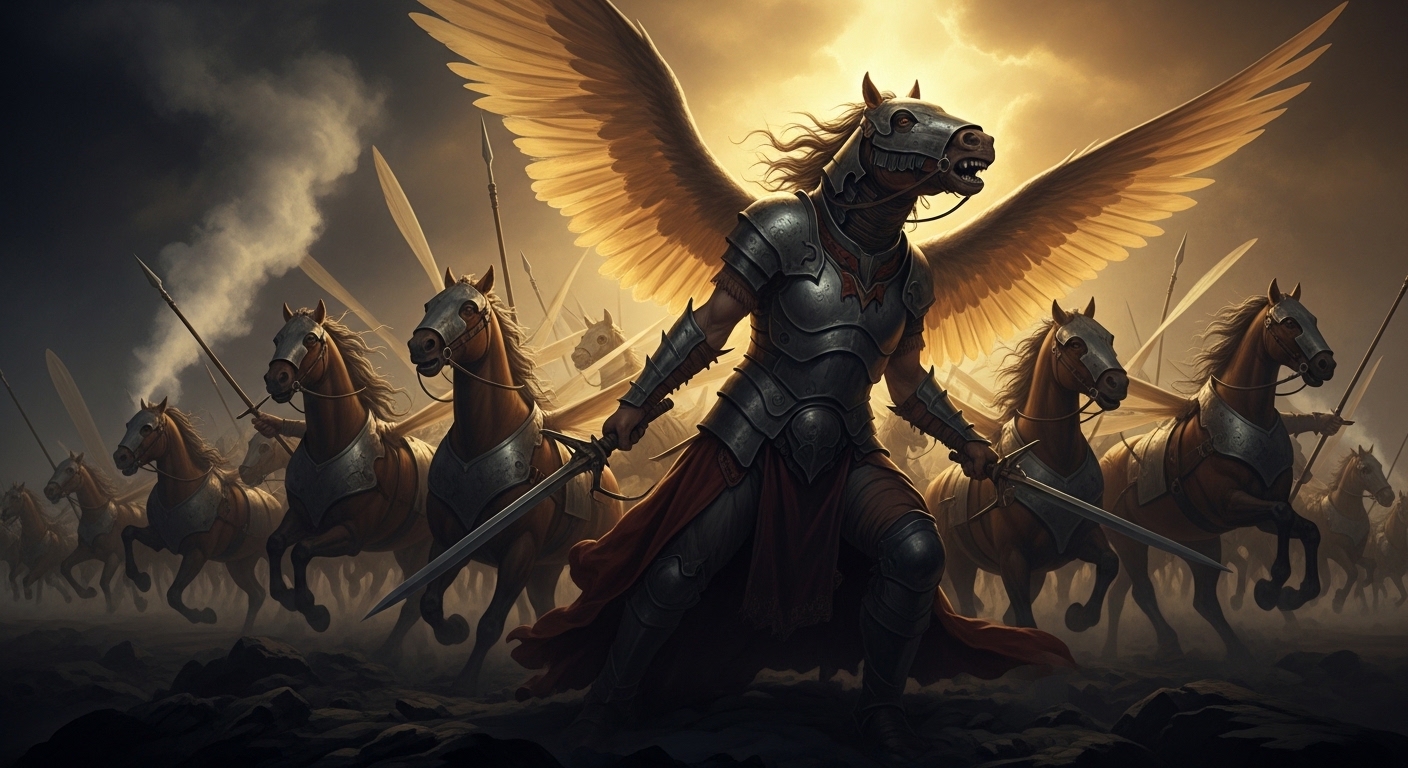
The description accumulates: they look like horses equipped for war. Their heads wear something like crowns of gold. Their faces are human. Their hair is like women’s hair. Their teeth are like lions’ teeth. Their torsos are armored in iron. The sound of their wings — in one of the most sustained pieces of auditory description in the Bible — is the sound of many chariots and horses rushing to war. Their tails are like scorpion tails, with stingers, and the stings produce the kind of pain that makes the afflicted wish for death, though death flees from them.
Their king is named.
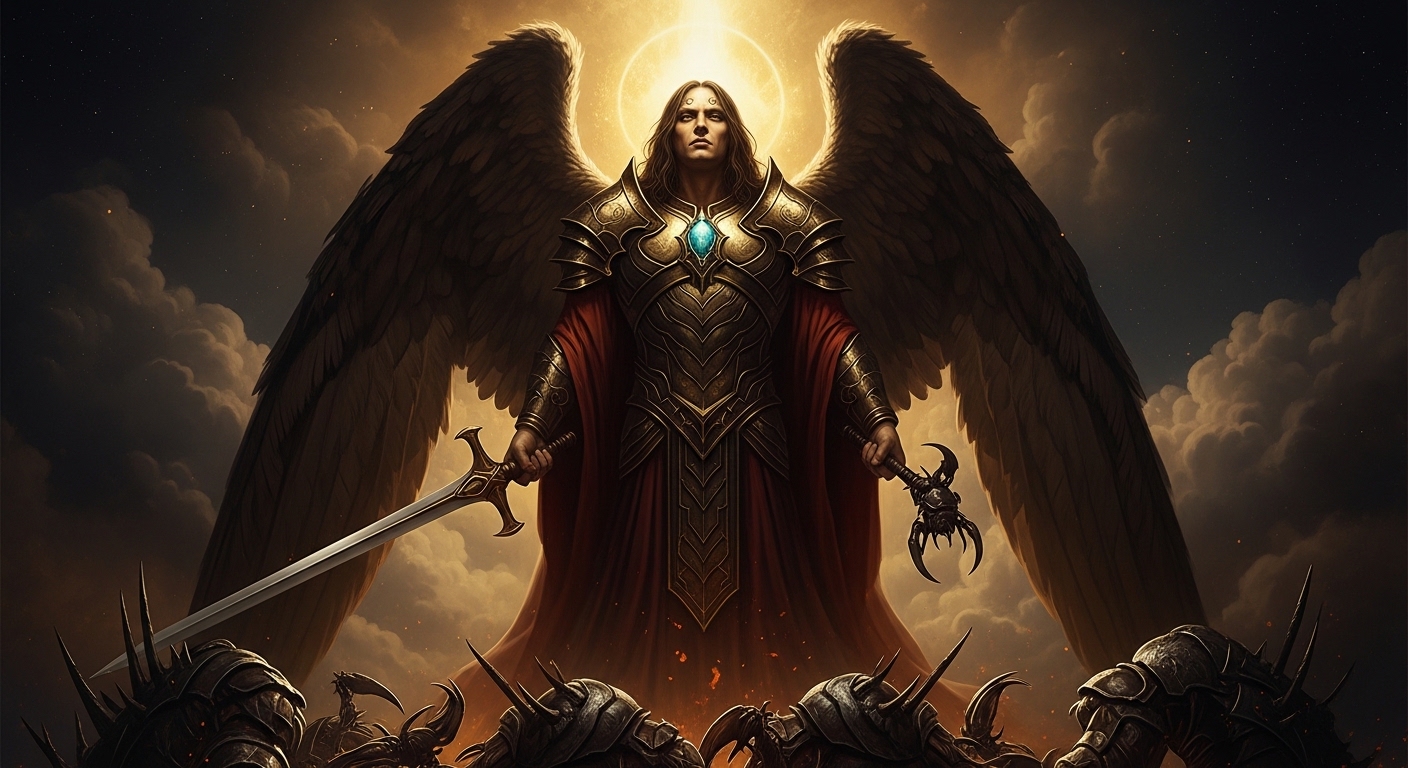
They have as king over them the angel of the bottomless pit. His name in Hebrew is Abaddon, and in Greek he is called Apollyon.
Abaddon exists before Revelation as a place-name: the Hebrew word meaning destruction, ruin, the place of ruin — parallel to Sheol, the realm of the dead. In Job 26:6, “Abaddon is naked before God.” In Proverbs 15:11, “Sheol and Abaddon lie open before the Lord.” In the Old Testament usage, Abaddon is not a person but a location: the deepest, most destructive aspect of the underworld.
Revelation makes him a person. Or names the person of a place.
This is theologically ambiguous, and the text leaves the ambiguity intact. Is Abaddon a fallen angel, a demon king, an evil intelligence? Or is he — as some early Christian interpreters argued — an angel executing divine judgment, a functionary of the destruction that is authorized from above? The passive grammar returns: he is given a key; his locusts are permitted five months. Permission implies a permitter. The chaos has a ceiling.
The five months end.
The sixth trumpet sounds, and what comes out of that is different — the four angels bound at the Euphrates are released, and their army kills a third of humanity. The sequence of trumpets escalates in a pattern that suggests the locusts of Abaddon were the warning shot: pain without death, torment without final consequence, a limited window in which the creatures of the Pit demonstrate what they can do and are then recalled.
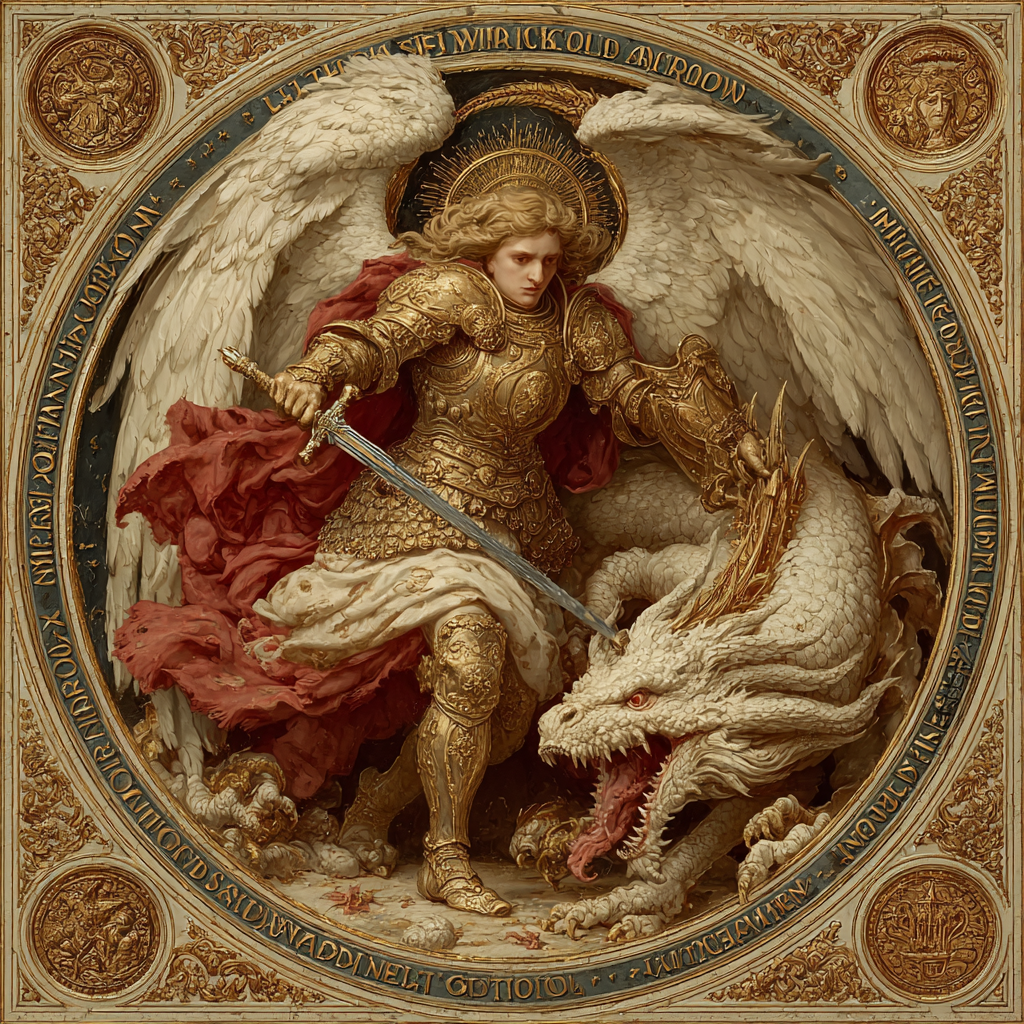
Abaddon appears once more in Revelation, in the twentieth chapter, but without that name: an angel descending from heaven with a great chain and the key to the bottomless pit — the same key, presumably — to bind the dragon for a thousand years. The one who opens the Pit and the one who closes it may or may not be the same figure. Revelation does not clarify. It has spent twenty chapters being unwilling to simplify the relationship between divine authority and the instruments of destruction, and it declines to simplify it at the end.
What Abaddon represents is not destruction for its own sake.
He is the personified limit of judgment: the point at which divine anger, expressed through chosen instruments, reaches its permitted boundary and stops. The five months are not unlimited. The locusts cannot kill. They are confined to those without the seal of God. Every parameter is specified, every limit defined. The terrifying thing about Abaddon’s locusts is not that they are chaotic — it is that they are precise.
The Destroyer destroys what he is told to destroy.
For exactly as long as he is permitted.
And then the trumpet sounds again.
Scenes
Echoes Across Traditions
Entities
Sources
- Revelation 9:1-11 (the Fifth Trumpet)
- Revelation 20:1-3 (the angel and the bottomless pit)
- 1 Enoch 18:11-19:2 (the Prison of the Fallen Stars)
- Book of Job 26:6; Proverbs 15:11 (Abaddon as place-name)
- Pseudepigrapha: Testament of Solomon; Apocalypse of Abraham