Al-Khiḍr and the River That Gives Eternal Life
mythological time — pre-Islamic narrative, integrated into Islamic tradition by the early Abbasid period · The Land of Darkness — the mythological region beyond the furthest east where the Water of Life flows beneath a black spring
Contents
Al-Khiḍr finds the Water of Life in the Land of Darkness and drinks from it, becoming the one mortal being in Islamic tradition who has escaped death — he who is always green, always appearing, always gone before you can hold him.
- When
- mythological time — pre-Islamic narrative, integrated into Islamic tradition by the early Abbasid period
- Where
- The Land of Darkness — the mythological region beyond the furthest east where the Water of Life flows beneath a black spring
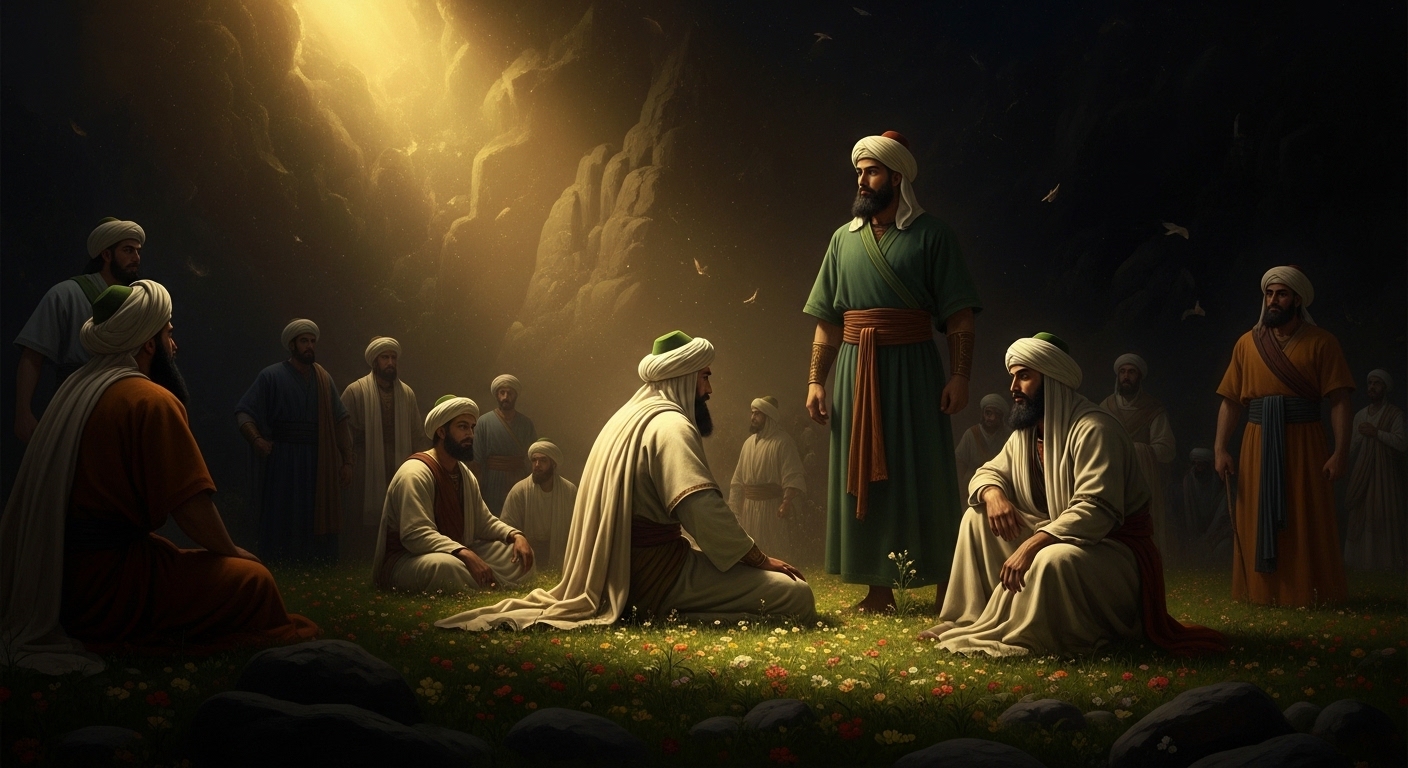
The expedition enters the Land of Darkness before dawn.
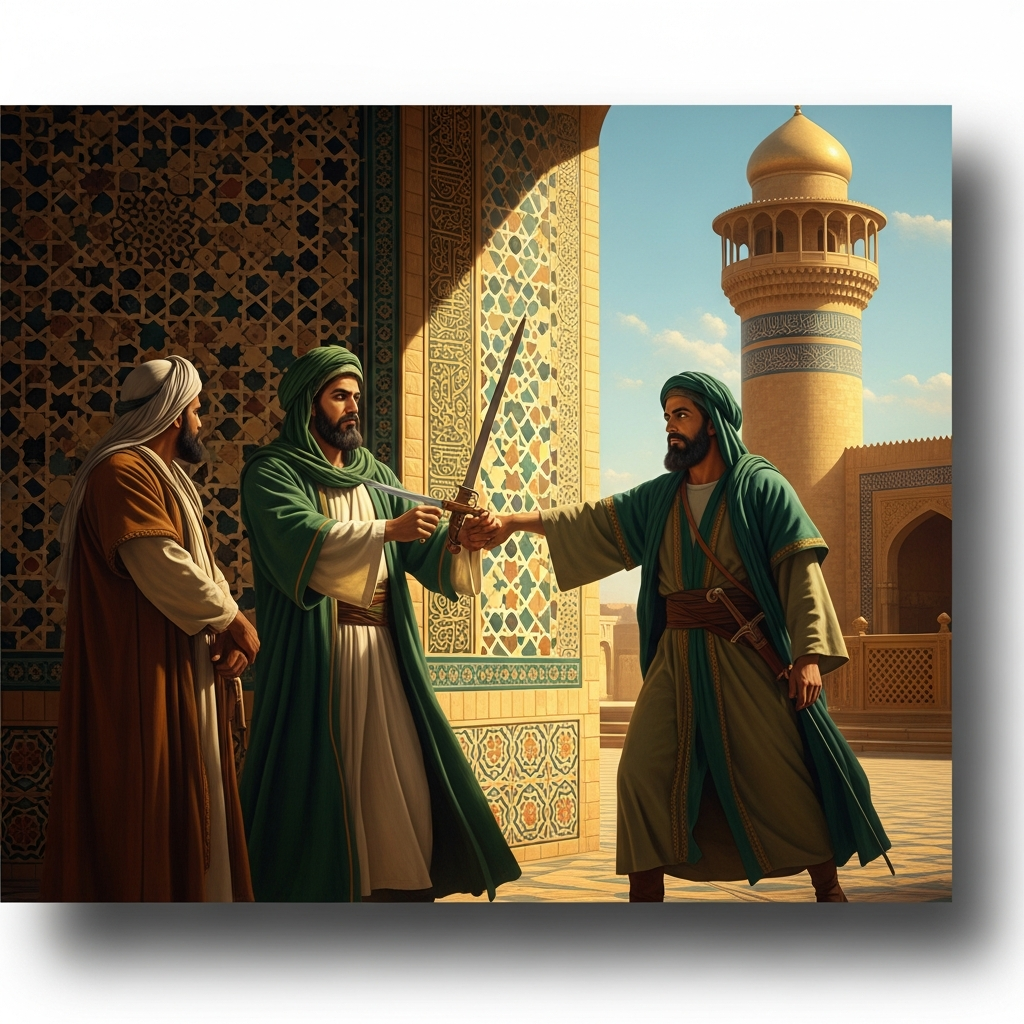
Alexander the Great — called Dhū’l-Qarnayn, the Two-Horned One, in the Islamic narrative traditions — has been told by a wise elder: at the farthest boundary of the world, where the sun has never shone, there is a spring. Whoever finds it and drinks is freed from death. Alexander organizes an expedition of chosen followers, and among them is the one who will actually find the water.
His name in this story is al-Khiḍr.
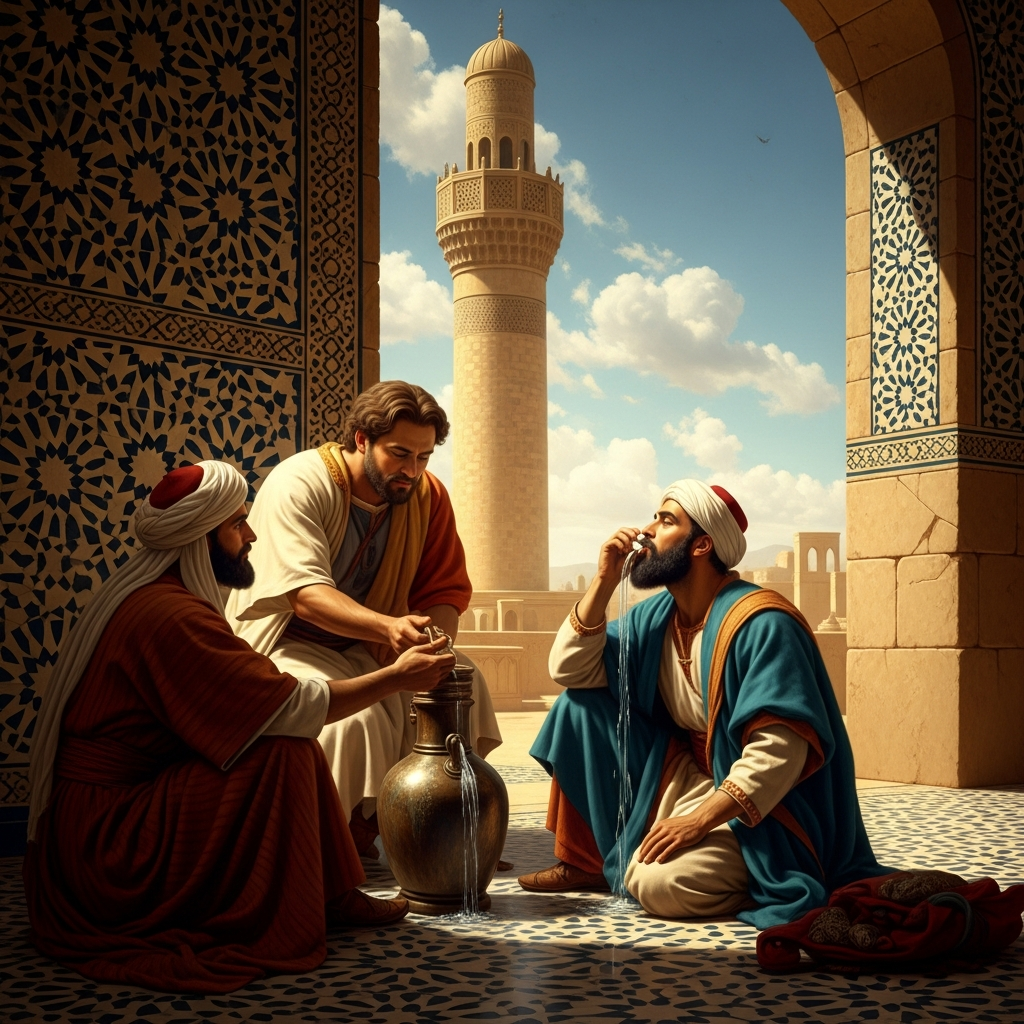
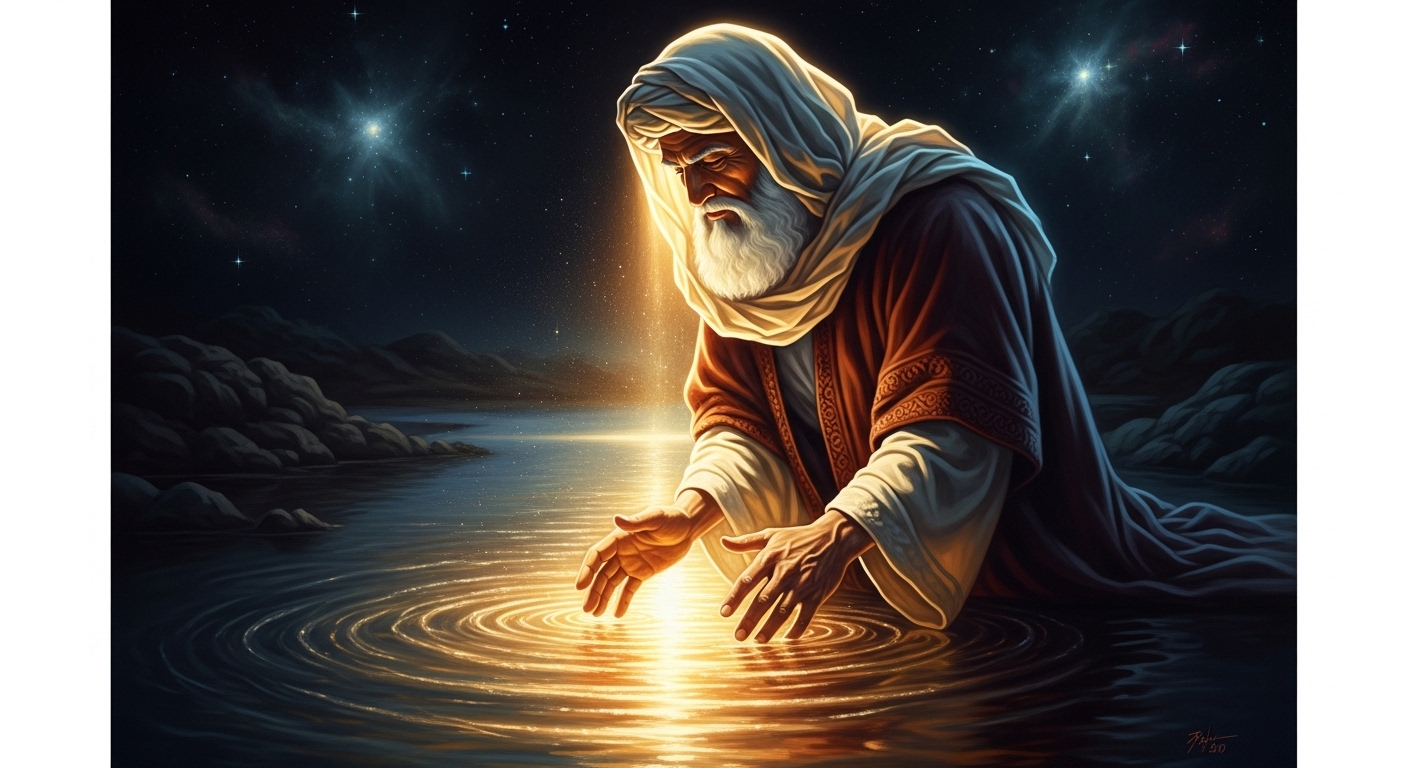
He is ahead of the main column — a scout or a water-finder, by some accounts a vizier, by others simply the one who was destined to be there. He follows the smell of water through absolute darkness. He reaches the spring and drinks. He fills his container. He turns to bring it back to Alexander.
Alexander, in most versions of the story, never reaches the spring. He arrives too late, or takes a wrong path, or is delayed by his retinue. The water-carrier who found it has already drunk. The spring has sealed itself. The one mortal who was destined to drink has drunk.
Alexander can conquer the known world. He cannot find the spring.
Al-Khiḍr is already gone from where he was.
The name Khiḍr means the green one. In some accounts he is called this because wherever he sits, the ground beneath him turns green and flowers. In other accounts he carries the greenness within him — he is hayy, alive, in a way no other mortal is, and the life in him overflows into the world around him. The color green is the color of paradise in Islamic imagery, the color of the Prophet’s standard, the color of life in a desert landscape where life is a miracle.
He appears in the Quran in Sura 18 — without being named, as the servant of God whom Moses accompanies and cannot understand. He is named in the Hadith literature and given his biography and immortality in the later commentarial tradition. By the time of the Sufi masters, he is an established figure: the immortal guide who appears to seekers who are genuinely lost and who need a teaching that no human living teacher can provide.
The reports of his appearances are among the most persistent in Sufi hagiography. He appears to the traveler who has lost the road in the desert. He appears to the mystic whose teacher has died before transmitting the final initiation. He appears to the scholar who has reached the edge of what books can teach. He appears in a variety of forms — an old man, a young man, a stranger at the door, a voice from behind — and he stays long enough to give the one piece of knowledge needed, and then he is gone.
The theological function of his immortality is not biographical. It is structural.
The chain of transmission — silsila — is the backbone of Sufi institutional life. Every legitimate Sufi order traces its lineage from master to student all the way back to the Prophet, with the understanding that the initiatic transmission, the baraka or blessing, is carried person to person across the generations. The chain must not break. If a teacher dies before transmitting to a student, the student’s access to the tradition is compromised.
Al-Khiḍr is the suture in this chain. He is the one who can appear to the student whose human teacher is dead or unreachable, and transmit directly what would otherwise be lost. Several of the most important Sufi figures — including Ibn ʿArabī, in his own account of his spiritual formation — report direct instruction from Khiḍr at crucial moments when no human teacher was available.
He is not a substitute for the human teacher. He is the guarantee that the teaching itself is never orphaned. The divine source from which all initiation flows does not die. When the human carriers of that source die, the source finds another way.
Alexander, in the legend, grows old and dies like every other king.
He conquered Persia, India, the edge of the known world. He found the Land of Darkness. His expedition included the one who would reach the spring. But Alexander himself was not destined to drink.
The scouts go ahead. The generals wait.
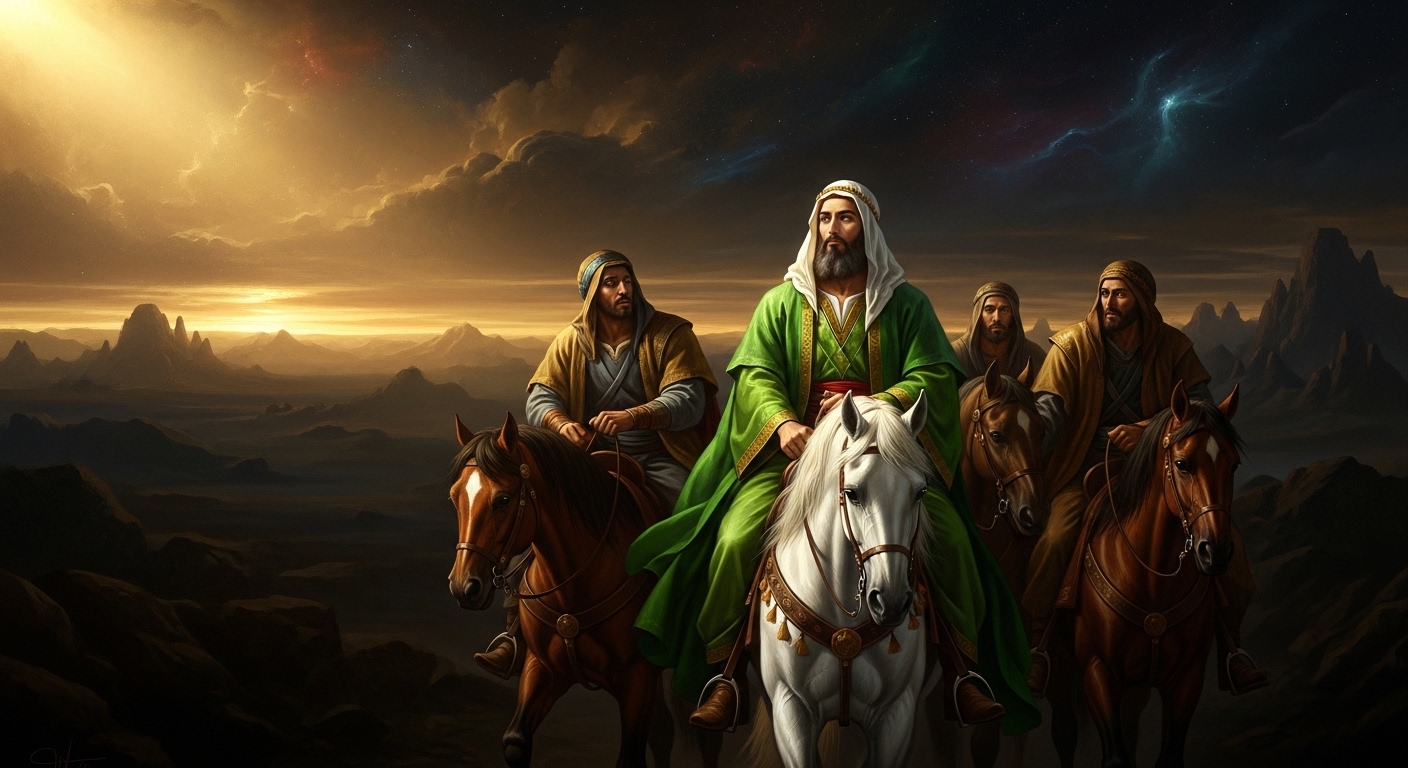
Al-Khiḍr is still ahead of every column that has ever marched. He drank in the darkness before the sun rose. He knows all the roads. He appears when the road is gone.
He is green. He is alive. He is not here and then he is.
Scenes
Echoes Across Traditions
Entities
- Al-Khiḍr
- Alexander the Great (Dhū'l-Qarnayn)
- Elijah
Sources
- Al-Tabari, *History of the Prophets and Kings* (Tarikh al-Rusul wa'l-Muluk), 9th century
- Al-Kisa'i, *Tales of the Prophets* (Qisas al-Anbiya), c. 1000 CE
- Pierre Lory, *Al-Khadir, figure du saint prophète* in *Numen* 47 (2000)
- Annemarie Schimmel, *Mystical Dimensions of Islam* (UNC Press, 1975), chapter on Khiḍr