Navigating the Forty-Nine Days Between Death and Birth
applicable at every death — the bardo teaching is timeless and applies to the post-death experience of any being · The bardo — the intermediate state between death and rebirth, experienced by the dying consciousness, described in the Tibetan Book of the Dead
Contents
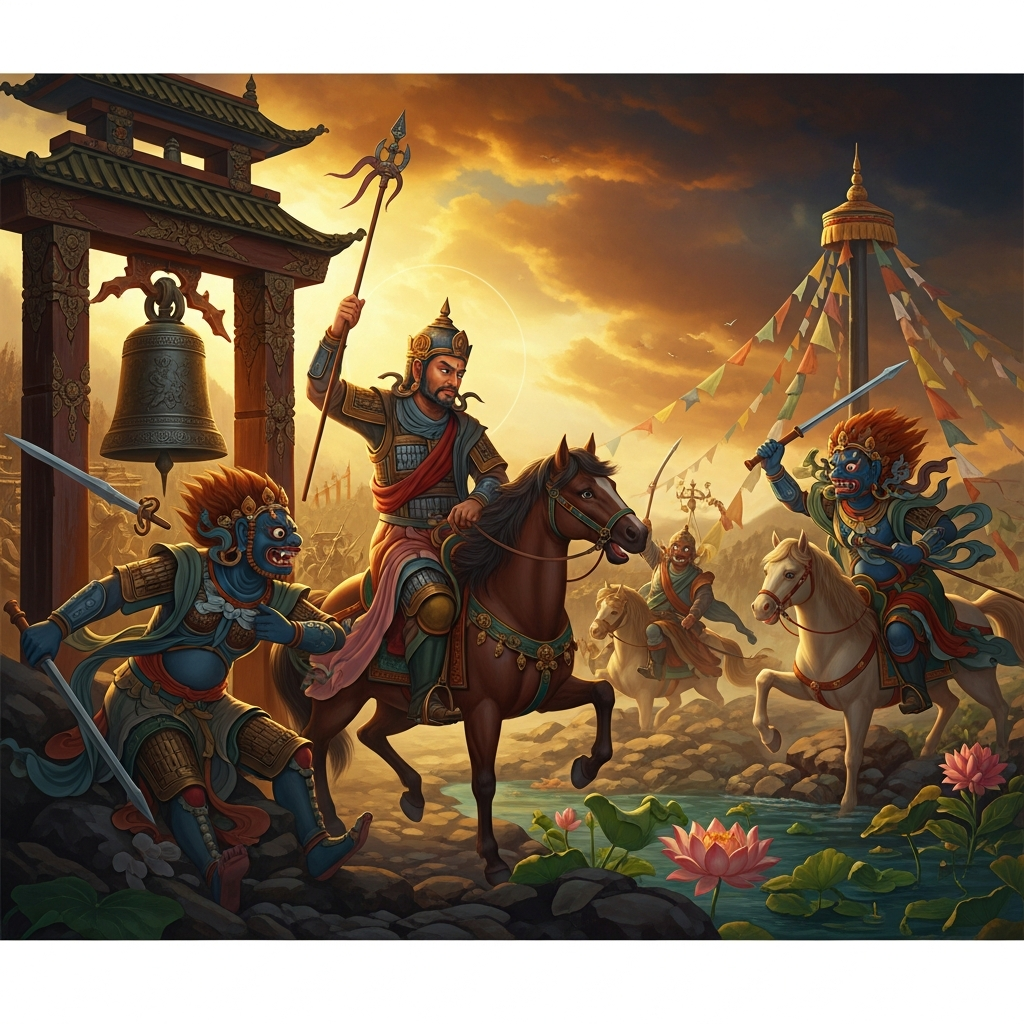
After death, the consciousness travels through the bardo — the intermediate state — encountering peaceful and wrathful deities, lights of various colors, and the accumulated force of its own karma, trying to recognize what it encounters as its own mind's display and thereby achieve liberation.
- When
- applicable at every death — the bardo teaching is timeless and applies to the post-death experience of any being
- Where
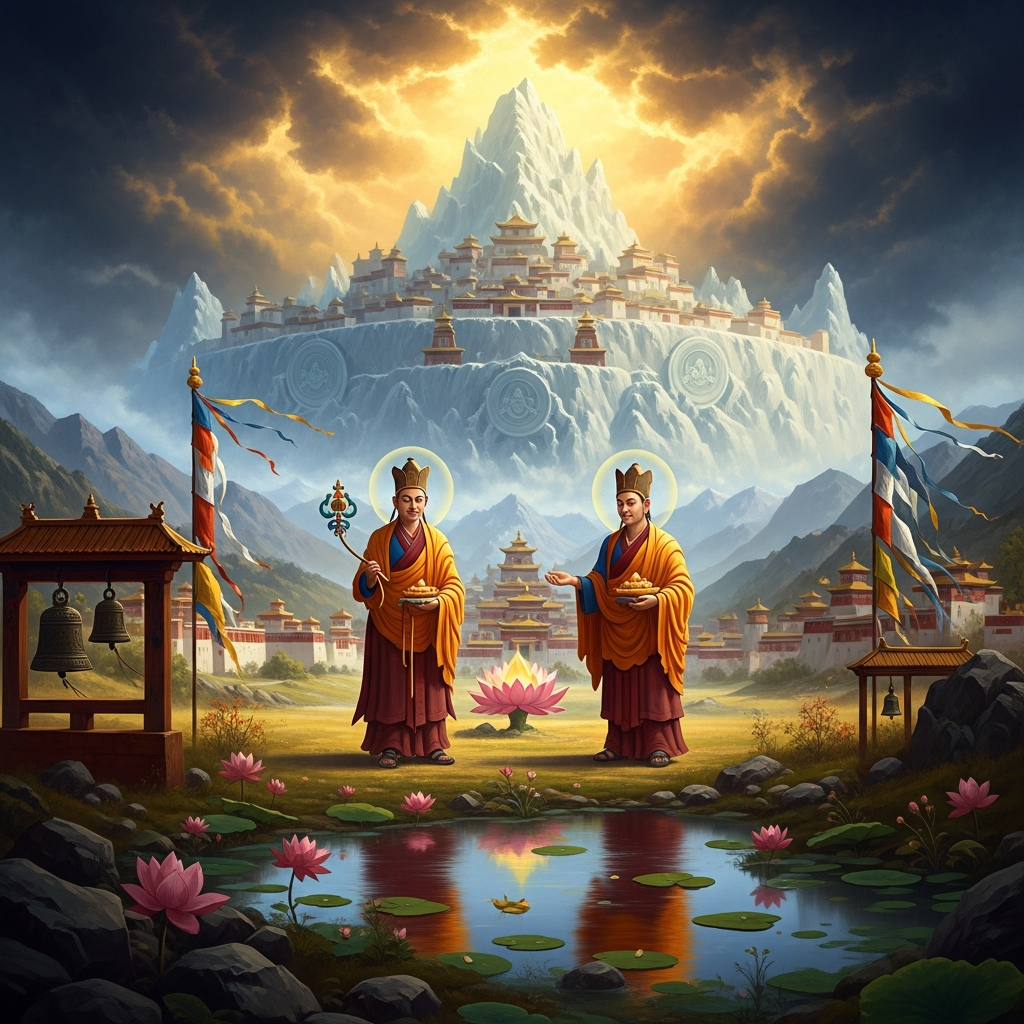
- The bardo — the intermediate state between death and rebirth, experienced by the dying consciousness, described in the Tibetan Book of the Dead
At the moment of death, the clear light appears.
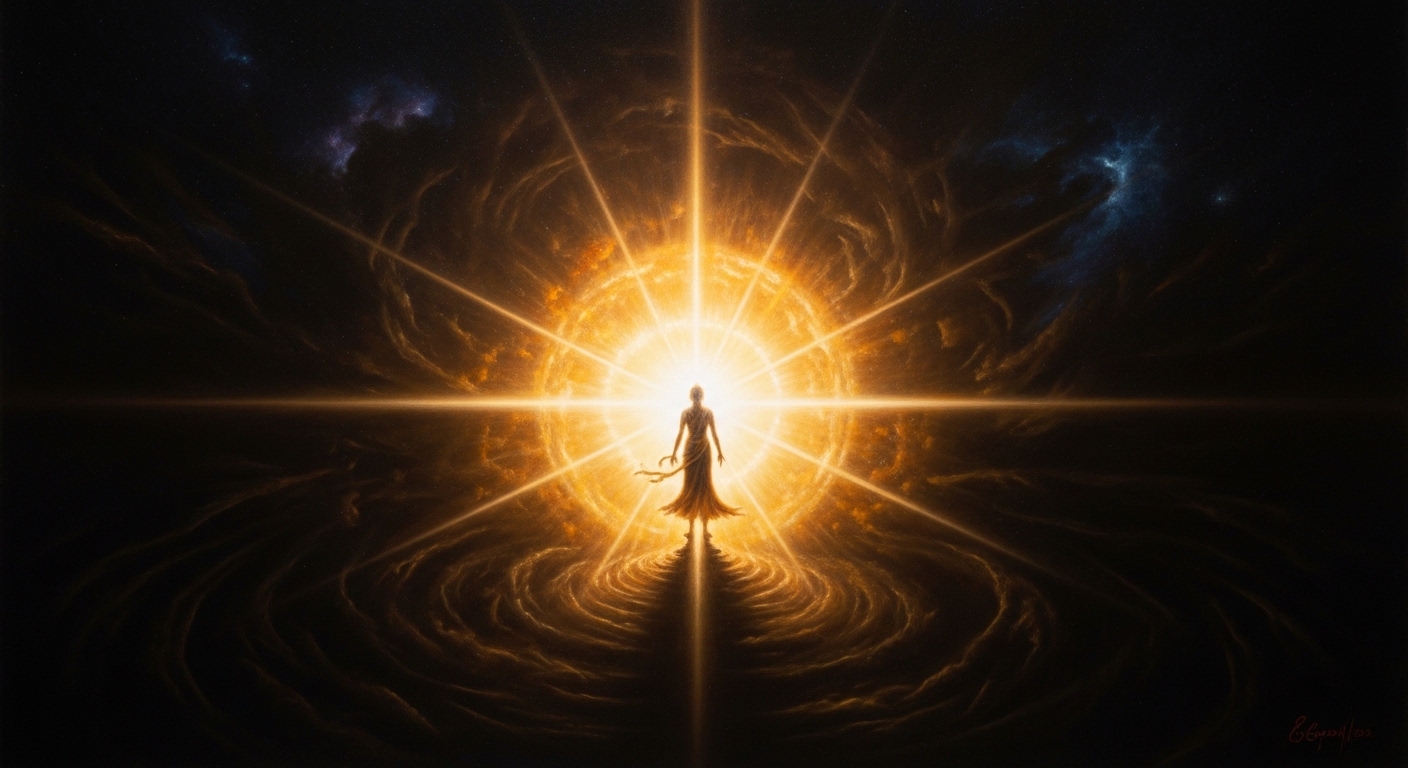
This is the first and most important moment in the entire bardo sequence. The consciousness, freed from the physical body, is greeted by what the Bardo Thodol calls the Dharmata — the fundamental nature of reality — in its most direct and brilliant form: a vast, luminous, empty awareness, the ground of all experience, the nature of mind in its undisguised state.
Most beings do not recognize it.
This is the tragedy and the teaching simultaneously. The clear light that arises at death is the same awareness that was pointed out by the teacher, the same sky that Dzogchen practice trains the practitioner to recognize and rest in. A practitioner who has recognized the nature of mind during life, who has trained the recognition until it is stable — that practitioner, encountering the clear light at death, knows it. They rest in it. The liberation is immediate and complete: no forty-nine days, no journey through the bardo, no rebirth. The liberation they practiced for in life is achieved in the first moment of death.
For everyone else, the journey begins.
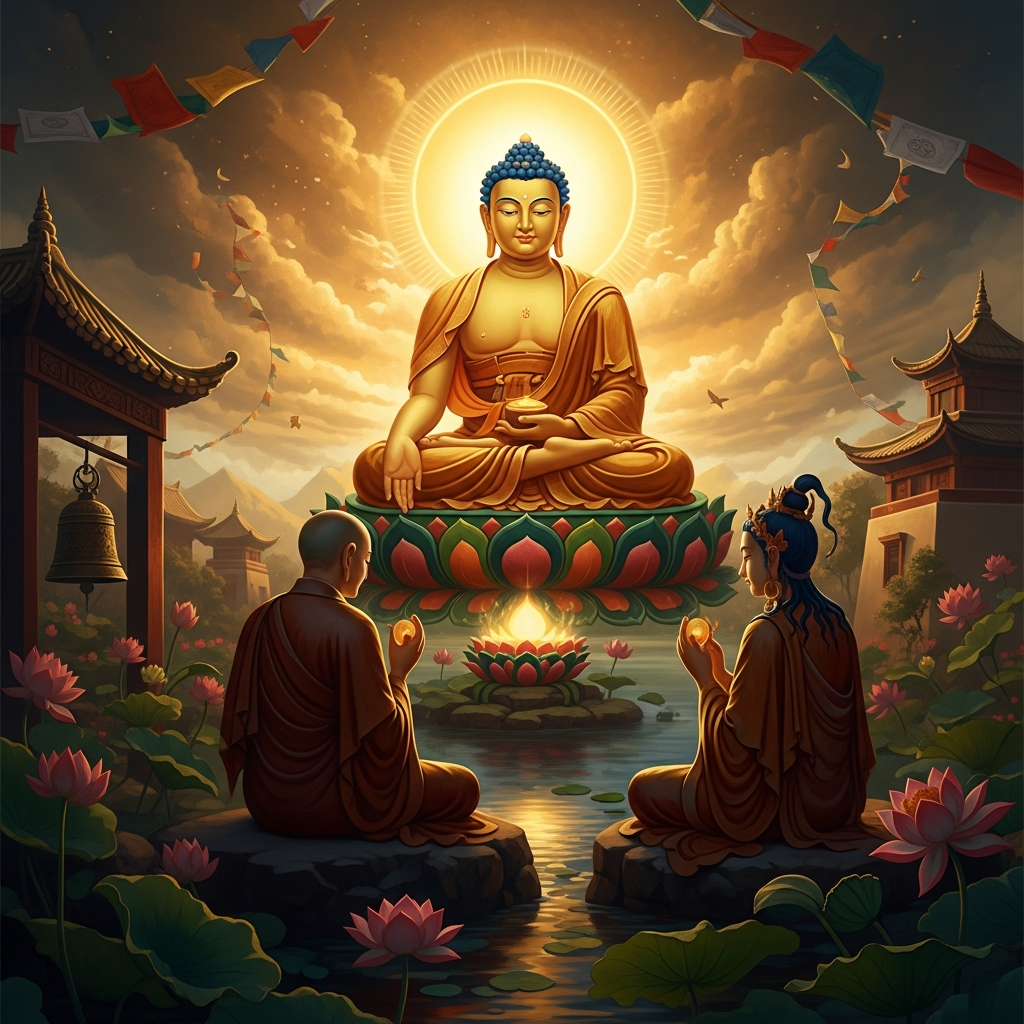
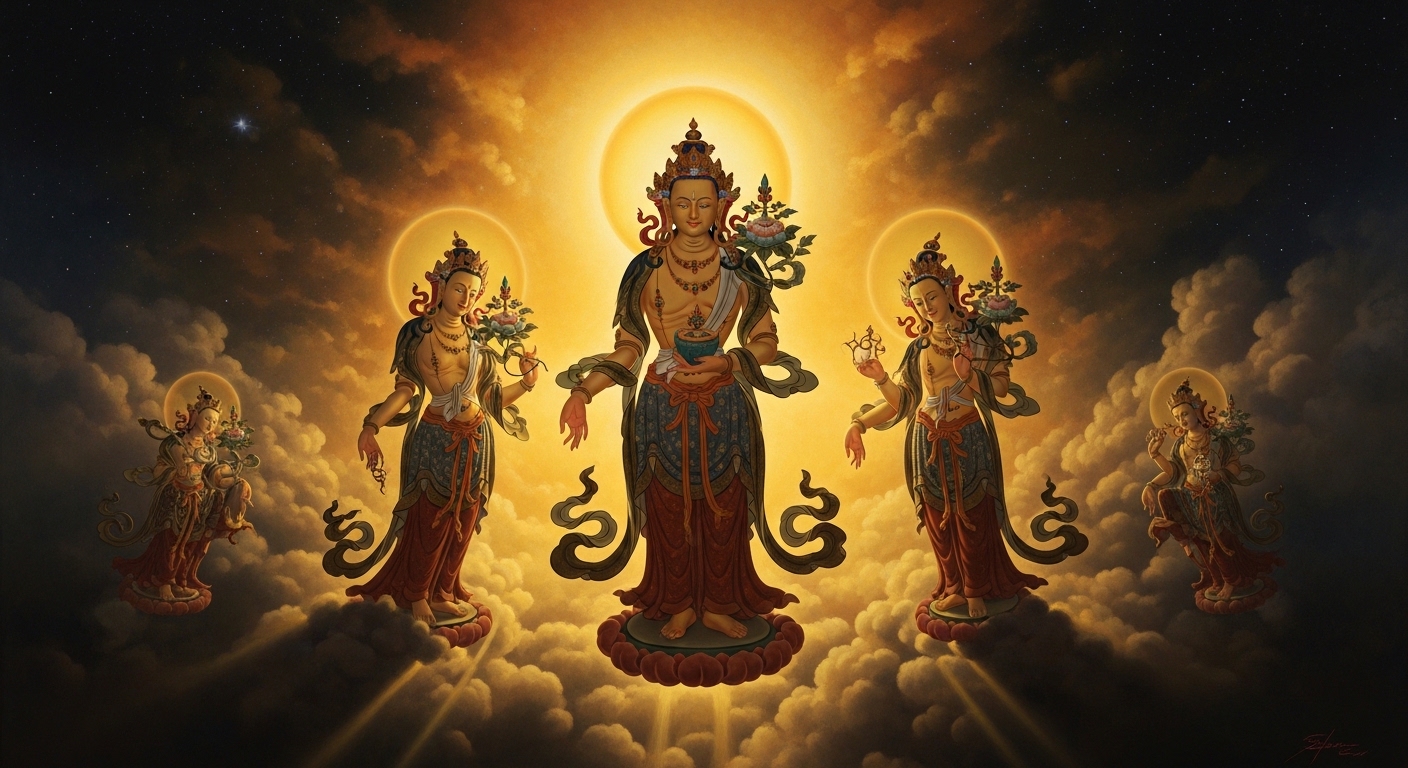
The peaceful deities arrive in the first week.
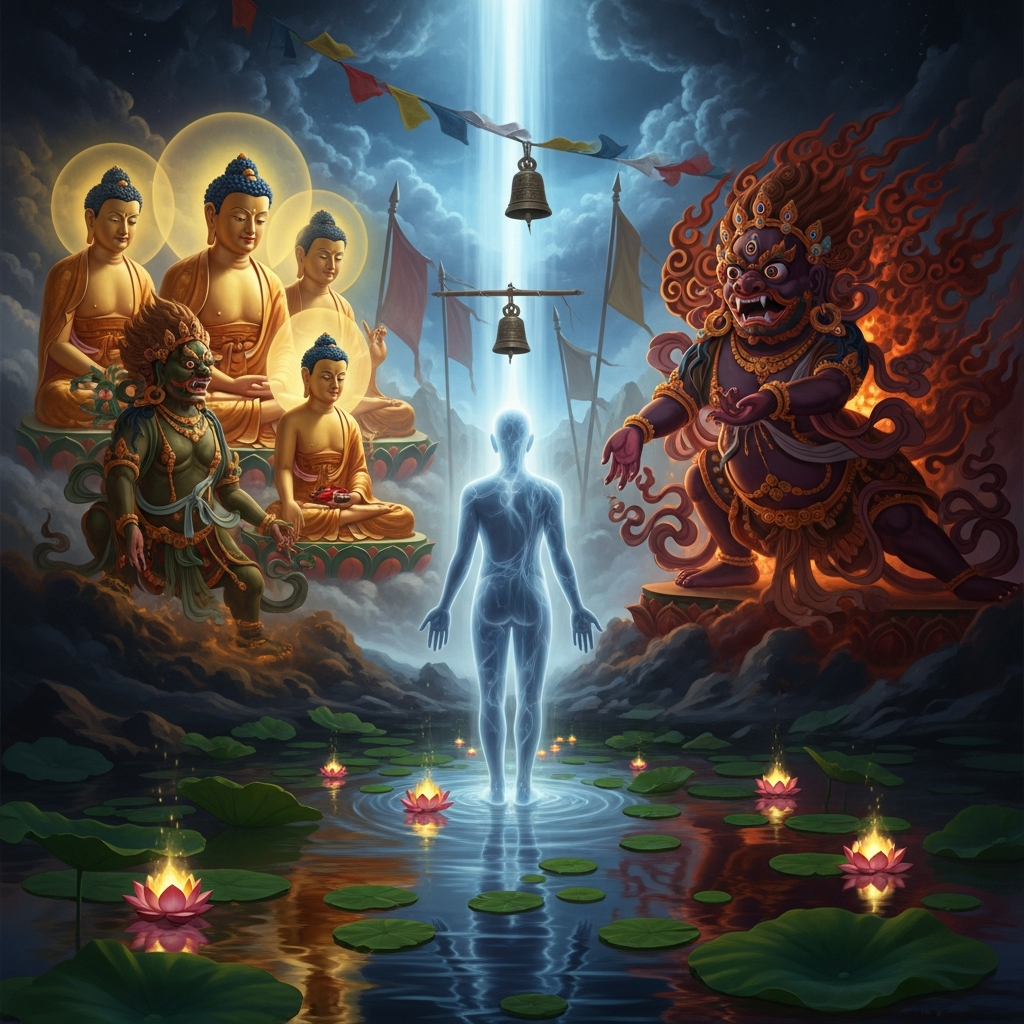
They appear in specific forms, specific colors, specific locations — the Buddha Vairochana in the center, radiating brilliant white light; Akshobhya in the east, radiating blue; Ratnasambhava in the south, radiating yellow; Amitabha in the west, radiating red; Amoghasiddhi in the north, radiating green. Each is accompanied by a consort, by attendant Bodhisattvas, by the full assembly of the peaceful mandala.
Each also appears with a dull, smoky counterpart light — the light of one of the six realms of rebirth. The dull lights are familiar, comfortable, safe-feeling. The brilliant lights of the Buddhas are overwhelming.
The instruction, read aloud to the dying person from the Bardo Thodol, is: recognize the brilliant light. It is your own awareness. The dull light is the siren of the familiar; follow it and you will be pulled toward rebirth in one of the realms. The brilliant light is liberation; allow yourself to be dissolved in it rather than flinching away.
The flinching is the problem. The consciousness, habituated to the solidity of embodied experience, cannot easily release into the infinite space of the brilliant light. It prefers the recognizable.
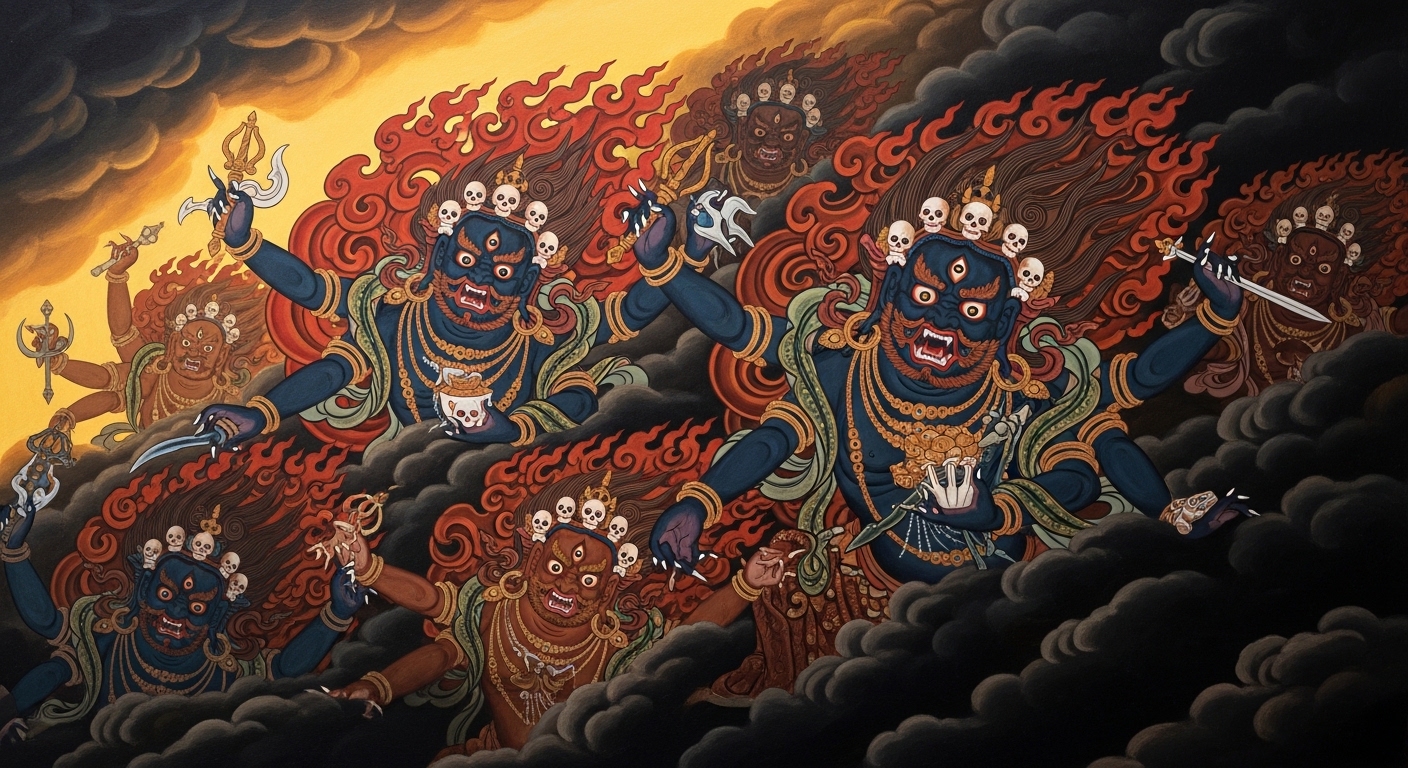
If the peaceful deities are not recognized, the wrathful deities arrive in the second week.
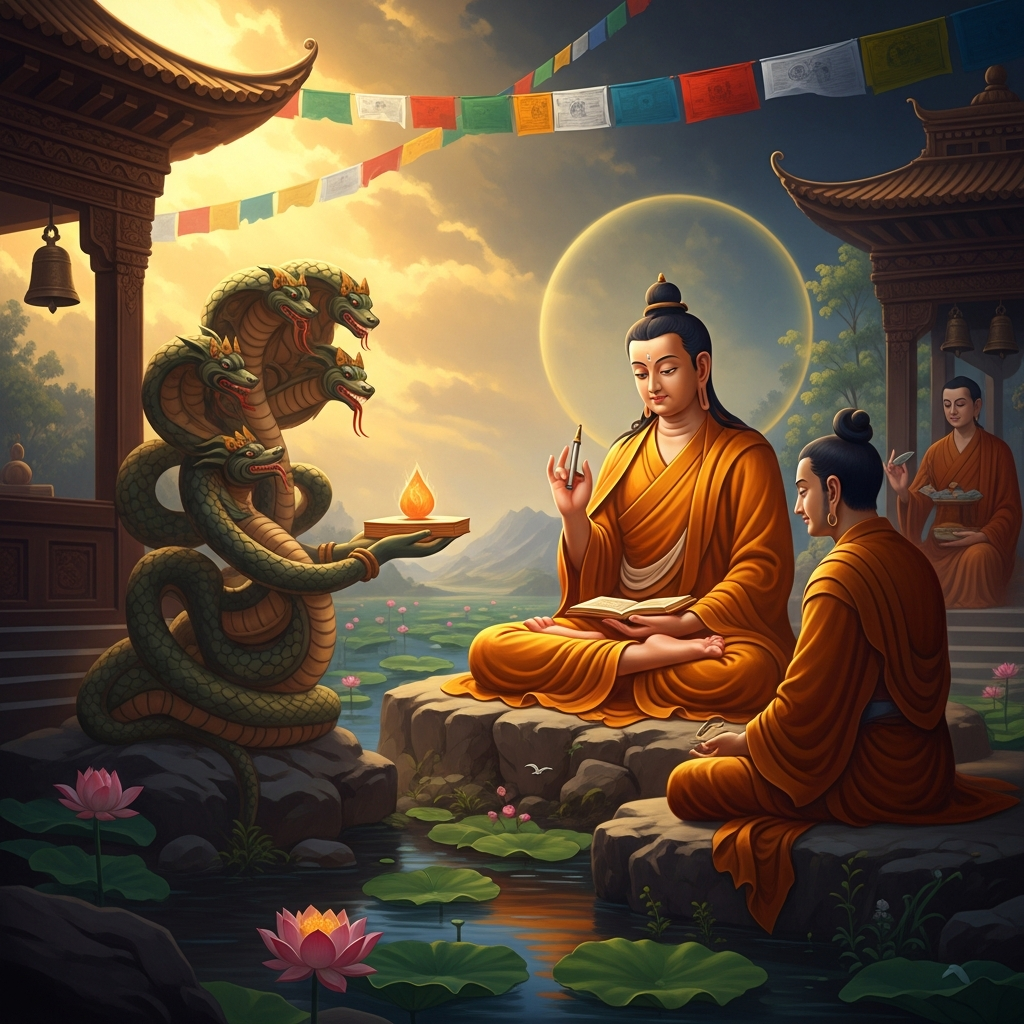
These are the same Buddhas in their wrathful aspect — the same compassion expressed through the forms of confrontation rather than invitation. They are enormous and terrifying: multiple faces, multiple arms, flames, skulls, blood. The Heruka deities of the Dzogchen tradition are here, wrathful and precise.
The instruction is the same: recognize these as your own mind’s display. The terror they inspire is the terror of your own awareness, turning up the volume because the first invitation was ignored. They are not your enemies. They are the most compassionate beings in the universe, appearing in wrathful form because wrathful form is what this moment requires.
The Tibetan Book of the Dead is, at its core, a training manual. The goal is that the practitioner hears it read to the dying enough times, reads it themselves enough times, practices the visualizations enough times in life, that the recognition becomes reflexive. The forty-nine-day map is not a document to encounter only at death — it is a map of the mind encountered every day in practice, so that when the territory appears for real, the territory is already known.
The forty-nine days end in rebirth — in a new womb, a new body, a new forgetting. The map goes back into the rock where Padmasambhava hid it, waiting for the next being who needs it.
Scenes
Echoes Across Traditions
Entities
- the deceased consciousness
- the peaceful Buddhas of the five families
- the wrathful Herukas
- Yama, Lord of Death
Sources
- Chogyam Trungpa and Francesca Fremantle, trans., *The Tibetan Book of the Dead* (Shambhala, 1975)
- Robert Thurman, trans., *The Tibetan Book of the Dead* (Bantam, 1994)
- Sogyal Rinpoche, *The Tibetan Book of Living and Dying* (HarperCollins, 1992)