Contents
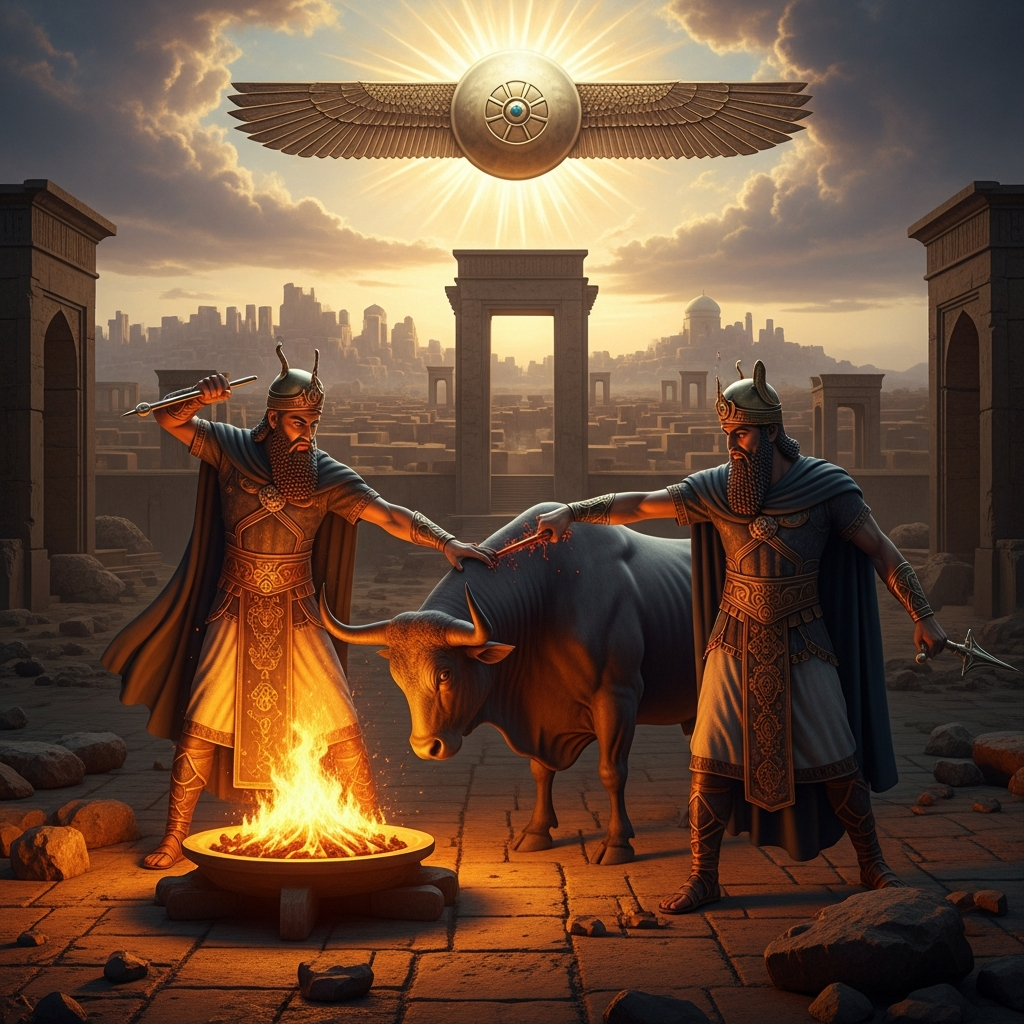
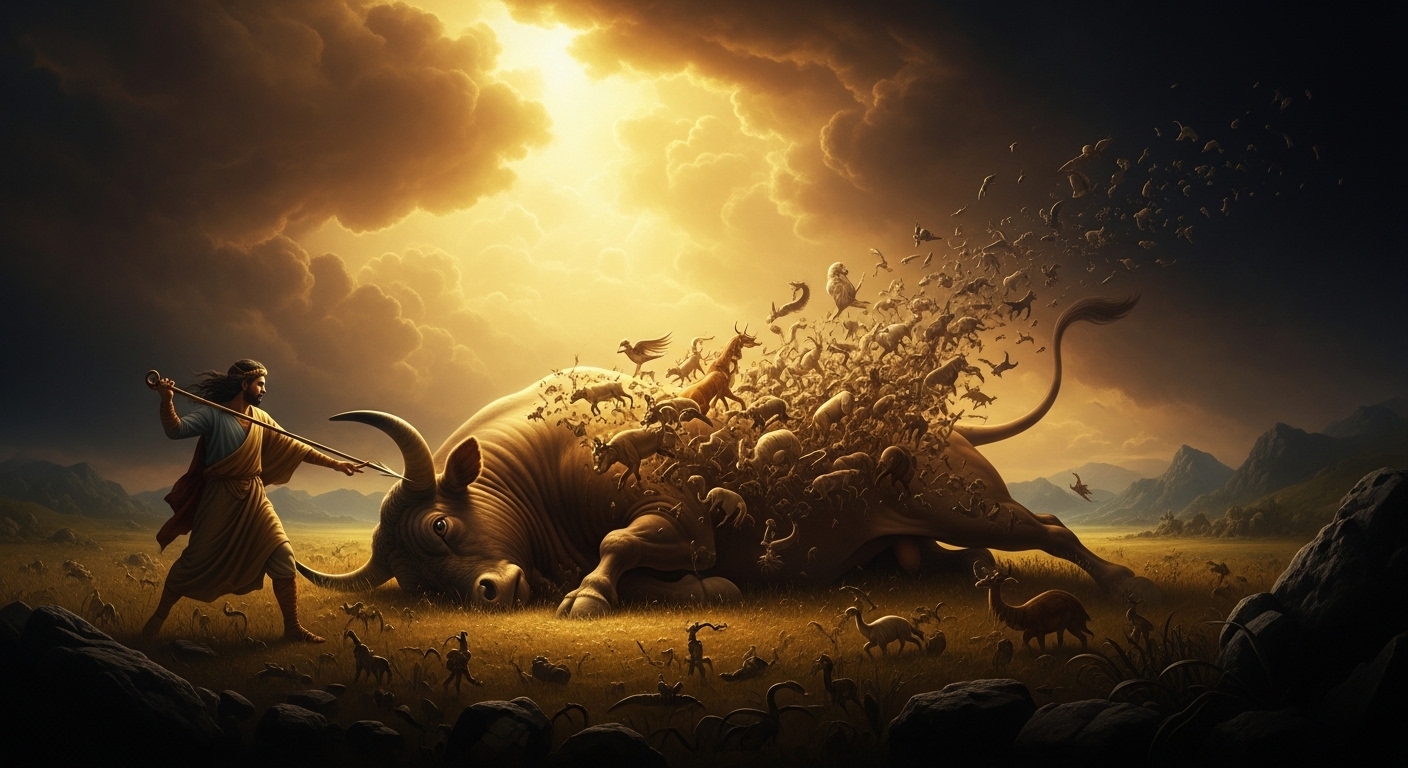
In the beginning, Ahura Mazda created Gavaevodata, the Primordial Bull — the first animal, the source of all life. Angra Mainyu could not tolerate it. His first assault on creation was not cosmic — it was this one animal, in one meadow. From that murder, every living thing that would ever walk the earth descended.
- When
- Mythic time — the primordial conflict, before historical time
- Where
- The first creation — before differentiation of earth
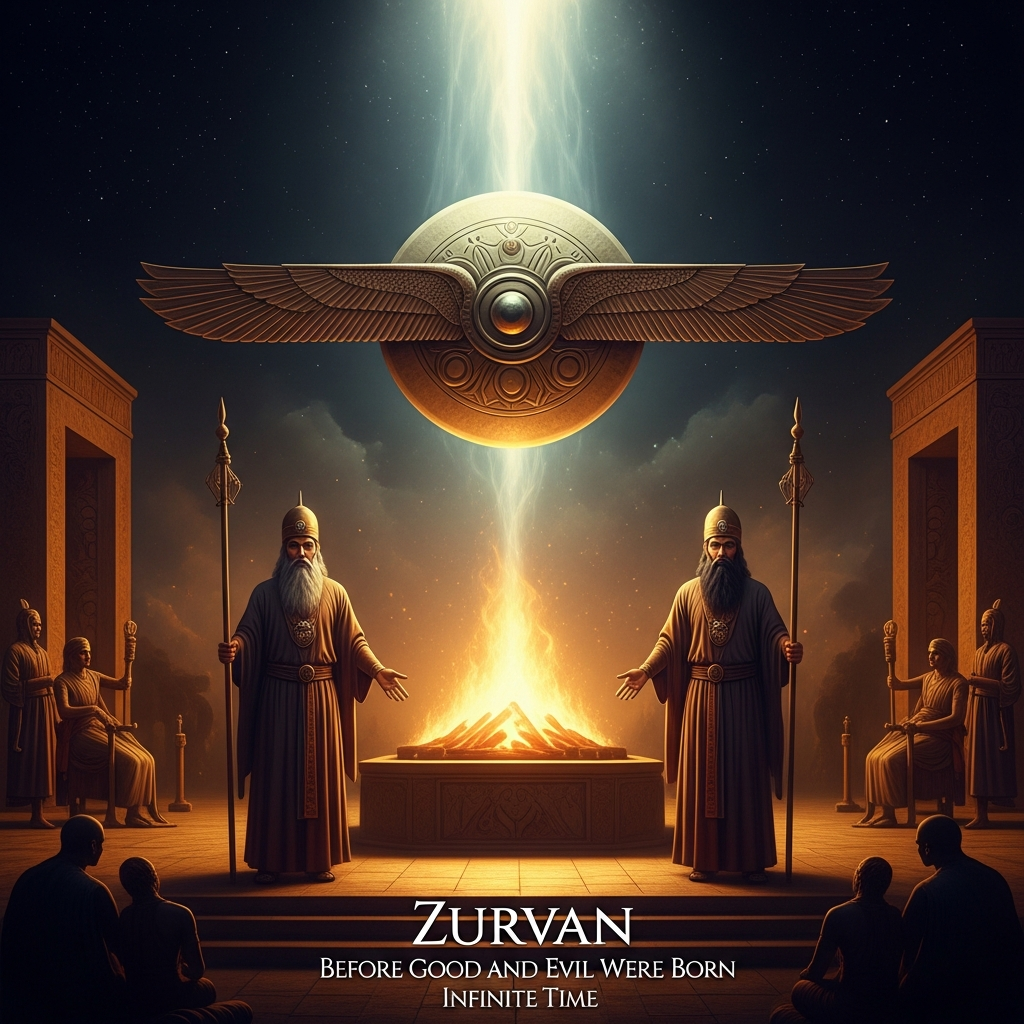
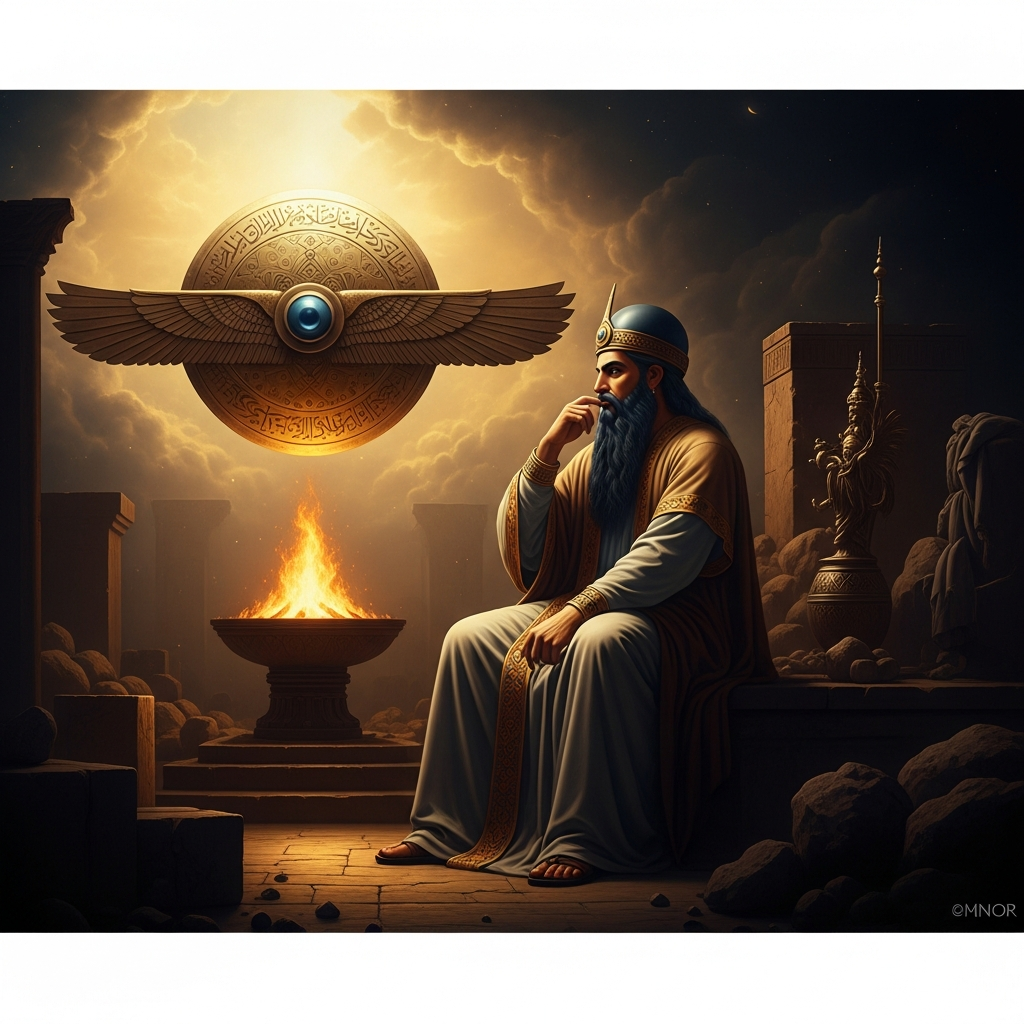
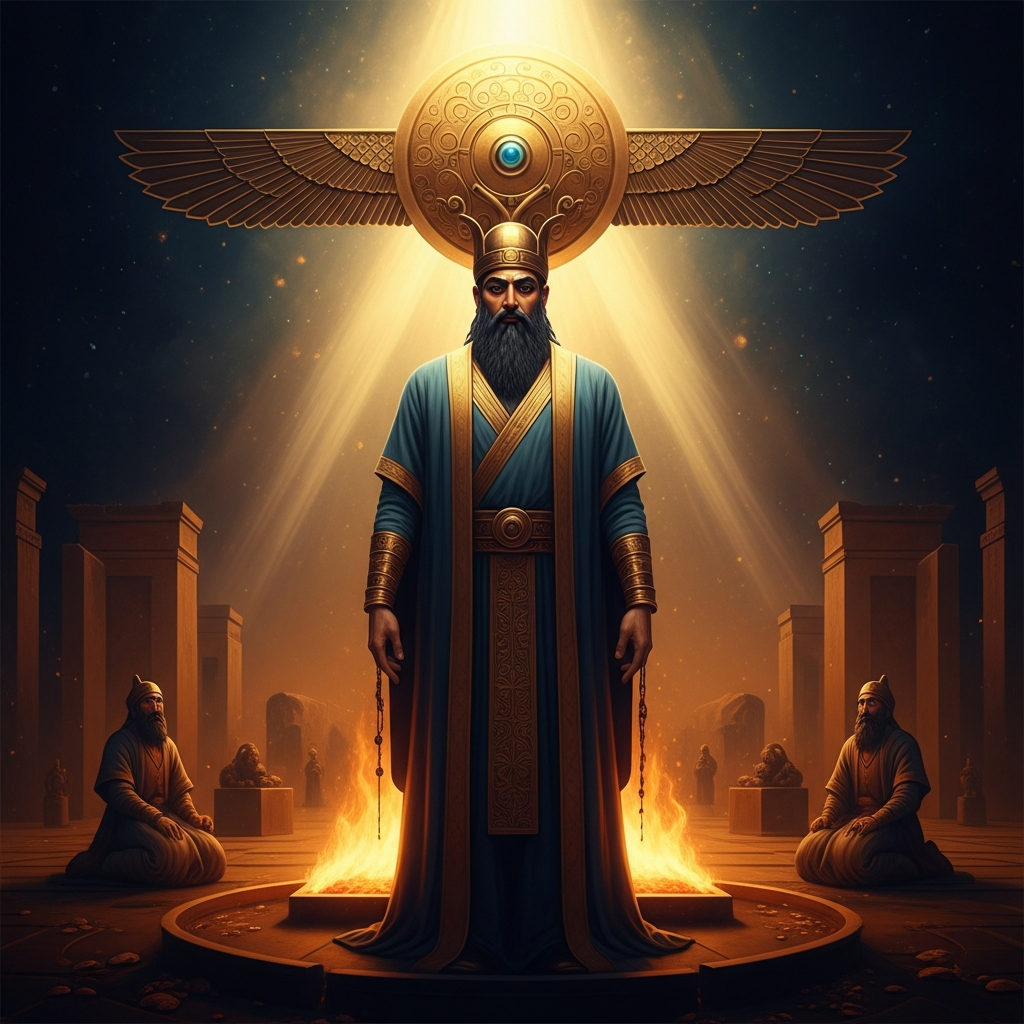
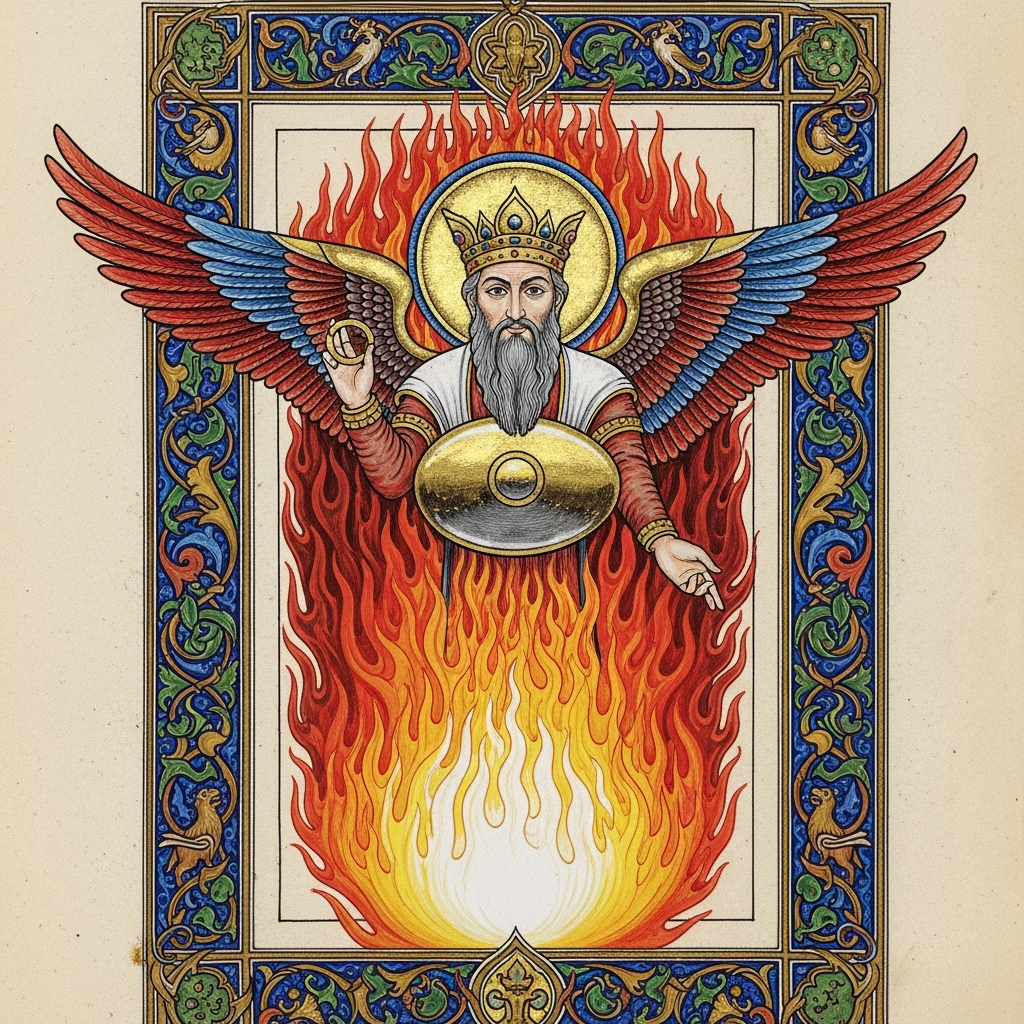
Ahura Mazda thought alone, in the infinite light, and what he thought became real.
This is the Zoroastrian creation: not matter shaped from chaos, not a void separated into sky and earth, but a divine intelligence whose thought was creative — whose conceiving of goodness caused goodness to exist. The Gathas, the oldest hymns of Zarathustra, circle this idea repeatedly: truth (asha) is not a human invention or a social agreement. It is the structure of reality as Ahura Mazda made it, woven into the nature of fire and light and the ordered passage of seasons.
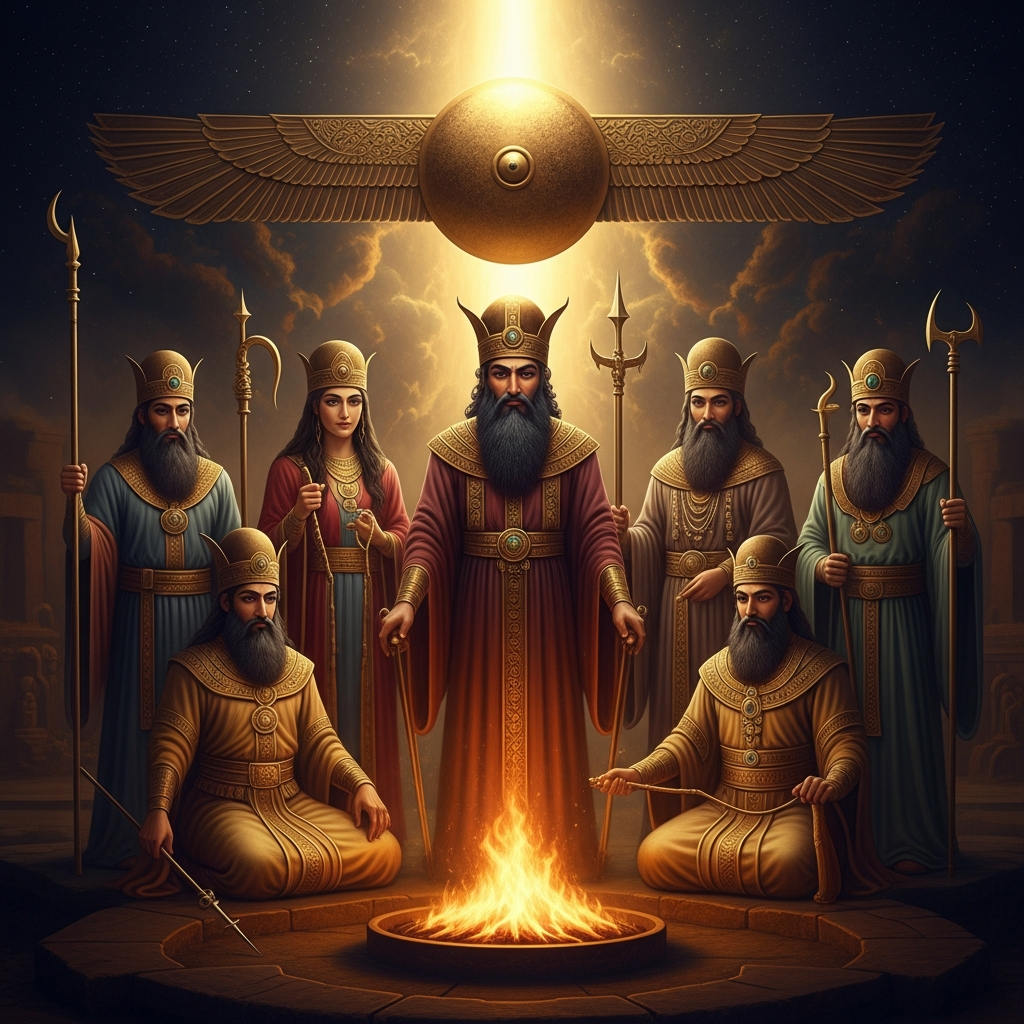
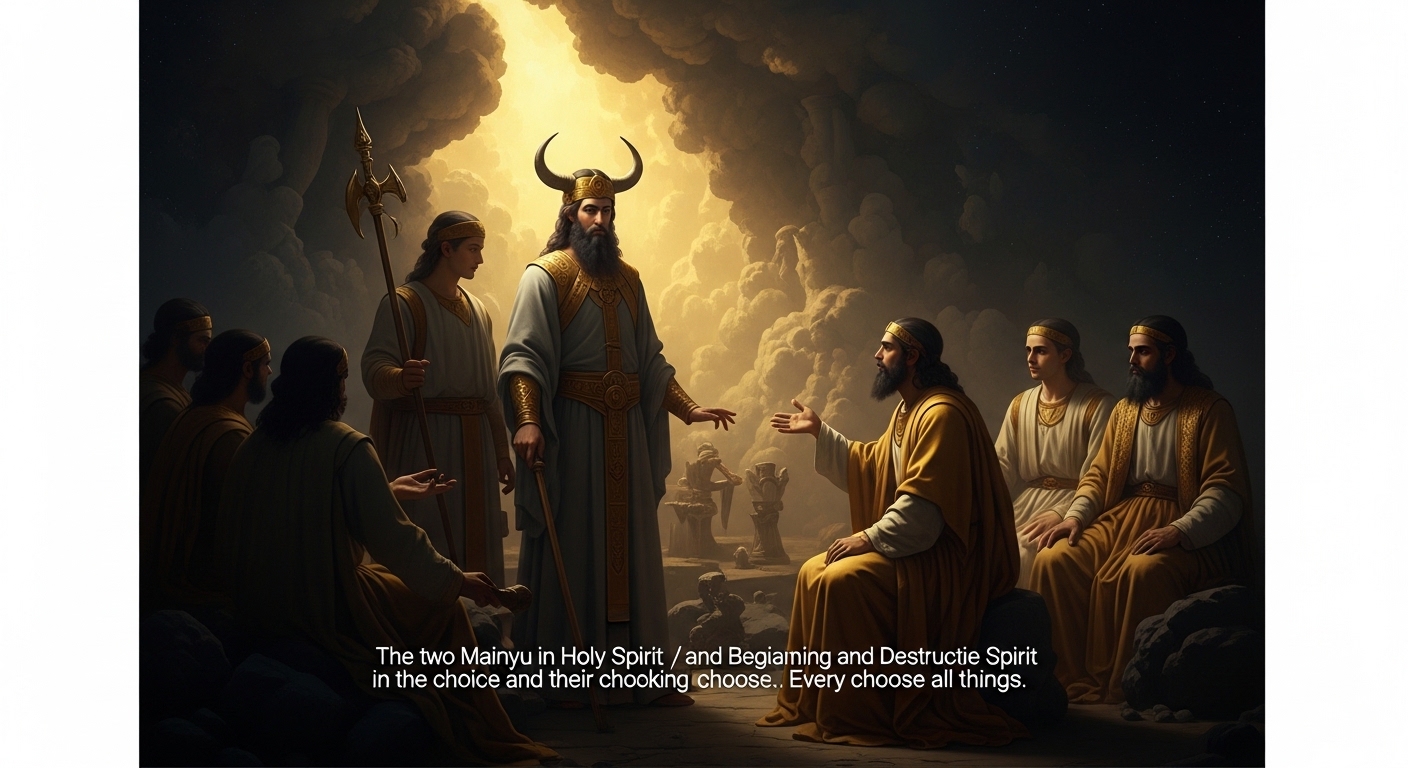
In the beginning were two spirits.
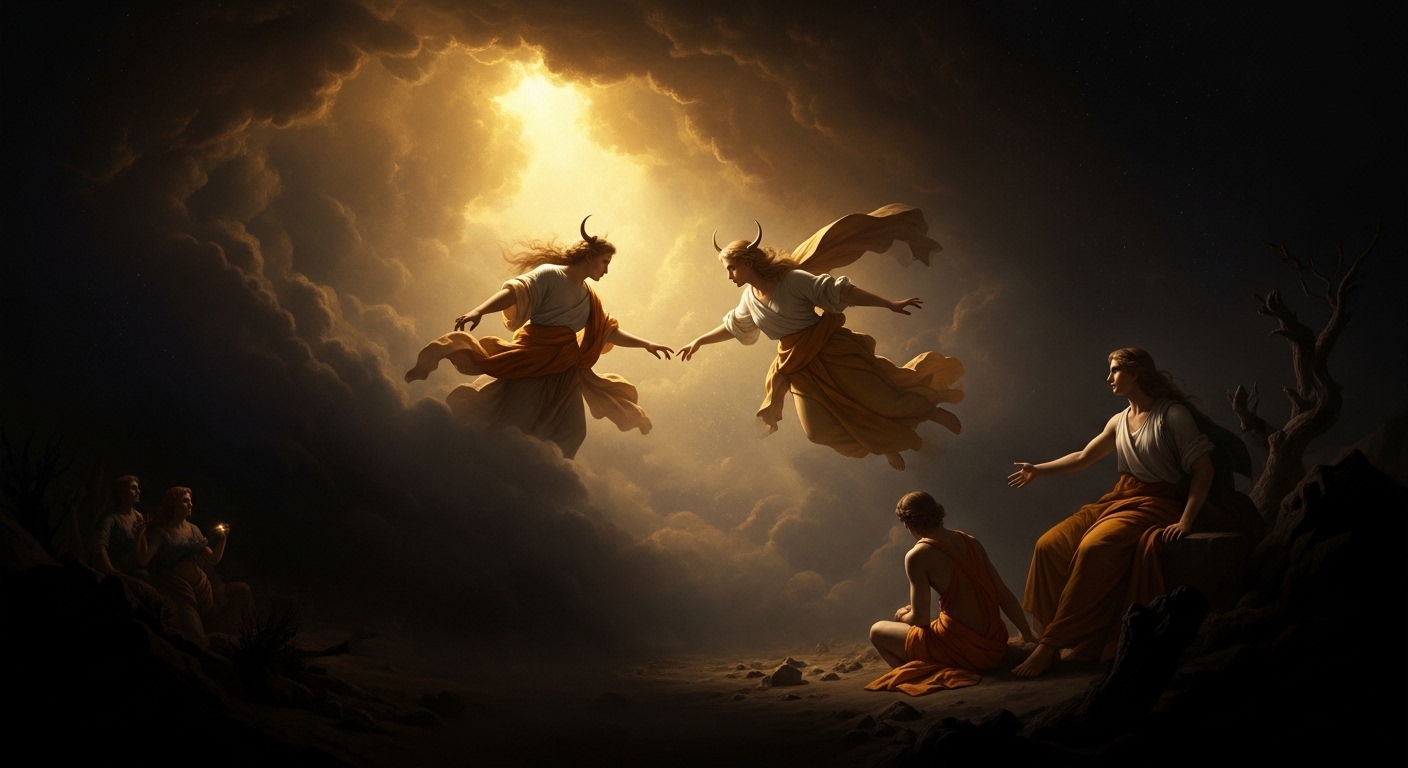
Zarathustra names them Spenta Mainyu and Angra Mainyu — the Holy (Beneficent) Spirit and the Destructive (Hostile) Spirit. They are twins, or near-twins: both primordial, both intelligent, both capable of genuine choice. In the famous verse of Yasna 30, Zarathustra says that in the beginning the two spirits met and each chose: the Holy Spirit chose truth and life; the Destructive Spirit chose lie and death. That choosing is the origin of everything.
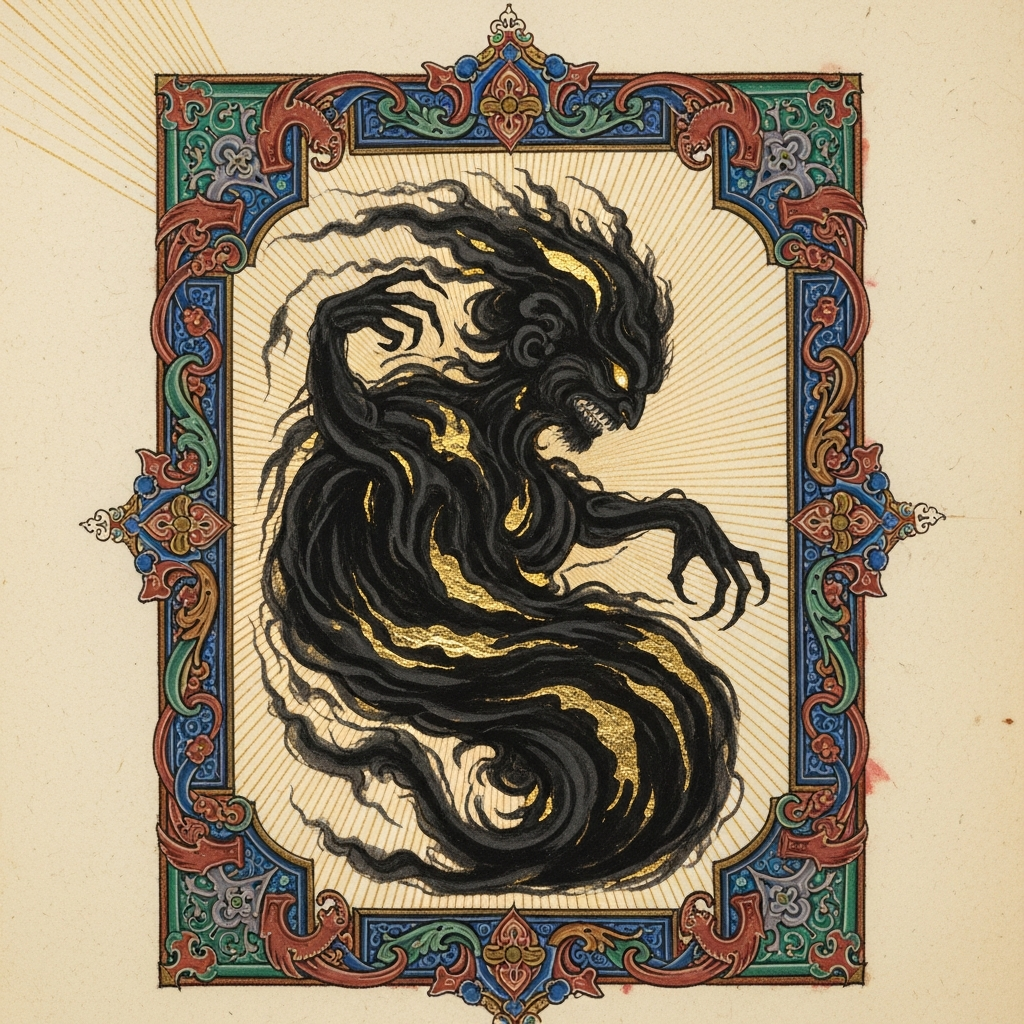
Angra Mainyu does not appear in the Gathas as a fully characterized villain. He is named, identified as the principle of druj — lie, falseness, destruction — but the mythology that gives him personality and history comes later, in the Pahlavi texts of the Sassanid and post-Islamic periods: the Bundahishn, the Denkard, the Vendidad. It is in these texts that the cosmic war becomes a narrative.
The first assault was on the first bull.
Ahura Mazda had created the material world in six stages: sky, water, earth, plants, animals, and finally the first human, Gayomard. The animals were unified in one primordial creature: Gavaevodata, the Primordial or Uniquely-Created Bull. It stood in the center of the first world, white as the moon, luminous, its body containing within it the spiritual seed of every animal species that would ever live.
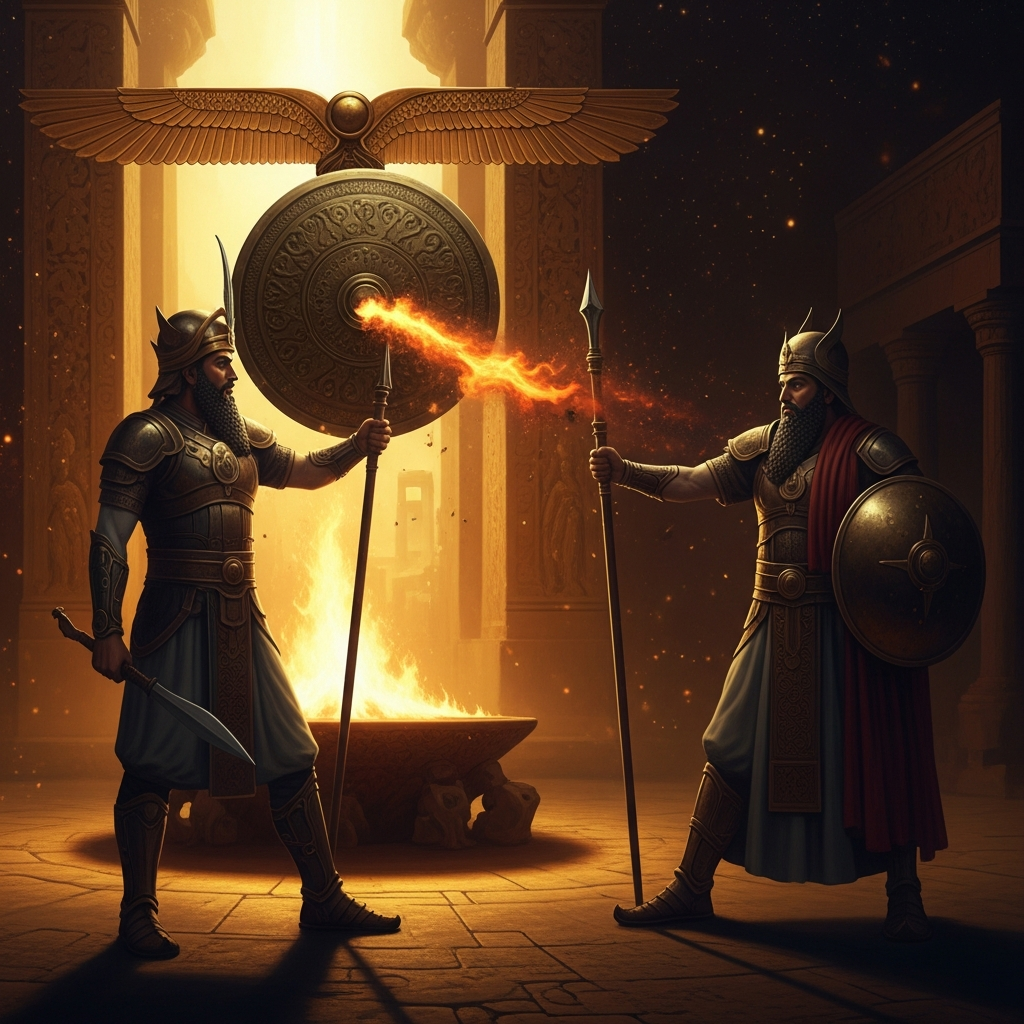
Angra Mainyu came.
The texts are precise about the sequence: he assaulted the sky first and failed. He assaulted the water and failed. He assaulted the earth and failed. He assaulted the plants and failed. Then he reached the bull — the most vulnerable of the material creations because it was alive in a way the others were not — and it did not withstand.
The bull fell.
The account in the Bundahishn of what happened then is one of the most structurally elegant creation myths in any tradition.
From the dying body of the Primordial Bull, Ahura Mazda caused the seeds of all animals to be carried by the moon to their eventual forms. Every species of creature came from that body: cattle and horses, wild animals, birds, fish. The death was not a victory for Angra Mainyu. It was a transformation. The single bull became every bull, every horse, every living thing that would walk or fly or swim.
This is the Zoroastrian theology of evil embedded in the myth: Angra Mainyu cannot destroy. He can only damage, corrupt, redirect. Everything he attacks either becomes stronger through the injury or seeds something new through the destruction. The druj is not creative — it can unmake but cannot make. The life that spilled from the dying bull was beyond his reach because it was already becoming something his blow could not have anticipated.
The first human was next.
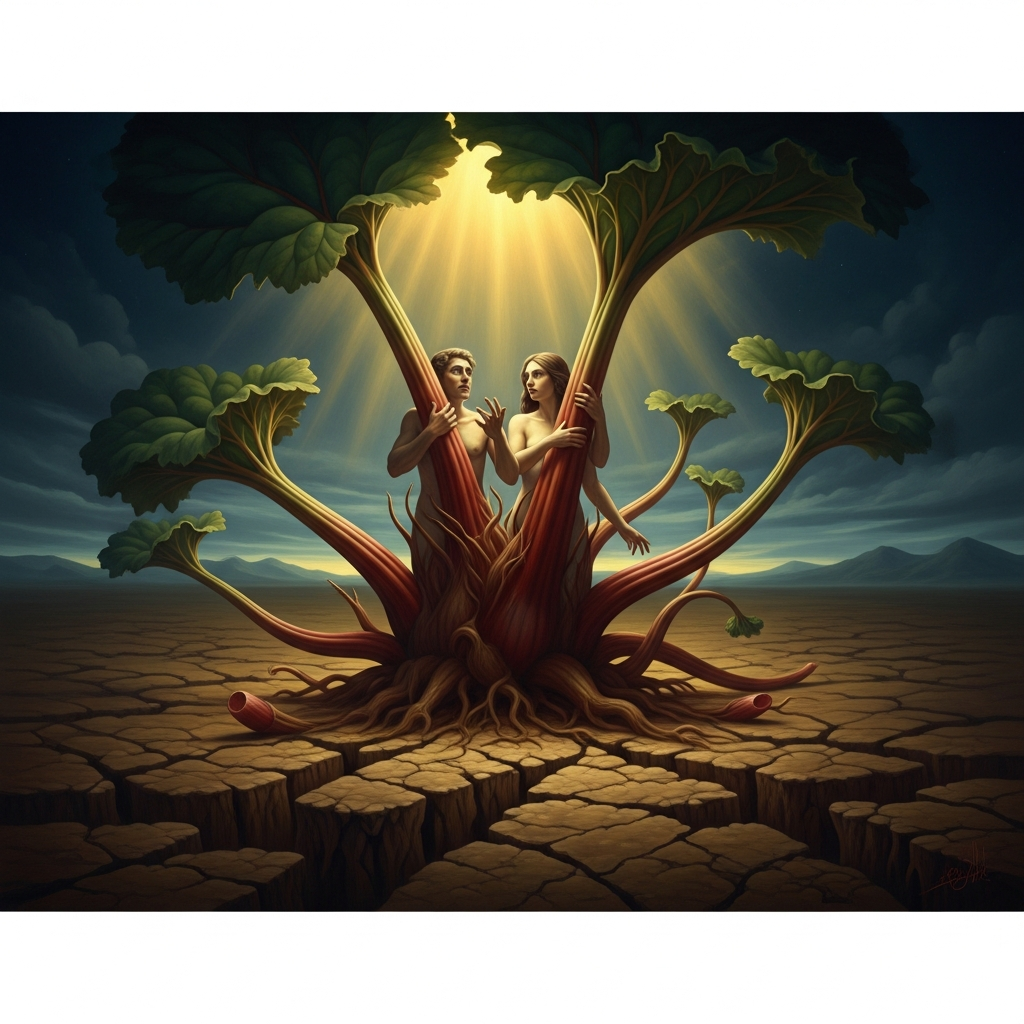
Gayomard, the Primordial Man, lived for thirty years after the bull’s death. Then Angra Mainyu struck him too. From Gayomard’s body came the metals of the earth — gold from his blood, the other metals from his other parts — and from his seed came Mashya and Mashyanag, the first man and woman, who grew from the earth as a plant grows, intertwined, and then separated into two forms and walked.
Angra Mainyu was not finished with them. He came to them as they walked, and his first gift was the first lie: I made you.
The Bundahishn records that Mashya and Mashyanag believed him. This is the Zoroastrian fall — not disobedience but credulity, not taking forbidden fruit but accepting a false account of origin from the source of falsehood. The lie that Angra Mainyu told them was not spectacular. It was small. It was the kind of lie that seems reasonable.
It was enough.
Zarathustra’s great contribution — the thing that made Zoroastrianism theologically distinctive in its ancient world — was to insist that this is a temporary condition.
The two Mainyu are not equal in permanence. Angra Mainyu’s power is real and present and destructive. But the cosmos has a direction: toward the Frashokereti, the final renovation, the cosmic restoration when evil is completely defeated, when all souls are purified, when the material world is perfected and the division between material and spiritual ends. Ahriman does not survive it. Druj does not survive it.
The war is real. The stakes are real. Every human choice to speak truth or falsehood, to create or destroy, to align with asha or druj, is a genuine contribution to the cosmic outcome. This is why Zarathustra’s religion placed such extraordinary weight on right thought, right word, right action: because the three are the daily participation of every ordinary person in the war that will, in the end, be decided.
Every lie feeds Angra Mainyu.
Every true word starves him a little.
The primordial bull died. Every living thing came from it. The death that evil intended became the abundance that evil cannot stand. This is the structure of Zoroastrian hope, and Zarathustra carried it across the Iranian plateau in the second millennium BCE, and it has not stopped traveling since.
Scenes
Echoes Across Traditions
Entities
- Angra Mainyu / Ahriman
- Ahura Mazda
- Zarathustra
Sources
- Bundahishn (Greater Bundahishn), Pahlavi compilation c. 9th century CE of earlier materials
- Gathas of Zarathustra (Yasna 30, 44-51), c. 1500-1000 BCE
- Vendidad (Vi-daevo-datha, 'The Law Given Against the Demons')
- Denkard, Books 3, 9 (encyclopedia of Zoroastrian tradition)