Contents
In the blackest hour of the night, when Ra's solar barque passes through the twelfth gate of the Duat, Apophis attacks. He has attacked every night since the first night. He has never succeeded. The gods ride with Ra, and the ritual book of overthrowing is read aloud, and the serpent is driven back into chaos until the next darkness.
- When
- Every night, since the beginning of time · New Kingdom and earlier
- Where
- The Duat — the twelve-gated underworld through which the solar barque travels nightly
The barque enters the Duat at sunset.
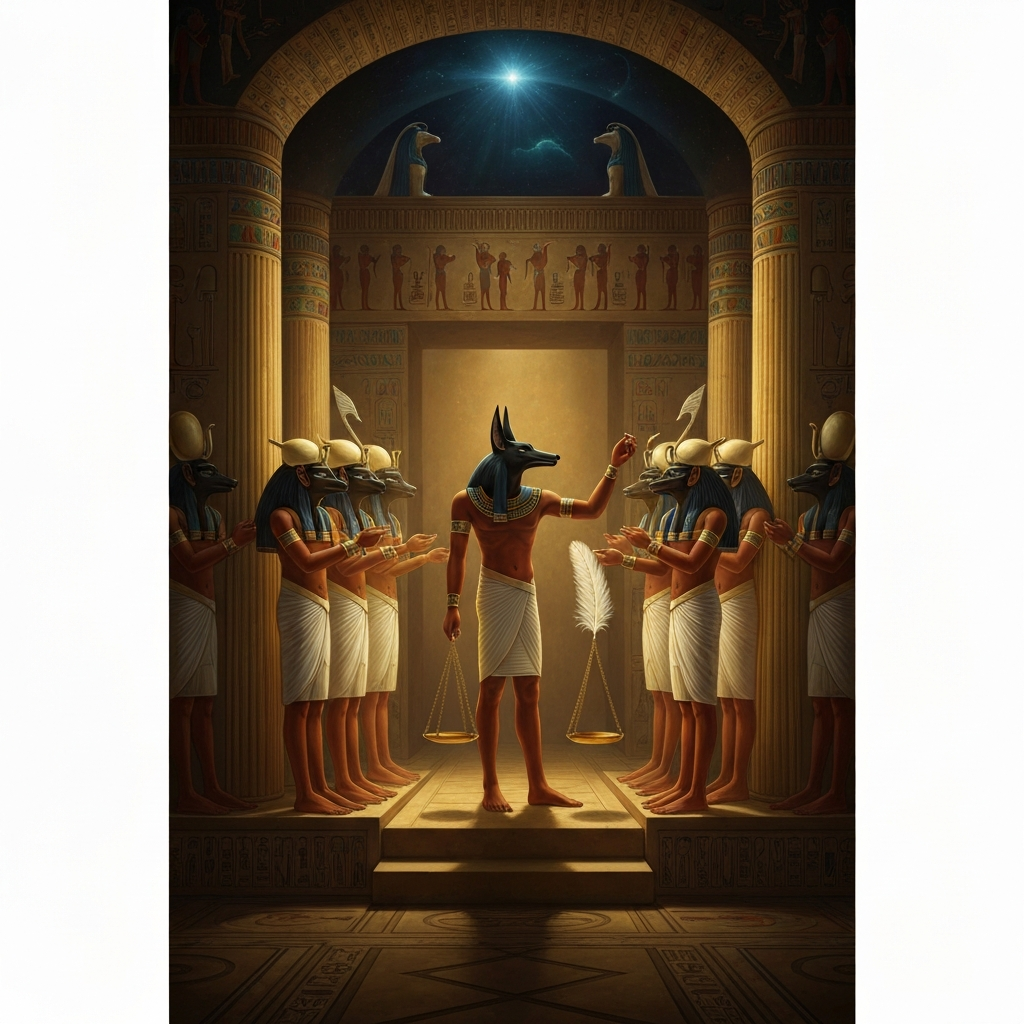
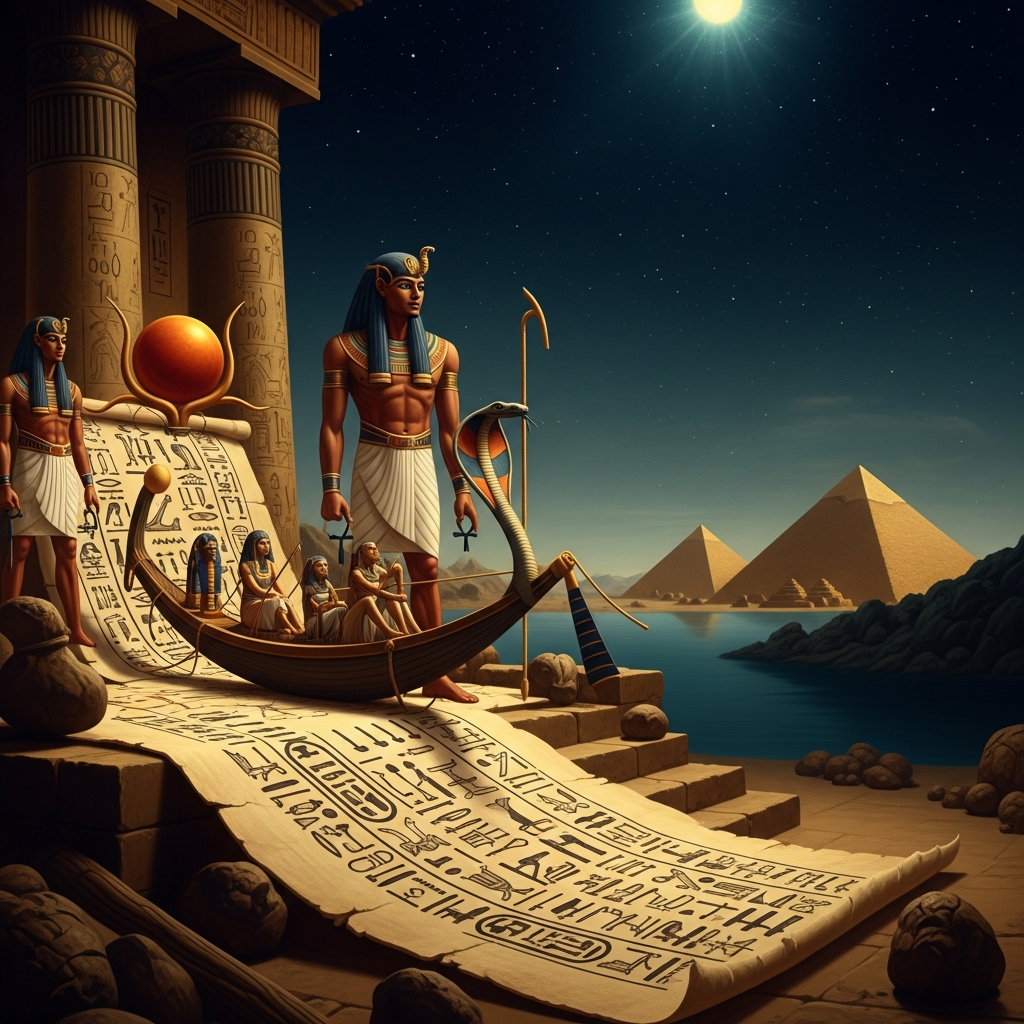
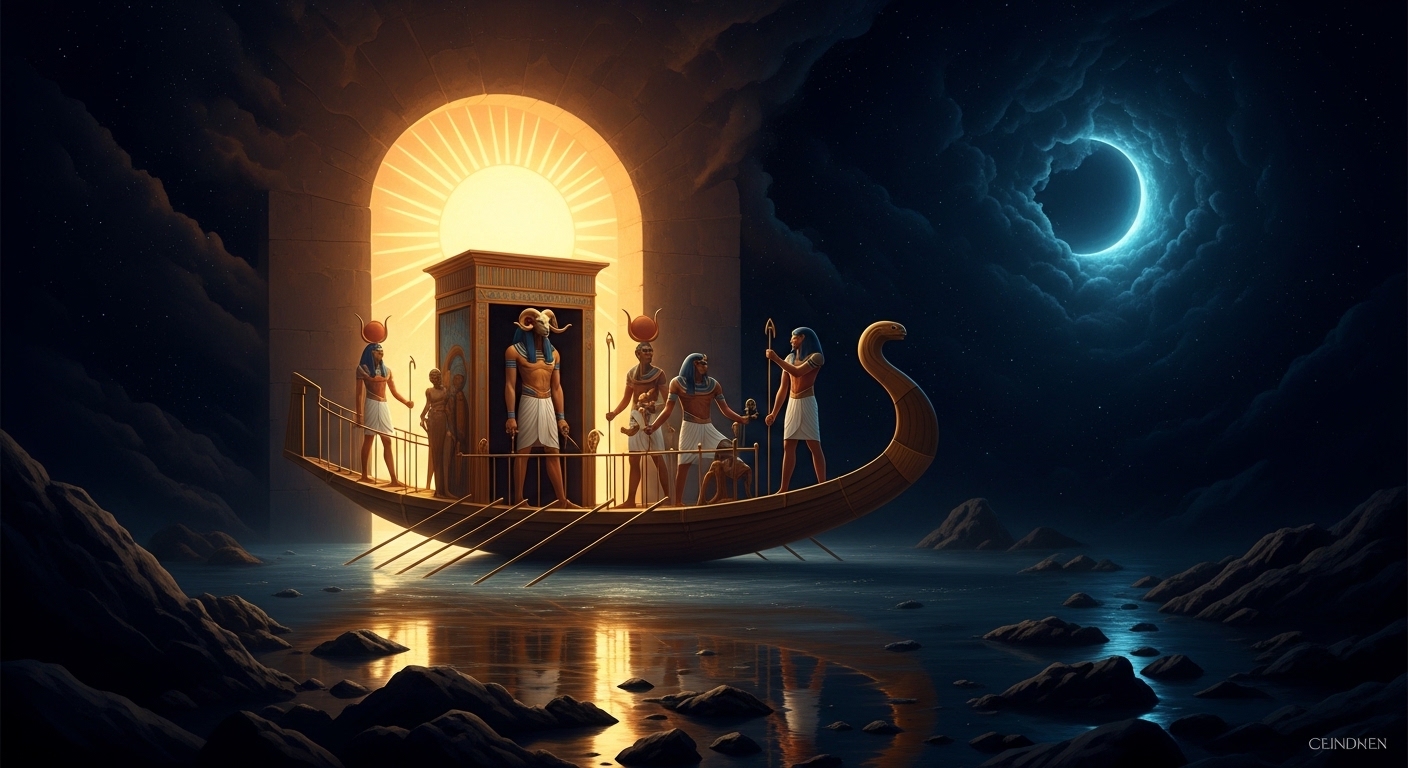
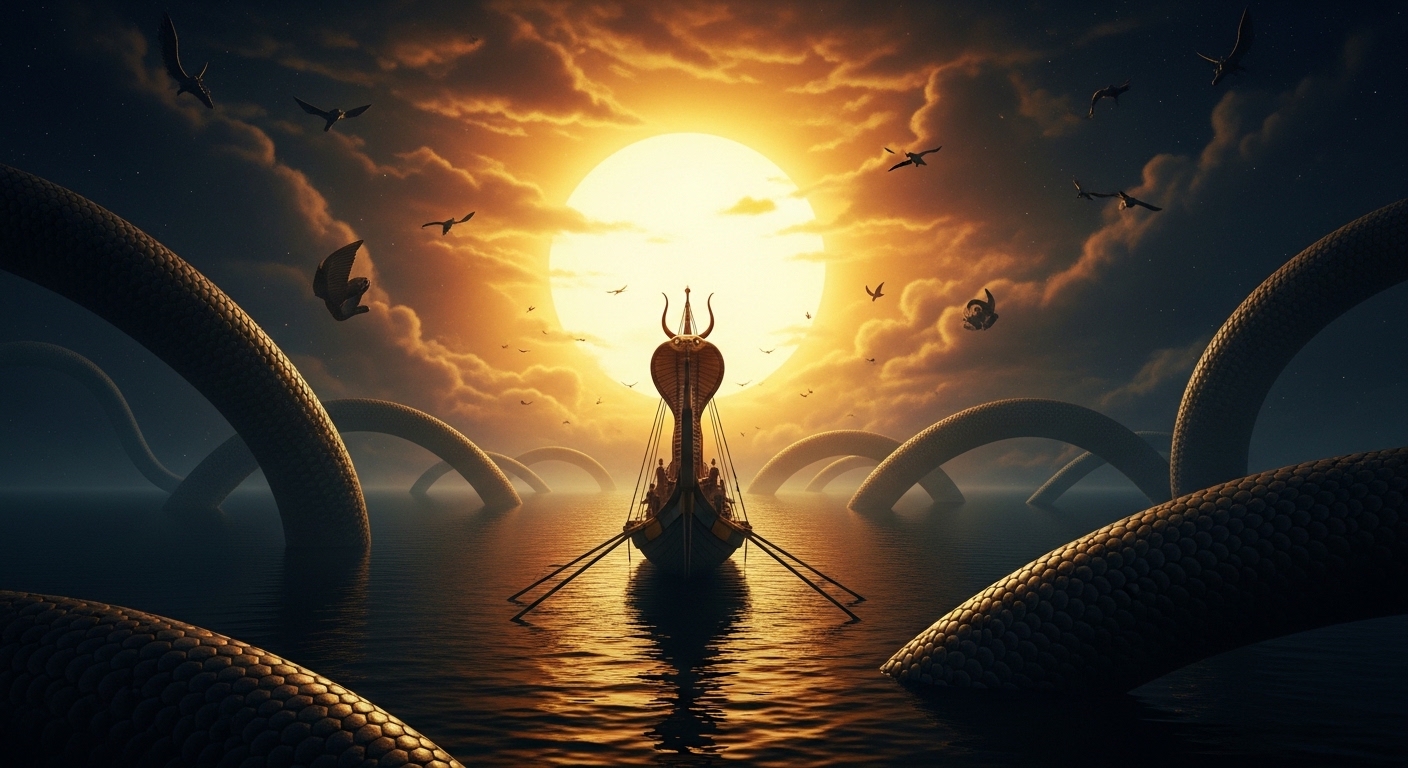
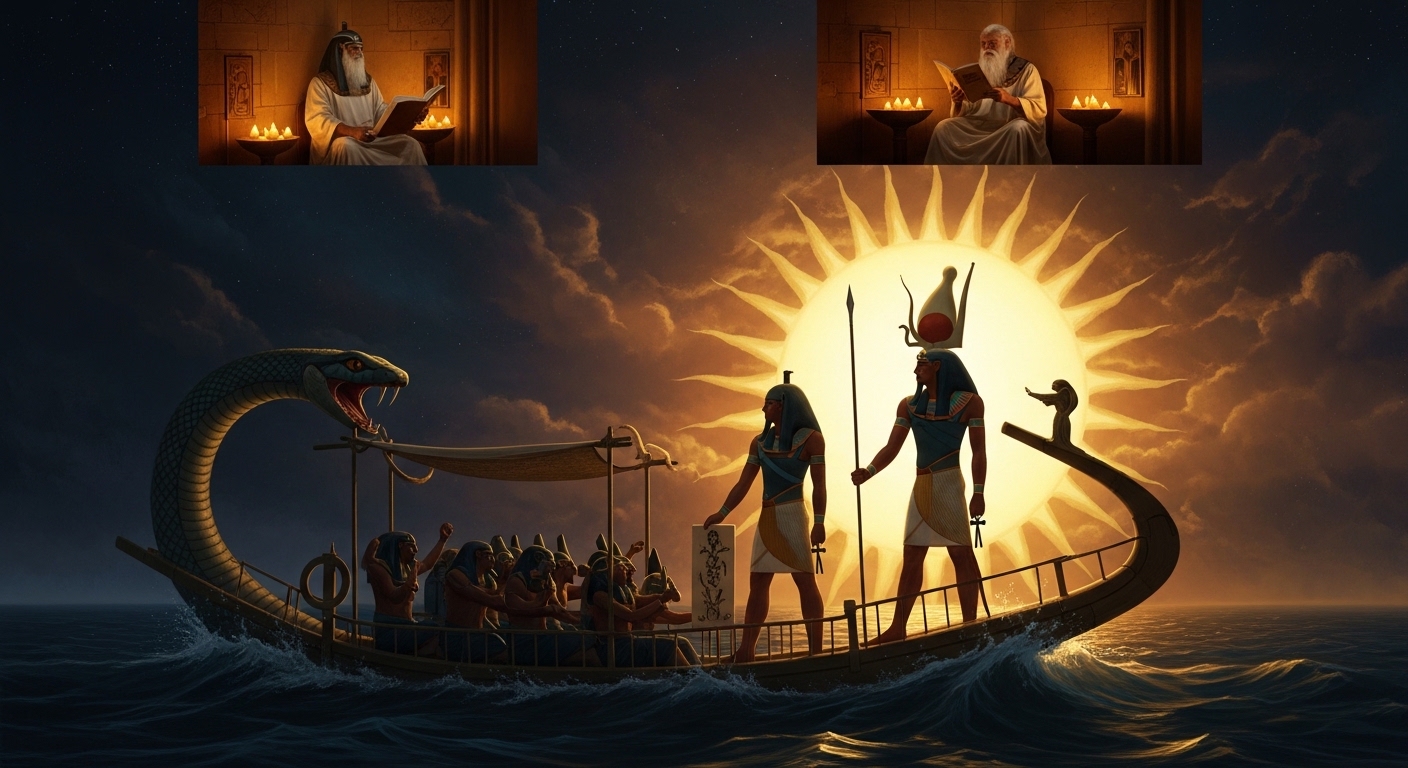
It is a long boat, painted gold, crewed by forty-two gods. At the prow stands a shrine, and inside the shrine the sun-god Ra takes the form he wears in the night: ram-headed, old, wrapped in the darkness he is passing through. The gods row. The oars make no sound in the waters beneath the earth. The only sounds are the hiss of passage and, somewhere ahead, far ahead in the blackness past the seventh gate, the breathing of the thing that waits.
Apophis has no origin story.
The Egyptians were precise about this. He was not made. He was not born. He is not the son of any god or the product of any act. He simply is, as chaos simply is, as the void before creation simply was. His name in one translation means “He Who Was Spat Out” — the rejected, the expelled, the substance that did not become order. He is what the universe was before Atum said I am, and he wants nothing except to return everything to what it was.
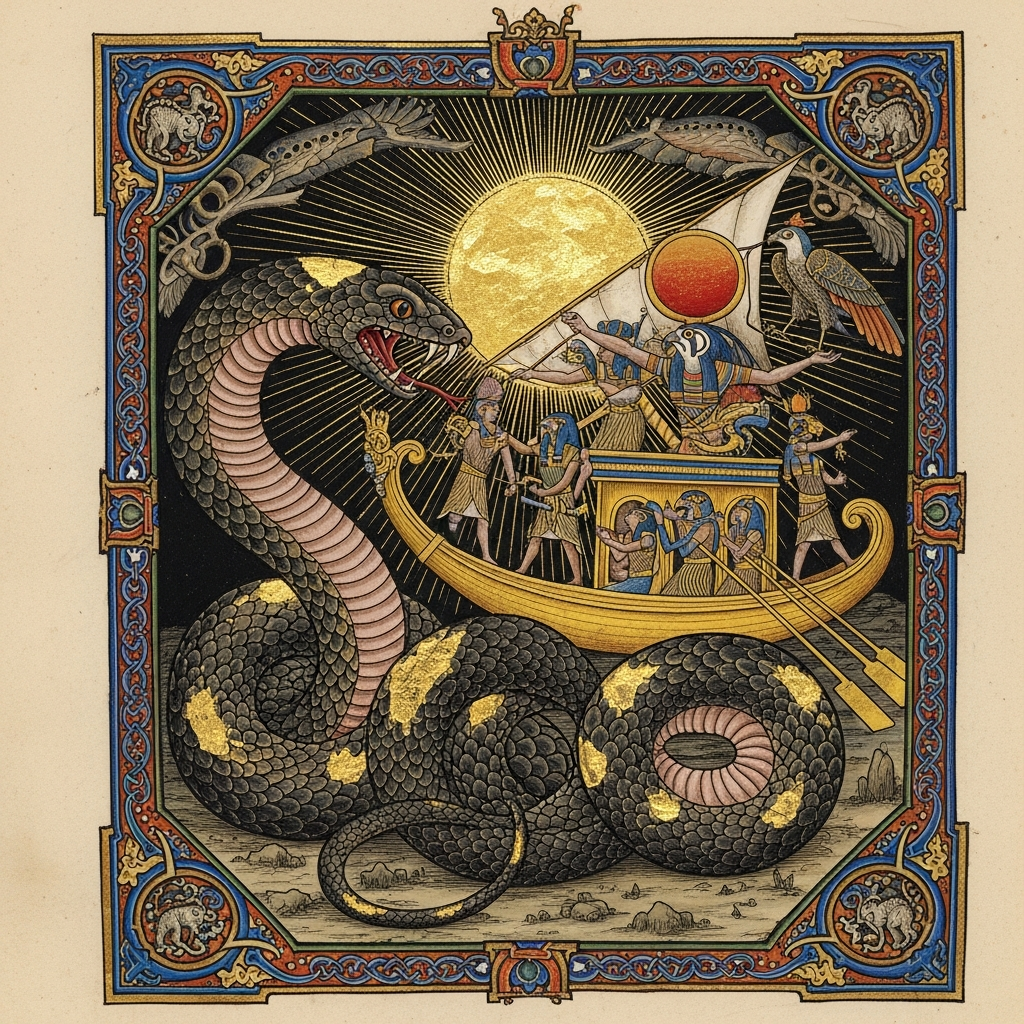
He is a serpent. He is enormous — the length of him exceeds calculation. His coils have filled certain passages in the Duat so completely that in the twelve-hour journey, there is one point where the barque must stop and the gods must fight their way through him. Every night.
In the full accounting of the Amduat, the Book of What Is in the Underworld, twelve gates divide the darkness. In the first gate, the recently-dead crowd the banks of the underground river, raising their arms in welcome. In the middle gates, the mysteries deepen: the dismembered gods reconstitute themselves, the hours of regeneration do their work, Ra’s ram-head slowly becomes younger, working backward toward the child-sun that will emerge at dawn. In the twelfth gate, the scarab beetle takes over entirely and the rebirth is almost complete.
But the seventh gate is different.
At the seventh hour, the danger is absolute.
This is the bottom of the night, the point equidistant from both sunsets, the hour with no light leaking from either end. It is the hour of Apophis. He fills the passage ahead from wall to wall and floor to ceiling, and his body is not merely physical — to encounter him is to be pulled toward unmakedness. The gods who have traveled with Ra feel their certainty eroding. A few, in some versions, are simply absorbed into his coils and have to be retrieved.
Set stands at the prow.
This is the great cosmic irony: Set — god of storms, chaos, the desert, violence; the god who murdered Osiris; the god the other gods eventually expelled to the margins of their pantheon — is the one who defeats the chaos serpent every night. He is the only one strong enough. His spear penetrates where divine virtue cannot. His relationship to chaos is not opposition but mastery: he is chaos domesticated, violence in service of order, the thing that knows the dark because it has lived in it.
He drives the spear into Apophis.
In the temples above, while this is happening, the priests are reading.
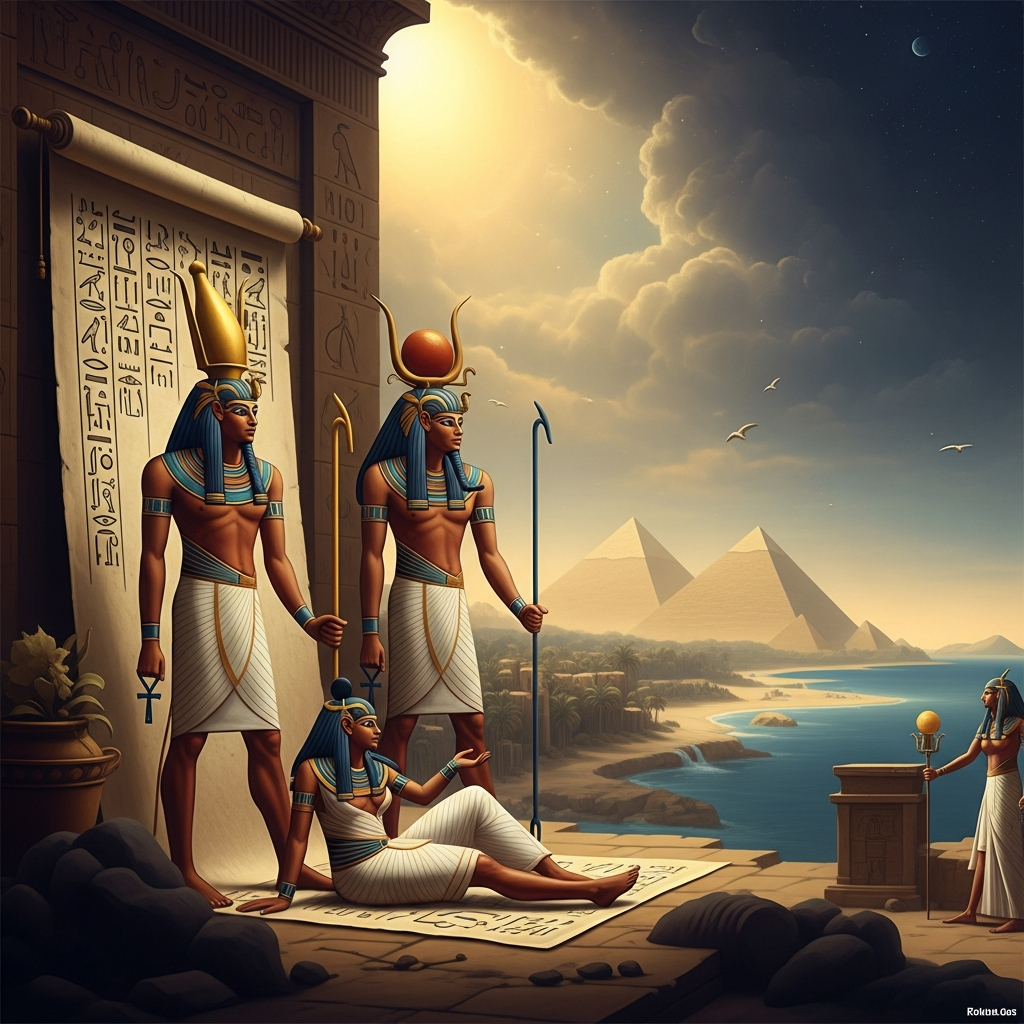
The Books of Overthrowing Apophis are the most detailed magical anti-chaos manuals in the ancient world. The Bremner-Rhind Papyrus preserves the fullest version. The priests spat on wax images of Apophis. They stamped on them with their left feet. They burned them in fire. They drew the serpent’s name in ink on fresh papyrus and burned that too. Every repetition of the name in the ritual context was another blow.
The reasoning is precise: the myth is not past. The battle is happening now, in the Duat, while we speak. The ritual text participates in the battle directly. The priest reading the overthrow is not describing something that happened; he is performing something that is happening. The words are force.
This ritual was conducted in the major temples of Egypt every single day for roughly three thousand years. From the Middle Kingdom to the Roman period, the priests stood in the lamplight before dawn and read the serpent into defeat.
Apophis never learns.
This is the essential point, the thing that separates him from even the vilest of the gods. Set knows he can lose. Ra knows he can die — in some traditions, the old sun-god does not survive the passage and must be renewed by his own night-journey, the scarab replacing the ram, youth replacing age in the twelfth hour. Even Osiris, murdered and dismembered, reassembles and transforms. All of the gods contain the knowledge of their own possibility of loss, and it changes them.
Apophis contains no knowledge of any kind. He is not malevolent in any considered way. He does not plot. He does not wait strategically. He simply fills the seventh passage every night because he fills the seventh passage every night, because that is what he is, because chaos does not learn from the last time the spear came through.
This is why the Egyptians did not tell the Apophis story the way they told other stories — with character development, with motivation, with the kind of narrative that implies the possibility of another outcome. The books of overthrowing are not stories. They are procedures. You do this, this, and this, in this order, and the sun rises. Every dawn is evidence that the procedure worked. Every night is proof that the procedure will be needed again.
In the twelfth hour, the barque passes into light.
Ra emerges as the scarab Khepri, newborn, rolling the sun above the eastern horizon as the scarab rolls its dung-ball across the desert. The gods cheer on the banks. The dead in the Duat return to their own processes. Apophis, convulsing somewhere in the seventh passage, begins to rebuild. By tonight he will be whole again.
The priests in the temple watch the light come over the horizon and record the outcome on their tallies.
The serpent was driven back.
Tomorrow night, they will read again.
Scenes
Echoes Across Traditions
Entities
- Apophis / Apep
- Ra
- Set
- Anubis
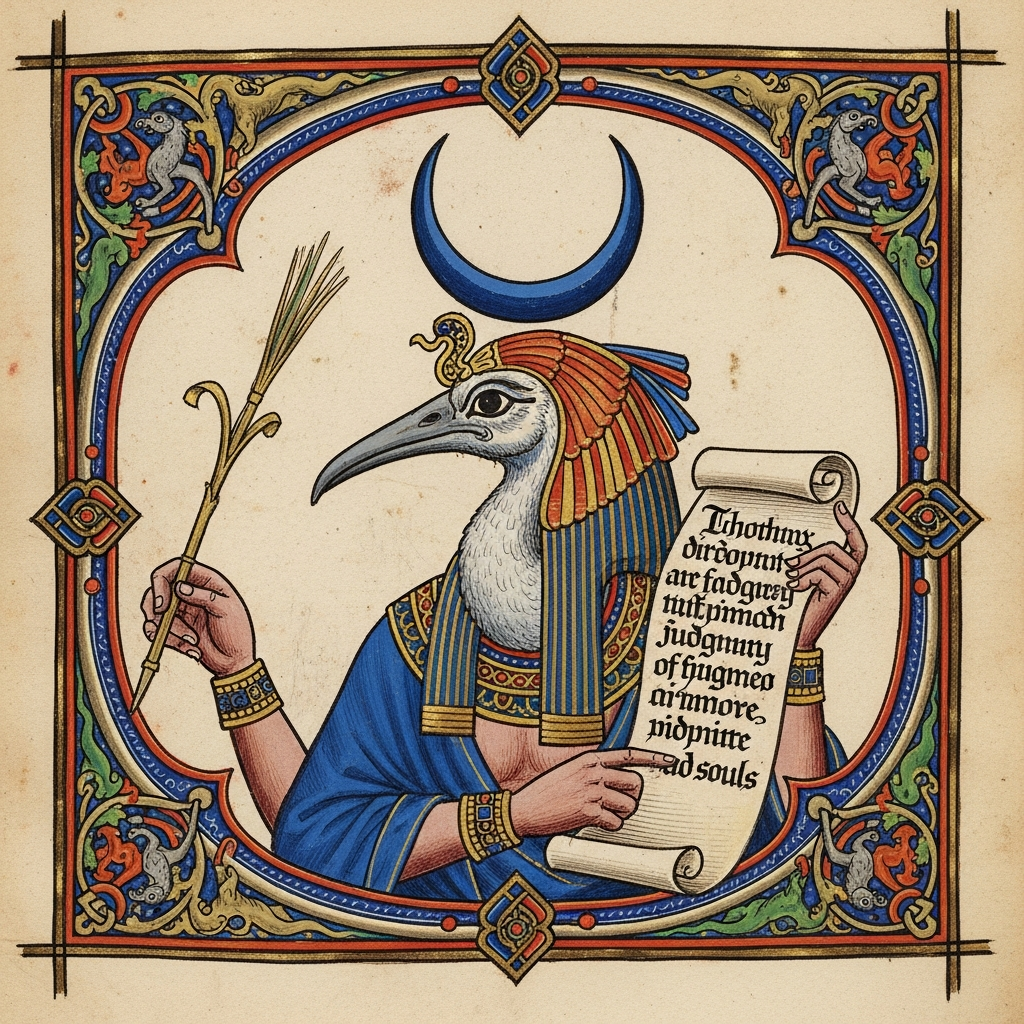
- Thoth
Sources
- Amduat ('That Which Is in the Underworld'), New Kingdom, ~1500 BCE
- Books of Overthrowing Apophis (Bremner-Rhind Papyrus, ~305 BCE)
- Coffin Texts, Middle Kingdom, ~2055-1650 BCE
- Book of the Dead, Spell 39