Contents
Thirty birds cross seven valleys seeking the Simurgh, the mythical king of birds. When they arrive at the threshold of the Simurgh's dwelling after losing thirty thousand birds along the way, they discover the answer has been inside the name: thirty birds in Persian is si murgh.
- When
- c. 1177 CE — Nishapur, Khurasan
- Where
- Nishapur, Khurasan — Attar's city; the poem is set in mythological space, the seven valleys of the soul
Thirty thousand birds set out.
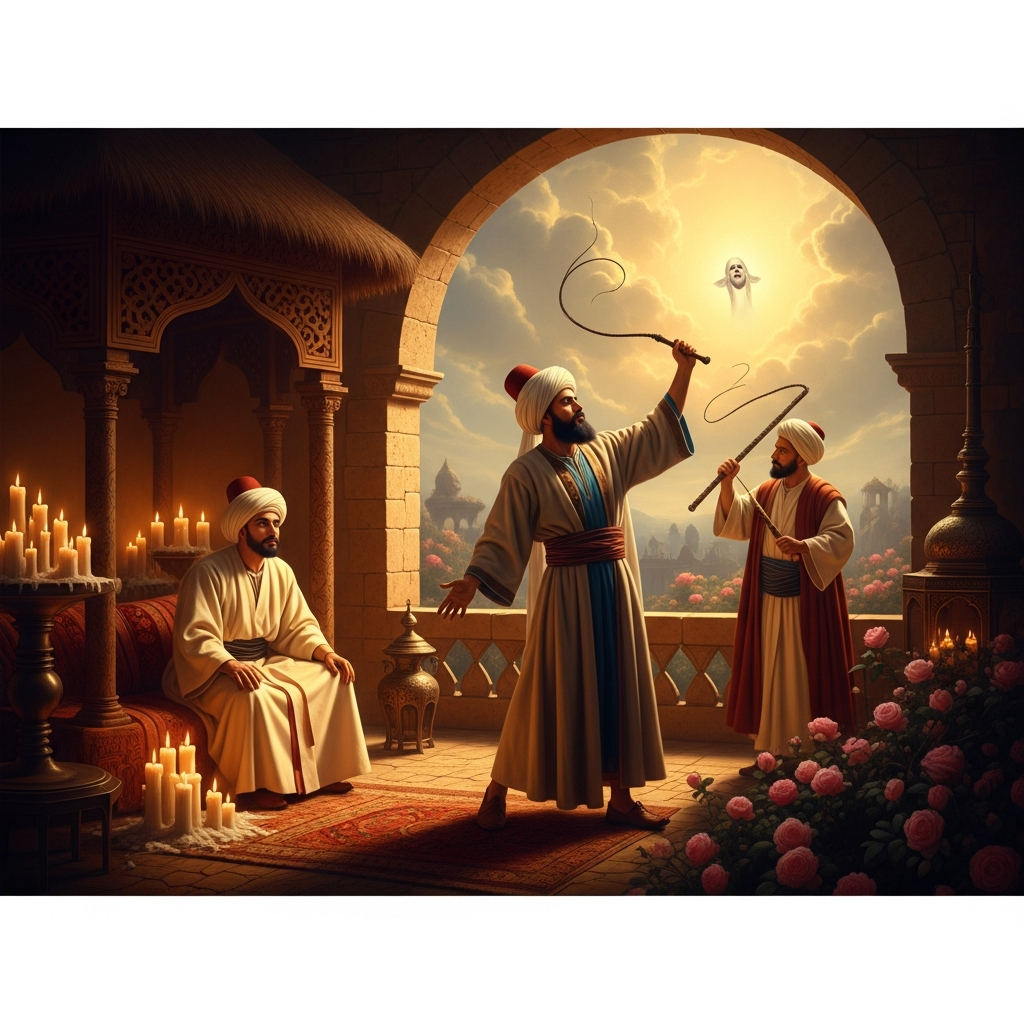
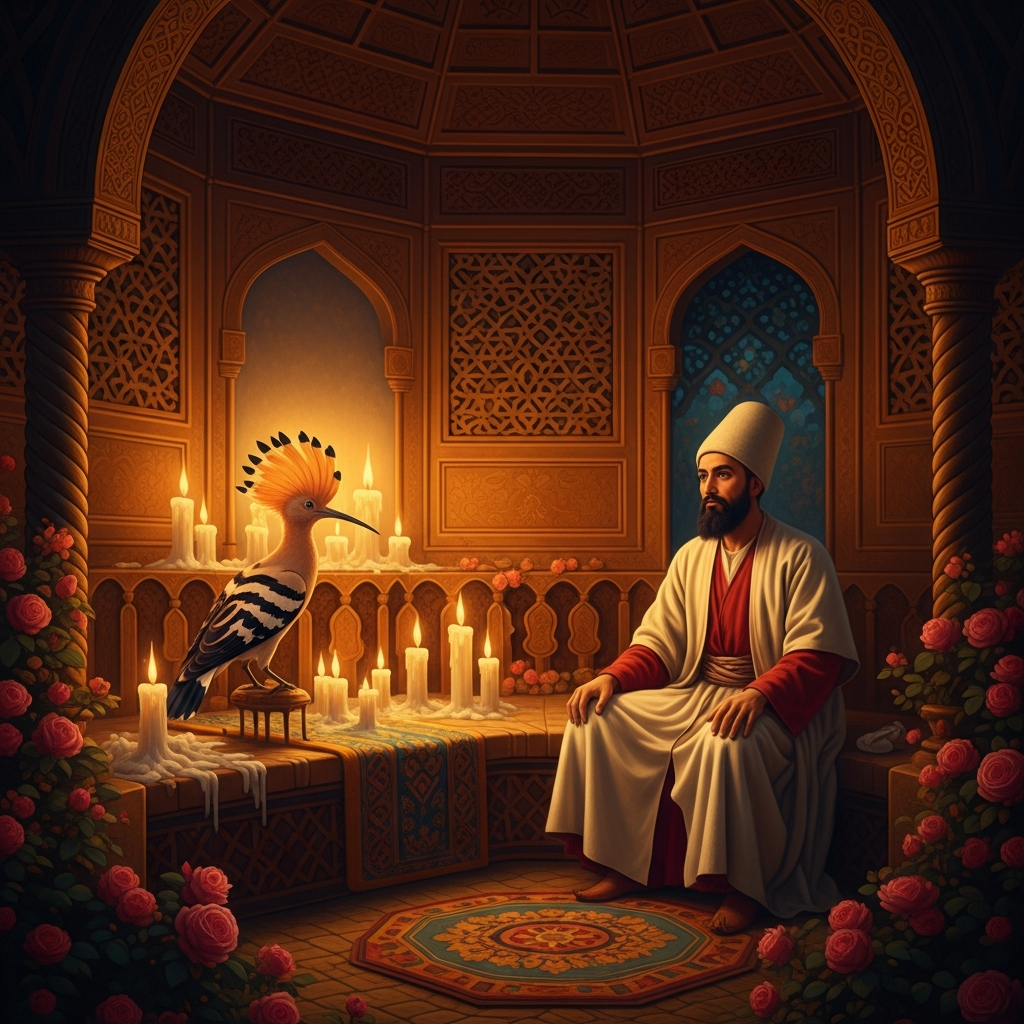
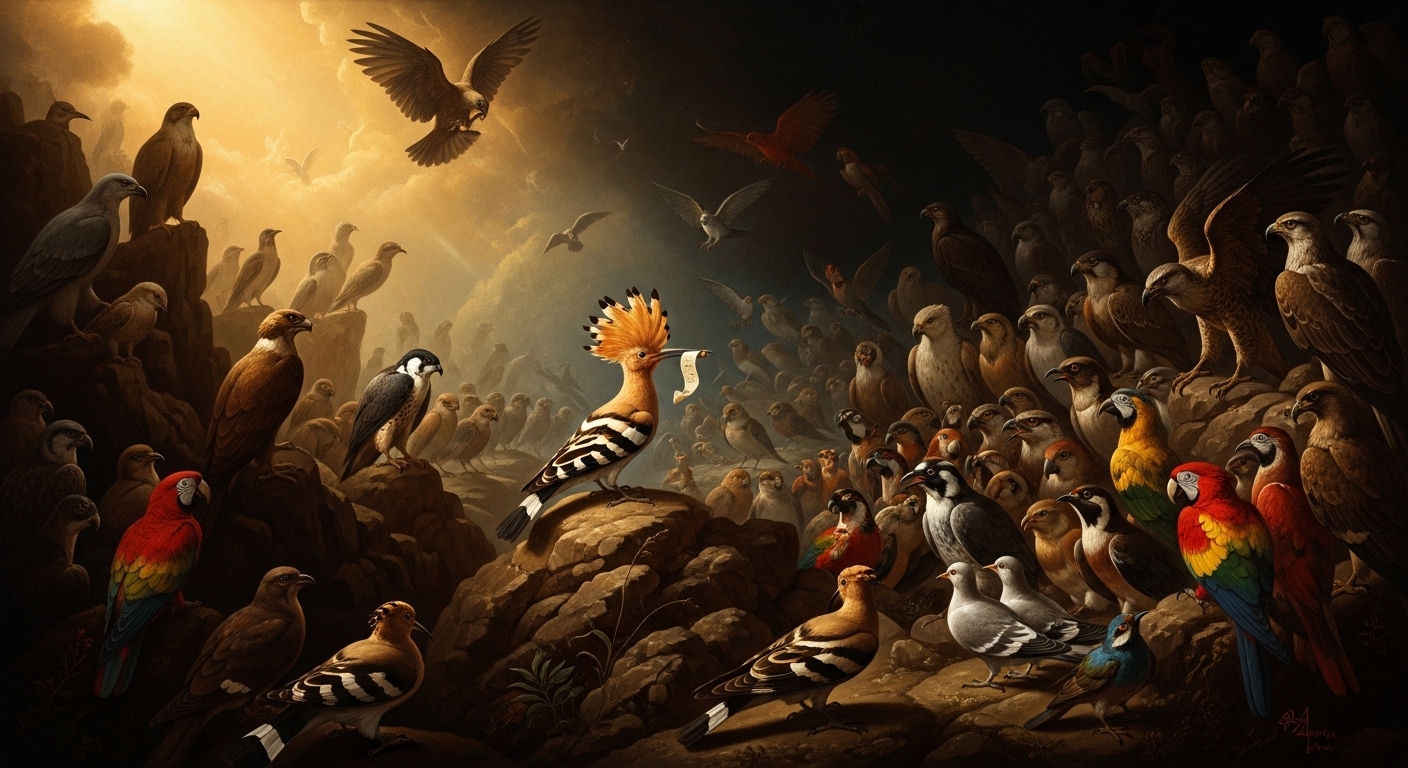
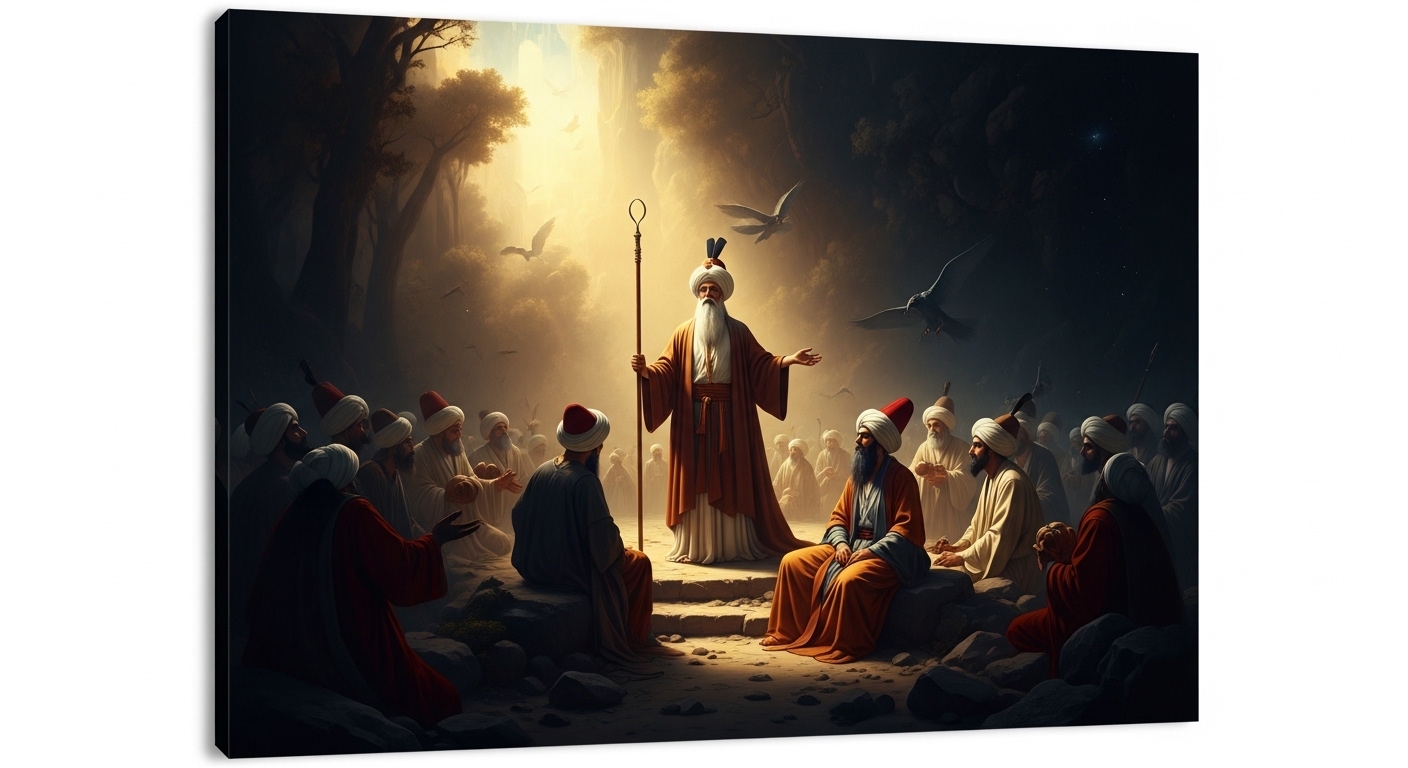
The hoopoe — Solomon’s bird, the messenger between the human world and the divine — has called the assembly. He says: we have a king, the Simurgh, who lives at the mountain Qaf at the edge of the world. We should go to him. Most of the birds have excellent reasons not to go. The nightingale loves the rose and cannot leave. The parrot loves the emerald cage of beauty. The duck loves the water. The hawk loves the king’s wrist. Each bird has an attachment — a love of something in the world — that substitutes for the journey.
The hoopoe answers each objection with a teaching. The nightingale’s love for the rose is love for a metaphor for love: the real love is ahead. The hawk on the king’s wrist has confused the symbol of power for power itself. The duck in the water has confused the element of purification for the source of purification.
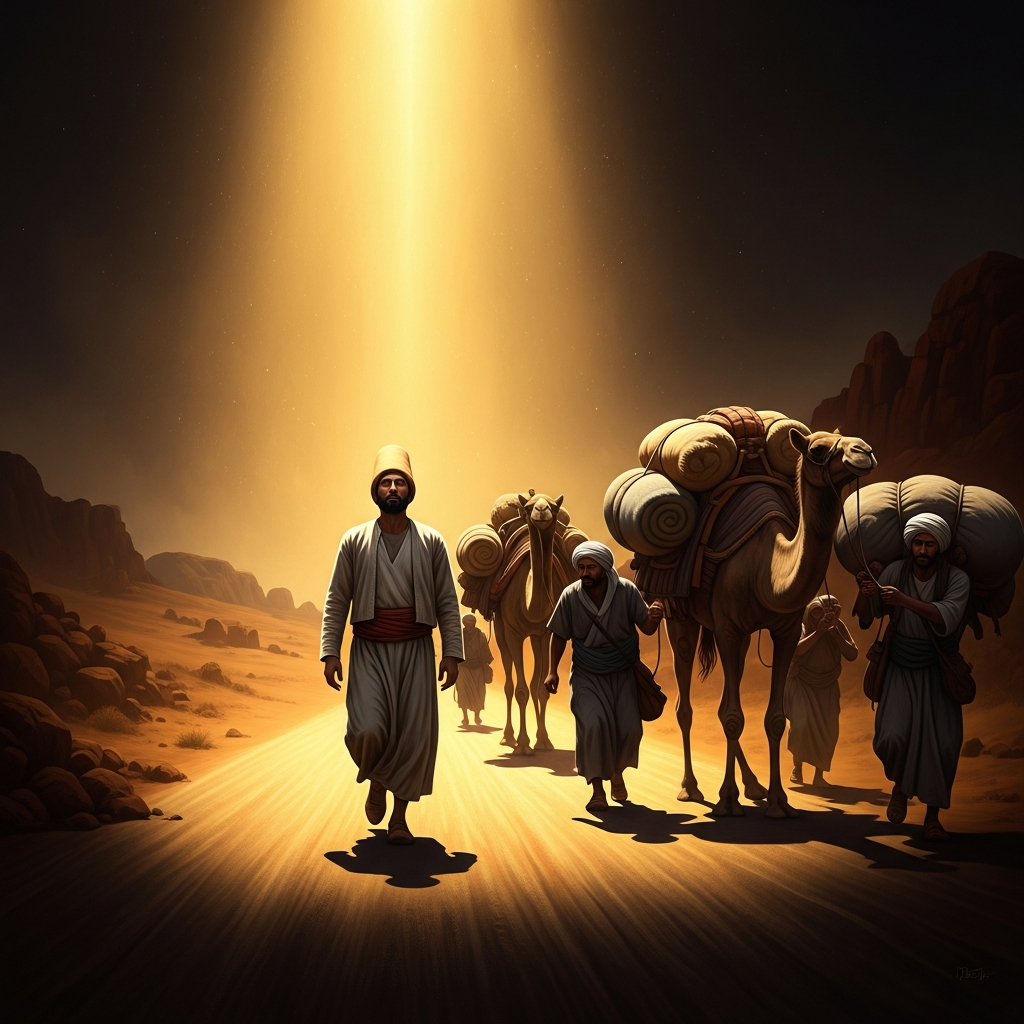
Some birds leave anyway. Some are persuaded. Some come for reasons they cannot articulate. The thirty thousand set out.
The seven valleys.
The Valley of the Quest: you must want to find. Not want to want to find — actually want. This is more difficult than it sounds. Most seekers want the reputation of seeking, or want the safety of having tried, or want the spiritual standing that seeking confers. The actual wanting — the want that would continue after all these incentives were removed — is rarer.
The Valley of Love: love that burns everything else. Not love for the journey, not love for the companions, not love for the spiritual practice as a valued activity. Love for the Simurgh himself, which is love for the real without qualification. The birds who have comfortable substitutes for this love turn back here.
The Valley of Gnosis: direct knowing that goes beyond what the intellect can contain. The bird who reaches here sees that the universe is more than it appeared, that every created thing is a sign pointing in a direction most people never follow.
The Valley of Detachment: the release of the final attachments — including the attachment to the spiritual journey itself, to the accumulation of mystical experience, to the identity of seeker.
The Valley of Unity: the discovery that what seemed to be many is one. Not as an idea — as a direct perception. The birds who reach here are terrified and undone and continue.
The Valley of Bewilderment: beyond unity, beyond the comfort of even the mystical framework, a state in which nothing remains to orient the traveler.
The Valley of Annihilation: the self that has been traveling is consumed. There is no more traveler.
Thirty birds arrive at the palace of the Simurgh.
They have crossed every obstacle. They have buried thirty thousand companions in the valleys — dead from exhaustion, from grief, from the terror of the later stages. They are thirty birds. They arrive at a threshold that no bird has crossed. They look in.
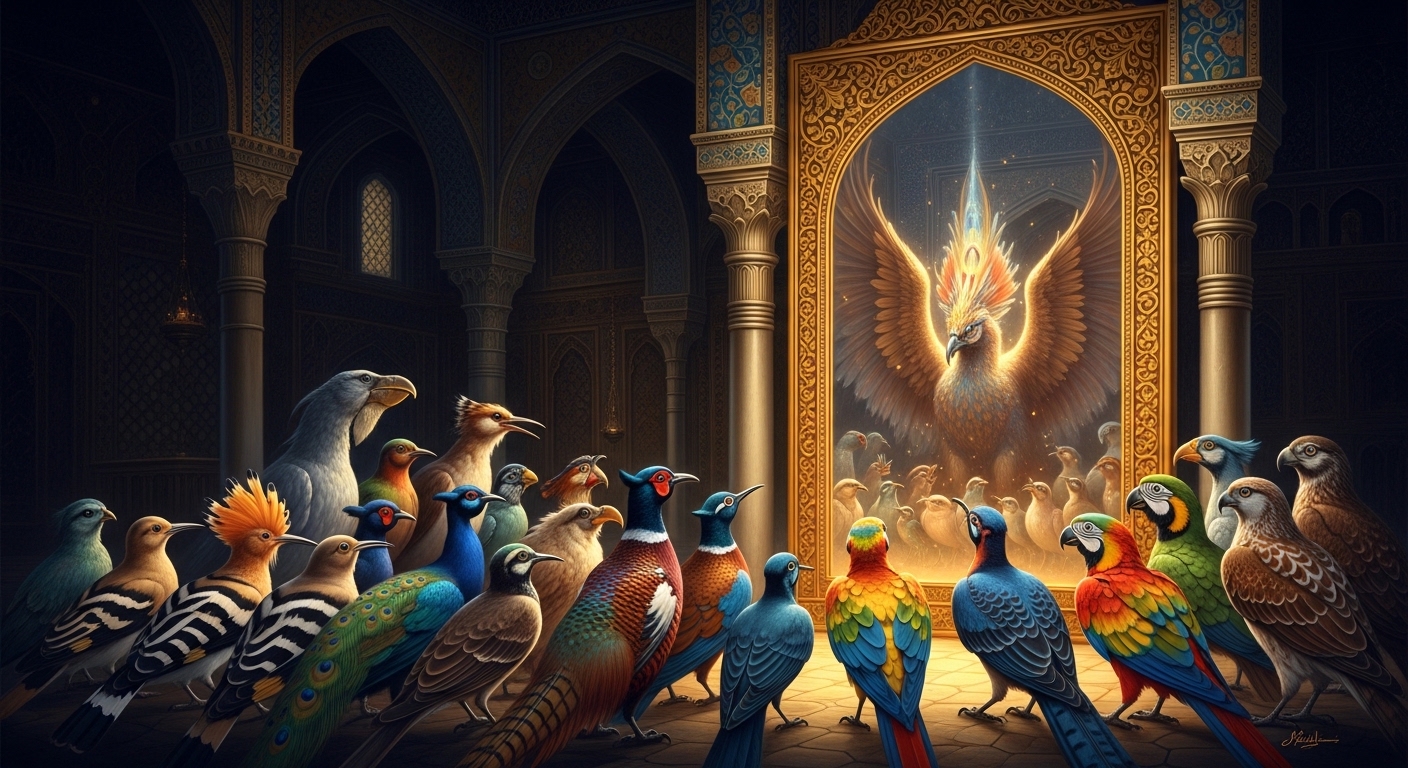
In the mirror of the palace, they see thirty birds.
The Simurgh is thirty birds.
Thirty birds in Persian is si murgh. The Simurgh — the king of birds they have been seeking — is the name they have been carrying the entire journey. They are the Simurgh. They always were. The thirty thousand who died in the valleys were not failures; they stopped at the valley whose teaching they had not yet absorbed. The thirty who survived absorbed all seven. And in absorbing all seven — losing self at every stage — they became what was always their nature.
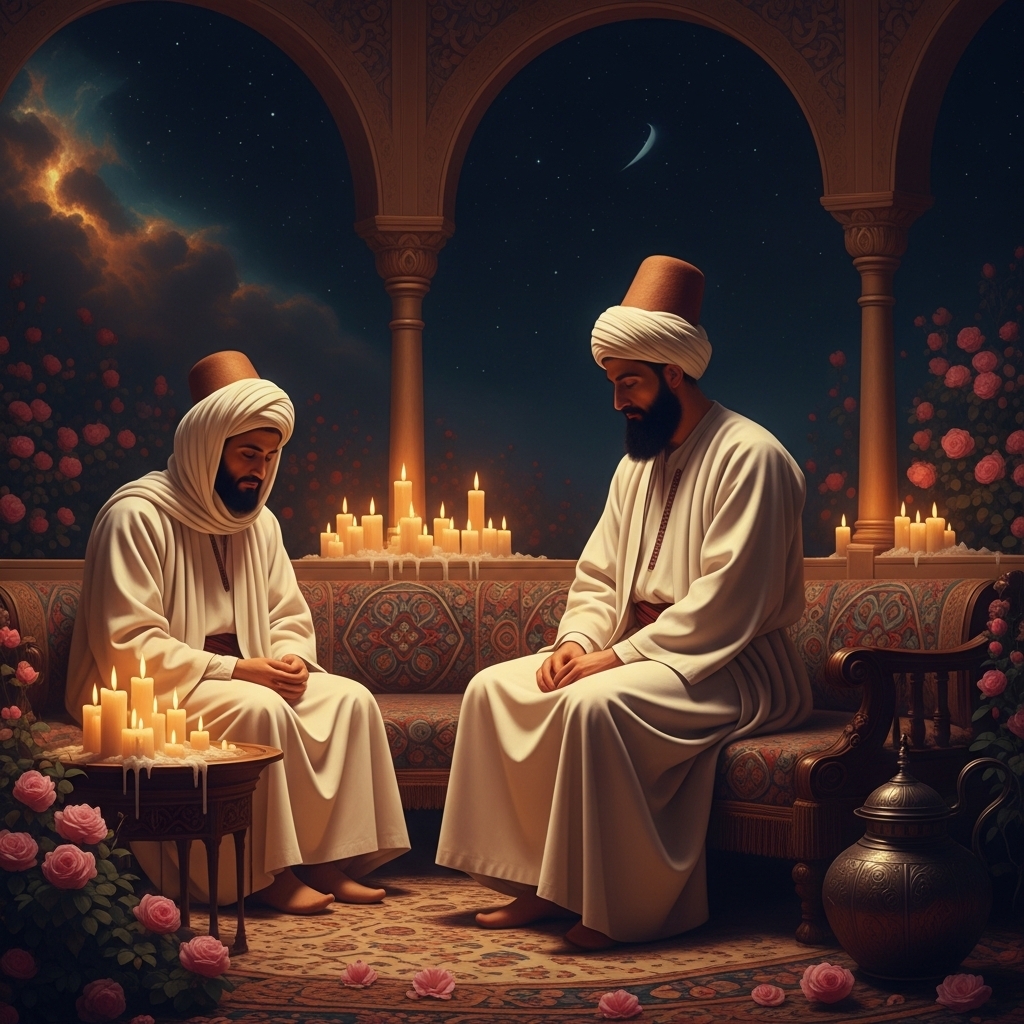
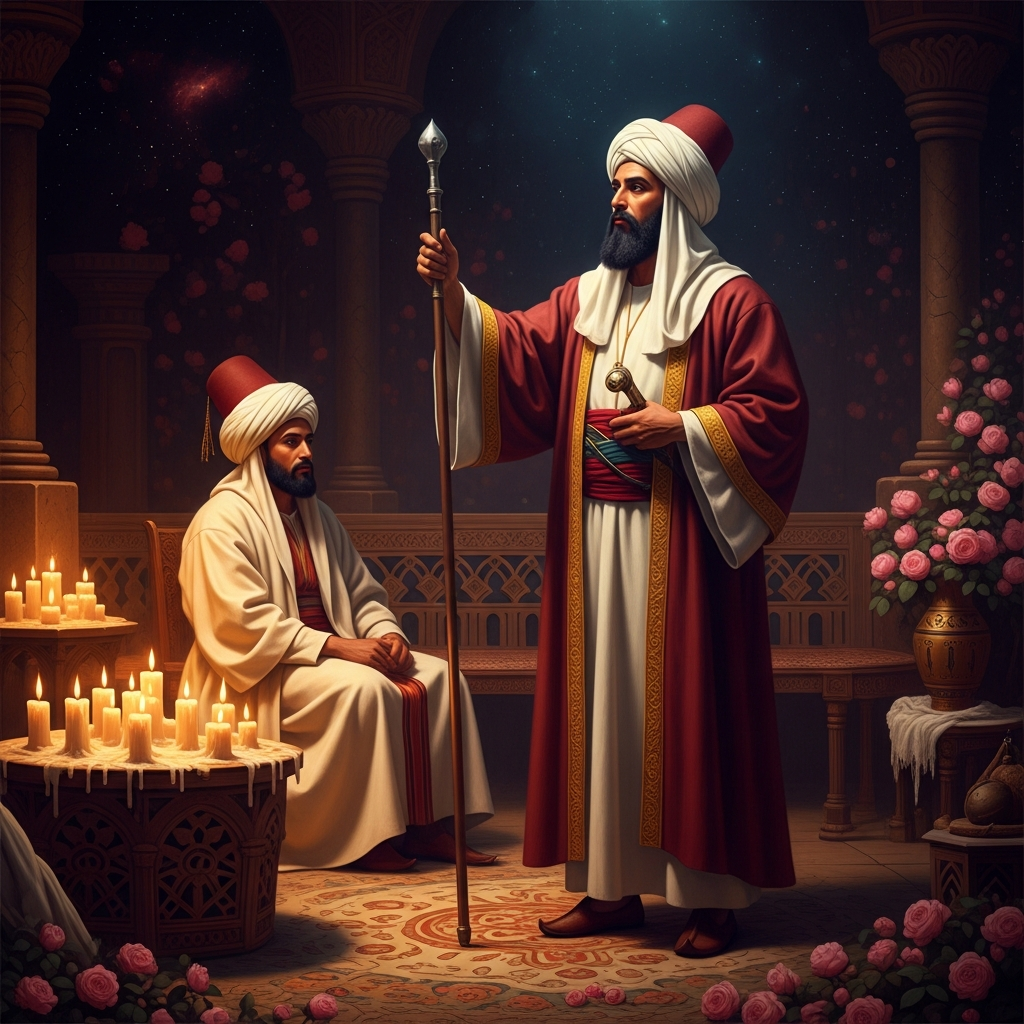
Attar wrote the poem in Nishapur, the city of roses and poets, probably in 1177.
He was selling perfumes and medicines in the bazaar, by his own account. His name means perfumer. He was surrounded all day by the smell of things that cannot be seen.
The poem ends with the birds in the mirror, seeing themselves as the Simurgh, seeing the Simurgh as themselves.
They are silent.
There is nothing more to say after the journey ends where it began, and what was sought was the one seeking.
Scenes
Echoes Across Traditions
Entities
- Farid ud-Din Attar
- the Hoopoe (guide bird)
- the thirty birds
- the Simurgh
Sources
- Farid ud-Din Attar, *Mantiq al-Tayr* (Conference of the Birds / Speech of the Birds), c. 1177, trans. Afkham Darbandi and Dick Davis (Penguin, 1984)
- Helmut Ritter, *The Ocean of the Soul* (Brill, 2003)
- Paul Losensky, introduction to Penguin edition
- Annemarie Schimmel, *As Through a Veil* (Columbia, 1982)