Contents
When God asked who would retrieve the soil from the earth to make the first human, earth refused three angels in succession. The fourth — Azrael — prevailed by force and returned with the clay. As reward, or consequence, he was appointed to do the thing earth had feared: take souls at death. He has kept every appointment since.
- When
- Islamic cosmological time · Hadith and tafsir literature from 7th century CE onward
- Where
- Everywhere simultaneously — Azrael stands with one foot in the east and one in the west
Earth did not want to give up its clay.
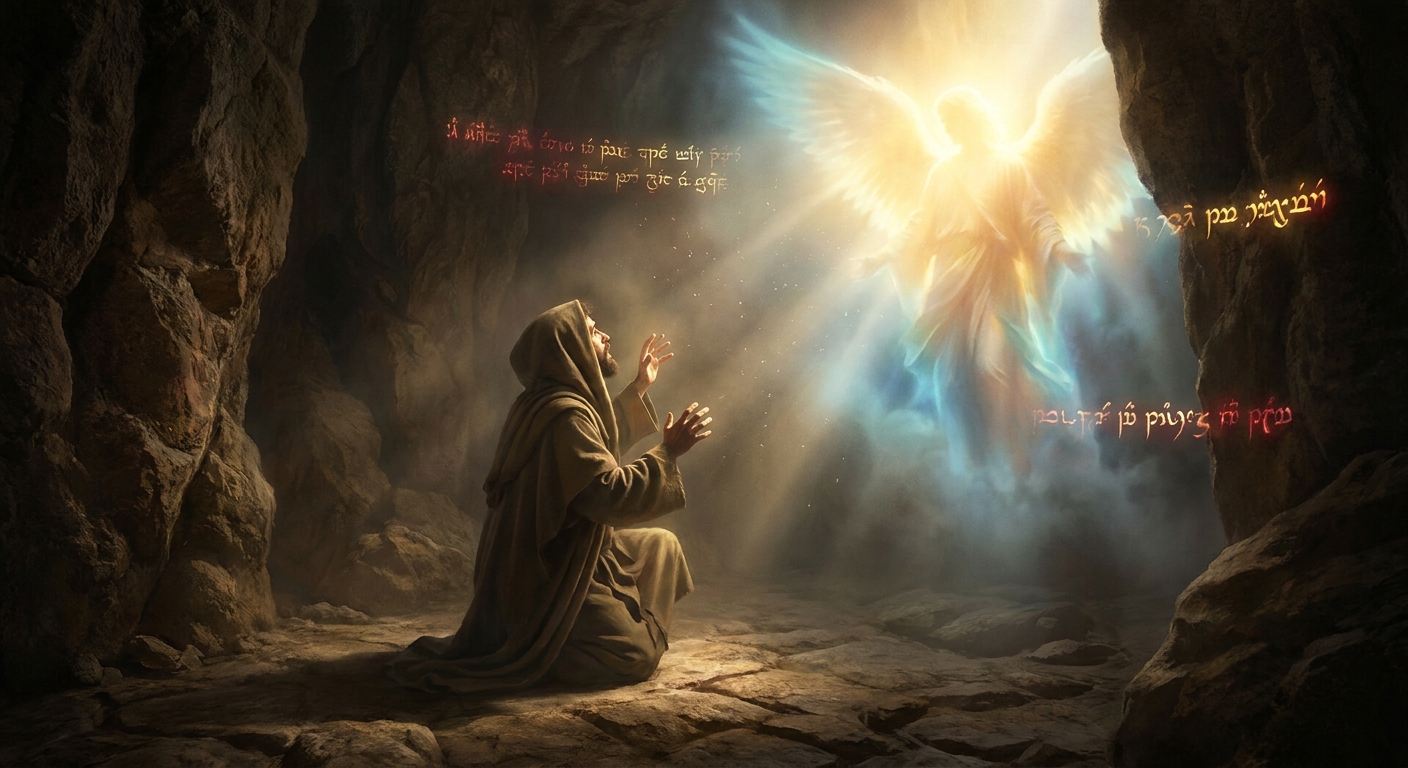
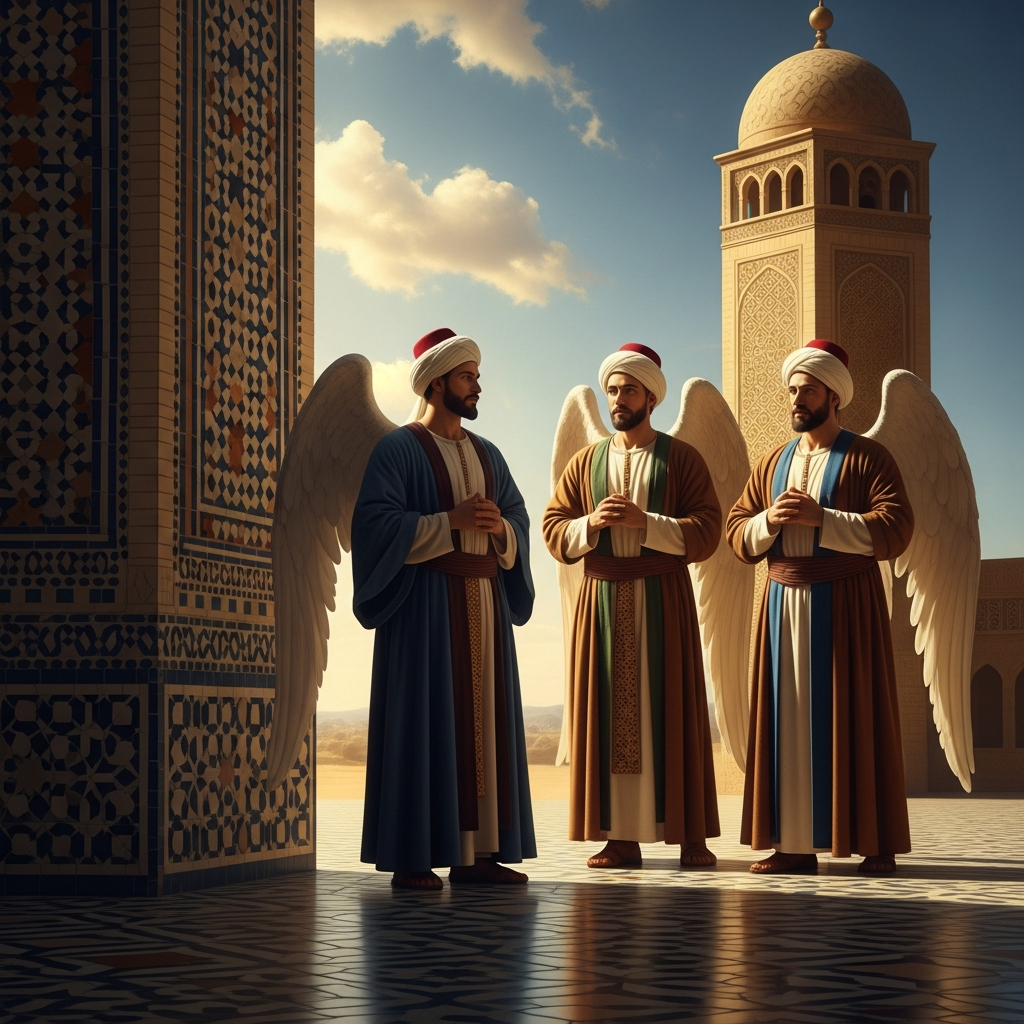
The tradition that explains Azrael’s appointment begins before human life does, in the period between the divine decision to create humanity and the act of creation. God intended to make Adam from the soil of the earth. He sent an angel — in most accounts, Jibrail (Gabriel) — to bring a handful of clay from the earth’s body.
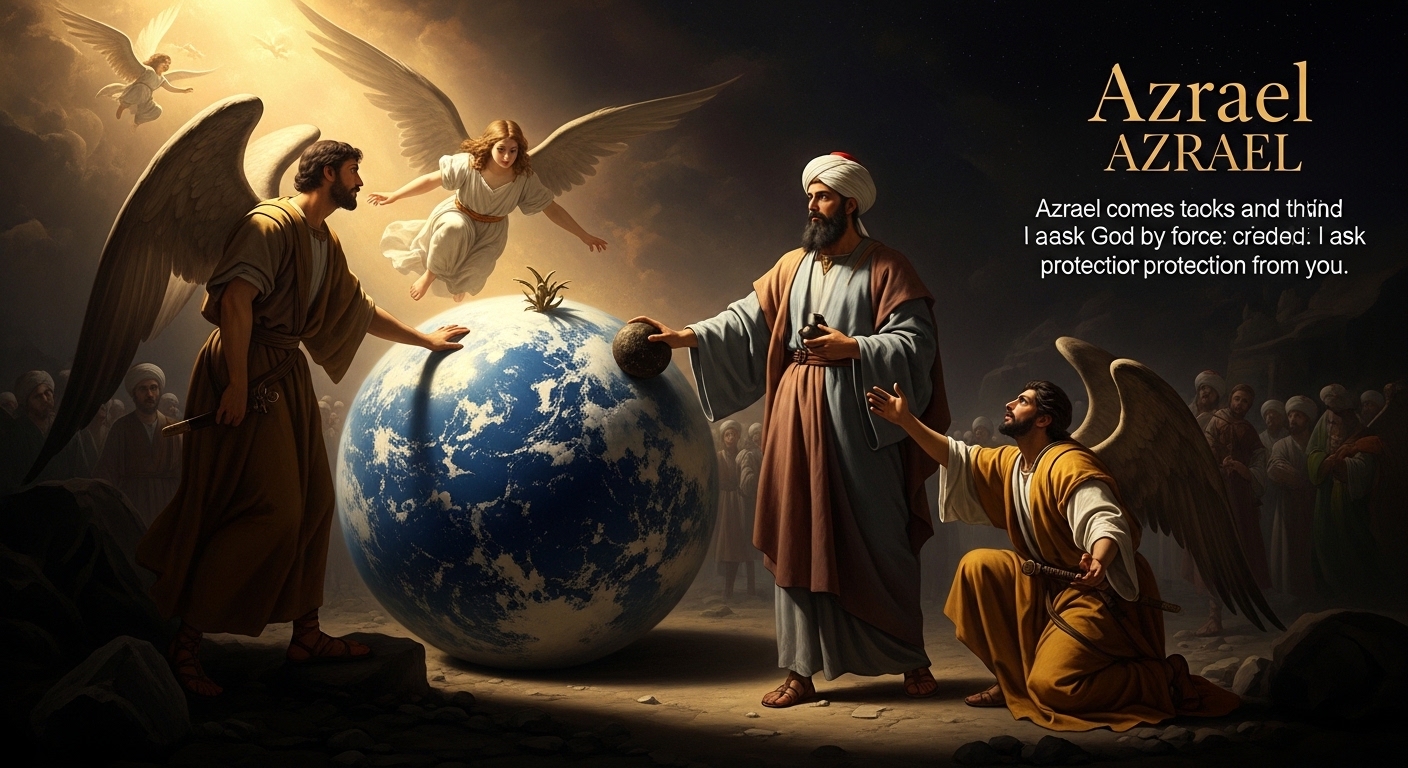
The earth spoke. It said: I seek God’s protection from you.
Jibrail returned empty-handed. The command had been to take; the refusal to allow was not his to override without authorization he did not have.
A second angel was sent. The earth said the same thing. The angel returned.
A third.
The same refusal.
Then Azrael was sent. He came to the earth and the earth said what it had said to the others: I seek God’s protection from you. Azrael answered: And I seek God’s protection from disobeying His command. He took the clay.
As a consequence of this service — or, depending on the telling, as a reward for it — Azrael was appointed to do the thing the earth had feared he would do to it: take the souls of living beings at the moment of death.
He has not refused an appointment since.
The Quran names the angel of death without naming Azrael: Say: the angel of death who has been charged with you will take you (32:11). The name Azrael appears in the hadith literature and the tafsir tradition — the body of Quranic interpretation — rather than in the Quran itself. But the figure is consistent across Islamic cosmology: a single angel, not a class of angels, who receives souls at death, whose task is universal and unavoidable.
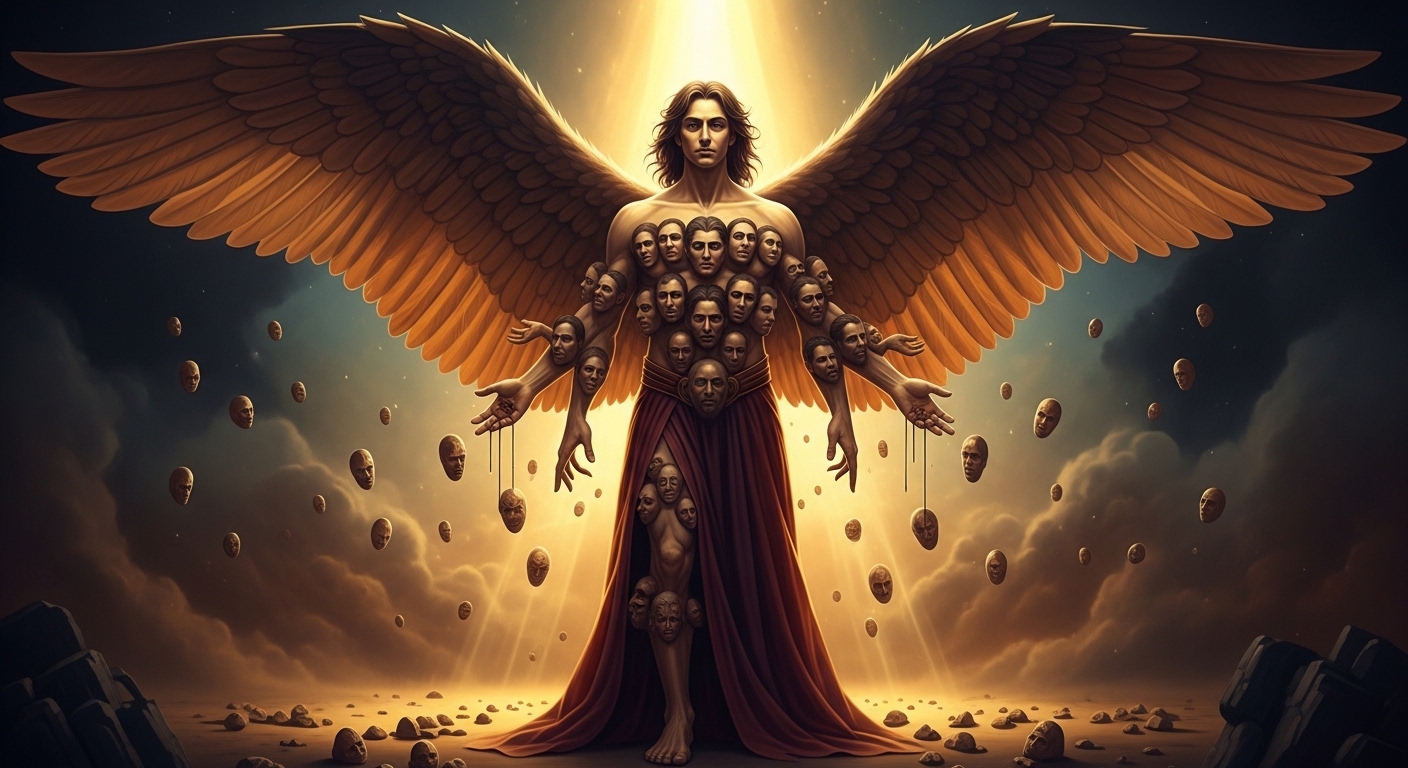
The descriptions of Azrael in the tafsir literature are staggering in scale. He stands with one foot in the east and one in the west, his wings spanning the space between. His body in some accounts is covered with faces — each face a soul he has received, or will receive — and with feet, each foot the size of the distance between heaven and earth. The size is not anatomy; it is metaphor for capacity: Azrael is large enough to contain all death, because he has contained all death, because every death there has ever been passed through him.
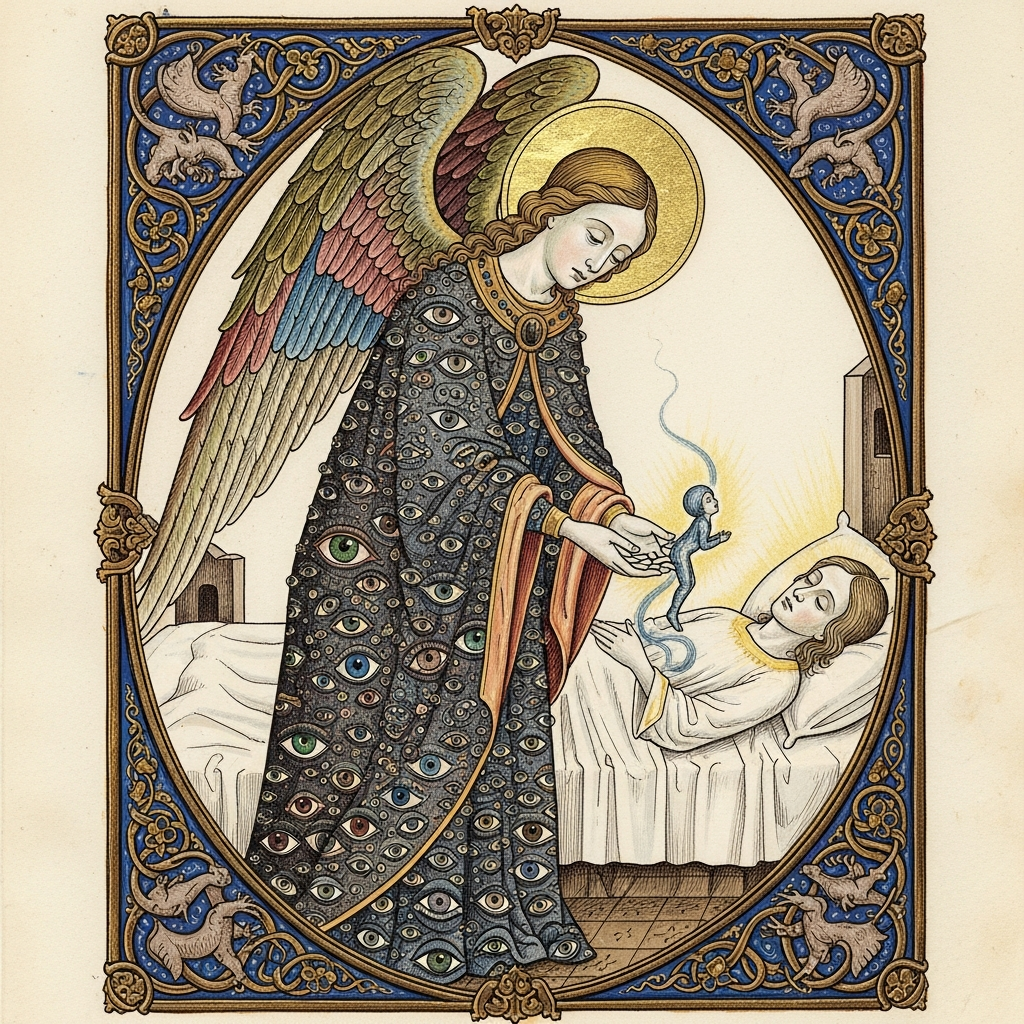
He holds a tablet on which the names of the dying are written. When the time comes for a soul, the name is revealed to him. He descends.
The Sufi poets, who made death their most persistent subject, found in Azrael something the theological traditions occasionally missed: gentleness.
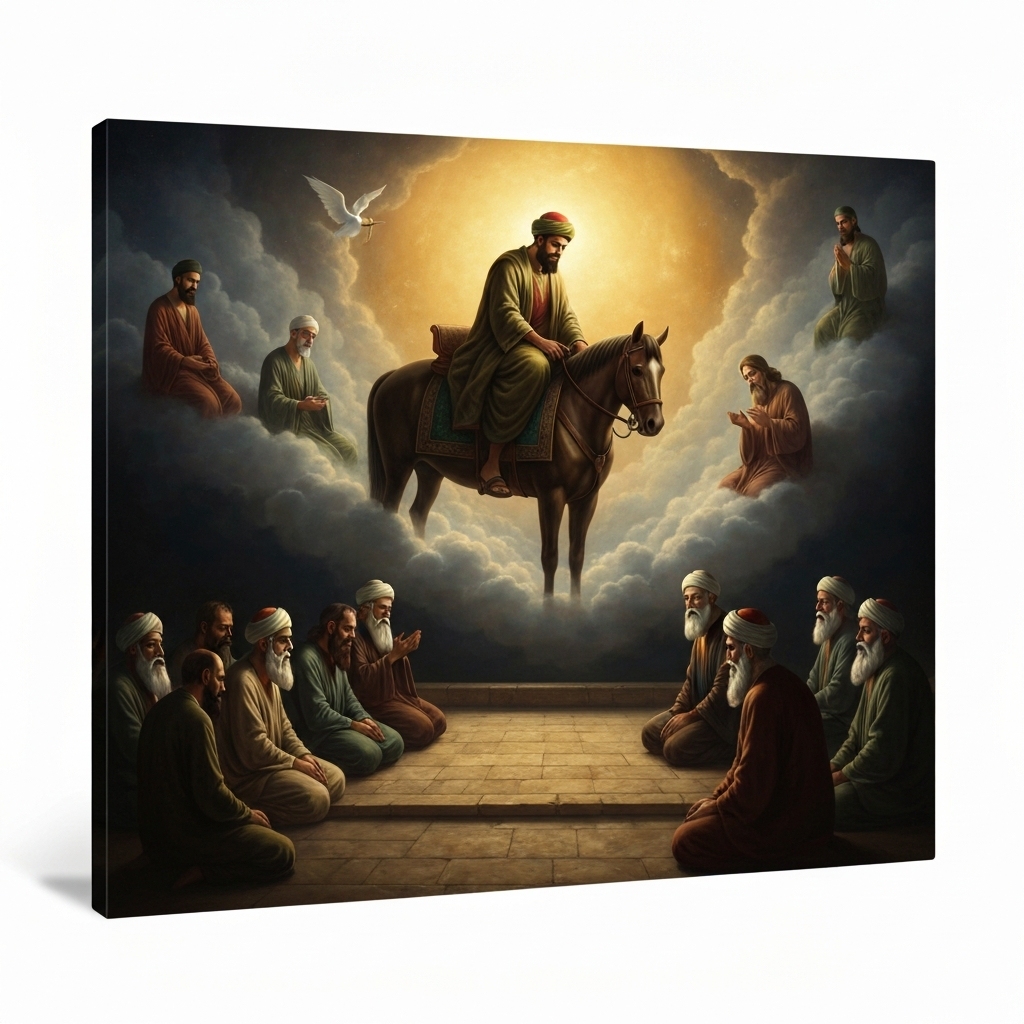
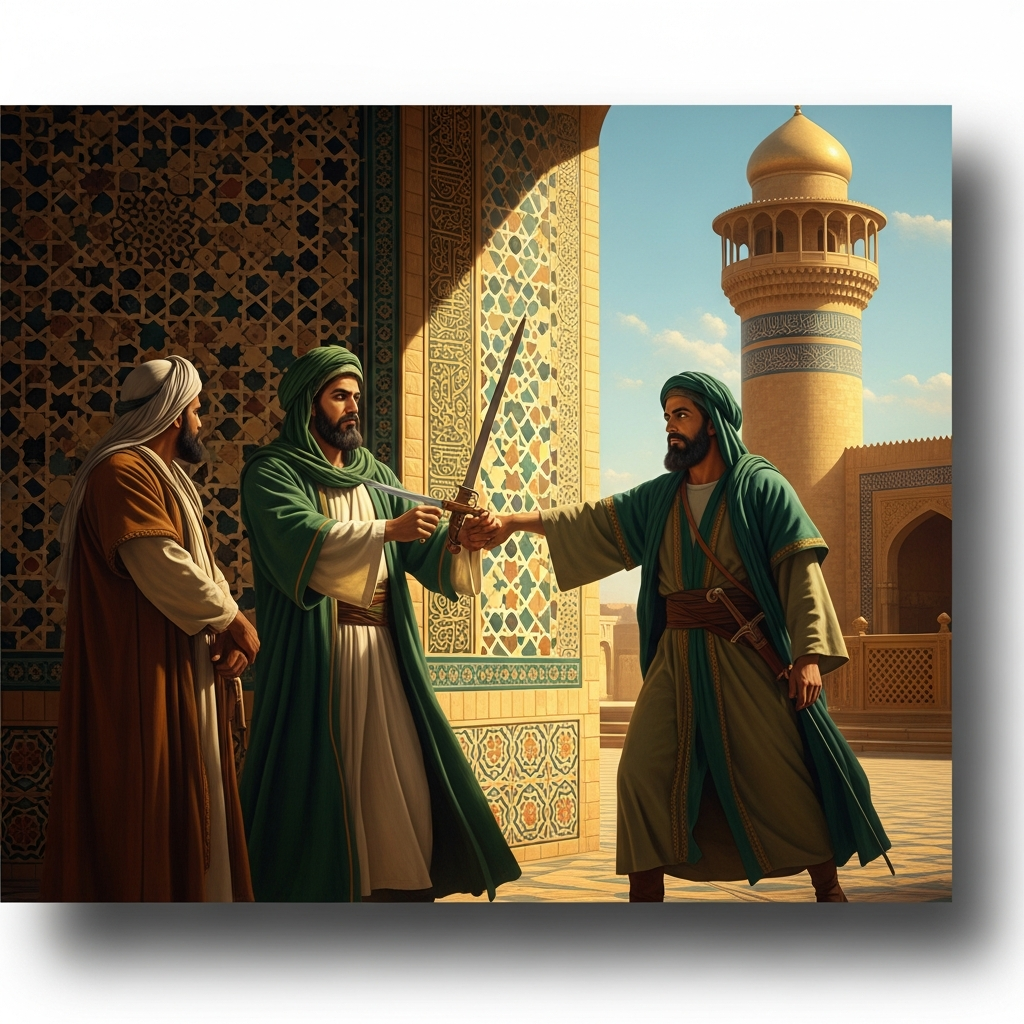
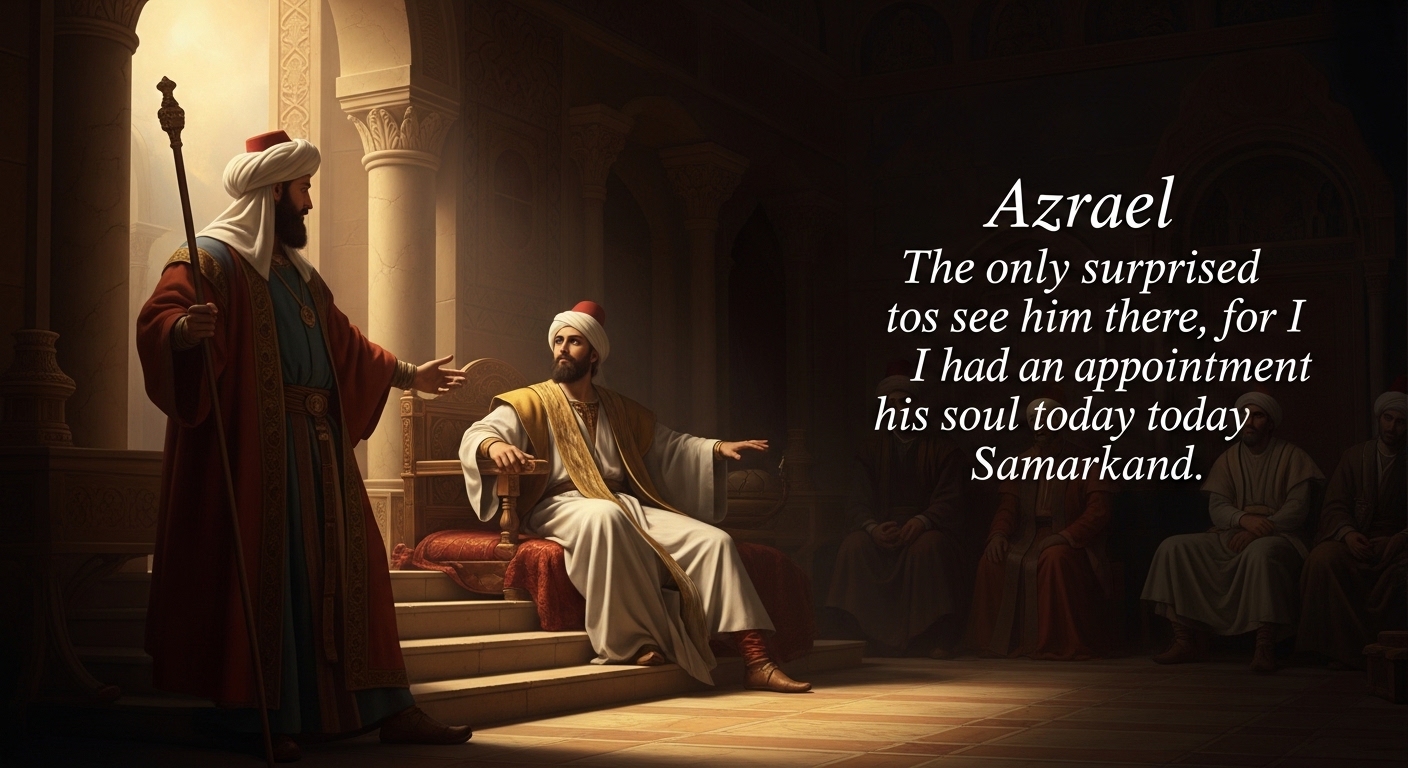
Rumi tells a story in the Masnavi that has become one of the most famous illustrations of fate in any literature. A man in Solomon’s court sees Azrael looking at him with an expression of intent he misreads as threat. Terrified, he asks Solomon to command the wind to carry him to Samarkand. Solomon does. The man arrives in Samarkand.
Later, Solomon asks Azrael why he was looking at the man so intently.
I was surprised, Azrael says. God had commanded me to take his soul today in Samarkand, and he was here.
The point of the story is not that fate is inescapable, though it is. The point is that Azrael had no malice in his gaze. He was surprised to see the man in the wrong city, at the wrong moment, running from an appointment that would have found him wherever he ran.
The fear of death that sent the man to Samarkand sent him directly to his death. The angel at the door was already on his way to where the man was going.
In Sufi thought, Azrael becomes the teacher of non-attachment.
The theologian Al-Ghazali, in the Ihya Ulum al-Din, writes about keeping death in mind not as a practice of despair but as a practice of clarity: if you remember that Azrael is present, you remember what is important. The appointments he keeps are a record of what was lived, not just what was lost.
The Sufi position is more radical. Some poets address Azrael as the beloved — the one toward whom the soul has always been traveling, the one whose arrival ends the separation between the soul and its source. Rumi’s Masnavi is full of this language: the fire that the moth flies into is not destruction; the angel whose gaze you flee is not your enemy.
The earth cried out in fear when Azrael came for its clay. But without that clay, Adam was not made. Without Adam, the human possibility — the possibility of love, of worship, of the return to God — did not exist.
Azrael’s task, in this reading, is not the ending of things. It is the last appointment on the way home.
He has kept every one.
Scenes
Echoes Across Traditions
Entities

Sources
- Tafsir literature on Quran 32:11 ('the angel of death who has been charged with you')
- Hadith collections (Bukhari, Muslim — on the nature of death)
- Al-Qurtubi, al-Tadhkirah fi Ahwal al-Mawta (The Reminder Regarding the Conditions of the Dead)
- Jewish traditions: Talmud Bavli, Bava Batra 16a (Samael as angel of death)
- Sufi poetry: Rumi, Masnavi (Azrael and the man who fled to Solomon)