The Bektāshī: Between Islam and the Mysteries
13th–19th century CE — formation and height of the Bektāshī order in Anatolia and the Balkans · Hacıbektaş, Anatolia (Cappadocia) — the order's headquarters; and across the Ottoman Empire from Bosnia to Albania
Contents
The Bektāshī order of Anatolia, associated with the Janissary corps of the Ottoman Empire, maintained a form of Islamic mysticism so saturated with Alid devotion, Christian symbolism, and heterodox practice that their neighbors debated for centuries whether they were Muslims, crypto-Christians, or something entirely new.
- When
- 13th–19th century CE — formation and height of the Bektāshī order in Anatolia and the Balkans
- Where
- Hacıbektaş, Anatolia (Cappadocia) — the order's headquarters; and across the Ottoman Empire from Bosnia to Albania
The twelve-month calendar of the Bektāshī ceremony begins in the middle of what the neighbors call the month of mourning.
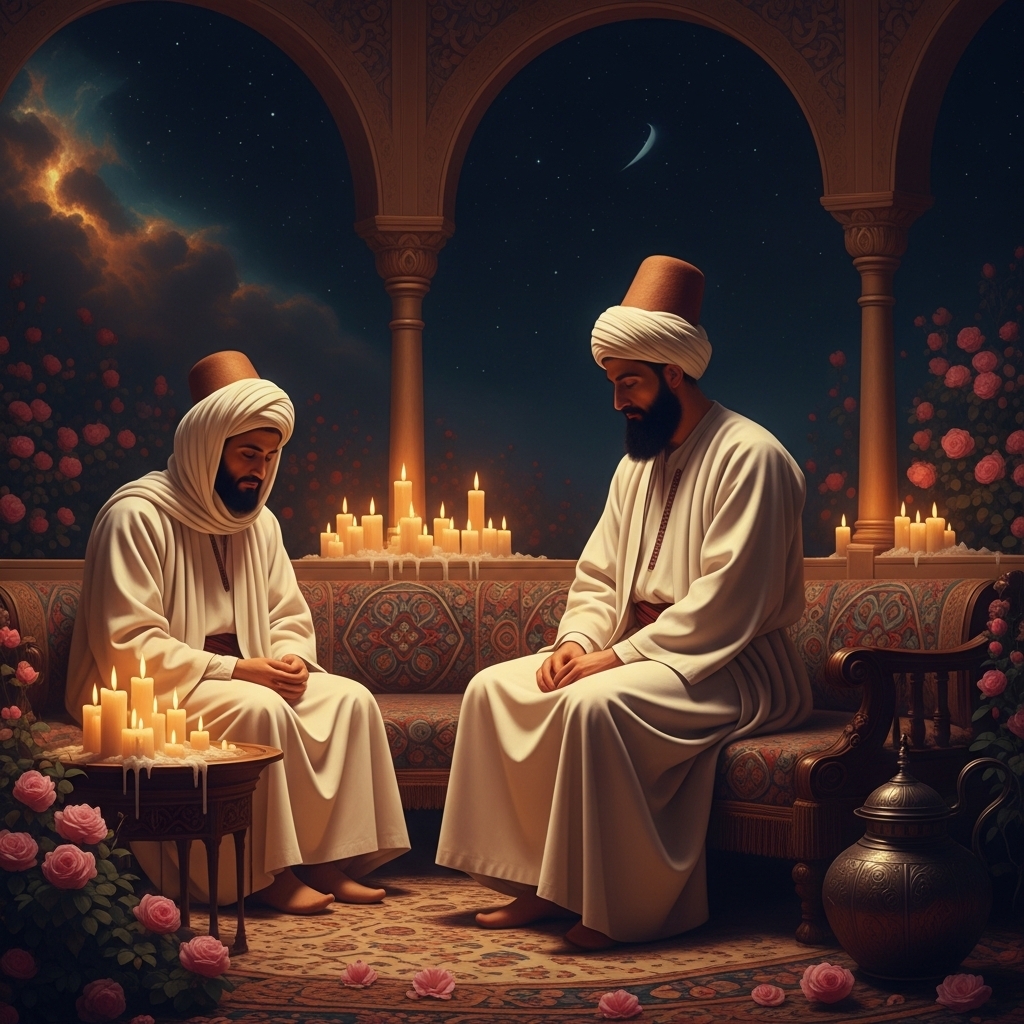
This is Muharram, the first month of the Islamic year, when Shia Muslims fast and mourn for the martyrdom of Husayn at Karbala. The Bektāshī observe a twelve-day fast — not identical to the Shia Muharram practices, but continuous with them — and at the end of the twelve days they gather for cem, the ceremony that is the heart of their practice. The cem includes music, singing, ecstatic movement, sometimes a shared communal meal that includes wine — all of this in a space that is explicitly not a mosque and in a gathering that may include women seated alongside men.
The neighbors — orthodox Sunni Muslims in the cities and towns of Anatolia — observe this with a range of responses from tolerant curiosity to genuine theological alarm.
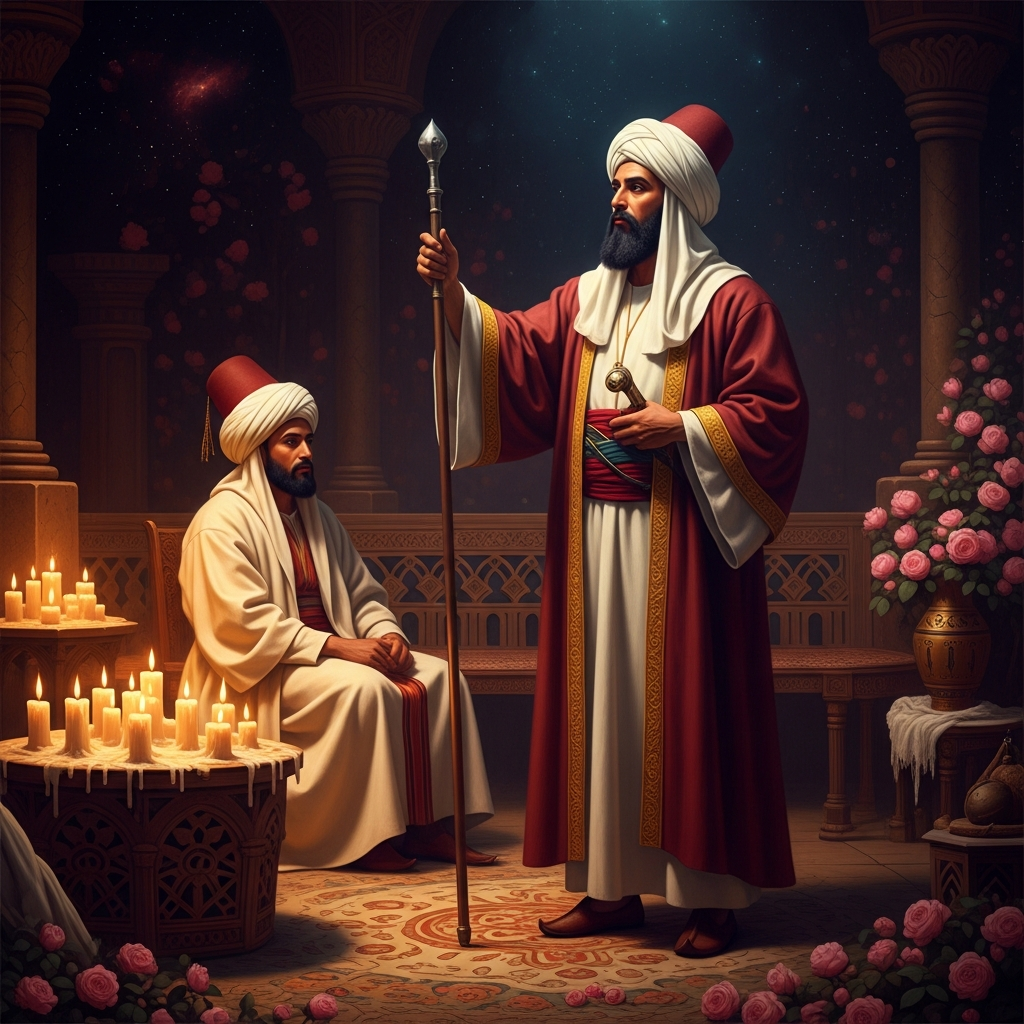
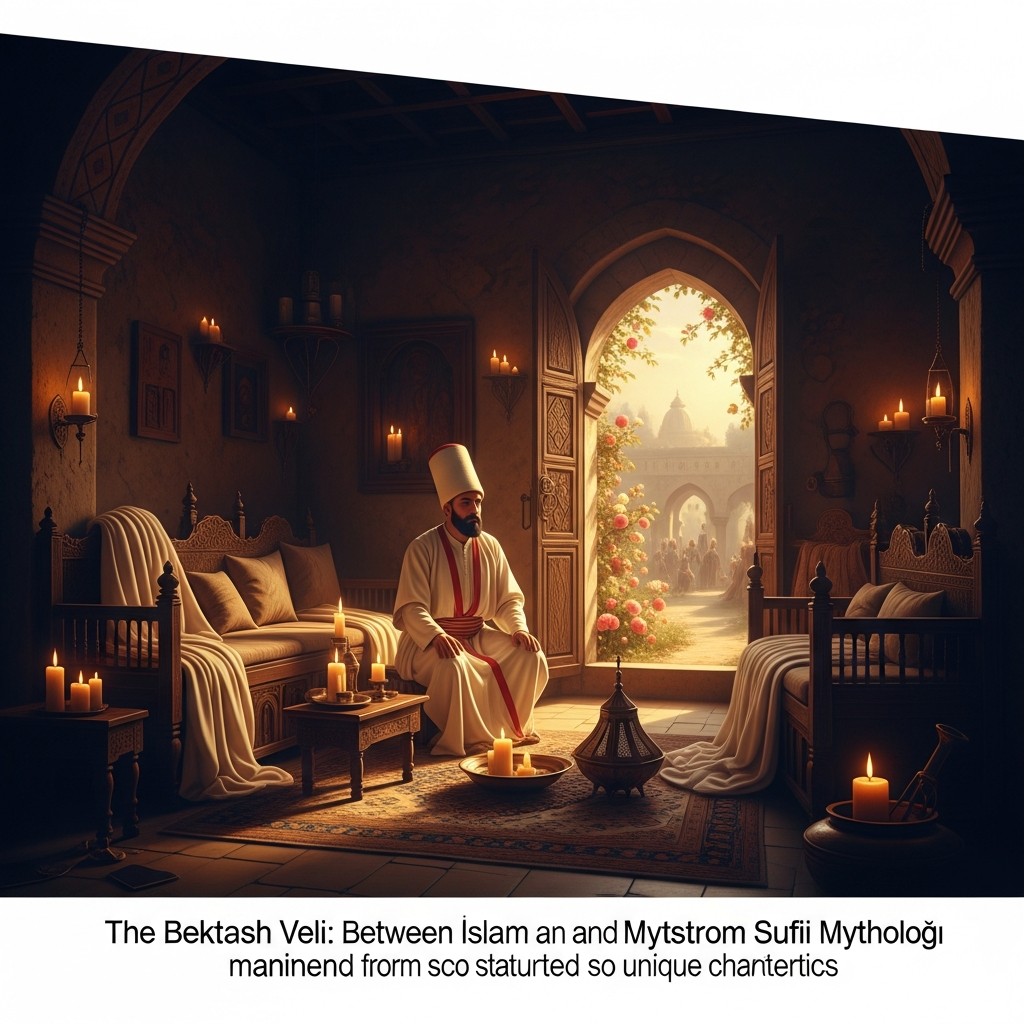
The figure at the order’s center is Haji Bektash Veli.
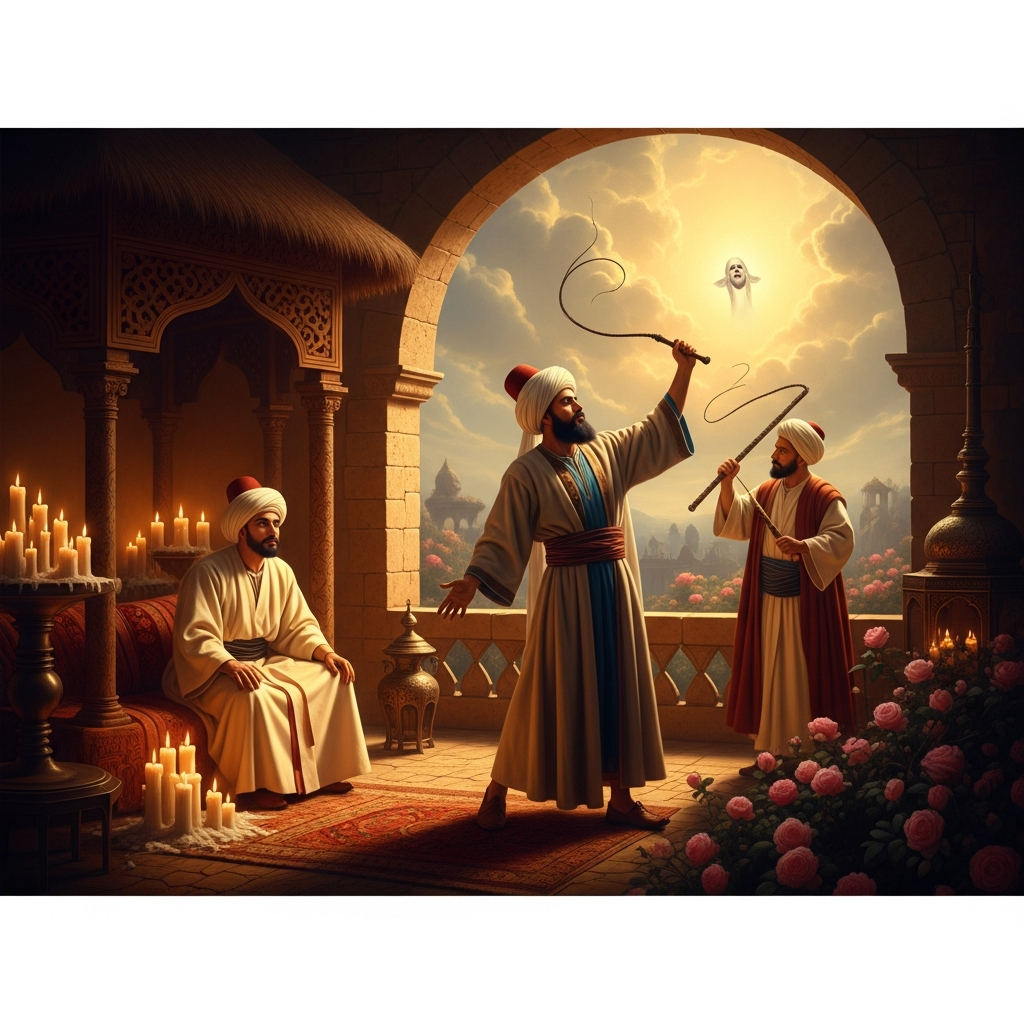
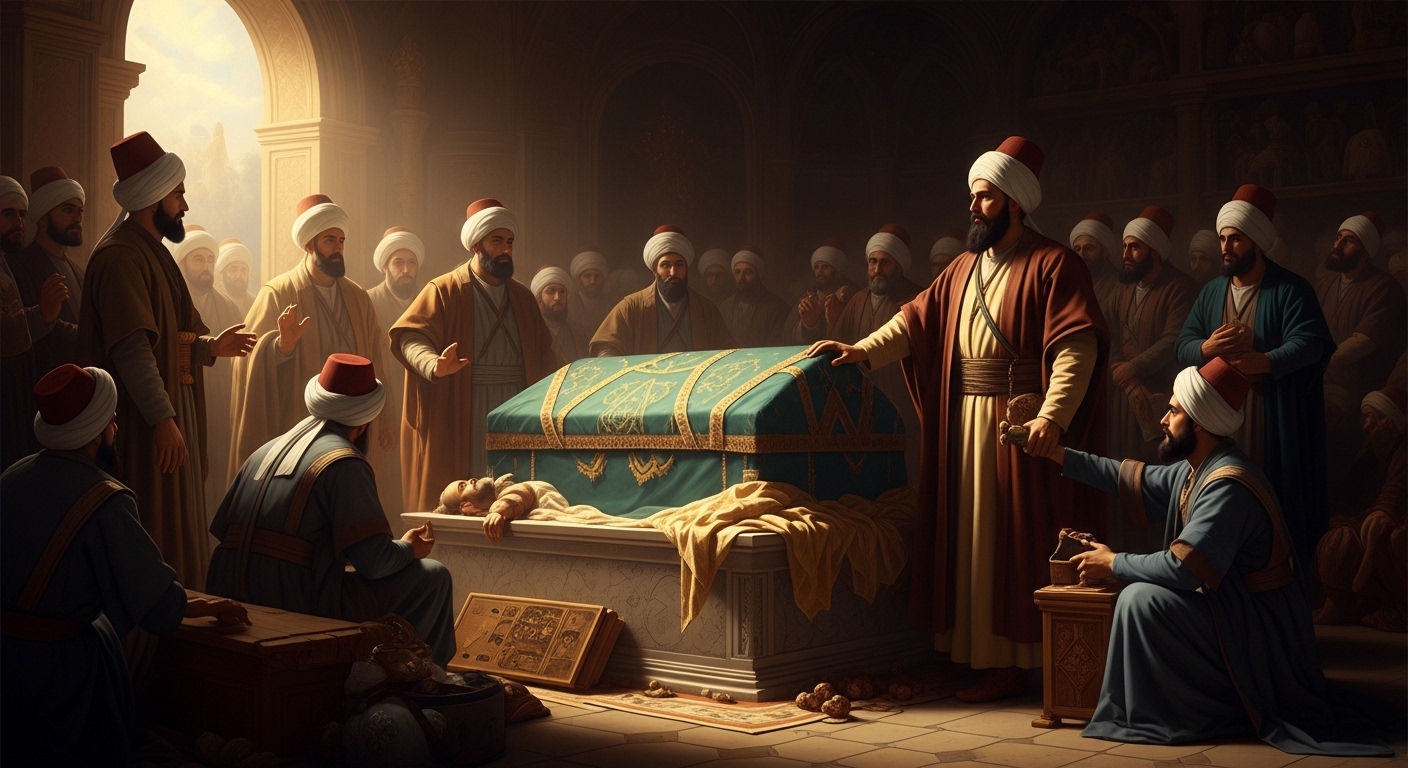
He is a thirteenth-century figure from Khurasan — possibly from Nishapur, the city of Sufi thought — who came to Anatolia at the time of the Mongol invasions and settled in Cappadocia, in the central Anatolian plateau, in the area that still bears his name: Hacıbektaş. The hagiography around him is extensive and clearly syncretic: he performs miracles using a staff, he sits on a rock that flies, he transforms into a falcon. These are not Islamic theological imagery. They are Anatolian shamanic imagery, absorbed into a Sufi hagiographic framework.
The order that develops around his tomb in the two centuries after his death incorporates elements that are difficult to categorize as straightforwardly Islamic.
The veneration of Ali — the Prophet’s son-in-law, the martyr figure of Shia Islam — is central. The formula Allah, Muhammad, Ali is used in ways that parallel the Shia commitment to Alid authority. The twelve imams of Shia tradition are explicitly present in Bektāshī iconography. Yet the order identifies itself as Sunni in its formal legal affiliations.
The heterodox elements accumulate.
Wine is used ceremonially in some branches of the order. This is either: a) a genuine use of wine in ritual, which is categorically prohibited in Islamic law, or b) a metaphorical wine in the Sufi tradition of calling divine ecstasy wine. The Bektāshī tradition has used the ambiguity deliberately, as Hafez used it, and has maintained it through centuries of external pressure.
The ceremony (cem) includes women. In the orthodox Muslim framework, men and women worship separately. The inclusion of women in Bektāshī ceremonies as active participants — not segregated, not silent — was and is one of the most visible marks of the order’s distinctiveness.
The initiation involves a staged progression through levels, with wine shared communally at certain levels, in a way that some scholars have compared to Christian sacramental practice. Whether the comparison is structural coincidence, genuine Christian influence on the syncretic Anatolian tradition, or deliberate borrowing is debated.
The Janissary connection is historical.
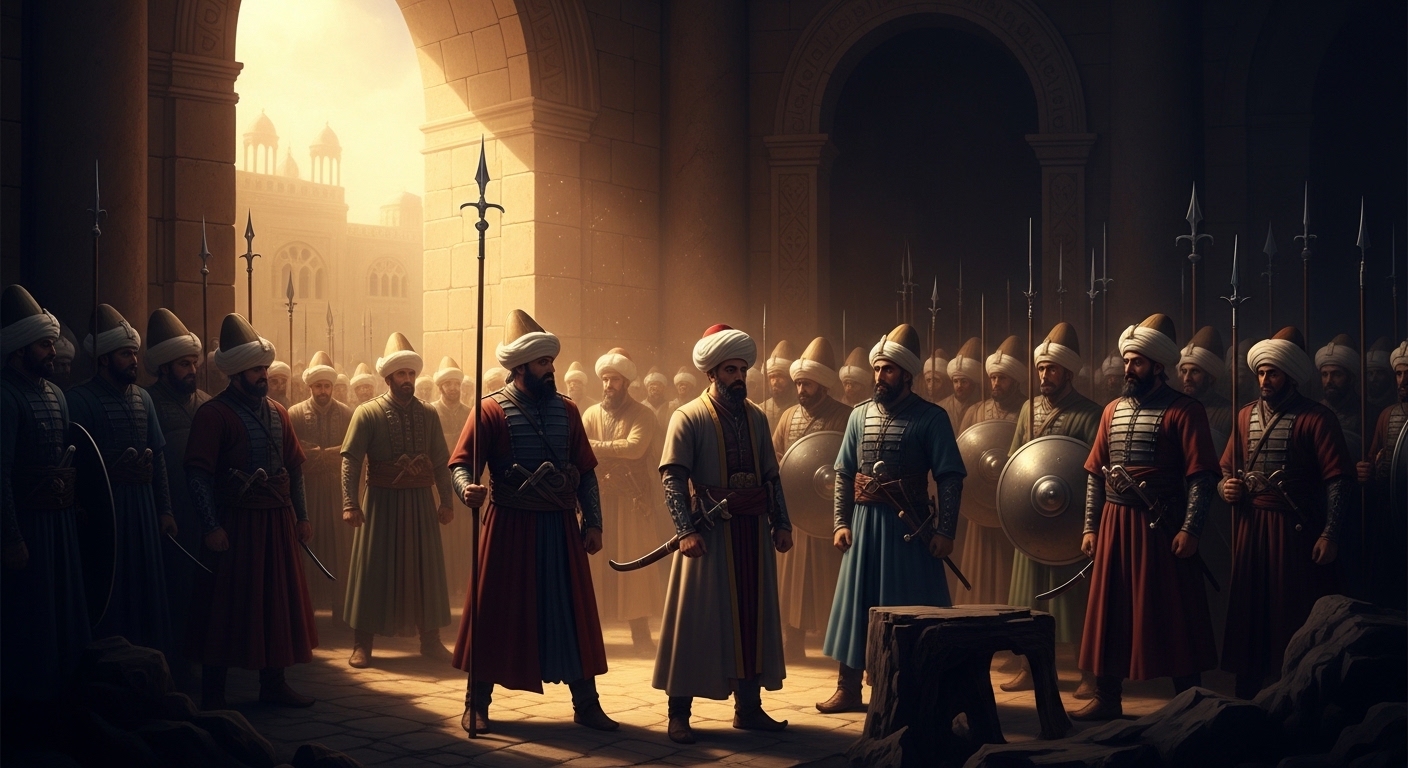
The Ottoman Janissary corps — the elite infantry force that was the backbone of the Ottoman army from the fourteenth to the nineteenth century — adopted the Bektāshī order as its patron tradition. The head of the Bektāshī order received a formal role in Janissary ceremonies. The two institutions were intertwined for four centuries.
When Sultan Mahmud II destroyed the Janissary corps in 1826 — the event the Ottomans called the Auspicious Incident — the Bektāshī order was officially suppressed simultaneously. The dervish lodges were closed. The leaders were executed or exiled.
The order survived, driven underground, in the Balkans — particularly Albania, which had significant Bektāshī presence going back several centuries. When Albanian nationalism emerged in the late nineteenth century, the Bektāshī served as one of its cultural anchors: a form of Islamic identity that was distinctly Albanian, not Arab and not Ottoman.
The order continues today.
Its theology — eclectic, poetic, resistant to orthodox systematization, attentive to Ali and the twelve imams, comfortable with wine as metaphor and wine as wine, inclusive of women — represents one of the oldest living experiments in what happens when Sufi mysticism fully absorbs the culture in which it is embedded.
The neighbors still debate whether this is Islam, which is the question the tradition was designed to make unanswerable.
Between the mosque and the mystery, the cem continues.
Scenes
Echoes Across Traditions
Entities
- Haji Bektash Veli (13th century founder-figure)
- Balım Sultan (the order's second founder, early 16th c.)
- the Ottoman Janissaries
Sources
- John Birge, *The Bektashi Order of Dervishes* (Luzac, 1937)
- Irène Mélikoff, *Au Banquet des Quarante: Exploration au coeur du Bektachisme-Alevisme* (Istanbul, 2001)
- Ahmet Karamustafa, *God's Unruly Friends: Dervish Groups in the Islamic Later Middle Period* (Utah, 1994)
- Frederick de Jong and Bernd Radtke, eds., *Islamic Mysticism Contested* (Brill, 1999)