The Chishtī Order and the Power of Qawwali
1192 CE (Chishti's arrival in Ajmer) through 13th–14th century development in Delhi · Ajmer, Rajasthan and Delhi, India — the two poles of the Chishti order's influence in the subcontinent
Contents
Muin ud-Din Chishti arrives in Ajmer from Khurasan in 1192 and establishes the Sufi order that will shape the spiritual landscape of the Indian subcontinent — an order whose embrace of Indian music, poetry, and vernacular language made Islam accessible to millions who would never have entered a mosque.
- When
- 1192 CE (Chishti's arrival in Ajmer) through 13th–14th century development in Delhi
- Where
- Ajmer, Rajasthan and Delhi, India — the two poles of the Chishti order's influence in the subcontinent
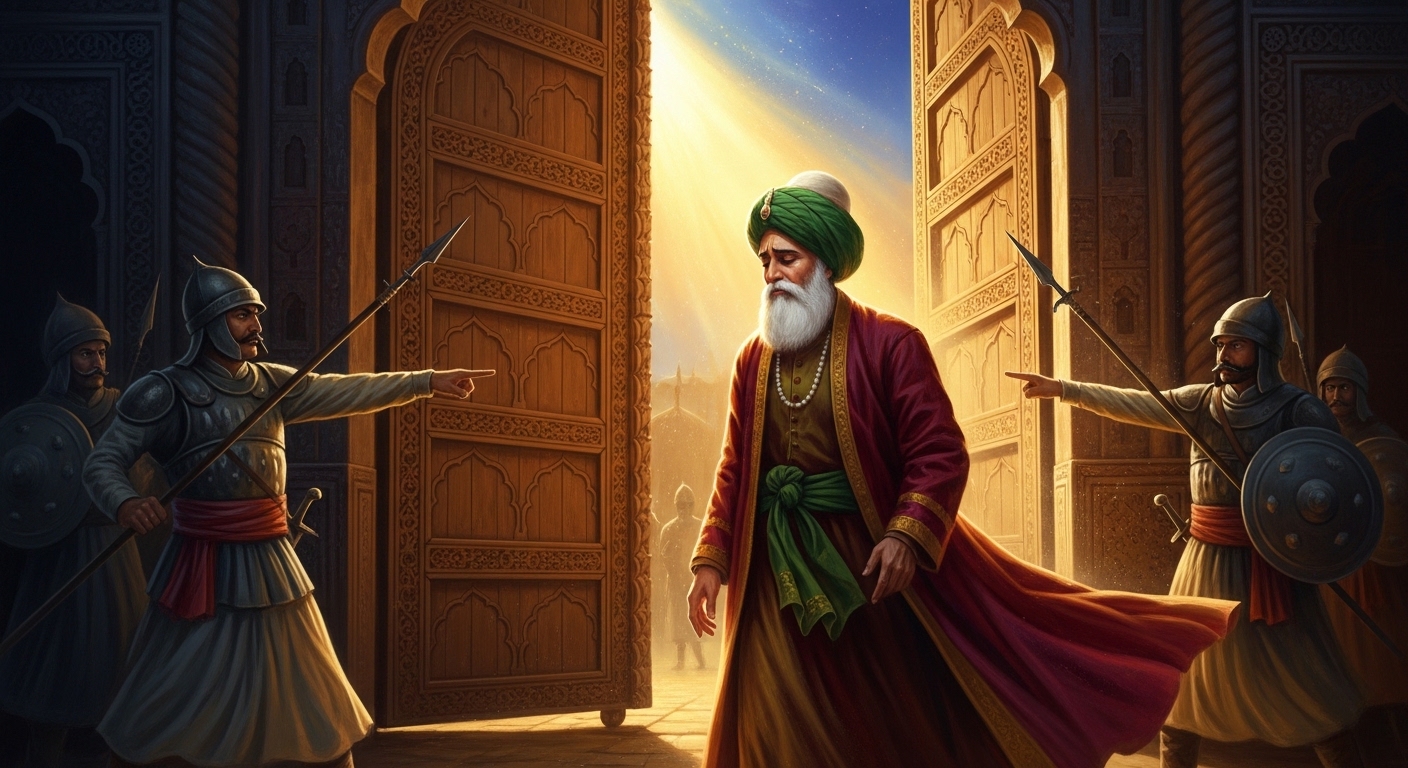
He arrives at the gates of Ajmer and is told to leave.
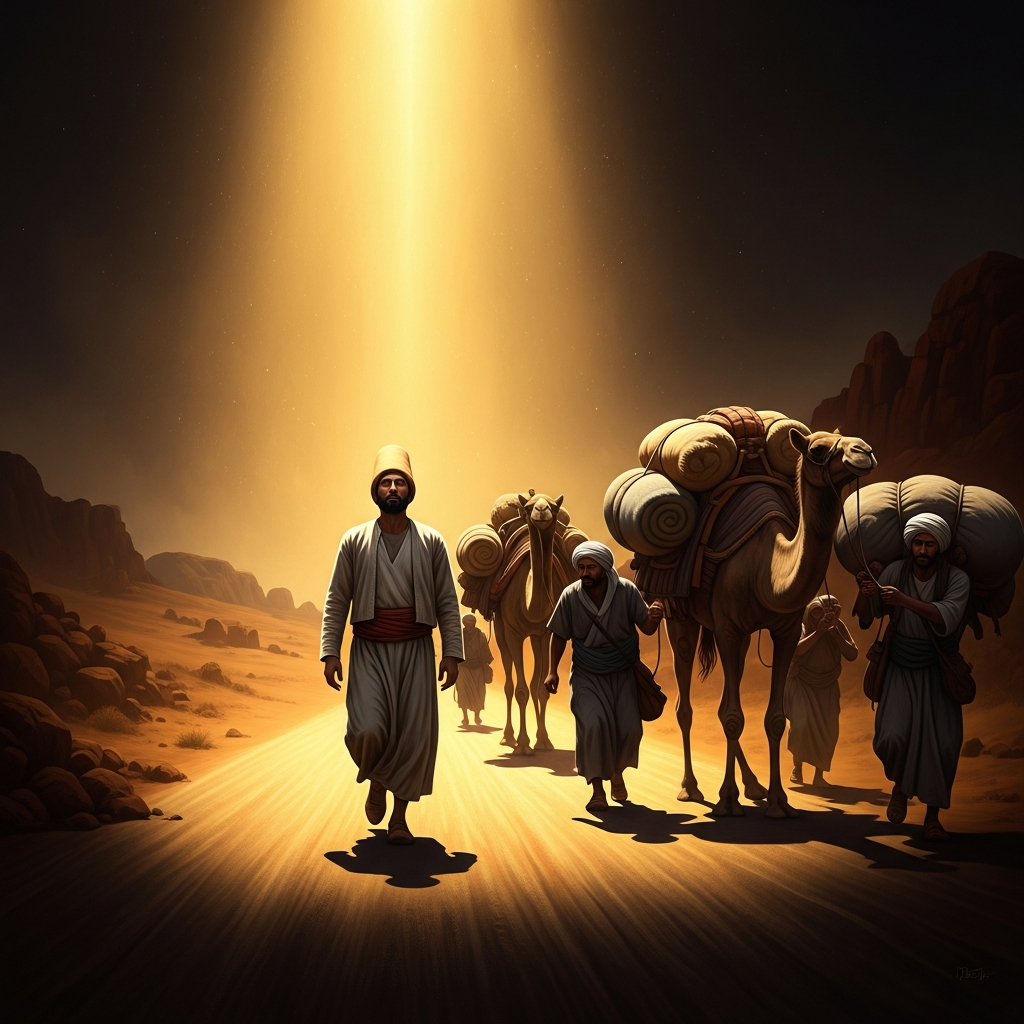
The ruler of Ajmer in 1192 — the Rajput king Prithviraj Chauhan, who will lose the region to Muhammad of Ghor in the Second Battle of Tarain that same year — is hostile to the Islamic travelers arriving in his territory. Muin ud-Din Chishti, a Khorasani mystic in his forties who has been traveling for decades from his home region through Khurasan, Baghdad, and now across the Hindu Kush into India, is among those told to move on.
He doesn’t.
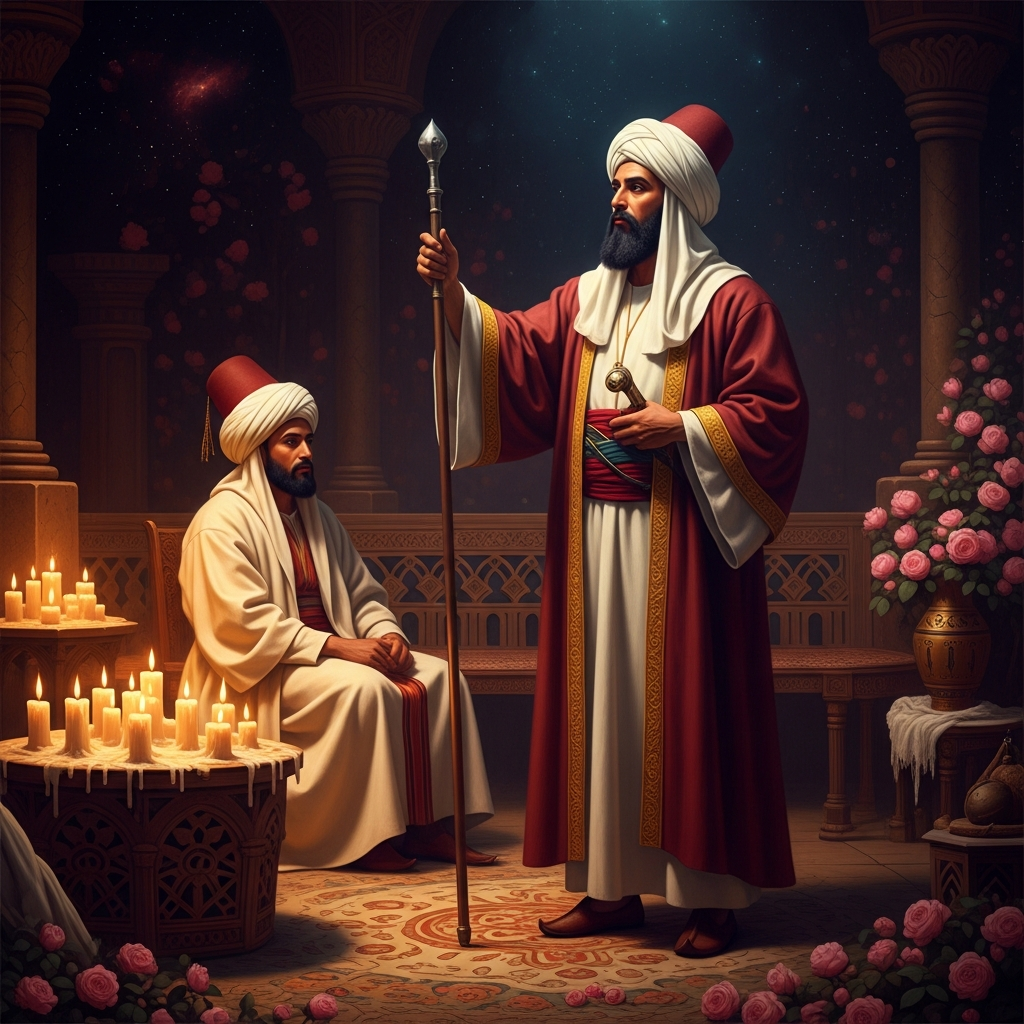
He establishes a small hospice at the foot of Ana Sagar lake. He begins feeding people. He begins treating the sick. He speaks the local language badly at first and then better. He does not require conversion as a precondition for receiving hospitality. The Rajput gentry come to see what this foreign ascetic is doing and find a man who knows how to listen, who speaks with evident care for the people in front of him, and who seems genuinely to embody the qualities he teaches.
The conversions begin slowly, then accelerate.
The method the Chishti order develops over the following century is deliberate.
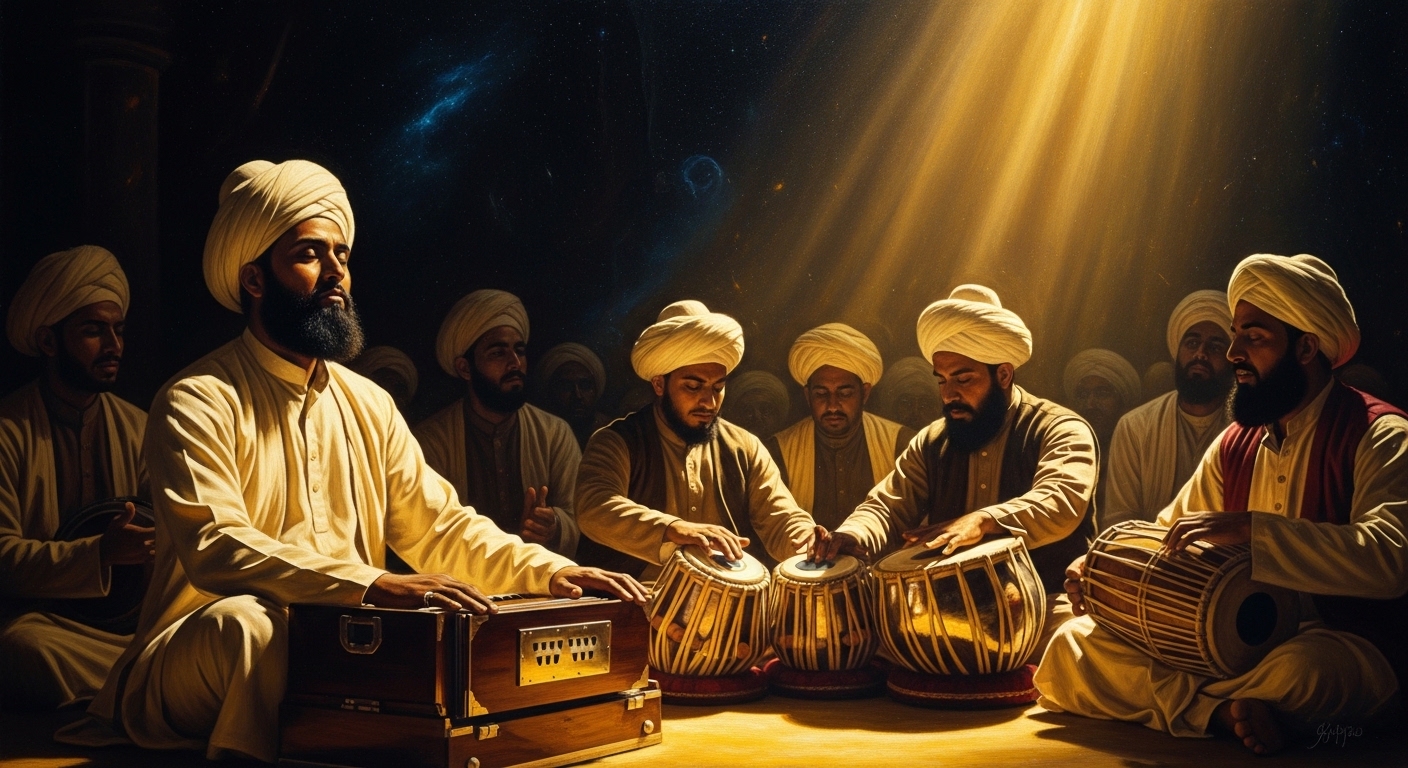
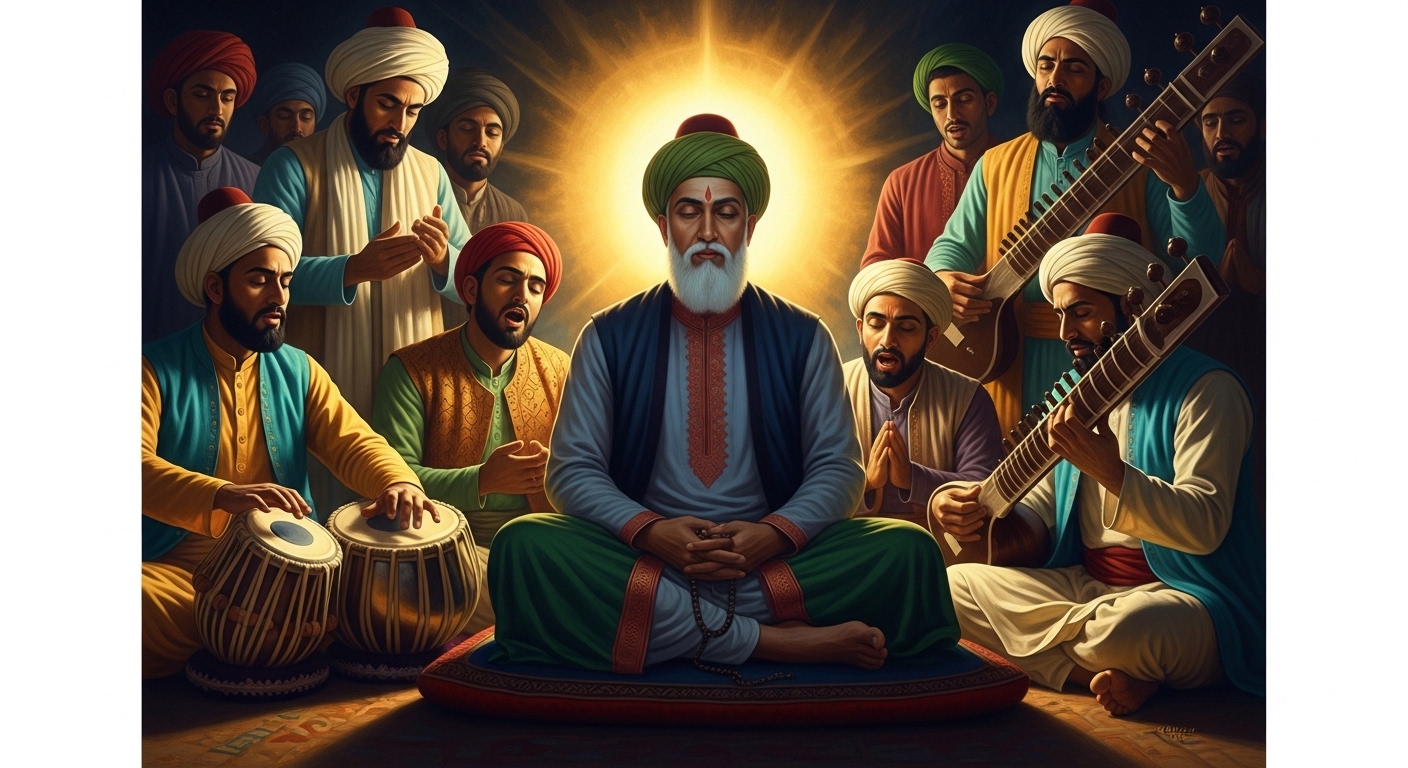
Sama — sacred listening, the use of music — is at the center. But in India, the music is not the Persian ney and Arabic lyrics of the Middle Eastern Sufi orders. It is the Hindustani musical tradition: ragas, rhythmic cycles, voice as the primary instrument, the ecstatic call-and-response structure of Indian devotional music. The Chishtis absorb this tradition not as a compromise but as a recognition: music that moves the soul uses the sonic vocabulary of the culture in which it is heard. Persian music moves Persian souls. Indian music moves Indian souls.
Amir Khusrow — the great Delhi poet and musician who is the disciple of Nizamuddin Auliya, the order’s most celebrated master — embodies this synthesis. He writes in Persian, Hindi, and a mixed language that becomes the basis of Urdu. He composes in classical Indian ragas. He invents or develops musical forms that become the foundations of North Indian classical music. The qawwali form — the devotional music that remains the Chishti order’s signature — is substantially his creation.
Nizamuddin Auliya of Delhi is the order’s apogee.
He was born in Badaun and came to Delhi as a young man to study. He became the disciple of Farid ud-Din Ganj-i-Shakar — Baba Farid — whose tomb in Pakpattan is still one of the most visited Sufi shrines in the world. Nizamuddin then established himself in Delhi, where his khanqah at the Ghiyaspur quarter became the most important spiritual center in the Delhi Sultanate for over fifty years.
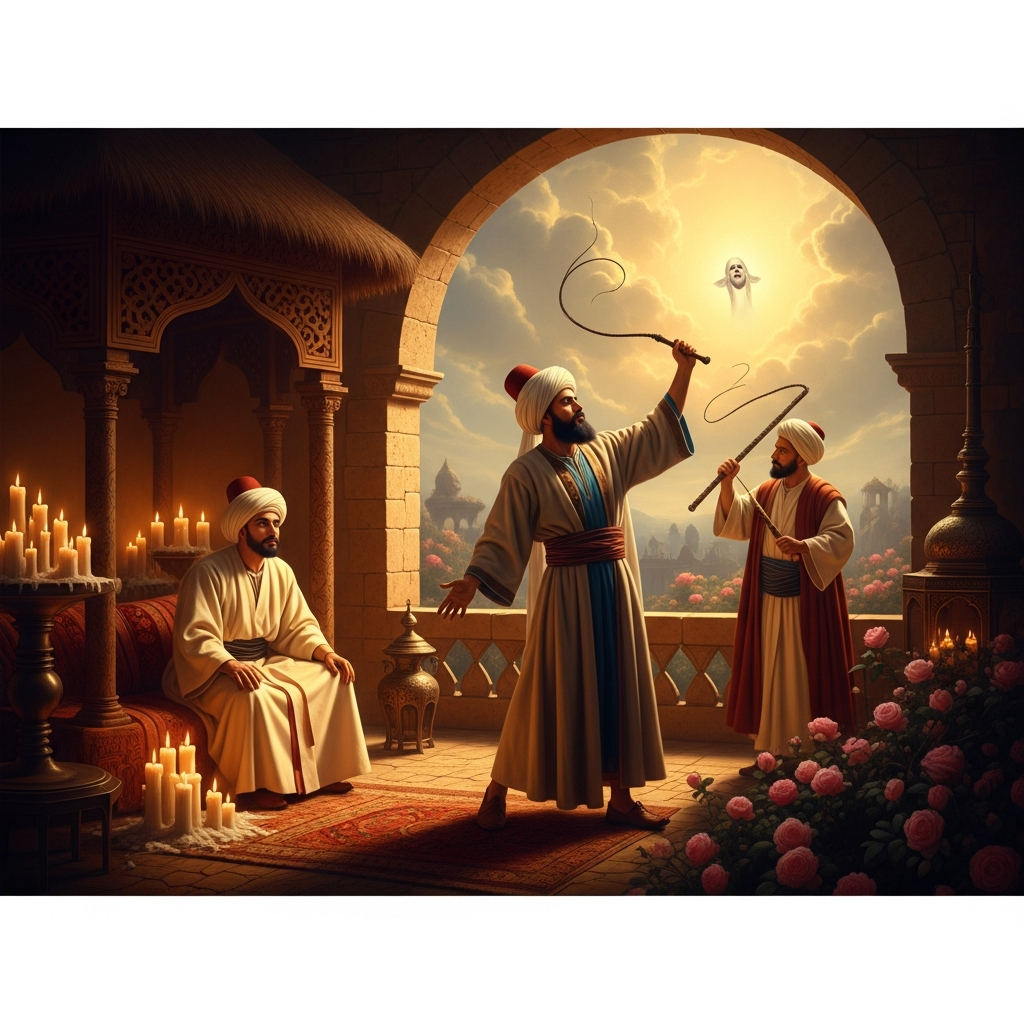
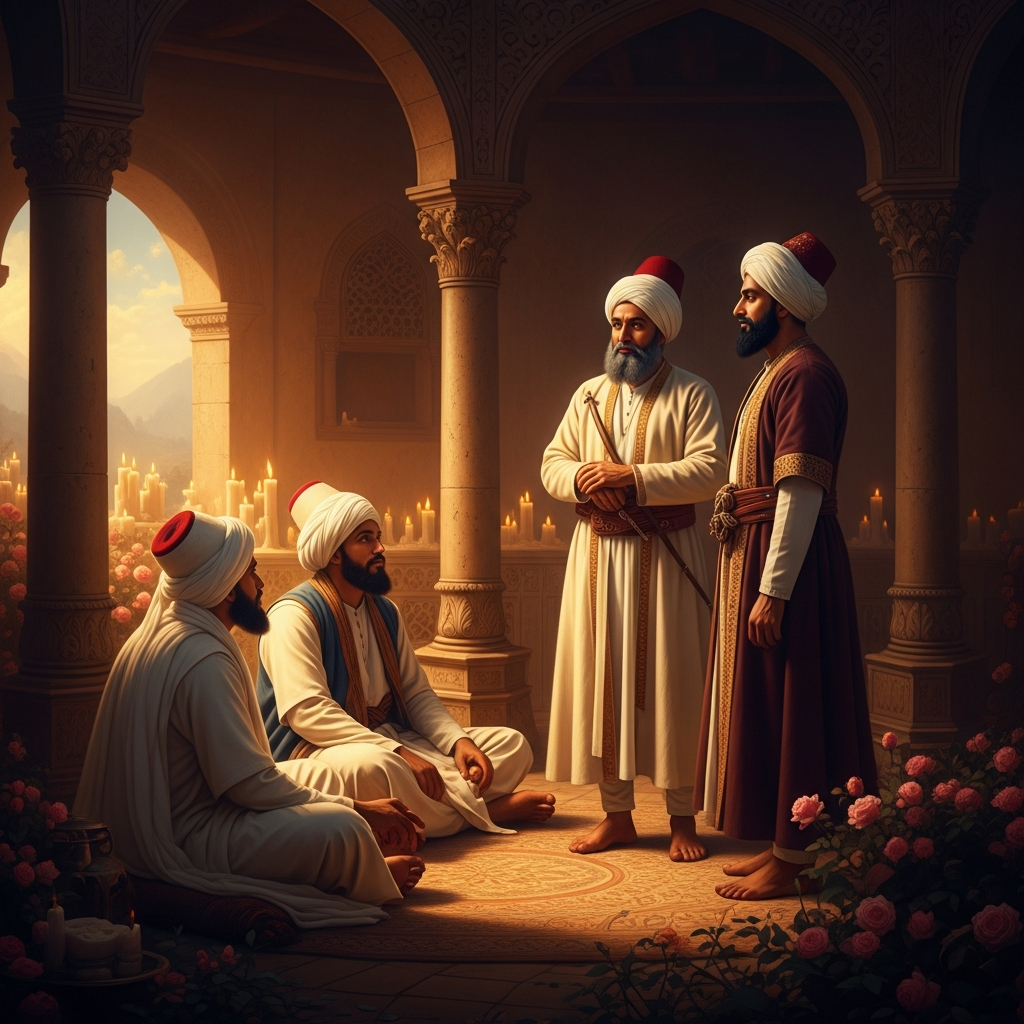
His khanqah was open to everyone. Hindus, Muslims, the poor, the powerful, traders, scholars, women, men — all were received. He fed everyone who came. His practice of feeding the hungry without regard to religion was controversial with the more orthodox; he ignored the controversy. The spiritual authority he accumulated was such that the sultans of Delhi deferred to him, and the one sultan — Ghiyath ud-Din Tughluq — who did not defer to him and actively opposed him is remembered in Chishti tradition for the aphorism the master uttered when the sultan threatened him: Huz-uz dilli dur ast — Delhi is still far.
The sultan died before reaching Delhi after a military campaign. The saying became proverbial.
The qawwali that developed in and around the Chishti khanqahs was not merely entertainment or even merely worship.
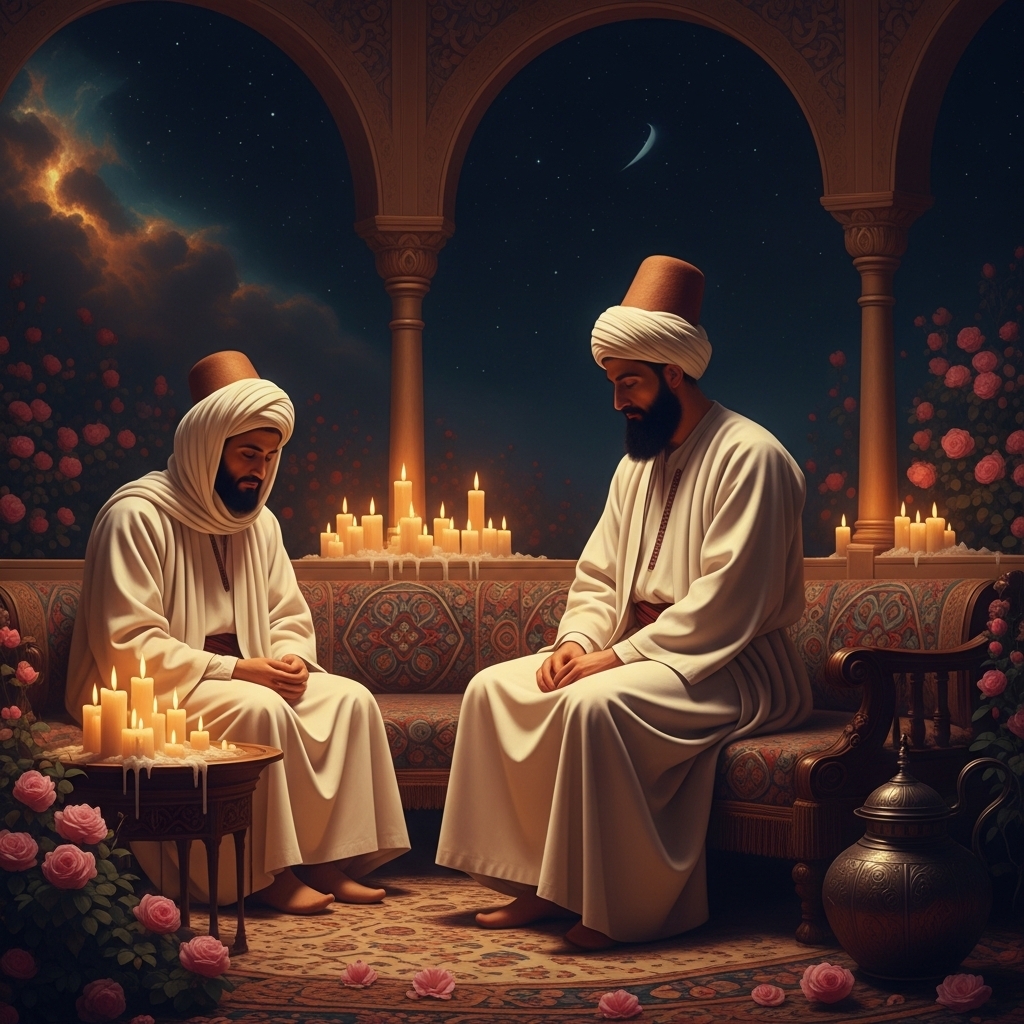
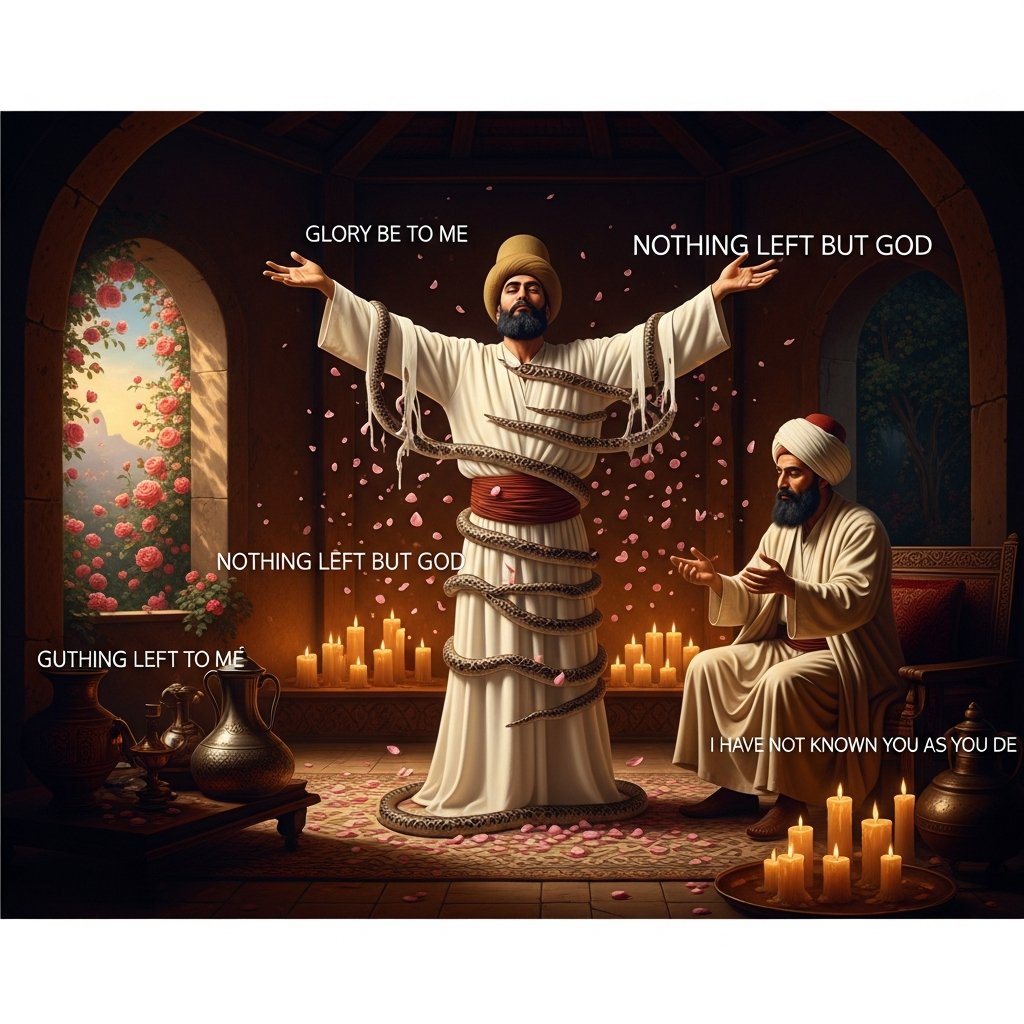
It was a technology of transmission. The musical form — ecstatic, repetitive, building toward a peak of intensity, with the lead singer improvising within the raga’s framework while the chorus responds — creates conditions in which the barrier between ordinary consciousness and mystical openness can be crossed by listeners who have not undergone years of formal Sufi training. The music does in forty minutes what formal practice might take years to achieve.
This democratizing function was exactly the Chishti intention. The order was not designed for scholars or professional mystics. It was designed for the Indian subcontinent, where millions of people could receive the Sufi teaching through the door of music and come out the other side different.
Muin ud-Din Chishti’s tomb in Ajmer — the Dargah Sharif — receives millions of pilgrims annually, Muslim and Hindu and Sikh and Christian and secular. The qawwali still plays at the tomb.
The music that he heard in Khorasan found a new home in India.
The home is still singing.
Scenes
Echoes Across Traditions
Entities
- Muin ud-Din Chishti
- Nizamuddin Auliya (the order's greatest master)
- Amir Khusrow (the order's greatest poet-musician)
Sources
- Khaliq Ahmad Nizami, *The Life and Times of Shaikh Nizamu'd-Din Auliya* (IDARAH-I ADABIYAT-I DELLI, 1991)
- Bruce Lawrence, *Notes from a Distant Flute: The Extant Literature of Pre-Mughal Indian Sufism* (Tehran, 1978)
- Regula Qureshi, *Sufi Music of India and Pakistan: Sound, Context and Meaning in Qawwali* (Cambridge, 1986)
- Simon Digby, 'The Sufi Sheikh as a Source of Authority in Mediaeval India' in *Purusartha* 9 (1986)