Ibn ʿArabī: Imagination Is the Only Reality
c. 1229–1240 CE — Damascus, Syria, last decades of Ibn ʿArabī's life · Damascus, Syria — where Ibn ʿArabī settled in his final decades under the protection of the Ayyubid dynasty
Contents
In the Fusus al-Hikam, Ibn ʿArabī argues that the entire visible world exists in the intermediate realm of imagination — neither purely real nor purely unreal — and that the mystic's task is not to escape this world but to perceive it as the ongoing self-disclosure of God.
- When
- c. 1229–1240 CE — Damascus, Syria, last decades of Ibn ʿArabī's life
- Where
- Damascus, Syria — where Ibn ʿArabī settled in his final decades under the protection of the Ayyubid dynasty
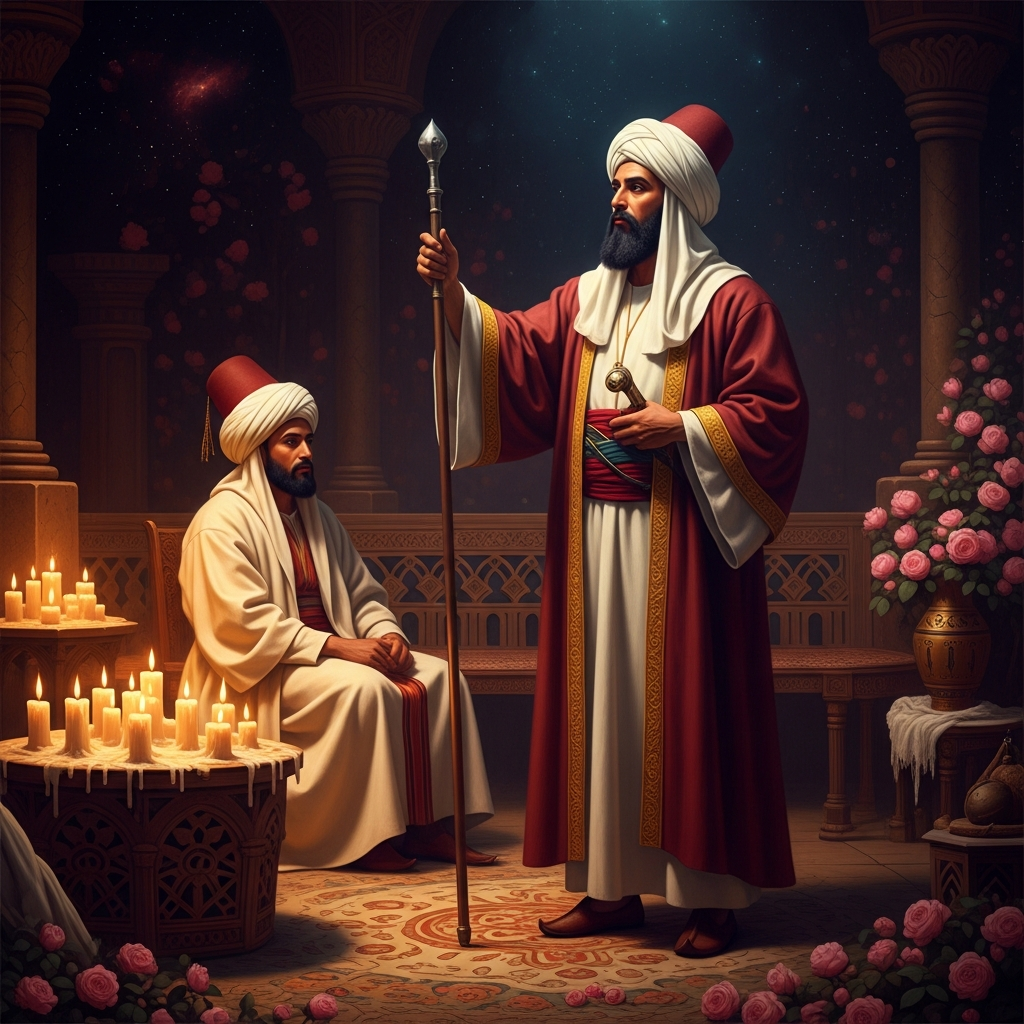
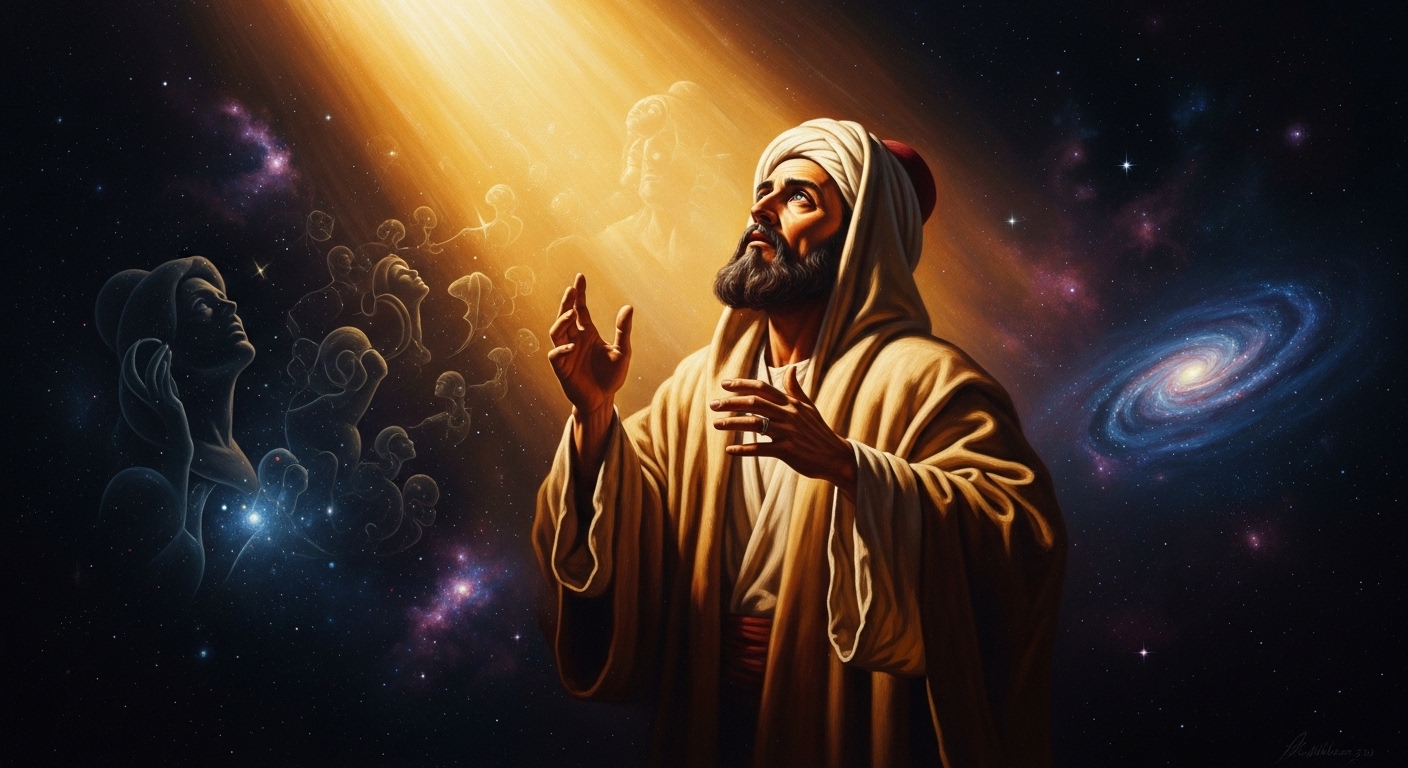
He receives the Fusus al-Hikam in a dream.
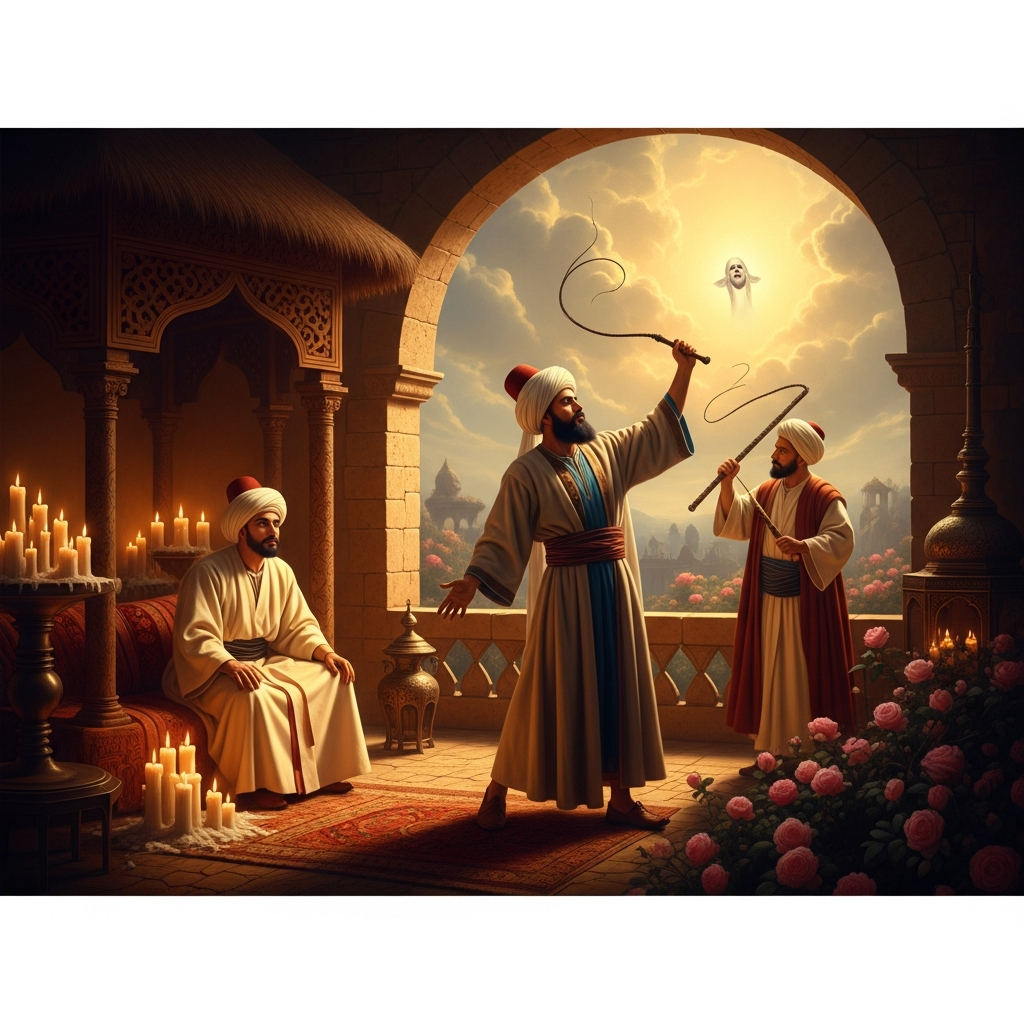
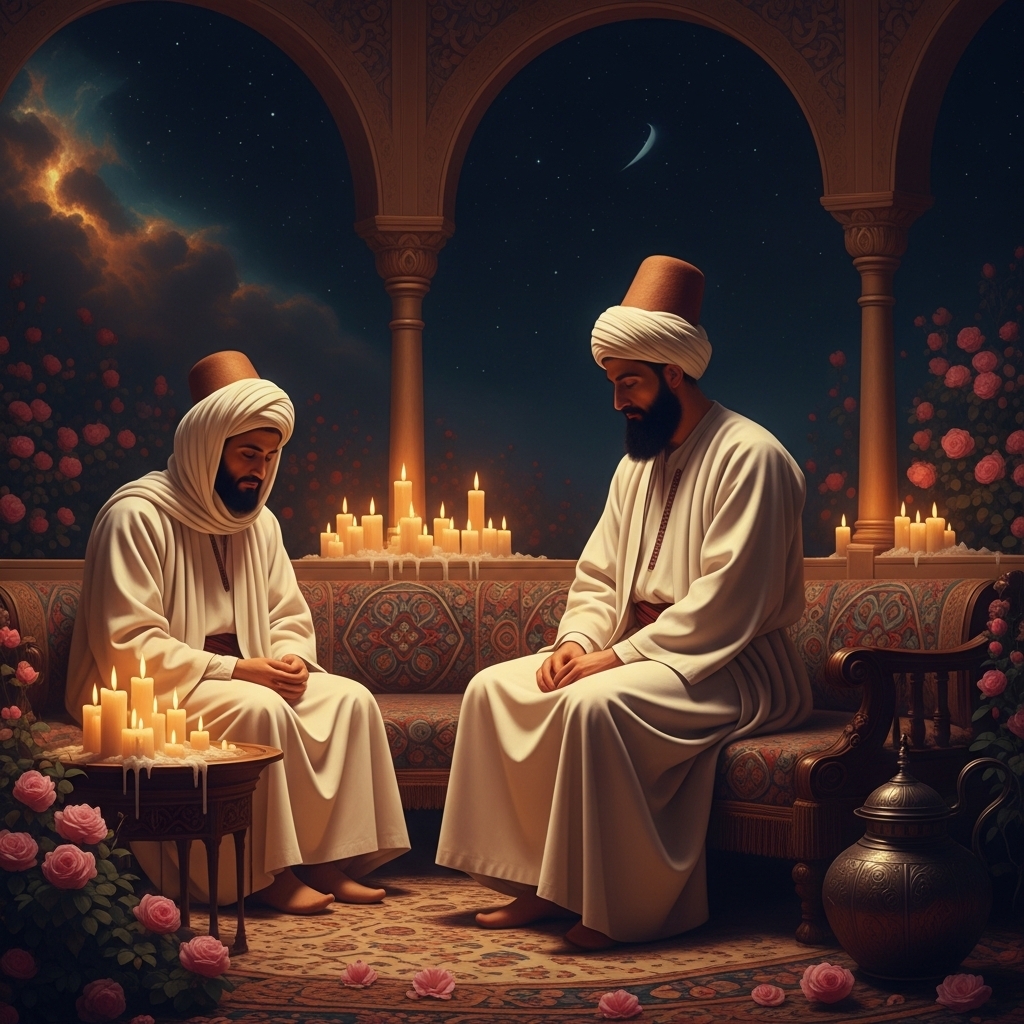
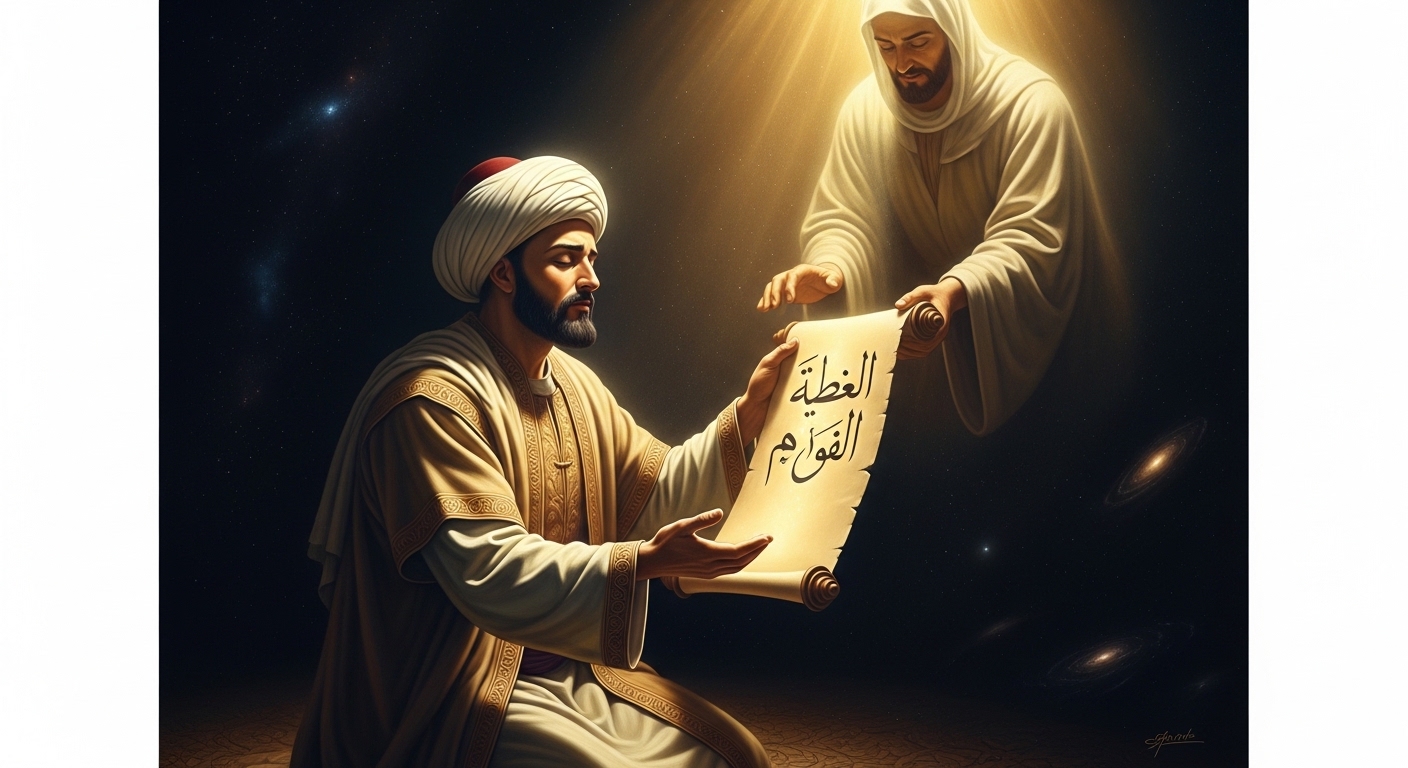
This is how he reports it himself in the introduction. The Prophet Muhammad appears to him in Damascus, holding a book, and says: this is the book Fusus al-Hikam — the Bezels of Wisdom — take it and carry it to the people so they may benefit from it. Ibn ʿArabī wakes up and writes it in the way he has written all his major works: not composing in the ordinary literary sense but transcribing what has already been placed in him.
The claim is not unusual in the tradition of Islamic mystical writing. The distinction between divine inspiration and human authorship is, in Sufi epistemology, a matter of how much the personal self has gotten out of the way. What Ibn ʿArabī is saying, in claiming the book came from the Prophet, is that the ordinary authorial self — the one with preferences and anxieties about being understood — was not the faculty active during the writing. Something else was.
This is itself an illustration of the book’s central argument.
The doctrine is called wahdat al-wujud — the Unity of Being — and its most radical implication concerns imagination.
In ordinary Islamic metaphysics (and in much of Western medieval philosophy), the ladder of reality goes: material world at the bottom, intellectual/spiritual world at the top, with God at the apex. The goal of the spiritual life is to ascend from matter to spirit, progressively leaving the material behind. Imagination, in this framework, is lower than reason and useful mainly as a vehicle for communicating abstract truths to non-philosophers through stories and images.
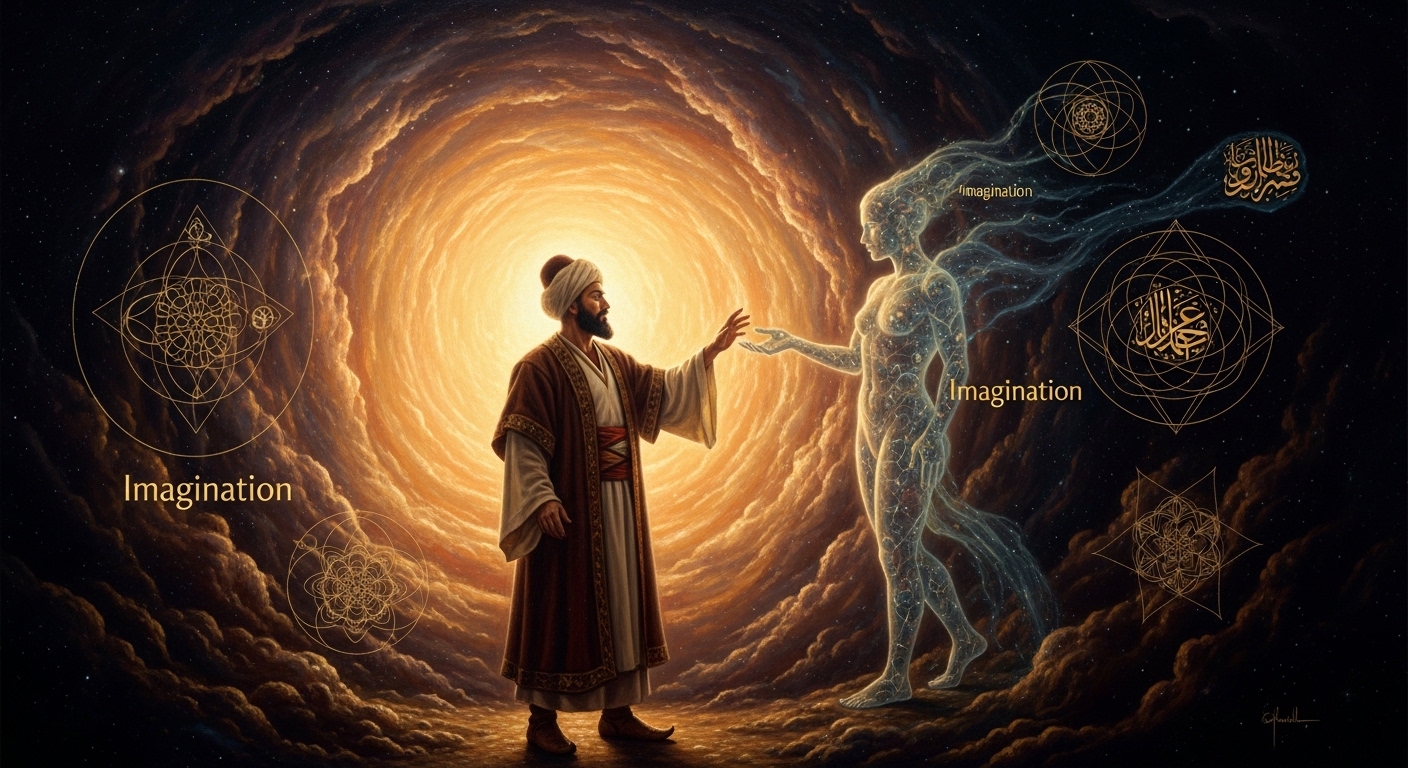
Ibn ʿArabī reverses the hierarchy. Not materially — he is not promoting the material over the spiritual — but architecturally. He introduces the concept of khayal, imagination or the imaginal realm, as the essential middle term between the Absolute and the created world. The barzakh, the isthmus, the realm between two seas: this is where creation actually happens. God does not create directly — the Absolute, as pure Being, cannot be in direct contact with the relative. God creates through self-disclosure, and self-disclosure requires an intermediary. That intermediary is imagination.
This means the entire visible world exists in the imaginal mode. It is neither the Absolute itself nor purely its own thing. It is God’s ongoing act of self-expression, the divine looking at itself in a mirror. The mirror is real — you can break it, you can touch it, you can be hurt by it — but the reality it contains is a reflection.
The implication for mystical practice is not what the non-specialist expects.
You might expect Ibn ʿArabī to conclude: therefore, see through the world and reach the Absolute behind it. Leave the mirror, find the face. This is the typical mystical trajectory: the world as obstacle to be transcended.
He concludes the opposite. The mystic’s task is to read the mirror more accurately. To look at the visible world — every form in it, every face, every stone, every image that arises in the soul during prayer — as a theophany, a divine self-disclosure, and to ask: what aspect of the divine is being shown here? The world is not an obstacle to God. The world is God appearing in a mode accessible to created eyes.
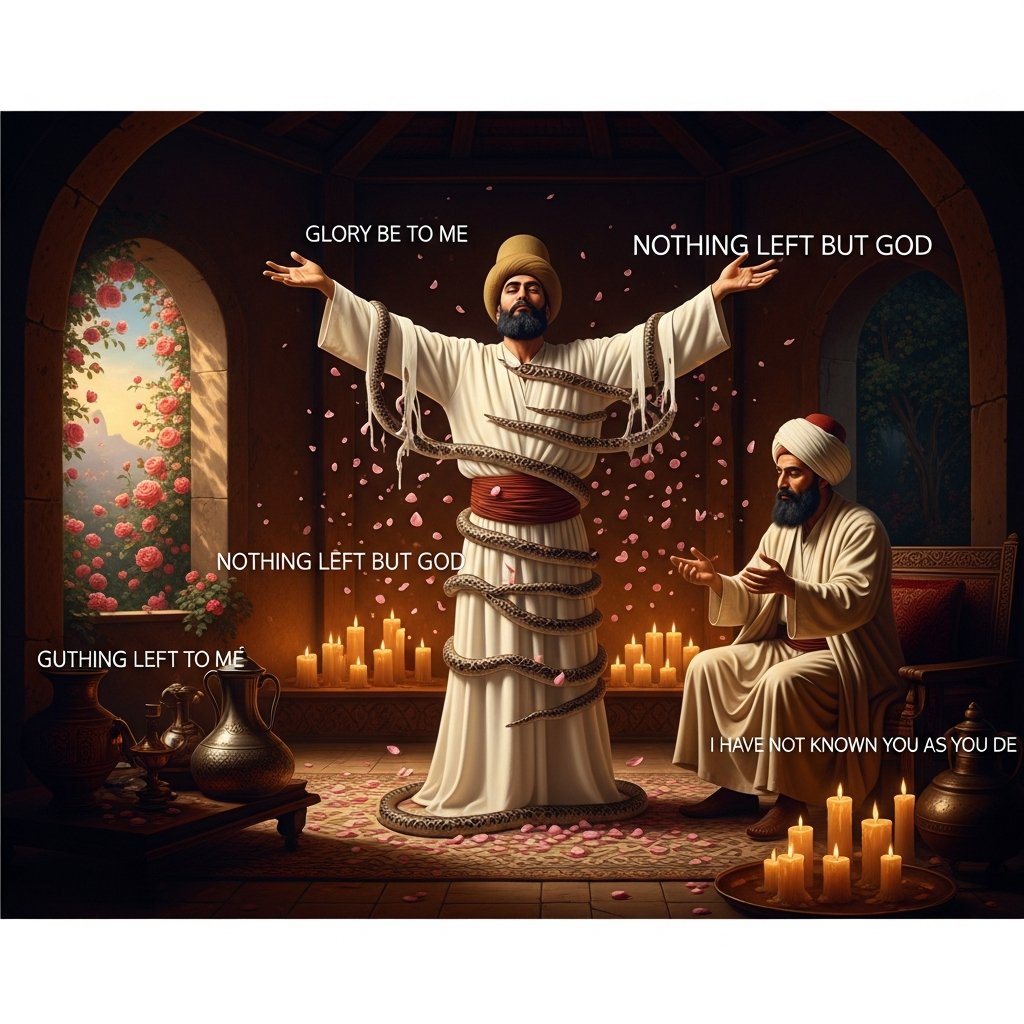
The Sufi who achieves this perception does not leave the world. He inhabits it differently. The cup is God. The wine is God. The beloved’s face is God. The tree is God. Not metaphorically — not as a reminder of God — but as a direct act of divine self-disclosure, a way God is choosing in this moment to be seen. The mystic who sees this in a sustained way is living in what Ibn ʿArabī calls the maqam al-mushahada — the station of witnessing — where every moment is a revelation and nothing is ordinary.
His opponents — and he has many, both in his lifetime and after — focus on what they see as the collapse of distinctions.
If everything is God’s self-disclosure, they ask, what is left of the distinction between good and evil? Between permitted and forbidden? Between the Prophet and the idolater? Ibn ʿArabī’s response, which his commentators have been elaborating for eight centuries, is that he is describing ontology, not ethics. The level of Being on which all things are God’s self-disclosure is not the level on which the distinction between the charitable act and the cruel act operates. The mystic who truly sees the divine in all things does not therefore treat all things identically. The physician who understands that bacteria and human cells are both made of the same chemical elements still treats them differently.
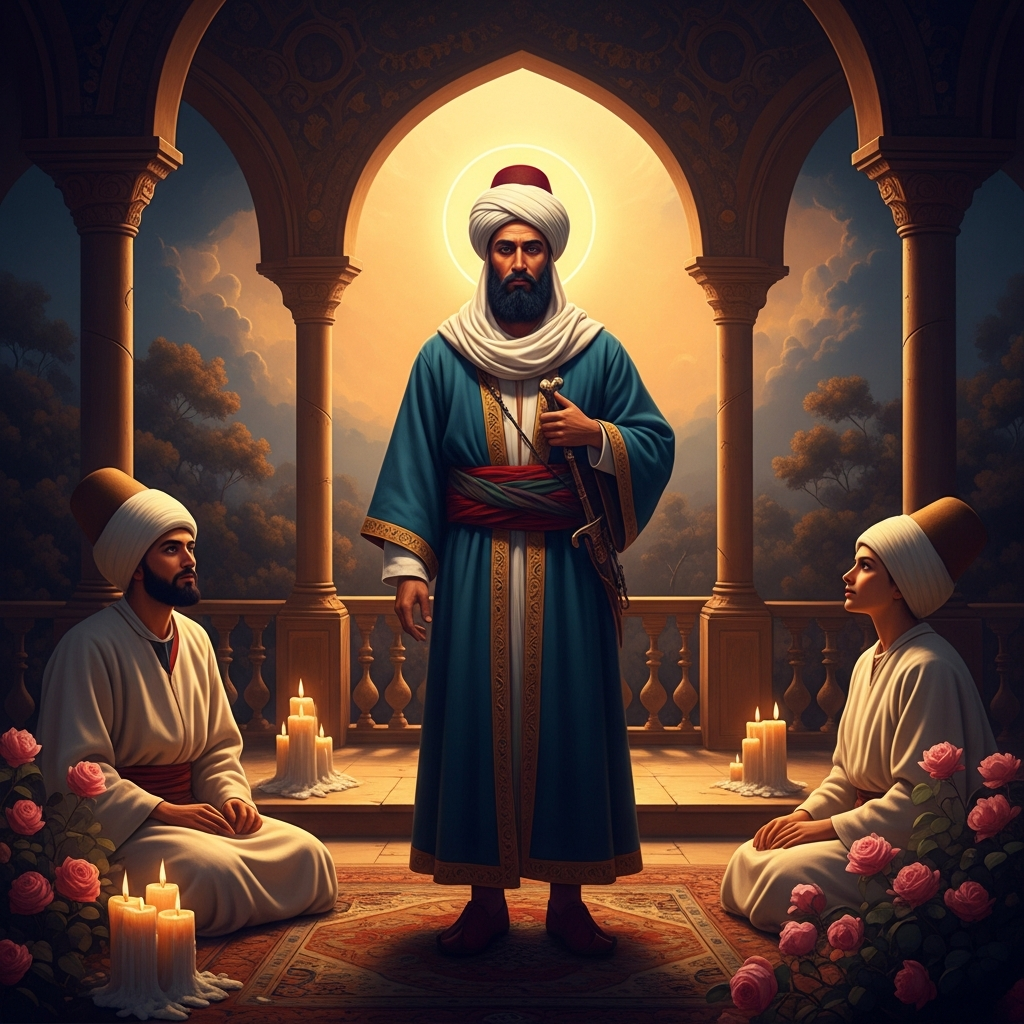
He dies in Damascus in 1240, leaving behind an estimated 350 works.
The mirror is still showing what it shows. Every image in it is God. Every face, every stone, every dream received at dawn from a figure holding a book — asking, now, that you carry it to the people.
Scenes
Echoes Across Traditions
Entities
- Ibn ʿArabī
- the Prophet Muhammad (in vision)
Sources
- Ibn ʿArabī, *Fusus al-Hikam* (Bezels of Wisdom), c. 1229
- Ibn ʿArabī, *Futuhat al-Makkiyya* (Meccan Revelations), composed c. 1203–1240
- William Chittick, *The Sufi Path of Knowledge: Ibn al-Arabi's Metaphysics of Imagination* (SUNY Press, 1989)
- Henry Corbin, *Alone with the Alone: Creative Imagination in the Sufism of Ibn Arabi* (Princeton, 1969)